Architectural shingles are better than 3-tab shingles in nearly every category that matters for long-term homeownership: lifespan, wind resistance, curb appeal, and warranty coverage. Three-tab shingles are the better choice only when upfront cost is the primary concern, and even that advantage is narrowing as 3-tab products are being phased out of the market. For homeowners in Watkinsville and Hiawassee, Georgia comparing their next roofing material, this guide answers every question from the Google People Also Ask results so you can make a confident decision before getting your first quote.
Architectural Shingles vs Three Tab Shingles: Which Is Better?
Architectural shingles are better than 3-tab shingles for most homeowners. They last longer, resist higher wind speeds, carry stronger warranties, provide better curb appeal, and deliver lower lifetime cost for anyone staying in their home for 15 years or more. Three-tab shingles cost less upfront, but that cost advantage shrinks when you account for the fact that a 3-tab roof will likely need replacement while an architectural shingle roof is still providing years of protection.
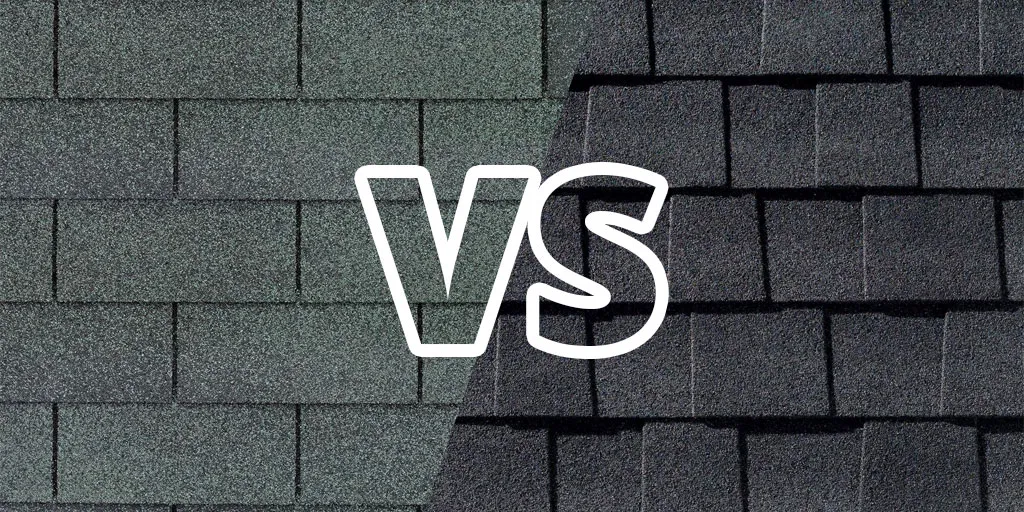
The core structural difference explains everything else. Three-tab shingles are made from a single flat layer of asphalt with three cutouts along the lower edge that create a uniform, flat appearance. Architectural shingles, also called dimensional or laminated shingles, are made by fusing multiple layers of asphalt together to create a thicker, heavier product with a textured, three-dimensional look. According to Spicer Bros. Construction’s shingle comparison analysis, architectural shingles are approximately 50% heavier than 3-tab shingles because of this multi-layer construction. That added weight and thickness translates directly into better durability, stronger wind resistance, and a longer service life.
For homes in Oconee County around Watkinsville and in the north Georgia mountains near Hiawassee, Georgia’s active storm seasons make wind resistance a practical concern, not just a spec sheet figure. Summer thunderstorms regularly produce gusts that approach and exceed the rated limit for 3-tab shingles. The gap in wind performance between the two products is a real-world consideration for every homeowner in this region.
The Watkinsville asphalt roofing page covers the architectural shingle products available for homes in this area and what current installation costs look like.
Architectural Shingles vs 3-Tab Shingles: At a Glance
| Factor | 3-Tab Shingles | Architectural Shingles |
|---|---|---|
| Construction | Single flat layer of asphalt | Multiple fused asphalt layers |
| Weight | ~240 lbs per square | ~350 lbs per square (50% heavier) |
| Lifespan (Georgia) | 12 – 20 years | 20 – 30 years |
| Wind Rating | 60 – 70 mph (standard) | 110 – 130 mph (standard) |
| Appearance | Flat, uniform, basic | Dimensional, textured, premium |
| Warranty | 25-year limited | 30-year to lifetime |
| Material Cost (per sq ft) | $1 – $2 | $4 – $6.50 |
| Installed Cost (2,000 sq ft) | $5,000 – $8,000 | $8,000 – $20,000 |
| Industry Status | Being phased out (68% SKU reduction) | Industry standard; growing market |
| Algae / Mold Resistance | Limited; single-layer density | Better; denser multi-layer construction |
| Best For | Tight budgets; short-term holds; outbuildings | Most homes; long-term homeowners; storm areas |
Sources: Bill Ragan Roofing 3-Tab vs. Architectural Analysis, FoxHaven Roofing 2025 Shingle Comparison, Today’s Homeowner 2026 Shingle Guide, Spicer Bros. Construction Shingle Comparison, PACC Solutions 2025 Shingle Cost Data, itel 3-Tab Discontinuation Report.
Which Is Better, 3-Tab Shingles or Architectural?
Architectural shingles are better than 3-tab shingles in all of the performance categories that matter most: lifespan, wind resistance, warranty coverage, curb appeal, and long-term cost per year of protection. Three-tab shingles are better only in upfront cost, and they are being phased out of the market so rapidly that even that advantage is becoming more complicated.
The clearest way to see this is through the wind rating comparison. Standard 3-tab shingles are rated to withstand winds of 60 to 70 mph, according to FoxHaven Roofing’s 2025 shingle comparison. Standard architectural shingles carry ratings of 110 to 130 mph, and some premium architectural products carry unlimited wind speed warranties when installed with required accessories. In Watkinsville and Hiawassee, summer thunderstorms regularly produce wind gusts that approach or exceed the 3-tab limit. The wind rating gap between the two products is not a marketing distinction. It is a practical difference that shows up on roofs every storm season.
Architectural shingles also win decisively on lifespan. According to the National Association of Home Builders (NAHB), the average asphalt shingle roof lasts 20 to 30 years. For 3-tab shingles in Georgia’s warm, humid climate, where J&M Roofing’s regional research shows southern shingles averaging around 14 years, the lifespan shrinks further. Architectural shingles in the same climate realistically deliver 20 to 25 years, and premium architectural products can reach 30 years or more with proper installation and ventilation. The lifespan difference alone means a homeowner who stays in their Watkinsville or Hiawassee home for 25 years will likely replace a 3-tab roof once during that period while an architectural roof keeps protecting without replacement.
Why Are 3-Tab Shingles Being Discontinued?
Three-tab shingles are being discontinued because the roofing industry and homeowner expectations have both moved past them. Their single-layer construction makes them less durable, less wind-resistant, and less energy-efficient than modern architectural shingles, and their flat, uniform appearance offers less curb appeal than the dimensional look buyers now expect.
The scale of this change is significant. According to itel’s 3-tab discontinuation report, compiled from their comprehensive database of roofing materials, available 3-tab shingle SKUs across the United States declined by 68% over the five years leading into 2024. That is not a gradual reduction. That is a near-elimination of most product lines from most manufacturers. Jacob Piazza, Director of Roofing Services at itel, describes this as the industry’s adaptation to emerging trends and technologies that ensure roofing systems’ longevity across various conditions.
There are several specific drivers behind this phase-out. First, 3-tab shingles cannot meet many updated building codes that require higher wind resistance ratings, particularly in regions prone to severe weather. Second, many manufacturers have shifted their production capacity to architectural shingles and premium products where demand is growing. Third, some states have implemented regulatory requirements, most notably California’s Proposition 65 chemical regulations, that effectively ended 3-tab shingle manufacturing for those markets. Fourth, the insurance industry increasingly struggles to process claims for homes with discontinued 3-tab products because matching replacement shingles for partial repairs is often impossible when the original color or style is no longer in production.
The practical consequence for Watkinsville and Hiawassee homeowners who still have 3-tab roofs: when storm damage occurs and a partial repair is needed, the installer may not be able to find an exact match for your shingle color or style. This can force a full roof replacement rather than a partial repair, which insurance may or may not cover depending on policy terms. This reality is another reason to plan proactively for an upgrade to architectural shingles rather than waiting for a 3-tab roof to fail.
Do Architectural Shingles Last Longer Than Three Tabs?
Yes, architectural shingles last significantly longer than 3-tab shingles. Architectural shingles last 25 to 30 years under normal conditions, while 3-tab shingles last 15 to 20 years, according to FoxHaven Roofing’s 2025 shingle comparison. In Georgia’s warm, humid climate, both timelines are compressed relative to cooler northern climates, making the lifespan gap between the two even more significant for local homeowners.
The reason architectural shingles last longer comes down to their multi-layer construction. Multiple layers of fused asphalt provide more material protecting the roof deck below. Architectural shingles resist curling, cracking, and granule loss better than single-layer 3-tab shingles because there is simply more material between the external environment and the adhesive and fiberglass layers beneath the surface. Their stronger adhesive strips also maintain better seal between courses, reducing the risk of wind lifting individual shingles during storms.
According to Bill Ragan Roofing’s lifespan analysis, under ideal conditions with proper installation and adequate attic ventilation, architectural shingles should last 20 to 25 years in Georgia. Three-tab shingles in the same conditions realistically reach 15 to 20 years before the combination of heat, UV exposure, humidity, and storm activity shortens their effective protective life.
For homeowners comparing shingle types before a replacement project, Ridgeline Roofing and Exteriors offers Drone Zone AI Roofing Inspections that document your current roof’s exact condition, giving you a clear, professional assessment of remaining service life before you commit to a product choice.
What Are the Disadvantages of Architectural Shingles?
The disadvantages of architectural shingles are their higher upfront cost compared to 3-tab shingles, their greater weight (which is rarely a structural concern but is worth confirming on older homes), and slightly more complicated installation due to their heavier, layered design. That is the complete list of real disadvantages for most homeowners.
On cost, architectural shingles cost approximately $4 to $6.50 per square foot installed versus $1 to $2 per square foot for 3-tab shingles in materials alone, according to Today’s Homeowner’s 2026 shingle guide. For a standard 2,000-square-foot home in Georgia, the installed cost difference typically runs $3,000 to $8,000 more for architectural shingles versus 3-tab. That is a real budget difference, though it narrows considerably when viewed over the 20 to 25-year lifespan architectural shingles deliver versus the 15-year lifespan 3-tab shingles provide in the same climate.
On weight, architectural shingles are roughly 50% heavier than 3-tab shingles per roofing square. For the vast majority of homes, this is not a structural concern because roofs are designed to carry the weight of roofing materials plus significant live loads from rain, snow, and maintenance workers. For a very old home with potential deck deterioration or unusual structural features, a contractor should confirm the deck is in good condition before installation regardless of which shingle type is chosen.
Longer installation time is the most accurate practical disadvantage. Heavier panels take more effort to handle and align during installation. The added labor time is already factored into installed cost quotes, so it is not an additional out-of-pocket expense, but it does mean a larger architectural shingle project may take a day longer than the equivalent 3-tab job on the same home.
What Are the Common Problems with 3-Tab Shingles?
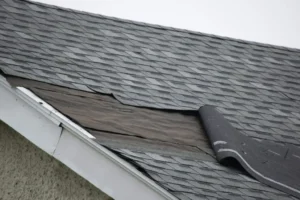
The common problems with 3-tab shingles are wind lifting and blow-off during storms, faster granule loss leading to premature aging, curling and cracking from UV and heat exposure, difficulty finding matching replacement shingles as product lines are discontinued, and a shorter lifespan that leads to earlier replacement cycles compared to architectural products.
Wind lifting is the most immediate problem in Georgia’s storm-prone climate. Three-tab shingles are rated for 60 to 70 mph winds, and the National Severe Storms Laboratory identifies sustained winds above 50 to 60 mph as capable of causing roof damage. Summer thunderstorms in Oconee County near Watkinsville and in the north Georgia mountains near Hiawassee routinely produce gusts in this range. When a single-layer 3-tab shingle lifts at the edge, it can tear away entirely during a storm, exposing the underlayment beneath and creating an immediate leak risk.
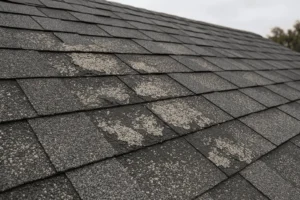
Granule loss is the aging problem. Granules on the shingle surface protect the asphalt binder beneath from UV radiation. Single-layer 3-tab shingles have less granule coverage than architectural shingles and lose granules faster under Georgia’s intense summer heat and UV exposure. As granules wash into the gutters, the exposed asphalt binder dries out, cracks, and eventually allows water to penetrate the shingle.
The matching problem is increasingly significant as more 3-tab product lines are discontinued. A homeowner with a 10-year-old 3-tab roof that suffers hail damage to 20% of the shingle surface may find that the exact color and style they have is no longer manufactured. When a perfect match is impossible, insurance companies sometimes require full roof replacement rather than partial repair, and the coverage for that scenario depends on specific policy terms.
What Are the Best Shingles to Get for Your Roof?
The best shingles to get for your roof are architectural asphalt shingles from GAF, Owens Corning, or CertainTeed for most Georgia homeowners. These three brands consistently lead the residential roofing market and are considered the top tier by experienced contractors throughout Georgia.
GAF Timberline HDZ is the best-selling architectural shingle in North America and is available through GAF Master Elite certified contractors with the highest warranty protection in the industry. GAF’s WindProven warranty offers unlimited wind speed coverage with no maximum, making it the strongest wind warranty available. Ridgeline Roofing and Exteriors is a GAF Master Elite certified contractor, which means homeowners in Watkinsville and Hiawassee have access to the GAF Golden Pledge warranty providing 50-year non-prorated material coverage and 25 years of workmanship protection.
Owens Corning Duration features SureNail technology, a reinforced fabric strip that creates up to 2.5 times better nail pull-through resistance than standard shingles. The Duration FLEX product achieves a Class 4 impact resistance rating, the highest available under UL 2218 testing, which qualifies homeowners for insurance premium discounts in Georgia’s storm-active markets and provides superior hail protection in the north Georgia mountains near Hiawassee.
CertainTeed Landmark is the premium aesthetic choice with more than 40 color options and the industry’s most extensive designer shingle line. CertainTeed products are physically heavier than some competitors, contributing to their durability. Their StreakFighter algae resistance technology is particularly relevant in Georgia’s warm, humid climate where Gloeocapsa magma algae growth is endemic and causes the dark streaking visible on many older shingle roofs in Oconee County.
The most important thing to understand about brand selection is that the contractor’s certification level determines the warranty you receive. The same GAF shingles installed by a Master Elite contractor come with dramatically stronger warranty protection than those installed by a non-certified contractor. Certification matters more than brand preference in most cases.
Do 3-Tab Shingles Increase Home Value?
Three-tab shingles do not increase home value to the same degree as architectural shingles. A new roof of any type removes one of buyers’ most common concerns during inspection negotiations, which has real value. But buyers, appraisers, and real estate agents can distinguish between 3-tab and architectural shingles, and they value them differently.
According to the 2024 Cost vs. Value Report published by the Journal of Light Construction, asphalt shingle roof replacement delivers an average ROI of approximately 60.7% nationally at resale. This figure reflects primarily architectural shingle replacements, since those are now the industry standard. A 3-tab shingle installation on a home where the neighborhood standard is architectural shingles may actually create a negative curb appeal impression compared to comparable homes with architectural products. Buyers familiar with roofing materials will recognize the flat, dated look of 3-tab shingles and may adjust their offers accordingly.
The National Association of Realtors’ 2025 Remodeling Impact Report found that 37% of Realtors recommend sellers install new roofing before listing, and that new roofing achieves a Joy Score of 10 out of 10 for homeowner satisfaction. The type of shingle matters for that resale impact. A new architectural shingle roof that looks premium, carries a strong warranty, and delivers visual curb appeal contributes meaningfully to a listing. A new 3-tab shingle roof, increasingly recognized as a builder-grade or entry-level product in a market moving away from 3-tab entirely, contributes less.
For homeowners in Oconee County or Towns County who are preparing to sell and need a roof replacement, architectural shingles are the clearer investment. The Watkinsville roof replacement page provides a full overview of the replacement process and what to expect from written quotes on both product types.
How to Tell If a Roofer Is Lying?
You can tell a roofer is lying by watching for these patterns: same-day pressure to sign a contract without time to compare quotes, claims that they can guarantee what your insurance will pay, refusal to provide a written itemized estimate, demands for large upfront cash payments before any work starts, inability to show a valid Georgia contractor’s license and insurance certificate, and no verifiable physical address or community reviews.
After major storms in the Watkinsville and Hiawassee areas, out-of-area storm chasers often canvass neighborhoods making promises that no legitimate contractor would make. A roofer who claims your entire roof replacement will be free through insurance, who pushes for a same-day signature, or who cannot explain the difference between 3-tab and architectural shingles in plain language is not someone you want installing either product on your home.
Red flags specific to shingle selection conversations include: recommending 3-tab shingles without disclosing that they are being phased out and that matching replacements may be unavailable if storm damage occurs, suggesting an overlay installation (adding new shingles over existing ones) when the existing roof has more than one layer or when the deck condition has not been verified, and providing a single lump-sum quote with no breakdown of material, labor, tear-off, or permit costs.
Protect yourself by verifying the Georgia contractor’s license number independently, getting at least three written itemized quotes, and checking reviews from homeowners specifically in your community. Do not pay more than 10% to 15% as a deposit before work begins.
What Is the Cheapest Time of Year to Get a New Roof?
The cheapest time of year to get a new roof, whether architectural shingles or any other material, is late winter from January through early March. Georgia roofing contractors are least busy during these months. Temperatures stay above 40 degrees Fahrenheit, which is the minimum temperature for proper asphalt shingle sealing, and storm season has not yet started. Less demand means faster scheduling and occasionally more competitive pricing on both materials and labor.
Late fall, October through November, is the second-best window. The summer storm rush has passed, crews are available, and contractors want to fill their schedules before the slower winter period. Off-peak scheduling can save 10% to 20% on labor according to some industry estimates, though the savings vary by contractor and market conditions at the time.
The most expensive and hardest time to schedule in the Watkinsville and Hiawassee areas is immediately after a major storm event. When a significant hail or wind storm rolls through Oconee County or Towns County, every licensed local contractor books out quickly. If your roof has storm damage but is not actively leaking, waiting a few months after the storm often means shorter wait times and more competitive pricing than trying to schedule during the post-storm rush.
Do Shingles Affect My Home Insurance?
Yes, shingles affect your home insurance in meaningful ways. The type of shingles you install, their age, their wind rating, and their impact resistance all factor into how insurance companies assess your home’s risk and what premiums you pay.
Architectural shingles with higher wind ratings and impact resistance typically fare better in insurance underwriting than 3-tab shingles. Some insurers offer discounts for Class 4 impact-resistant shingles, the highest UL 2218 impact rating available, because they reduce the statistical likelihood of storm damage claims. In Georgia’s active storm environment, where wind and hail drove more than half of all residential roofing claims in 2024 according to Fixr.com’s 2025 industry data, insurers have real financial reasons to reward homeowners who install more resilient shingle products.
Conversely, a home with aging 3-tab shingles that are approaching or past their rated lifespan may face higher premiums, coverage limitations, or in some cases non-renewal notices from carriers who are tightening underwriting standards for older roofs. According to A1 Roofing CT’s 3-tab phase-out analysis, some insurance companies are now requiring full roof replacement rather than partial repairs when a discontinued 3-tab style cannot be matched for storm damage repairs. This creates a situation where a homeowner’s policy terms change based on the availability of their shingle product in the supply chain, not just the condition of their roof.
Contact your specific insurer before a roof replacement to ask directly: what credit does your company offer for Class 4 impact-resistant architectural shingles? What is your policy if my existing 3-tab shingle style is discontinued and cannot be matched for a partial repair? Getting these answers before your next roof project helps you choose the shingle product that maximizes both protection and insurance value for your home in Watkinsville or Hiawassee.
Are Architectural Shingles Worth the Extra Cost?
Yes, architectural shingles are worth the extra cost for most homeowners. The higher upfront price is justified by a longer lifespan, stronger wind resistance, better warranty coverage, improved curb appeal, and lower lifetime cost per year of protection when compared to 3-tab shingles.
The math is straightforward. An architectural shingle roof in Georgia realistically lasts 20 to 25 years. A 3-tab shingle roof in Georgia’s climate realistically lasts 15 to 20 years, and often closer to 14 to 15 years given the heat and humidity of the state’s summers. A homeowner who stays in their home for 25 years will replace a 3-tab roof once during that period, paying the full replacement cost plus the disruption and uncertainty of a second project. An architectural shingle roof protects the home through the same 25 years without a replacement cycle. When you divide the total cost of each option by the years of protection delivered, architectural shingles cost less per year of protection for most homeowners who stay long-term.
According to FoxHaven Roofing’s 2025 shingle comparison, replacing a 3-tab roof twice during the lifespan of one architectural roof eliminates much of the upfront savings. That analysis assumes a worst-case scenario where the 3-tab roof needs replacement at the 15-year mark and the replacement costs have risen with inflation, which roofing material costs have done substantially since 2022.
Architectural shingles are not worth the extra cost if you are selling the home within two to three years, if you are covering an outbuilding or structure where appearance does not matter, or if budget constraints make the higher first cost genuinely unmanageable. For all other situations, the case for architectural shingles is clear.
What Type of Roof Shingles Last Longest?
Among asphalt shingle types, premium luxury shingles last longest at 25 to 40 years or more, followed by architectural shingles at 25 to 30 years, and 3-tab shingles at 15 to 20 years. Beyond asphalt, metal roofing lasts 40 to 70 years, tile lasts 50 to 100-plus years, and slate lasts 75 to 150 years.
Within the asphalt shingle category, which covers approximately 80% of American homes according to RubyHome’s 2025 Roofing Statistics, the type hierarchy is clear. Luxury shingles from product lines like GAF Grand Sequoia, Owens Corning Duration Premium, or CertainTeed Presidential are the top tier within asphalt. They mimic the look of natural slate or wood shake, carry the strongest warranties, and deliver the longest lifespans. Their cost reflects this premium status, running significantly higher than standard architectural products.
Standard architectural shingles are the sweet spot for most Georgia homeowners: strong enough to handle the state’s storm and heat environment, available in a wide range of colors and styles from proven manufacturers, and backed by 30-year to lifetime warranties through certified installers. For homeowners who want the longevity advantage without moving to metal or tile, upgrading from standard to premium architectural shingles is the most accessible path to a longer-lasting asphalt roof.
Three-tab shingles have the shortest lifespan of any common residential roofing material and are no longer the right choice for homeowners seeking durable long-term protection.
What Are the Red Flags for Roofing Contractors?
The red flags for roofing contractors are: no verifiable physical local address, no proof of a valid Georgia contractor’s license, inability to provide a current certificate of general liability and workers’ compensation insurance, same-day pressure to sign before comparing other quotes, vague contracts without itemized material and labor costs, demands for more than 10% to 15% as a deposit before work starts, and promises about insurance coverage that no contractor can legitimately guarantee.
For shingle-specific conversations, watch for contractors who try to talk you into 3-tab shingles without disclosing their phase-out status, who recommend an overlay installation without fully verifying the deck condition, or who cannot explain the specific products they are proposing in terms of manufacturer, model name, wind rating, and warranty tier. A contractor who cannot explain the difference between GAF Timberline HDZ and a standard architectural shingle, or who cannot tell you what warranty tier you qualify for based on their certification level, lacks the expertise to be trusted with your roof.
After significant storm events near Watkinsville or Hiawassee, out-of-area storm chasers increase dramatically. These contractors typically have no local presence, no community reviews, and no intention of being around to honor a workmanship warranty. Verifying a local address, checking Google reviews from homeowners in Oconee County or Towns County specifically, and confirming GAF Master Elite or equivalent manufacturer certification are the most reliable ways to distinguish legitimate local contractors from opportunistic visitors.
What Color Roof Increases Home Value?
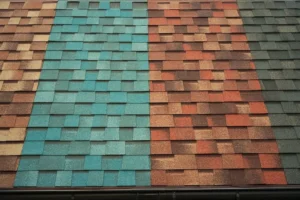
The roof colors that increase home value most are neutral, timeless tones that coordinate with most exterior styles: charcoal gray, weathered wood brown, pewter gray, and driftwood. According to GAF’s 2025 shingle color trend analysis, Charcoal, Weathered Wood, Pewter Gray, and Barkwood are the top nationally trending shingle colors due to their versatility across architectural styles and exterior color palettes.
Research from GP Martini Roofing’s shingle color study found that 91% of consumers and 87% of real estate professionals agreed that a roof color coordinating with the rest of the home’s exterior increases its market value. This is not a question of which single color is universally best but of how well the roof color works with the specific home’s siding, trim, and exterior materials. A charcoal gray shingle on a white farmhouse creates strong contrast and visual appeal. The same charcoal gray on a dark brick home may be less effective than a warmer brown or weathered wood tone.
For Georgia homeowners in Watkinsville and the surrounding Oconee County area, lighter or medium shingle colors have a practical energy advantage beyond aesthetics. Lighter shingles reflect more solar radiation than dark shingles, which in Georgia’s intense summer heat can reduce attic temperature and lower air conditioning costs. This energy efficiency benefit is a real selling point to buyers who understand what they are looking at.
The most important color advice is to choose a product and color you will be happy with for 20 to 25 years. Trend-chasing for resale value is less reliable than choosing a classic neutral that coordinates well with your specific home’s exterior.
What Is the 25% Rule in Roofing?
The 25% rule in roofing is the guideline that when more than 25% of a roof’s surface is damaged or significantly deteriorated, full replacement is more cost-effective than targeted repairs. Patching a quarter or more of a roof’s shingle surface rarely solves the underlying issue. Repeated patch repairs in that scenario typically accumulate to more than a full replacement would have cost if done at the right threshold.
Insurance adjusters and licensed contractors both use this benchmark when evaluating storm damage. When a hail storm affects a home in Oconee County near Watkinsville and a contractor finds that 30% of the shingle surface shows significant granule loss, cracked shingles, or broken seal strips, full replacement is almost always recommended over spot repair. The guideline applies to both architectural and 3-tab shingles, though it is increasingly more relevant for 3-tab because partial matching repairs are harder to execute as 3-tab product lines are discontinued.
For homeowners whose shingle damage is clearly limited to a small, isolated section, shingle roof repair in Watkinsville is a viable and often sensible option. A professional inspection determines clearly whether your specific situation calls for targeted repair or full replacement.
What Are the Typical Years That a 3-Tab Shingle Will Last?
A 3-tab shingle roof typically lasts 15 to 20 years under normal conditions, with the manufacturer-stated lifespan of 25 years representing an optimistic upper bound that few real-world installations reach. According to Bill Ragan Roofing’s shingle lifespan analysis, homeowners should expect to get around 80% to 85% of a 3-tab shingle’s maximum lifespan in realistic conditions. That translates to approximately 20 to 22 years at the high end.
In Georgia’s warm, humid climate, the realistic 3-tab lifespan is shorter than the national average. J&M Roofing’s regional research shows asphalt shingles in warmer southern environments averaging around 14 years of service life compared to 19 or more years in cooler northeastern states. Heat and UV exposure accelerate granule loss. Humidity promotes algae growth that consumes shingle material. Summer storms add wind and impact stress. A 3-tab shingle roof installed in Watkinsville or near Hiawassee should be planned around a 15-year realistic lifespan rather than the 25-year manufacturer statement, and professional inspections after the 10-year mark help catch deterioration before it becomes an active leak problem.
What Is the Average Cost to Replace Shingles on a Roof?
The average cost to replace shingles on a roof in Georgia runs from $8,000 to $20,000 for architectural asphalt shingles on a standard 2,000-square-foot home, with the midpoint around $12,000, according to RST Roofing & Renovations’ 2025 Georgia pricing data. Three-tab shingle replacements on the same home start as low as $5,000 to $8,000. Premium or luxury architectural shingles push toward $18,000 to $25,000 depending on the specific product and roof complexity.
Georgia’s construction costs run approximately 10% below the national average, according to Roof Observations’ 2025 Georgia cost guide. Nationally, the average shingle roof replacement runs $9,519 according to Angi’s July 2025 data, with a range of $5,868 to $13,213 for most standard projects. Labor accounts for approximately 60% of the total project cost, according to NerdWallet’s roofing cost analysis, which means the contractor you hire and the complexity of your specific roof drive the final number as much as the shingle product itself.
Per-square-foot pricing for 3-tab shingles in Georgia materials runs $1 to $2 while architectural shingles run $4 to $6.50, but the installed cost is higher because labor for architectural shingles takes slightly longer due to their heavier weight and layered design. For homes near Hiawassee with steeper mountain-style pitches, labor costs per square are higher than flatter-roofed homes in lower-elevation Watkinsville, which should be factored into any budget comparison.
How Much Does a Shingle Roof Cost for a 2,000-Square-Foot House?
A shingle roof for a 2,000-square-foot house costs between $8,000 and $20,000 for architectural asphalt shingles in Georgia, with the midpoint around $12,000, according to RST Roofing & Renovations’ 2025 Georgia data. Three-tab shingles on the same home run $5,000 to $8,000. The gap between the two reflects material costs, slightly higher labor for architectural shingles, and the longer-term durability advantage architectural products deliver.
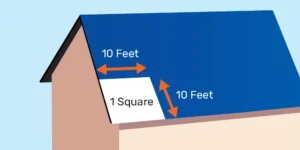
Roofing contractors price jobs by the “square,” meaning 100 square feet of roof surface. A 2,000-square-foot house has 20 to 25 roofing squares once pitch and overhangs are accounted for. Steeper pitches add surface area beyond the floor footprint and also add labor cost because crews move more slowly with safety equipment on steeper slopes. Additional costs beyond base installation include tear-off at $1 to $3 per square foot, deck repairs if sheathing damage is discovered, permits at $250 to $500, and new underlayment.
The only reliable number for your specific 2,000-square-foot home is the one on a written estimate from a licensed local contractor who has seen your roof. Online calculators and general ranges are useful for budgeting, but your actual roofline complexity, deck condition, and current material pricing all move the final number away from any general estimate.
Why Do Architectural Shingles Last Longer?
Architectural shingles last longer because their multi-layer construction provides significantly more material protecting the roof deck, stronger adhesive bonding between layers, better resistance to wind uplift from heavier weight, and more granule coverage to protect the asphalt binder from UV degradation. All of these structural advantages flow from the same core decision: architectural shingles use more and better asphalt to create a thicker, stronger product.
According to Hoel Roofing’s 2025 shingle comparison, the raw material cost of architectural shingles is roughly 20% to 40% higher than 3-tab shingles because of the additional asphalt and protective granules in the multi-layer construction. That added material cost is exactly why architectural shingles outlast 3-tab products by 5 to 15 years in most climates, and why they maintain their protective effectiveness longer into their service life before showing the curling, cracking, and granule loss that signal an aging 3-tab roof.
Proper attic ventilation is equally important to realizing architectural shingles’ full lifespan potential. When heat builds up in an unventilated attic during Georgia’s long summers, it accelerates shingle deterioration from below, shortening even quality architectural shingles’ service life. Proper ridge and soffit ventilation, installed correctly during a roof replacement, is the most impactful additional investment homeowners can make alongside shingle selection to protect their roof’s long-term performance in the Watkinsville and Hiawassee climates.
What Devalues a House the Most?
Among exterior elements, a roof in poor condition is one of the most consistent sources of home value reduction. A failing roof signals to buyers that the home has been neglected, raises questions about interior water damage and mold, and creates immediate uncertainty about a major expense the new owner will face. Buyers who see an old, deteriorating, or storm-damaged roof on a listing either make lower offers to account for the replacement cost or walk away entirely.
According to the 2024 Cost vs. Value Report, a new asphalt shingle roof replacement returns approximately 60.7% of its cost at resale. This means a $12,000 architectural shingle roof adds approximately $7,300 to the home’s market value. But the value of removing an old, problematic roof from the sale conversation is often worth more than the percentage calculation shows, because buyers who are worried about an old roof adjust their offers more than the actual replacement cost would justify.
Other exterior factors that consistently reduce home value include outdated or damaged siding, deferred exterior paint, overgrown or poorly maintained landscaping, and visible foundation cracks. Among these, a failing roof tends to create the most anxiety for buyers because it represents both a large upfront cost and ongoing water damage risk until it is addressed.
For homeowners in Watkinsville or Hiawassee who are weighing whether to replace a marginal roof before listing, the honest calculation is this: a buyer who sees an old 3-tab roof or a visibly deteriorating shingle roof will either negotiate a credit larger than the replacement cost or pass on the home. A proactive replacement with quality architectural shingles removes that negotiating point entirely and presents the home as well-maintained and ready to buy.
How to Increase Home Value by $50,000?
Increasing home value by $50,000 through a single improvement is achievable primarily through kitchen or bathroom renovations, finished basement additions, or major exterior renovations in high-value markets. Roofing alone does not typically add $50,000 in value unless the home is large, in a premium market, or the existing roof’s condition is so poor that buyers were pricing in a significant replacement credit.
However, a new architectural shingle roof is one of several projects that together can push a home’s value meaningfully higher. According to the National Association of Realtors’ 2025 Remodeling Impact Report, new roofing combined with updated siding and fresh exterior paint can significantly increase both market value and sale speed. These three exterior updates together address the most visible first impression buyers form before they ever walk through the front door.
For homeowners in Watkinsville or Hiawassee looking to maximize value before a sale, the combination of a new architectural shingle roof, fresh exterior paint, clean gutters, and well-maintained landscaping addresses the same buyer psychology that causes old roofs to depress sale prices. Each individual element adds some value. Together, they create the impression of a well-maintained home that is ready to buy without negotiation. Buyers pay full asking price or close to it when they trust that the home’s major systems are in good shape.
Working with Ridgeline Roofing and Exteriors on a pre-sale roof replacement allows you to get the project done efficiently with a local certified contractor who can provide the warranty documentation buyers and their agents will want to review during due diligence.
3-Tab vs. Architectural Shingles: Cost Comparison for Georgia Homes (2025)
| Home Size | 3-Tab Installed (GA) | Architectural Installed (GA) | Premium Luxury Installed (GA) |
|---|---|---|---|
| 1,000 sq ft | $3,000 – $5,500 | $5,500 – $11,000 | $9,000 – $18,000 |
| 1,500 sq ft | $4,500 – $7,000 | $7,000 – $15,000 | $12,000 – $24,000 |
| 2,000 sq ft | $5,000 – $8,000 | $8,000 – $20,000 | $15,000 – $30,000 |
| 2,500 sq ft | $6,500 – $10,000 | $10,000 – $24,000 | $18,000 – $36,000 |
| 3,000 sq ft | $8,000 – $12,000 | $12,000 – $28,000 | $22,000 – $42,000 |
Sources: RST Roofing & Renovations 2025 Georgia Pricing Data, Roof Observations 2025 Georgia Cost Guide, Bill Ragan Roofing Cost Analysis, Today’s Homeowner 2026 Shingle Guide, PACC Solutions 2025 Shingle Cost Data, Angi 2025 Roof Replacement Cost Data. Georgia costs reflect approximately 10% below national averages. Actual costs vary by roof complexity, pitch, tear-off, and specific contractor pricing.
Frequently Asked Questions About Architectural vs 3-Tab Shingles in Watkinsville and Hiawassee, GA
Should I choose architectural shingles or 3-tab for my home near Watkinsville, GA?
You should choose architectural shingles for your home near Watkinsville, GA in almost all cases. Architectural shingles last 20 to 25 years in Georgia’s climate versus 14 to 20 years for 3-tab, they carry higher wind ratings (110 to 130 mph versus 60 to 70 mph) that matter significantly in Georgia’s storm-active summers, and they deliver better curb appeal and resale value. Three-tab shingles make sense only if budget is severely constrained, the structure is an outbuilding where appearance does not matter, or you plan to sell within two to three years and the existing roof condition is still acceptable. For homeowners who plan to stay in their Oconee County home for any meaningful length of time, architectural shingles are the clear choice.
Are 3-tab shingles still available in Georgia?
Three-tab shingles are still available in Georgia but with significantly reduced product selection. According to itel’s discontinuation report, available 3-tab SKUs across the United States declined by 68% over the five years leading into 2024 as major manufacturers have phased them out in favor of architectural products. This means color options are limited, matching replacement shingles for partial repairs is increasingly difficult, and some contractors in the Watkinsville and Hiawassee areas may not stock 3-tab products at all. For any homeowner considering 3-tab shingles, the risk that your specific color or style will be discontinued before your roof’s service life ends is real and worth weighing against the upfront cost savings.
What architectural shingle brand does Ridgeline Roofing install in Watkinsville and Hiawassee?
Ridgeline Roofing and Exteriors is a GAF Master Elite certified contractor and installs GAF roofing systems for qualifying projects. GAF’s Master Elite certification is one of the top contractor certification levels in the residential roofing industry, held by a very small percentage of roofing companies nationally. This certification gives homeowners in Watkinsville and Hiawassee access to the GAF Golden Pledge warranty, which provides 50-year non-prorated material coverage and 25 years of workmanship protection, a level of warranty protection that most contractors cannot access. The team can also provide guidance on Owens Corning and other leading architectural shingle options to help homeowners choose the best product for their specific home and budget.
How long do architectural shingles last in the north Georgia mountain climate near Hiawassee?
Architectural shingles last approximately 20 to 28 years in the north Georgia mountain climate near Hiawassee, depending on installation quality, attic ventilation, and specific product choice. The mountain climate in Towns County creates more aggressive thermal cycling than lower-elevation Georgia communities, with hot summer days and cooler mountain nights causing shingles to expand and contract more frequently than in flatter areas. This thermal stress shortens shingle life compared to the manufacturer’s stated lifespan, which assumes more moderate conditions. For homes near Hiawassee, algae-resistant shingles with strong wind ratings and proper attic ventilation are particularly important because the combination of humidity, temperature swings, and active storm seasons creates more demanding conditions for asphalt shingles than the manufacturer’s baseline testing accounts for.
Is it worth upgrading from 3-tab to architectural shingles at roof replacement time?
Yes, it is worth upgrading from 3-tab to architectural shingles at roof replacement time for almost all homeowners. The cost difference between 3-tab and standard architectural shingles on a typical Georgia home runs approximately $3,000 to $8,000. That additional cost buys 5 to 10 more years of roof life, higher wind resistance that matters in Georgia’s storm seasons, a stronger warranty, better curb appeal, and a product that is still actively manufactured and supported by major roofing companies. The cost difference divided by the additional years of protection typically works out to less than $500 per additional year of service, which is well below what a roof replacement project would cost. For any homeowner who plans to stay in the home more than three to five years, the upgrade pays for itself in eliminated future replacement cost.
What color architectural shingles are most popular in Georgia?
The most popular architectural shingle colors in Georgia follow the national trend of neutral, timeless tones: Charcoal, Weathered Wood, Pewter Gray, and Barkwood are the top four nationally popular GAF colors, and these same tones dominate Georgia markets. According to GAF’s 2025 shingle color trend analysis, these four neutral classics work well across most exterior color palettes and maintain resale appeal across decades. In Georgia’s warm climate, medium-toned shingles in weathered wood or pewter gray balance thermal performance (lighter than charcoal, which absorbs more heat) with visual versatility. For homeowners in the wooded mountain communities near Hiawassee, earthy tones in brown or weathered wood tend to complement the natural surroundings particularly well. For modern or contemporary homes in Watkinsville neighborhoods, charcoal or slate gray creates strong curb appeal contrast against lighter siding.
What warranty comes with architectural shingles from Ridgeline Roofing?
As a GAF Master Elite certified contractor, Ridgeline Roofing and Exteriors can offer homeowners in Watkinsville and Hiawassee access to the GAF Golden Pledge warranty on qualifying installations. The Golden Pledge provides 50-year non-prorated material coverage and 25 years of workmanship protection, which is among the strongest warranty packages available in residential roofing. This warranty level is only accessible through contractors who have achieved Master Elite certification, which means most contractors installing the same GAF shingles cannot offer equivalent protection. The shingles themselves are identical. The warranty protection is dramatically different based on installer certification level.
Final Thoughts
The comparison between architectural shingles and 3-tab shingles used to be a genuine tradeoff between cost and quality. Today, it is much closer to a straightforward recommendation in favor of architectural shingles for almost every homeowner. Three-tab shingles are being phased out by manufacturers, their product availability has dropped by 68% in five years, matching replacement shingles for partial repairs is increasingly difficult, and their performance in Georgia’s storm-active climate never matched what architectural products deliver for a modest additional cost.
For homeowners in Watkinsville and the surrounding Oconee County communities, and for those in the north Georgia mountain area near Hiawassee in Towns County, architectural shingles are the right choice for any planned roof replacement. The additional upfront cost is real. So is the additional lifespan, the stronger wind rating, the better warranty, and the improved curb appeal that comes with the industry’s current standard product rather than a legacy option that is actively being discontinued.
Ready to Compare Shingle Options for Your Specific Home?
Ridgeline Roofing and Exteriors is a GAF Master Elite certified contractor serving Watkinsville, Hiawassee, and homeowners throughout Oconee and Towns County, GA. Free inspections, honest assessments, and no-pressure written estimates that cover both product types so you can make the right decision for your home and your budget.
Call 770-706-ROOF (7663) or schedule your free inspection online. When you are ready to explore which architectural shingle product is right for your home, the asphalt roofing page in Watkinsville and the shingle roof repair page cover what the team offers across both replacement and repair scenarios.