Skip to content
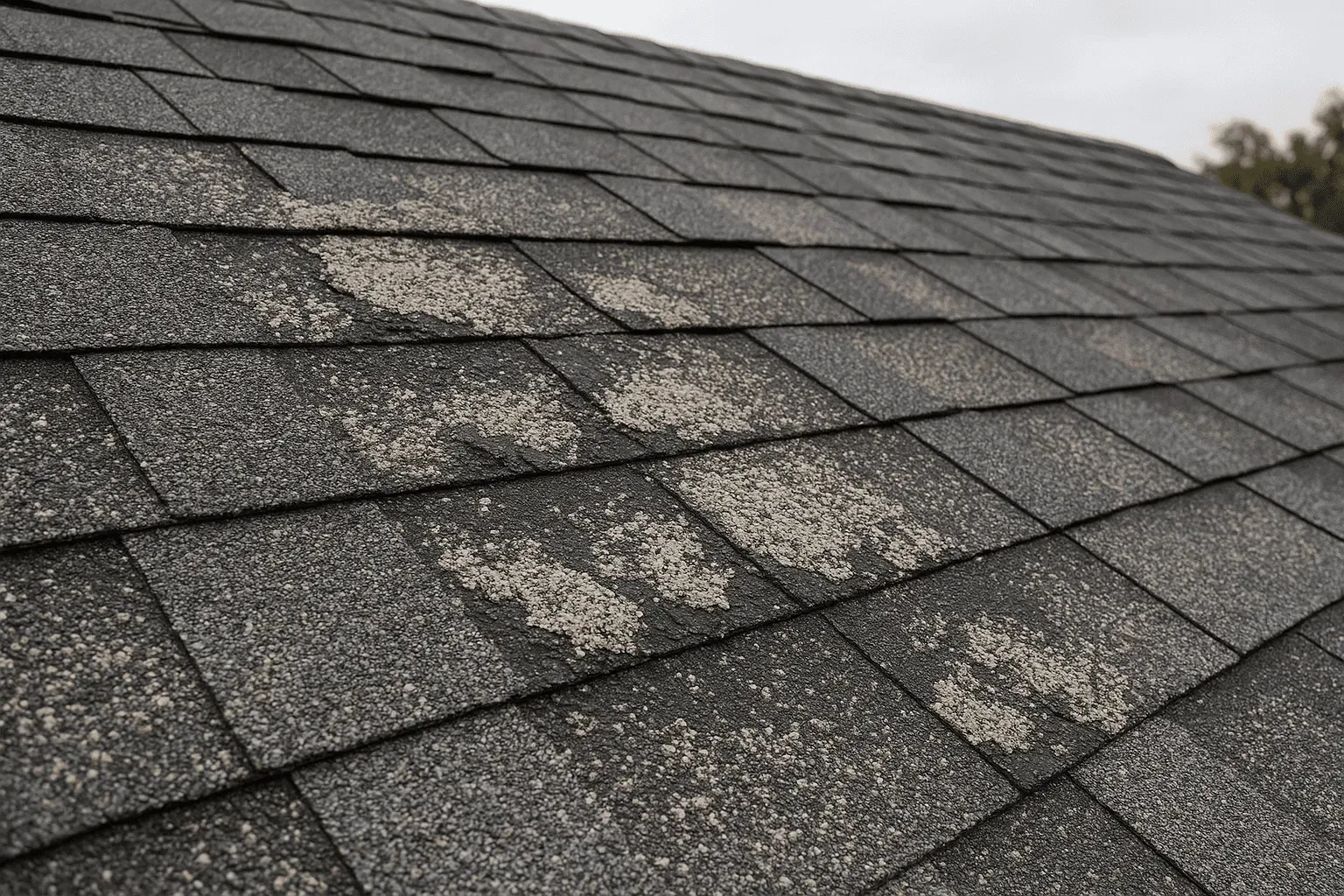
Granule loss on asphalt shingles means the small crushed mineral particles bonded to the surface of the shingle are wearing away or have been knocked off, leaving the asphalt layer underneath exposed to direct sunlight, rain, and heat. Some granule loss is completely normal, especially on a new roof or an aging one approaching the end of its life. But excessive or uneven granule loss is a warning sign that your roof is deteriorating faster than it should, and in many cases it points to storm damage, ventilation problems, or poor installation. Homeowners in Watkinsville, GA and across the Oconee County area ask about granules in gutters more than almost any other roofing topic. This article explains what granule loss is, what causes it, how to tell when it is a real problem, what it means for your insurance, and what your next steps should be.
Is It Normal for New Shingles to Lose Granules?
Yes, it is normal for new shingles to lose granules during the first few weeks and months after installation. During manufacturing, some granules interlock with embedded ones but are not fully bonded to the asphalt surface. Handling, shipping, and installation dislodge many of these loosely attached particles. After the roof is put on, the first several heavy rains wash the remaining loose ones into the gutters.
According to InterNACHI, the International Association of Certified Home Inspectors, this early shedding is expected and does not indicate a problem with the shingles themselves. It is common to see granule accumulation in the gutters of fairly new roofs. The key indicator to look for is whether the shingles themselves look bare or patchy after this initial settling period. If they look uniform and fully coated, the shedding was normal manufacturing excess. If you see dark, exposed patches on the shingles themselves, that is a different and more serious situation.
What Causes Shingle Granule Loss?
The causes of shingle granule loss are natural aging, hail impact, poor attic ventilation, improper installation, pressure washing, heavy foot traffic on the roof, and manufacturing defects. Most granule loss on roofs in the Watkinsville area and across Georgia comes from a combination of age and storm activity rather than a single cause.
Natural aging is the most common cause. As shingles get older, the bond between the granules and the asphalt underneath weakens. Ultraviolet radiation from the sun dries out the asphalt, making it more brittle and less able to hold granules in place. According to InterNACHI, over time the bond deteriorates and granules are loosened and carried away by runoff. This process accelerates as a roof passes the 15 to 20-year mark.
Hail is the second major cause. When hailstones strike a shingle, they knock granules loose from the impact zone. Research published in the journal Frontiers in Materials found that asphalt shingles exposed to both natural weathering and repeated hail events were approximately ten times more susceptible to future damage than freshly manufactured shingles. That cumulative damage effect is significant for homes in northeast Georgia, where severe thunderstorm and hail events are a regular seasonal occurrence.
Poor attic ventilation is an often-overlooked cause. When hot air becomes trapped under the roof deck, it raises the surface temperature of the shingles well above what manufacturers design them to handle. Roof surface temperatures in poorly ventilated homes can regularly exceed 150 degrees Fahrenheit in summer. That sustained heat dries out the asphalt and weakens the granule bond from below, accelerating granule loss years before it would normally occur.
Pressure washing is one of the most damaging things a homeowner can do to an asphalt roof. The force of a pressure washer strips granules directly off the shingle surface and can cause enough damage in a single cleaning session to require a roof replacement within a few years. Never pressure wash an asphalt shingle roof. Soft washing with low-pressure chemical application is the correct method for algae and moss removal on shingle roofs.
How Much Granule Loss Is Too Much?
Too much granule loss is when you can see bare, dark patches on the shingle surface from the ground, when gutters are consistently full of granules after every rain, or when shingles appear shiny or reflective rather than textured and matte. Any of those signs points to a roof that has lost its protective layer in meaningful areas and needs professional evaluation.
Industry data provides a useful framework. Minor granule loss of 10 to 20 percent may add only one to two years to the natural aging process. But significant bald patches covering 50 percent or more of individual shingles can reduce the remaining lifespan of those shingles by up to 70 percent, according to roofing industry research. Once asphalt is exposed to direct UV and heat for 12 to 24 months, cracking and water intrusion become likely in those sections.
Uniform granule loss spread evenly across the entire roof surface typically means natural aging. Patchy or concentrated granule loss in specific areas, especially after a storm, usually points to impact damage or a defect. Both situations benefit from a professional inspection to determine the actual scope and the right response.
What Does Granule Loss on Shingles Look Like?
Granule loss on shingles looks like dark, bare patches on the roof surface where the texture is gone and the asphalt underneath is exposed. From the ground, affected sections may appear shinier or more reflective than the surrounding shingles, which still have their full granule coating and look matte and textured.
In your gutters, granule loss looks like a layer of coarse, sand-like particles that feel like rough gravel. They are usually gray, dark brown, or black depending on the shingle color. After a heavy rain, you may see them washed out near your downspout as a streak of gritty material on the driveway or ground. A small amount in the gutters once or twice a year is not a cause for alarm. A consistent and heavy accumulation after every storm is a signal that the roof is actively shedding at an accelerated rate.
Close up, hail-related granule loss shows as circular bare spots where a hailstone struck the shingle and knocked the granules off in a tight radius. This pattern is distinct from the gradual, diffuse loss that comes from normal aging. Knowing the difference matters when you file an insurance claim, because hail damage is typically a covered peril while normal wear and tear is not.
Is Granule Loss on a Roof Covered by Insurance?
Granule loss caused by a specific storm event, particularly hail, is generally covered by homeowners insurance. Granule loss from normal aging and wear is not covered. The distinction is critical, and it is the source of many disputes between homeowners and insurance adjusters.
According to the National Oceanic and Atmospheric Administration (NOAA), there were 5,373 recorded hail events across the United States in 2024 alone. In 2024, hail damage accounted for 50 to 80 percent of all thunderstorm-related insurance claims, resulting in an estimated $10 billion in property damage. Average payouts for hail damage roof claims ranged from $12,000 to $17,000 in 2024, according to insurance industry data.
For your claim to succeed, the granule loss needs to be documented as storm-related rather than age-related. This is where having a licensed roofing contractor involved in the inspection matters. Insurance adjusters sometimes characterize granule loss as normal aging to limit or deny a claim. A contractor who knows how to identify hail impact patterns, such as the circular exposed areas and bruised mat beneath, can provide documentation that supports your claim.
Homeowners in Watkinsville and surrounding Oconee County who have experienced a storm and noticed significant granule buildup in their gutters should schedule an inspection promptly. The Drone Zone AI roofing inspection service provides documented photographic evidence of roof condition that is useful when working with an insurance adjuster after a storm event.
What Not to Say to a Roof Insurance Adjuster
There are several things you should never say to a roof insurance adjuster during a claim inspection. First, do not tell the adjuster your roof is old but has always been fine. Age is exactly the factor adjusters use to reclassify storm damage as wear and tear, reducing or eliminating your payout.
Do not guess at when damage happened. If you are not certain, say you are not certain. Incorrect statements about timing can complicate your claim. Do not immediately accept the first settlement offer without reviewing it against an independent contractor estimate. Insurance payouts for hail claims can range widely, and the first offer is not always the full amount you are entitled to under your policy.
Do not allow the adjuster to complete the inspection without your contractor present. Having a licensed roofer on the roof during the adjuster visit, someone who can point out specific impact patterns and granule loss zones, significantly improves the accuracy of the assessment. Adjusters processing high claim volumes after storm events sometimes miss subtle damage that a roofer with trained eyes will catch on a thorough inspection.
Also, do not admit to having deferred maintenance or delayed repairs. Even if true, that conversation introduces grounds for the insurer to reduce coverage under maintenance exclusions. Let the adjuster make their assessment independently and respond through proper documentation.
What Are the Final Stages of Shingles?
The final stages of asphalt shingles are accelerated granule loss, exposed asphalt, cracking and curling, and then structural failure with active leaks. These stages progress in sequence, and granule loss is always present in the early and middle phases of shingle decline.
In the early stage, granules begin shedding at a higher rate than normal. The shingles still look mostly intact from the ground, but up close the surface texture is noticeably thinner in places. Gutters begin filling with granules more consistently.
In the middle stage, bare patches of dark asphalt appear across multiple shingles, especially on south- and west-facing slopes that receive the most sun and storm exposure. According to InterNACHI, south- and west-facing slopes are more likely to deteriorate faster because of increased UV and storm exposure. The asphalt starts to soften in summer heat and harden in winter cold, cycling through stress that accelerates cracking.
In the final stage, shingles begin to curl at the edges, crack across the surface, and lose their ability to seal properly at the tabs. At this point, water infiltration is no longer a matter of if, but when. Missing shingles become more likely during even moderate wind events, and interior water damage typically follows within a season or two if the roof is not replaced.
Homeowners in Watkinsville who notice their shingles entering the middle stage should not wait for the final stage to arrive. Getting ahead of the replacement cycle before interior damage occurs saves significantly on total repair costs. A professional assessment of shingle condition is the right starting point, and roof repair services in Watkinsville can address early-stage and mid-stage issues before full replacement becomes the only option.
What Is the Difference Between Hail Damage and Granule Loss?
The difference between hail damage and normal granule loss is the pattern, the location, and the condition of the asphalt beneath the missing granules. Hail damage creates circular impact zones where granules are knocked off in a concentrated area, often with a bruised or fractured asphalt mat visible underneath. Normal granule loss is diffuse, spread across the surface gradually without a specific impact pattern.
Hail damage also tends to appear consistently across the entire roof surface and on soft metal elements like gutters, downspouts, and flashing. If your gutters are dented and your shingles show circular bare spots after a storm, that is hail damage. If the shingles show widespread thin granule coverage with no specific impact zones and the metal components are undamaged, that is more likely normal aging.
This distinction matters enormously for insurance purposes. Long-term uniform granule loss is not considered functional damage by insurance companies and is treated as part of the natural aging process. Hail-related granule loss that meets coverage thresholds, typically 6 to 10 visible impacts per 100 square feet on at least three sides of the roof, is a covered claim. A licensed roofing professional can document the difference and provide the detailed report needed to support your claim.
How Do You Fix Granule Loss on Shingles?
The way you fix granule loss on shingles depends entirely on how severe and widespread it is. For minor, localized granule loss on a relatively young roof that is otherwise in good condition, a roofing contractor can apply asphalt roof cement or a specialized sealant over the exposed area as a temporary protective measure. This slows UV degradation in the affected zone and buys time until the full roof is ready for replacement.
You cannot reapply the granules you find in the gutters back onto the shingles. Once granules have been shed, the adhesive bond is gone and they will not reattach. Products sold as granule repair materials are temporary coatings, not a true granule restoration. They extend the life of a roof by months, not years.
For widespread granule loss, especially on a roof that is 15 years old or more in Georgia’s climate, the most practical and cost-effective fix is a full roof replacement. Patching individual shingles across a large area of significant loss rarely saves money in the long run because the surrounding shingles are also near the end of their life. Replacing the roof when the first major zone of loss appears is almost always cheaper than waiting until water damage is discovered inside the home.
Homeowners in the Hiawassee, GA area who are seeing granule loss on an older shingle roof can explore full replacement options and what the installation process involves by reviewing roof replacement services in Watkinsville. The same quality and product standards apply to both service locations.
How to Repair Granule Loss on a Roof Without Replacing It
Repairing granule loss without replacing the roof is possible when the damage is localized to a small section and the surrounding shingles are still in good condition. The repair options are targeted shingle replacement in the affected section and applying a UV-protective roof sealant over exposed asphalt areas as a temporary measure.
Targeted shingle replacement works best when hail or impact damage is concentrated in one section of the roof and the rest of the shingles are less than halfway through their expected lifespan. A contractor removes the damaged shingles and installs matching replacements. This is a legitimate repair strategy when the scope is limited and well-documented.
UV-protective sealant is a short-term measure. It creates a barrier over bare asphalt that slows degradation caused by direct sun exposure. It does not restore granule protection, and it does not address underlying moisture or structural issues. Think of it as a bandage, not a cure. It is appropriate when a homeowner needs to protect a small area while budgeting for a full replacement in the next six to twelve months.
One important point: the 25 percent rule in roofing applies here. In many jurisdictions, if more than 25 percent of a roof is repaired or replaced within a 12-month period, local building codes may require bringing the entire roof up to current standards. Homeowners in Watkinsville and Oconee County should confirm code requirements with their contractor before beginning any significant repair work.
How Long Do 50-Year Shingles Actually Last?
Fifty-year shingles do not actually last 50 years in most climates, including Georgia. In the Southeast’s hot, humid conditions with regular storm activity, the realistic lifespan of a premium architectural shingle marketed with a 50-year warranty is typically 25 to 35 years with proper installation and adequate attic ventilation.
The “50-year” label refers to the manufacturer’s warranty term under ideal conditions, which often includes specific installation requirements, ventilation standards, and the use of a full manufacturer-certified roofing system including underlayment and accessories. According to contractor and industry data, architectural shingles in warmer climates last closer to 20 to 25 years in real-world conditions. In Georgia’s heat, UV exposure, humidity cycles, and storm frequency, even premium shingles age faster than the warranty language implies.
That said, 50-year shingles do outperform standard 30-year products in meaningful ways. They are thicker, carry heavier granule coatings, and use higher-density asphalt layers that resist granule bond breakdown longer. If you install a 50-year shingle product in Watkinsville with proper ventilation and a certified contractor, expecting 30 to 35 years of reliable performance is realistic. Expecting 50 years in Georgia’s climate is optimistic.
At What Wind Speed Do Shingles Come Off?
Standard three-tab asphalt shingles are rated for wind speeds between 60 and 70 mph before they begin to lift and fail. Architectural shingles typically carry wind ratings of 110 to 130 mph. Class 4 impact-resistant architectural shingles from premium manufacturers can be rated to withstand 150 mph winds when properly installed.
Wind rating is directly tied to the adhesive seal strip on the underside of each shingle. When shingles are newly installed, the seal strip is soft and bonds to the shingle below it under heat from the sun. Once sealed, wind uplift resistance increases significantly. Shingles that have not fully sealed, which can happen in cold-weather installations or when ventilation is inadequate, are more vulnerable to wind damage at lower speeds.
For homeowners in Georgia, especially those near Hiawassee, GA where ridge-line properties and mountain terrain can channel and amplify wind during storm events, choosing an architectural shingle with a minimum 110 mph wind rating is a practical baseline. Upgrading to Class 4 impact-resistant products adds both wind and hail resistance in one product category. Homeowners interested in learning more about the range of asphalt shingle options available can review asphalt roofing services in Watkinsville.
Is One Missing Shingle a Problem?
Yes, one missing shingle is a problem and should be repaired promptly. A single missing shingle exposes the roof deck and underlayment beneath it to direct rain, UV radiation, and debris. Water that gets into the exposed deck area can cause wood rot, mold growth, and structural damage to the decking and the framing below it. The cost of repairing the damage caused by a single missing shingle left unaddressed for one rainy season is almost always far greater than the cost of replacing the shingle itself.
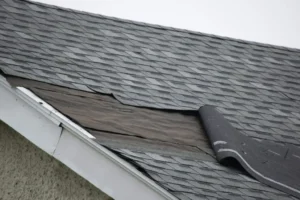
Missing shingles are also a signal. A shingle that blows off in a wind event that did not damage anything else on the property suggests that the adhesive seal on that shingle was already compromised. When one shingle fails that way, neighboring shingles may be approaching the same condition. A professional inspection after any wind event that causes a missing shingle is the right response.
In Georgia, where summer storms can produce wind gusts well above 60 mph, one missing shingle after a storm is a common finding. Do not ignore it. Address it quickly and get the rest of the roof inspected while you are at it. Shingle roof repair in Watkinsville covers both individual shingle replacements and more comprehensive storm-related repairs.
What Do Bad Asphalt Shingles Look Like?
Bad asphalt shingles look dark and bare in patches, curled or cupped at the edges, cracked across the surface, stained with black algae streaks, or visibly shiny where the granule layer is gone. Any of those appearances from the ground points to shingles that are failing or have already failed their protective function.
Curling takes two forms. Cupping is when the edges of the shingle turn upward, leaving the center lower. Clawing is when the center of the shingle lifts and the edges stay flat. Both are signs of moisture imbalance in the shingle caused by aging and heat cycling. Cracked shingles show horizontal or diagonal breaks across the shingle body, usually from brittleness caused by UV degradation after granule loss.
Algae staining, which shows as black or dark green streaks running vertically down roof sections, is not by itself a sign of shingle failure but indicates moisture is staying on the surface longer than it should. In Georgia’s humid conditions, algae growth appears on shingles within a few years on many homes. Algae-resistant shingles with copper-embedded granules resist this growth and maintain a cleaner appearance longer.
What Temperature Is Too Cold for Shingles?
Temperatures below 40 degrees Fahrenheit are generally too cold for standard asphalt shingle installation. Below that threshold, the asphalt becomes stiff, the shingles can crack during handling and cutting, and the self-sealing adhesive strip on the back of each shingle does not activate. Shingles that are installed without activating the seal strip will not bond properly to the course below them, which significantly reduces wind resistance and creates a higher risk of leaks at the seams.
When a contractor installs shingles in cold weather, they must hand-seal each shingle with roofing cement to compensate for the inactive adhesive strip. This adds labor time and cost but is the correct procedure for legitimate cold-weather installations. Shingles should also be kept warm before installation in cold weather, either stored in a heated space or delivered in heated vehicles, to prevent brittleness during handling.
In Watkinsville, GA, winter temperatures rarely stay below 40 for extended periods, so most residential roofing projects can proceed through late fall and into winter without the cold-weather concerns that affect contractors in northern states. Near Hiawassee, GA, in the north Georgia mountains, temperatures can drop more significantly, and homeowners planning winter roofing projects there should verify conditions with their contractor before scheduling.
Granule Loss Stages and Urgency: A Reference Guide
| Stage | What You See | What It Means | Recommended Action |
|---|---|---|---|
| Stage 1: Normal | Light granules in gutters after rain or new installation | Normal manufacturing excess or early weathering | Monitor annually; no immediate action needed |
| Stage 2: Elevated | Consistent granule buildup after every storm, thin surface texture visible | Accelerated aging or early storm damage | Schedule professional inspection |
| Stage 3: Significant | Visible bare patches, dark spots, shiny sections on roof surface | Protective layer compromised, UV degradation active | Inspection, insurance claim evaluation, repair or replacement planning |
| Stage 4: Critical | Widespread bald areas, curling, cracking, missing shingles | Roof near or at end of life; water intrusion imminent | Full roof replacement, prioritize before wet season |
Sources: InterNACHI Mastering Roof Inspections guidelines; Insurance Institute for Business and Home Safety (IBHS) hail damage research; Frontiers in Materials, 2025; industry roofing contractor data.
What Is the Average Cost to Replace Shingles on a Roof?
The average cost to replace shingles on a roof is approximately $9,526 nationally, with a typical range of $5,868 to $13,217 for standard residential projects, according to roofing industry data. Larger homes, steeper pitches, premium shingle products, and significant decking damage from delayed granule loss can push costs higher, sometimes well above $20,000 for complex projects.
The material you choose affects cost significantly. Standard three-tab shingles are the least expensive option per square foot. Architectural shingles are a moderate step up. Class 4 impact-resistant products sit above that, and premium designer or shake-style shingles represent the top of the asphalt category. In Georgia, most standard residential replacements fall between standard and architectural shingle products, and insurance payouts for hail-related replacements averaged $12,000 to $17,000 in 2024.
Homeowners in Watkinsville and Hiawassee who are facing a replacement and need help managing the investment can explore residential roof financing options to spread the cost without delaying a necessary project.
What Is the Cheapest Time of Year to Get a New Roof?
The cheapest time of year to get a new roof is late fall and early winter, typically October through December in Georgia. Contractor demand drops after the busy summer storm season, scheduling is more flexible, and in some cases contractors have more time to spend on each individual project.
Material costs stay relatively consistent year-round because roofing products are manufactured and distributed on continuous cycles. The savings in the off-season come from labor availability and scheduling, not from dramatic price drops on shingles or underlayment. For homeowners in Watkinsville who are planning ahead rather than responding to an emergency, booking a fall or early winter installation can mean a better experience and more contractor attention compared to the crowded spring and early summer season.
Frequently Asked Questions
Is granular loss on a roof covered by insurance in Georgia?
Granular loss on a roof is covered by insurance in Georgia when it is caused by a specific storm event, most commonly hail or wind. Normal granule loss from aging and wear is not a covered claim under standard homeowners insurance policies. The key is documenting that the granule loss is storm-related, with circular hail impact patterns, consistent damage across multiple roof planes, and corresponding damage to soft metal components like gutters and downspouts. In Georgia, homeowners should file claims promptly after a storm because many policies have reporting deadlines. Having a licensed contractor provide a documented inspection report before the insurance adjuster visits significantly improves the accuracy of the assessment.
How do I know if my roof in Watkinsville needs replacing because of granule loss?
Your roof in Watkinsville likely needs replacing due to granule loss if you see visible bare dark patches on the shingles from the ground, if gutters are consistently full of gritty granules after every rainfall, if shingles are curling or cracking in addition to the bare spots, or if the roof is more than 20 years old and showing widespread granule thinning. In Oconee County’s hot, humid climate, asphalt shingles age faster than in cooler regions, and a 20-year-old shingle roof showing significant granule loss is almost certainly past its effective service life. A free inspection from a licensed contractor gives you a documented assessment with photos that helps you make an informed decision.
Can granule loss near Hiawassee, GA be caused by the mountain climate?
Yes, granule loss near Hiawassee, GA can be accelerated by the mountain climate in Towns County. The north Georgia mountains experience higher rainfall totals than the rest of the state, and the combination of more frequent rain, higher humidity, and occasional freeze-thaw cycles in winter creates more physical stress on shingle surfaces than is typical for lower-elevation Georgia homes. Temperature swings between cold nights and hot summer days also cycle the asphalt through more expansion and contraction, which gradually weakens the granule bond. Homeowners near Hiawassee should expect their shingle roofs to show age-related granule loss earlier than the manufacturer’s expected lifespan, and regular annual inspections are worth the time investment.
What is the most expensive part of replacing a roof in Oconee County?
The most expensive part of replacing a roof in Oconee County is typically the roofing materials themselves, including shingles, underlayment, flashing, and ventilation components. Materials generally represent 40 to 60 percent of the total project cost for a standard replacement. Labor is the next largest cost, and it increases if the roof pitch is steep or if decking damage from delayed granule loss requires additional repair before new shingles can go on. Homeowners who address granule loss and failing shingles before water damage penetrates the roof deck avoid the added cost of decking replacement, which can add several thousand dollars to a project. Catching the problem early almost always costs less than addressing it late.
How to tell if a roofer is lying about granule loss damage?
A roofer may not be telling you the truth about granule loss damage if they claim your entire roof needs immediate replacement after only a two-minute visual inspection with no photos or documentation, if they show up uninvited right after a storm offering urgency-priced deals, or if they cannot provide a written estimate and proof of licensing and insurance. Legitimate contractors document granule loss with close-up photos showing impact patterns or bare zones, provide a written scope of work, and explain clearly whether the issue calls for repair or full replacement based on the actual evidence. If a roofer pressures you to sign before you have seen documentation, that is a warning sign. A reputable contractor welcomes a second opinion and will give you time to review their assessment. You can learn more about the inspection process through Ridgeline’s Drone Zone AI inspection service, which provides verifiable photographic documentation of your roof’s condition.
What is the 25 percent rule in roofing and how does it affect granule loss repairs?
The 25 percent rule in roofing means that if more than 25 percent of a roof’s surface is repaired or replaced within a 12-month period, many local building codes require the entire roof to be brought up to current standards. For homeowners dealing with widespread granule loss, this rule can turn a planned partial repair into a full replacement requirement. In Watkinsville and Oconee County, confirming how local codes apply to your specific project before any work begins is important. A licensed contractor familiar with local regulations will let you know upfront if your repair scope triggers this rule. For homes with extensive granule loss across multiple sections, a full replacement often ends up being the more cost-effective and code-compliant path anyway. Homeowners can start by reviewing roof installation services to understand what a complete replacement involves from start to finish.
Final Thoughts
Granule loss is one of the most reliable early warning signs that an asphalt shingle roof is aging, has been damaged by storm activity, or has an underlying issue like poor ventilation that is shortening its life faster than it should. Finding granules in your gutters is not a reason to panic, but it is a reason to pay attention. The pattern, the amount, and the condition of the shingles themselves tell you whether you are looking at a normal aging roof or a roof that is in trouble.
Acting early matters. Significant granule loss on a 50 percent bald patch can reduce the remaining lifespan of those shingles by up to 70 percent. Water damage that follows after shingles fail adds thousands of dollars to the cost of what could have been a straightforward replacement. In Georgia’s heat and storm climate, the gap between a manageable roof repair and a major structural repair closes faster than it does in gentler climates. Getting an annual inspection and calling a professional after any significant storm are two of the most cost-effective habits a homeowner can build.
Seeing granules in your gutters or bare patches on your shingles? Ridgeline Roofing and Exteriors serves homeowners in Watkinsville, Hiawassee, and throughout northeast Georgia. The team provides free roof inspections with documented photographic evidence, honest assessments of whether you need repair or replacement, and professional installation backed by manufacturer warranties. Call 770-706-ROOF or schedule online today. Do not wait for a leak to tell you what your granule loss is already showing you. Visit Ridgeline’s Watkinsville roofing services to book your free inspection now.