Skip to content
The most common causes of roof leaks in older homes are failed or corroded flashing, aging and brittle shingles, clogged gutters, deteriorated pipe boot seals, and cracked caulking around chimneys and skylights. Roof leaks are not a minor nuisance. According to Roofing Contractor Magazine, leaks are the most commonly reported roofing issue, affecting nearly 6 million homes nationwide. Homes with roofs over 20 years old are three times more likely to file a wind or hail claim than homes with newer roofs, according to roofing industry data. For homeowners in Watkinsville and Hiawassee, where Georgia summer thunderstorms and seasonal hail events are regular occurrences, understanding where leaks start and why is the foundation of protecting both the home and the investment inside it.
What Is the Most Common Cause of Roof Leaks?
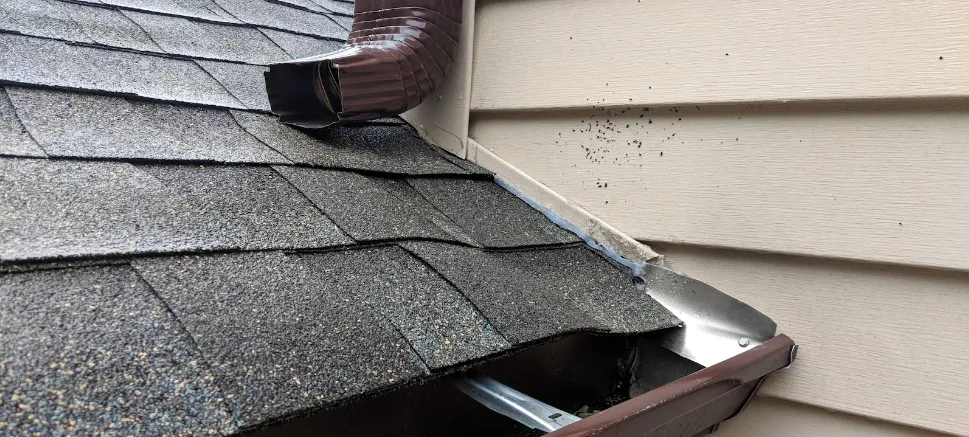
The most common cause of roof leaks is damaged or failed flashing. Flashing is the thin metal barrier, typically made of galvanized steel, aluminum, or copper, installed at every joint, seam, and transition point on the roof: around chimneys, at valleys where two roof planes meet, around skylight frames, and at vent pipe bases. According to Brahma Roofing and Construction, damaged flashing is the number one cause of residential roof leaks. Roof U.S. Construction confirms this, listing damaged flashing as the leading roof leak cause specifically because it occurs at multiple locations on every roof, and each joint is a potential failure point.
In older homes, flashing fails for several reasons. The tar or roofing cement used to seal flashing joints dries out, shrinks, and cracks over time. Galvanized steel flashing eventually rusts through. Movement of the house due to thermal expansion, settling, or wind can separate flashing from the surface it seals against. And on older properties where the roof has been reroofed multiple times without a full tearoff, flashing may have been installed over old flashing rather than replaced, creating a layered seal that eventually fails from the inside out. Homes in the Watkinsville and Hiawassee areas that are 15 years old or more should have their flashing inspected by a licensed contractor as a priority, not just the visible shingle surface.
What Is the 25% Rule in Roofing?
The 25% rule in roofing is a building code standard that requires a full permitted replacement if more than 25% of a roof is repaired or replaced within a 12-month period. This rule is in effect in most Georgia jurisdictions, including Oconee County and Towns County. It exists to prevent property owners from doing large piecemeal repairs that avoid the permitting requirements and code compliance standards of a full replacement project. For homeowners dealing with recurring or extensive leak damage, this rule often becomes relevant when a contractor assesses the scope of repair needed.
If a licensed roofing contractor in the Watkinsville area determines that storm damage or accumulated aging has compromised more than a quarter of your roof’s surface, the legally compliant and practically sound path forward is a full replacement, not a large repair. A reputable contractor will be transparent about this threshold and will help you understand what the assessment means for your specific situation before any work begins.
What Is the Average Cost to Fix a Roof Leak?
The average cost to fix a roof leak is approximately $1,200, with a range of $200 to $2,000 for most standard repairs, according to A1 Home Improvement. Minor repairs like replacing a few damaged shingles or resealing a vent boot run $150 to $500. Moderate repairs involving flashing replacement or gutter-related damage run $500 to $2,000. Severe repairs after long-neglected leaks, including replacing damaged decking sections and underlayment, can reach $1,500 to $8,000 or more, according to roofing industry repair data from BRH Enterprises.
The total cost of a roof leak repair is almost always lower when the problem is caught and addressed early. A $300 vent boot replacement that is deferred for two years becomes a $2,500 project if the water intrusion has rotted the surrounding decking. For homeowners in Hiawassee where homes regularly sit in heavy tree cover and are exposed to substantial rainfall in the North Georgia mountains, this cost escalation from delayed maintenance is one of the most avoidable expenses in home ownership. A professional inspection twice per year is far less expensive than emergency structural repairs caused by a leak that was ignored.
What Is the Most Common Location to Find a Roof Leak?
The most common locations to find a roof leak are at flashing joints around chimneys, vents, skylights, and dormers; in roof valleys where two slopes converge; at the eaves where gutters attach; and around any penetration through the roof surface including plumbing vents, exhaust fans, and satellite dish mounts. According to Angi, broken or damaged flashing around chimneys and skylights is among the most frequently cited sources of confirmed roof leaks. InterNACHI confirms that waterproof underlayment is specifically required in these high-risk zones because they are statistically the most prone to water intrusion.
For older homes in the Watkinsville area, chimneys deserve particular attention. The intersection of brick masonry, mortar, metal flashing, and asphalt shingles creates multiple surfaces that expand and contract at different rates through Georgia’s temperature swings. Over decades, this differential movement opens micro-gaps in the seals that allow water to work its way in. A homeowner who sees water stains on the ceiling near a fireplace after a rain event should assume the chimney flashing is the likely source until a licensed inspection proves otherwise.
How Do I Find the Source of a Leak in My Roof?
You find the source of a leak in your roof by starting inside the attic with a flashlight during or after a rain event, looking for water stains on the rafters or decking, wet insulation, or daylight visible through the decking. Water typically travels from its entry point along the rafters before dripping, so the wet spot on your ceiling may not be directly below the source of the actual penetration. According to Brahma Roofing, the first interior signs of a roof leak are usually peeling paint near the ceiling or water marks near kitchen or bathroom areas where vent pipes exit through the roof above.
From outside, look for the problem spots described by multiple sources: lifted, cracked, or missing shingles; dark staining or biological growth concentrated in one area; separated or rusted flashing at any transition point; and clogged gutters causing water to back up against the fascia. If you cannot access the attic or the roof safely, the most reliable next step is a professional inspection from a licensed local contractor who can physically walk the roof, check the attic, and trace water pathways accurately. Do not delay this inspection in the Watkinsville or Hiawassee areas, where summer storms can turn a small leak into a saturated deck in a single season.
How Long Should a Roof Last Before Leaking?
A properly installed roof should last its full rated lifespan before showing any leaking, which is 15 to 30 years for asphalt shingles, 40 to 70 years for standing seam metal, and 20 to 30 years for most commercial membrane systems, according to the National Roofing Contractors Association. A roof that leaks significantly before reaching those thresholds has either been installed incorrectly, has missing or failed flashing, has inadequate attic ventilation that is degrading the material from below, or has sustained damage from a storm or physical impact that has not been repaired.
In Georgia’s climate, asphalt shingles installed with quality materials, proper underlayment, and adequate attic ventilation realistically last 18 to 27 years in the Watkinsville area. A roof that begins leaking at 10 or 12 years has almost certainly experienced one or more of the avoidable failure modes: poor original installation, deferred maintenance, storm damage that was never professionally addressed, or flashing that was never properly sealed. Getting a professional inspection within the first two to three years after a roof replacement confirms that the system was installed correctly and gives you a documented baseline for future maintenance decisions.
At What Age Is a Roof Considered Old?
A roof is considered old at 15 to 20 years for standard asphalt shingles in Georgia’s climate. The National Roofing Contractors Association states that most new roofs are designed to provide useful service for about 20 years. At that threshold, shingles in the Watkinsville and Hiawassee areas have absorbed roughly two decades of intense UV exposure, summer heat, humidity, and storm impacts. Even a well-maintained 20-year-old roof may have reached the point where the cost-benefit analysis shifts from repair toward planned replacement.
Roofing industry data shows that homes with roofs over 20 years old are three times more likely to file a wind or hail claim, reflecting the reality that older roofing materials cannot absorb impacts and weather events the way newer materials do. A 22-year-old shingle that survives a mild hail event without obvious damage may still have its protective granule layer compromised in ways that accelerate aging over the following years. The honest answer to whether an older roof needs replacement is always determined by a professional physical inspection, not by the calendar year alone.
What Time of Year Is the Cheapest to Replace a Roof?
The cheapest time of year to replace a roof is late fall through early winter, from November through February in Georgia. According to Angi, scheduling a shingle roof installation during a contractor’s off-season can save 5% to 15% on total project cost. In both the Watkinsville and Hiawassee communities, storm season keeps roofing crews operating at full capacity from spring through early fall. Getting on a contractor’s schedule during the winter months means faster availability, more focused crew attention on your project, and often better pricing than peak season rates.
This timing recommendation assumes the roof is not actively leaking. A roof with an active leak cannot and should not wait for a better season. Water that is entering the structure during summer storms in North Georgia will cause expanding damage with every rain event. If an active leak is present, the responsible action is an immediate inspection and prompt repair, regardless of the calendar. The off-season savings are for planned replacements, not emergency situations.
How to Tell If a Roofer Is Lying
You can tell if a roofer is lying if they describe damage you cannot verify independently with photos, if they cannot show you specific images of every problem area they claim to have found, if they recommend full immediate replacement without providing itemized documentation of what they found and why repair is insufficient, or if they show up uninvited after a storm and pressure you to sign a contract on the same visit. According to ATR Roofing, storm chasers who operate this way are known for exaggerating storm damage to maximize insurance claim amounts.
A trustworthy roofing contractor in Watkinsville or Hiawassee will take photos of everything they find on your roof, walk you through each finding in plain language, give you a written proposal with itemized costs, and tell you honestly whether repair is a viable option rather than automatically recommending full replacement. They will not pressure you to sign anything on the first visit. They will welcome a second opinion if you ask for one. Contractors who build their reputation in communities like Oconee County and Towns County rely on long-term local trust, and that accountability shapes how they operate on every job.
Will Homeowners Insurance Pay for a Leaky Roof?
Homeowners insurance will pay for a leaky roof when the damage is caused by a sudden and accidental covered peril, such as wind, hail, a falling tree, lightning, or a storm. According to GEICO’s insurance guidance, homeowners insurance generally covers roof leaks if the cause is sudden and unexpected. Bankrate confirms that water damage and freezing accounted for 27.6% of all homeowners insurance claims filed in 2022 according to the Insurance Information Institute, making it one of the most common claim types.
Insurance will not pay for roof leaks caused by aging, deferred maintenance, improper installation, or gradual deterioration. According to GEICO, if a roof develops a leak due to cracked flashing that has not been replaced in years, or shingles that have worn out from sun exposure, insurance likely will not cover the damage. According to the Insurance Information Institute, gradual seepage or long-term water issues are typically excluded because they could have been prevented with regular upkeep. This means the homeowner’s maintenance history and documentation of regular professional inspections can directly affect whether a claim is approved or denied after a storm event in the Watkinsville or Hiawassee area.
Is It Normal for a Roof to Leak in Heavy Rain?
No, it is not normal for a properly maintained roof to leak in heavy rain. A sound roof system, including shingles, underlayment, flashing, and gutters, is designed to handle heavy rainfall without water intrusion. If your roof leaks during heavy rain and only during heavy rain, the most likely cause is a marginal deficiency that can handle normal rain but is overwhelmed by high-volume rainfall. These include a small unsealed gap in flashing, a slightly lifted shingle edge, a partially clogged gutter causing backup, or a compromised vent boot that allows water in when water levels on the roof surface rise above the base of the penetration.
Heavy rain reveals weaknesses that lighter rain may mask. A roof that only leaks in heavy downpours is still leaking, and the cause is still a real deficiency that needs repair. For homes in Hiawassee where intense mountain storms are common and rainfall can be sudden and heavy, a leak that appears only during storms is not a sign the roof is “mostly fine.” It is a sign there is a specific failure point that is allowing water in under high-volume conditions, and that failure will worsen over time if not addressed. Schedule an inspection after any storm that produces visible interior water intrusion.
What Is the Cheapest Way to Fix a Leaking Roof?
The cheapest way to fix a leaking roof is to identify and address the specific source of the leak with a targeted repair rather than a broad or precautionary replacement. A roofing contractor who locates the exact source, whether a failed vent boot, separated flashing, or a handful of missing shingles, and repairs only that specific area will cost significantly less than one who recommends replacing large sections without a clear diagnosis. According to Apple Roof, minor roof repairs including patching small leaks and replacing a few shingles cost $150 to $500.
The actual cheapest long-term fix is prevention: regular inspections that catch small failures before they expand into structural problems. A $300 flashing repair caught at its earliest stage costs a fraction of what the same leak costs after two years of undetected water infiltration have rotted the decking and insulation beneath it. For homeowners in the Watkinsville area, an annual inspection from a licensed local contractor is the most cost-effective roof maintenance strategy available. Finding and addressing small issues while they are still small is always cheaper than addressing them after they have grown.
What Are the Two Most Common Leak Detection Tests?
The two most common roof leak detection tests are a physical visual inspection and an infrared thermal imaging scan. A physical inspection involves a licensed inspector walking the roof surface and examining every shingle, flashing joint, penetration, ridge cap, valley, and eave edge while also checking the attic interior for water stains, wet insulation, and structural moisture damage. This is the most common method and is appropriate for most residential inspections.
An infrared thermal scan uses a drone or handheld thermal camera to detect temperature differences in the roof surface and decking that indicate areas where moisture has been absorbed into the material. Wet areas retain heat differently than dry areas, making them visible to thermal imaging even when the surface appears dry. According to HomeGuide, infrared inspections cost $400 to $600 and are used most often on commercial roofs or residential roofs where a leak source is suspected but cannot be found through visual inspection alone. For most homeowners in the Watkinsville and Hiawassee areas, a thorough physical inspection by an experienced licensed contractor will locate the source of any active or recent leak without the additional cost of thermal imaging.
How Long Can a Roof Leak Go Unnoticed?
A roof leak can go unnoticed for months or even years when the water enters the structure in a location that does not produce visible staining on interior ceilings or walls quickly. Water entering through flashing near a chimney or a vent pipe may travel along a rafter or roof truss for several feet before it finds a low point and drips. By the time a stain appears on a ceiling, the moisture has often been present in the insulation, decking, and framing for an extended period. According to North Shore Roof Repairs data, homes that receive annual inspections are 50% less likely to experience significant leak-related damage, precisely because inspections catch what interior observation cannot.
In Georgia’s climate, the most insidious slow leaks are the ones that occur at a low rate during normal rain but never accumulate enough volume to drip through to a visible surface. These leaks slowly saturate insulation, promote mold growth in the attic, and weaken structural wood over months and seasons. By the time mold becomes visible in the living space or a rafter begins to show structural distress, the damage is already significant. Inspecting the attic after every major rain event in the Watkinsville area is one of the simplest and most actionable things a homeowner can do to catch these slow leaks before they become structural problems.
How Do Plumbers Find Hidden Leaks?
Plumbers find hidden plumbing leaks using pressure testing, acoustic leak detection tools that amplify the sound of water moving through pipes, and thermal imaging cameras that detect temperature differences caused by water accumulation. These methods are used for plumbing-system leaks inside walls, floors, and under slabs. It is worth noting that not all ceiling water stains come from a roof. A stain on the ceiling below a second-floor bathroom, a washing machine hookup, or a plumbing supply line may be a plumbing issue rather than a roofing one.
When you notice a water stain on your ceiling, the first diagnostic question is whether the stain appears only after rain events or whether it is present regardless of weather. A stain that grows after rain is almost certainly a roof or flashing issue. A stain that appears independently of weather points toward a plumbing source. Calling both a licensed roofer and a licensed plumber for their respective inspections when the source is not immediately clear is a reasonable approach that avoids misdiagnosis and unnecessary repair costs in either direction.
How to Find a Roof Leak With No Attic
You find a roof leak with no attic by using infrared thermal imaging, by carefully tracing water stains on interior ceilings back toward the highest point of the water’s visible path, and by having a licensed roofing contractor perform a systematic exterior inspection of all roof surfaces, flashings, and penetrations directly above the affected area. On a flat-ceiling home without accessible attic space, there is no shortcut through the interior. The investigation has to start from the roof surface and work inward.
Some contractors use a controlled water test, which involves running water through a garden hose at specific roof sections in a systematic sequence while someone inside monitors for water entry, to isolate the source. This is most useful when a specific area is suspected but cannot be confirmed visually from the exterior. For homes in the Hiawassee area with cathedral ceilings or shed-style rooflines without accessible attic space, this controlled water test performed by an experienced contractor is often the most practical method for pinpointing a leak source that is not visually obvious from outside.
What Are Temporary Fixes for Roof Leaks?
Temporary fixes for roof leaks include applying roofing cement or caulk to a known gap or crack in flashing, placing a heavy-duty polyethylene tarp over the affected roof section and securing it with boards or sandbags, and using self-adhering rubberized roof patch tape over a small exposed area of decking or around a failed vent boot. These are all temporary measures designed to limit further water intrusion until a licensed contractor can perform a proper permanent repair. They are not substitutes for professional repair and should not be treated as permanent solutions.
Using roofing cement incorrectly or covering a significant area with a tarp without addressing the underlying cause does not fix the problem. It delays it while the real source of water entry continues to allow moisture into the structure in ways that may not be immediately visible. For homeowners in the Watkinsville area who experience a leak during a storm and cannot get a contractor on-site immediately, a temporary tarp or targeted caulking is a reasonable interim step. But a licensed contractor should inspect and make the permanent repair as soon as possible, ideally within one to two weeks, before additional rain events expand the damage.
Can I Claim Roof Repairs on My Taxes?
You generally cannot claim routine roof repairs on your personal federal income taxes as a deduction for your primary residence. Routine repairs and maintenance on a personal home are considered personal expenses by the IRS and are not deductible. However, there are specific situations where roofing costs may have tax implications. If a casualty loss from a federally declared disaster damages your roof and your insurance does not fully cover it, the uncompensated portion may qualify for a casualty loss deduction under IRS guidelines. Homeowners who work from home and have a dedicated home office may be able to claim a proportional share of home repair expenses including roofing, subject to IRS home office deduction rules.
For investment properties and rental properties, roof repairs and improvements are generally deductible as business expenses or depreciable capital improvements depending on the nature and cost of the work. The IRS distinguishes between a repair, which restores a property to working condition and is typically deductible, and an improvement, which adds value or extends the life of the property and must be capitalized and depreciated. A licensed tax professional familiar with real estate ownership is the right person to advise on how any specific roofing project applies to your tax situation. This is not tax advice, and the rules change periodically.
What Is the Best Thing to Stop a Roof From Leaking?
The best thing to stop a roof from leaking is to identify the exact source of the leak and make a proper professional repair at that specific location. Broad temporary solutions like roofing cement applied across a general area or tarps draped over the roof surface do not find the source and do not stop the underlying problem. According to Lyndsey Roofing, 40% of complaints about roofing companies filed with the Better Business Bureau relate to leaks, reflecting how frequently leaks are misdiagnosed or improperly repaired when the root cause is not properly identified first.
After the repair, the best ongoing protection against future leaks is consistent maintenance: cleaning gutters twice per year, having the roof inspected professionally every spring and fall, trimming trees to at least 10 feet from the roof surface, and replacing any vent boots, flashing seals, or caulking around penetrations as soon as they show visible deterioration. For homes in North Georgia, these habits are not optional maintenance for those who want extra protection. They are the difference between a roof that lasts 25 years and one that begins leaking at 15.
What Are the Most Leak-Prone Areas of a Roof?
The most leak-prone areas of a roof are roof valleys where two slopes intersect, chimney flashing joints, plumbing vent pipe boots, skylight perimeter seals, the eave line where gutters attach, and any location where the roofing material is interrupted by a penetration, transition, or change in plane. These areas are leak-prone for a shared reason: each one involves a junction between two or more different materials or surfaces that expand and contract at different rates and require precise sealing to stay watertight over decades of thermal cycling.
In the Hiawassee mountain area, valleys deserve special attention because the greater rainfall totals concentrate larger volumes of water in the valley channels with every storm. A valley flashing system that is adequate in a lower-rainfall area may not be sufficient for the higher water volumes that mountain storms produce. Rubberized self-adhering underlayment in all valley sections and high-quality metal valley flashing are non-negotiable components of any quality roof installation in the Towns County area. A contractor who installs valley sections with only standard underlayment and no metal flashing on a mountain home in North Georgia is cutting a corner that will matter when the first significant storm tests it.
A thorough inspection of all high-risk zones starts with professional roof repair in Watkinsville from contractors who know which areas of North Georgia homes fail first and how to address them before they become costly problems.
What Is the Cheapest Way to Fix a Leaking Roof?
The cheapest way to fix a leaking roof, covered in detail earlier in this guide, is a targeted professional repair at the confirmed source of the leak. Avoiding broad speculative repairs, getting an itemized proposal before authorizing any work, and addressing the problem promptly before it expands are the three practices that keep roof repair costs at their minimum. Small repairs stay small only when they are addressed while still small. Every week a confirmed leak is not repaired in Georgia’s rainy climate is another rain event driving moisture further into the structure beneath the entry point.
How Common Is a Leaky Roof?
A leaky roof is very common. According to Roofing Contractor Magazine, roof leaks are the most frequently reported roofing issue and affect nearly 6 million homes nationwide. Studies cited by North Shore Roof Repairs find that over 70% of homes older than 20 years experience some form of roofing issue, and leaks are the most prevalent category. For older housing stock, the numbers are even more concentrated: the U.S. Census Bureau reports that nearly 60% of owner-occupied homes nationwide were built before 1980, and homes with older roofing materials are statistically far more likely to experience active leaks.
The Watkinsville area and the broader Oconee County region include a significant number of homes built in the 1980s, 1990s, and early 2000s. Many of those homes are now carrying original or first-generation replacement roofs that are at or approaching end-of-life for their shingle systems. A homeowner in this demographic who has not had a professional roof inspection within the past 12 months is statistically likely to have at least one undiscovered issue that, if addressed now, would cost far less than it will cost after another year of Georgia weather tests it.
Are There Signs Before a Roof Collapses?
Yes, there are signs before a roof collapses. The most serious warning signs are visible sagging or bowing in the roofline when viewed from outside, visible dipping or deflection in the ceiling or attic decking from inside, creaking or cracking sounds coming from the roof structure during wind or snow load, and widespread soft spots in the decking that compress underfoot during a roof inspection. These signs indicate structural failure in the rafters, trusses, or decking itself rather than simple surface-level shingle wear, and they require immediate professional assessment.
A roof collapse is almost never sudden and without warning in a home that receives regular professional inspections. According to the U.S. Department of Housing and Urban Development, deteriorating roofs on aging homes can lead to spiraling maintenance costs and unsafe living conditions, but the progression from normal wear to structural compromise is gradual and detectable. For homes in Hiawassee with steep pitches and heavier snow or ice loads in mountain winters, structural roof inspections that go beyond shingle surface assessment and include decking and rafter evaluation are especially important. Any of the structural warning signs listed above should be treated as an emergency requiring immediate professional evaluation, not as something to monitor over the next few months.
Roof Leak Sources and Typical Repair Cost Ranges
| Leak Source | Why It Fails in Older Homes | Typical Repair Cost | Urgency Level |
|---|---|---|---|
| Chimney flashing | Dried caulk, corroded metal, settlement cracks | $300 to $1,500 | High |
| Pipe boot / vent seal | Rubber deteriorates, UV cracks base | $150 to $500 | High |
| Valley flashing | Corrosion, improper overlap, missing metal | $300 to $1,200 | High |
| Missing or cracked shingles | Wind damage, age brittleness, hail | $150 to $600 | Moderate to high |
| Clogged gutters / eave backup | Debris buildup, improper slope | $100 to $500 | Moderate |
| Skylight seal failure | Gasket aging, frame movement, caulk failure | $300 to $1,500 | High |
| Ridge cap deterioration | Sealant failure, tab adhesion loss | $200 to $800 | Moderate |
| Worn-out underlayment | Age, moisture cycling, previous improper repair | $1,100 to $9,000 (section) | High, part of replacement |
Sources: Apple Roof, A1 Home Improvement, Brahma Roofing, Angi, BRH Enterprises, HomeGuide, Roof U.S. Construction
Frequently Asked Questions
What causes roof leaks in older homes in Watkinsville, GA?
Roof leaks in older homes in Watkinsville are most commonly caused by failed chimney flashing, deteriorated vent pipe boots, clogged gutters that push water back under the eave shingles, aged and brittle shingles past their service life, and cracked or separated valley flashing. Georgia’s combination of intense UV exposure, high summer heat, heavy rainfall, and occasional severe storms accelerates the deterioration of all of these components. Homes in the Watkinsville area built in the 1990s and early 2000s with original roofing systems are now at the age where multiple failure modes are converging simultaneously, making professional inspection especially important for that generation of housing.
How long can a roof leak go unnoticed in a Georgia home?
A roof leak can go unnoticed in a Georgia home for months to years when the water entry point is in a location that takes a long time to saturate insulation and framing to the point of producing a visible stain. According to North Shore Roof Repairs industry data, homes that receive annual inspections are 50% less likely to experience significant leak-related damage, because professional inspectors look for moisture evidence in the attic before any visible staining occurs in living spaces. In Georgia’s rainy climate, where significant rainfall is spread across most of the calendar year, slow infiltration leaks accumulate faster than they would in drier regions. Inspecting your attic after major rain events is a simple practice that catches these leaks while they are still manageable.
Will homeowners insurance cover a roof leak caused by a Georgia hailstorm?
Yes, homeowners insurance will generally cover a roof leak caused by a Georgia hailstorm if hail is a covered peril in your policy. According to Bankrate and the Insurance Information Institute, sudden and accidental storm damage from covered perils including hail, wind, and falling trees is the type of event that homeowners insurance is designed to cover. To protect your claim, document the damage as soon as possible after the storm with photos, have a licensed local contractor inspect the roof and provide a written damage assessment before repairs begin, and report the claim to your insurer promptly. A claim for a hail-damaged roof that was already aging significantly before the storm may result in a reduced payout based on the roof’s actual cash value rather than full replacement cost, depending on your coverage type.
What is the most common roof leak in mountain homes near Hiawassee, GA?
The most common roof leak in mountain homes near Hiawassee is valley flashing failure. The North Georgia mountain climate around Towns County produces higher annual rainfall than lower-elevation Georgia locations, and roof valleys channel all of that water toward a single drainage path during every storm event. Valley flashing systems that are undersized, improperly installed, or have corroded over time cannot handle the water volumes that intense mountain storms generate. Homes in the Hiawassee area also tend to have steeper pitches and more complex rooflines with multiple valleys, which multiplies the total number of vulnerable transition points. A professional inspection that specifically evaluates valley condition, metal flashing integrity, and underlayment coverage in all valley sections is the starting point for preventing this most common mountain-home leak.
How do I know if my roof is leaking or if it is a plumbing issue?
You can determine whether a ceiling stain is from a roof leak or a plumbing issue by tracking when and how the stain appears. A roof leak produces visible water intrusion or ceiling staining specifically after rain events. A plumbing leak produces staining or active dripping regardless of weather, often near plumbing fixtures, supply lines, or drain pipes on the floor above. If the stain appears after every significant rain but is dry between storms, the source is almost certainly the roof or a roof-adjacent penetration like a chimney, skylight, or vent boot. If the stain appears intermittently with no correlation to rain, call a licensed plumber first. If you are not sure, having both a licensed roofer and a licensed plumber do independent assessments is more reliable than guessing, and usually less expensive than a misdiagnosis that leads to work on the wrong system.
Are there signs a roof is about to collapse in an older Georgia home?
Yes, the signs a roof is about to collapse in an older Georgia home are a visibly sagging or dipping roofline when viewed from outside, a ceiling that bows or sags noticeably in the living space below, soft or spongy decking that gives underfoot during a roof inspection, widespread mold visible in the attic combined with structural wood that shows signs of rot, and audible cracking or groaning from the roof structure during wind or weight loads. According to the U.S. Department of Housing and Urban Development, deteriorating roofs on aging homes can escalate from manageable repair needs to unsafe structural conditions when maintenance is consistently deferred. In Georgia’s climate, wood rot from chronic unchecked moisture intrusion is the most common path to structural compromise in older roof systems. Any of these signs should prompt an immediate call to a licensed roofing contractor, not a wait-and-see approach.
Final Thoughts
Roof leaks in older homes are common, often preventable, and almost always less expensive to address when caught early. The most common causes, failed flashing, aged shingles, clogged gutters, deteriorated vent seals, and cracked chimney mortar, are all detectable with regular professional inspections before they produce visible water damage inside the home. Roof leaks affect nearly 6 million homes nationwide according to Roofing Contractor Magazine, and homes over 20 years old are at the highest risk. For homeowners in Watkinsville, Hiawassee, and the surrounding North Georgia communities, the combination of heavy annual rainfall, intense summer heat, and storm-active seasons makes proactive roof maintenance one of the most financially protective habits you can develop.
If your home is showing signs of a roof leak, or if you have not had a professional inspection in the past year and your roof is 10 or more years old, the team at Ridgeline Roofing and Exteriors serves homeowners throughout Watkinsville, Hiawassee, and the surrounding communities with honest inspections, accurate leak diagnosis, and professional repairs backed by real warranties. Do not wait for a ceiling stain to tell you there is a problem. Contact Ridgeline Roofing today to schedule your free roof inspection and find out exactly what your roof needs before the next Georgia storm tests it.
Ready to address a suspected leak or confirm your roof’s condition? Start with an honest evaluation from the roof repair specialists in Watkinsville who know North Georgia roofs inside and out.