Skip to content
No, a metal roof does not make your house hotter. This is one of the most persistent myths in roofing, and the opposite is actually true for Georgia homeowners. Metal roofs reflect solar heat away from the building rather than absorbing it the way asphalt shingles do, and they release any heat they do absorb quickly after the sun goes down. According to Long Home Products, metal roofs have a low thermal mass, which means they reflect light and heat rather than storing it, and they actually help keep homes cool during summer months. For homeowners in Watkinsville and Hiawassee who are evaluating metal roofing, this guide answers every question that comes up in the research process so you can make a fully informed decision about whether metal is right for your home.
What Is the Downside of a Metal Roof?
The downside of a metal roof is its high upfront installation cost compared to asphalt shingles. According to Roof Maxx, the biggest drawback of a metal roof is the upfront price, which often runs two to three times the cost of a comparable asphalt shingle installation. For a standard 2,000-square-foot home, asphalt shingles typically cost $10,000 to $16,000 installed, while metal roofing runs $20,000 to $36,000 or more depending on the panel style and material. Other real downsides include potential noise during heavy rain if the roof lacks proper insulation and underlayment, the potential for fastener loosening from thermal expansion and contraction on exposed-fastener systems, and the need for a contractor with specific experience in metal roofing to avoid installation errors that void warranties.
The cost gap is real but requires context. According to Western States Metal Roofing, after about 15 years, metal roofing is actually 50% cheaper than shingles on a total cost of ownership basis because you avoid a second or third roof replacement. A standing seam metal roof installed today for $27,500 is likely to be the last roof that house ever needs, while two or three shingle replacements over the same 50-year period will cost progressively more with each cycle as material and labor costs rise. For homeowners in the Watkinsville area who plan to stay in their home for 15 or more years, the upfront cost disadvantage of metal becomes a long-term financial advantage. For homeowners who plan to sell in five to ten years, shingles are often the more practical choice.
Why Do Insurance Companies Not Like Metal Roofs?
Insurance companies generally do like metal roofs, and this is actually one of metal’s strongest selling points. The framing of this question as a concern reflects a misunderstanding. According to the Metal Roofing Alliance, a metal roof can lower homeowner’s insurance premiums by up to 35% because metal is non-combustible, highly resistant to wind and hail, and significantly reduces the risk of storm-related claims that drive insurance costs. Many carriers offer premium discounts specifically for homes with metal roofing because the claim frequency and severity for metal-roofed homes is lower than for comparable asphalt-shingled homes.
The nuance is that some insurers have specific policies on metal roofing that vary by region and carrier, and a very small number of carriers treat metal roofing’s higher replacement value as an increased exposure rather than a risk reduction. According to Sheffield Metals, while metal roofing insurance benefits exist, there is potential for higher premiums in some situations because the roof itself is worth more and replacement costs are higher. The practical advice for homeowners in Oconee County and Towns County is to call your insurance carrier before making a final decision and ask specifically whether your provider offers a premium discount for metal roofing. Most major carriers in Georgia do offer discounts, and getting the actual number from your specific carrier is more valuable than any general estimate.
Does Homeowners Insurance Go Down With a Metal Roof?
Yes, homeowners insurance often goes down with a metal roof, though the amount varies by carrier, location, and policy type. According to the Metal Roofing Alliance, a metal roof can lower homeowner’s insurance premiums by up to 35%. According to Flow Roofing, some insurers offer discounts of 5% to 15% on premiums for homes with metal roofs. The range is wide because insurers weigh multiple factors, including the fire resistance rating of the metal product, its wind uplift rating, hail impact resistance class, and the claims history of the specific region.
For homeowners in North Georgia, where spring and summer thunderstorm seasons regularly produce hail and high winds, the storm-resistance profile of a metal roof is directly relevant to the risk an insurer is taking on. According to Great State Roof, modern metal roofing often receives Class 4 impact resistance ratings, the highest available, meaning the panels can withstand impact from hailstones up to two inches in diameter without sustaining damage. A Class 4 impact rating qualifies for premium discounts with many major carriers. For homeowners in the Watkinsville and Hiawassee areas where afternoon hail events are a seasonal reality, the combined value of lower insurance premiums and fewer storm damage claims creates a financial case for metal roofing that goes beyond the energy savings alone.
Will a Metal Roof Keep My House Cooler?
Yes, a metal roof will keep your house cooler compared to asphalt shingles, and the difference is significant. According to the Metal Roofing Council of America as cited by HowStuffWorks, metal roofs can be about 100 degrees cooler on the surface than traditional asphalt roofs under the same sun exposure conditions. According to the Florida Solar Energy Center as cited by HowStuffWorks, asphalt shingles absorb so much heat that the heat streams into the structure and increases indoor temperatures by 20 to 25 degrees. A metal roof reverses this equation: it reflects solar energy rather than absorbing it, which keeps the roof surface and the attic space below it dramatically cooler.
According to DECRA, metal roofs can reflect up to 70% of the sun’s energy back into the atmosphere. In contrast, standard dark-colored asphalt shingles absorb the majority of solar energy they receive and transfer it as heat into the roof deck, attic, and living spaces below. This is why the cooling benefit of metal roofing is most pronounced in hot, sunny climates like Georgia, where summer temperatures routinely exceed 90 degrees and air conditioning runs for six months or more. For homeowners in Watkinsville and Hiawassee, the combination of metal’s reflective surface and the air gap created by a batten-mounted installation can meaningfully reduce attic temperatures and cut air conditioning costs during the long Georgia summer.
Is It Better to Have a Metal Roof or Shingles?
Whether a metal roof or shingles is better depends primarily on how long you plan to stay in the home and whether the upfront investment fits your budget. Metal roofing is better for homeowners who plan to stay 15 or more years, want the lowest possible long-term cost, want the best storm and fire resistance, and want to reduce energy costs and insurance premiums. Shingles are better for homeowners who need the lowest upfront cost, plan to sell the home within ten years, or are in a budget situation where the higher installation cost of metal creates financial strain. According to State Farm, metal roofs offer exceptional durability, energy efficiency, and aesthetic diversity, but their higher initial costs are real factors to weigh.
For most homeowners in Georgia who are planning to stay in their home long-term, metal roofing is the better investment. According to Western States Metal Roofing, if you plan on living in your house for more than 15 years, a metal roof will be a less expensive long-term investment than asphalt shingles because you avoid the cost of repeated replacements that will themselves cost more each time as material and labor costs rise. The Georgia climate specifically favors metal: the long, hot, sunny summers make the energy savings real and ongoing, the storm season makes the superior wind and hail resistance valuable, and the humid conditions make the resistance to mold, algae, and moisture damage a meaningful advantage over shingles that can deteriorate in those conditions.
What Is the Average Lifespan of a Metal Roof?
The average lifespan of a metal roof is 40 to 70 years depending on the specific metal material, panel style, coating, and maintenance. According to State Farm, metal roofs can last between 40 to 80 years depending on the material. According to PITCH Roofing, metal roofs last 50 to 70 years compared to approximately 25 years for asphalt shingles. Standing seam steel or aluminum roofing systems installed with proper underlayment, flashing, and fasteners by a qualified contractor will typically last 50 years or more with minimal maintenance. Exposed-fastener metal panel systems, which are more commonly used on agricultural and commercial buildings, tend to run 30 to 40 years as the exposed fasteners are the first component to require maintenance or replacement.
The lifespan difference between metal and shingles is the core financial argument for metal. According to Great State Roof, metal roofs last 40 to 70 years on average, while asphalt shingles typically need replacement every 15 to 25 years, meaning you might replace a shingle roof two to three times during the lifespan of a single metal roof. For homeowners in Watkinsville and Hiawassee who are replacing a roof today, a quality metal installation is very likely to be the last roof that house ever needs for the current owner. A quality shingle replacement, by contrast, will require another replacement in 20 to 25 years, at prices that will be higher than today’s due to material and labor inflation. The long-term math overwhelmingly favors metal for homeowners planning to stay in their homes.
Why Not Put Metal Roof Over Shingles?
You can put a metal roof over shingles in many situations, but there are important conditions that determine whether it is appropriate for your specific home. According to Great State Roof, metal roofing can often be installed over one layer of existing shingles, which reduces disposal costs and installation time. However, local building codes determine whether this is permitted, and most jurisdictions, including Georgia’s, do not allow installation over two existing layers of shingles. Before authorizing a metal-over-shingles installation, a licensed contractor must inspect the existing roof deck for water damage, soft spots, and structural integrity, because installing metal over a compromised deck locks moisture problems under a material that can last 50 years.
The experienced contractors in the GON Forum who have installed many metal roofs strongly recommend using 2×4 furring strips when installing metal over existing shingles, rather than attaching the metal directly to the old shingle surface. The furring strips create a ventilated air gap between the metal panels and the old roofing material, which reduces condensation risk and allows the attic to breathe properly. Without this air gap, the temperature differential between the metal surface and the cooler material beneath it can create condensation that causes wood deck deterioration over time. For homeowners in Oconee County and Towns County considering a metal-over-shingles installation, having the decision reviewed and the deck inspected by a licensed local metal roofing contractor before work begins is the right first step.
How to Tell If a Roofer Is Lying
You can tell if a metal roofing contractor is lying if they cannot explain the specific panel system they are recommending and why it is the right choice for your home’s pitch, structure, and climate, if they push you toward a metal-over-shingles installation without first inspecting the existing deck condition, if they quote a price that is dramatically lower than two or three competing proposals without explaining what is different about their approach, or if they cannot provide verifiable references from metal roofing projects completed in the Watkinsville or Hiawassee area. A contractor who promises a metal roof will pay for itself in energy savings within three to five years is overstating the savings timeline and should be questioned on the specific numbers behind that claim.
For metal roofing specifically, two red flags stand out above all others. First, an unqualified contractor proposing to install exposed-fastener metal panels on a roof that requires standing seam for proper waterproofing is telling you what is easiest for them, not what is right for your home. Second, a contractor who proposes skipping the recommended underlayment or batten system to save cost is proposing a shortcut that will cause condensation and warranty issues within a few years. A qualified metal roofing contractor in the Watkinsville area will specify the underlayment type, fastener system, panel gauge, and coating warranty in writing as part of their proposal, and they will be able to answer technical questions about those specifications in clear language.
Does a Metal Roof Devalue a House?
No, a metal roof does not devalue a house. In fact, metal roofing adds measurable value and resale appeal compared to an aging asphalt shingle roof. According to Rockland Builders, a metal roof installation, especially standing seam metal, adds noticeable curb appeal and increases resale value. Metal roofing signals to buyers and appraisers that the most significant deferred maintenance item in residential real estate, the roof, will not need to be addressed during their ownership tenure. That is a concrete financial advantage that buyers in competitive real estate markets recognize and factor into their offers.
The concern that metal devalues a home typically comes from misunderstandings about metal roofing’s appearance. Modern metal roofing is available in dozens of colors and profiles that complement virtually any architectural style, from traditional standing seam to metal shingles that convincingly replicate the look of slate or tile. For homes in the Watkinsville historic area or the mountain residential communities around Hiawassee, metal roofing profiles exist that are fully compatible with traditional Southern and mountain architectural styles. A well-chosen metal roof in a color and profile appropriate to the home’s architecture is an asset, not a liability, in any resale scenario in Georgia’s residential market.
What Not to Say to a Roof Insurance Adjuster
When filing a homeowners insurance claim for metal roof damage, do not tell the adjuster the roof was already having issues before the storm event that triggered the claim, because pre-existing condition language gives the carrier grounds to deny or reduce the payout. Do not agree on the spot to a repair scope that does not include a full panel replacement for damaged sections, because metal roofing panels that have been deformed or punctured by hail often require panel replacement, not just patching, to maintain the weatherproofing integrity of the system. Do not tell the adjuster that you have not maintained the roof, because maintenance exclusions in standard homeowners policies can be used to deny claims on roofs that show evidence of neglect.
The documentation that most strongly supports a metal roof insurance claim is a written assessment from a licensed roofing contractor that identifies specific storm-caused damage, photographs with date and time metadata taken immediately after the storm event, and National Weather Service records confirming hail size and wind speed at your specific location. For homeowners in the Watkinsville and Hiawassee areas where spring hail events are common, establishing a pre-storm baseline with a documented roof inspection report before storm season each year puts you in the strongest possible position to support a legitimate claim when severe weather strikes.
Is a Metal Roof Cheaper to Insure Than Shingles?
Yes, a metal roof is cheaper to insure than shingles in most cases. According to the Metal Roofing Alliance, a metal roof can lower homeowner’s insurance premiums by up to 35%. The lower insurance cost comes from metal’s superior fire resistance, wind resistance, and hail impact resistance compared to asphalt shingles. Insurers price these risk characteristics into their premiums, and a metal-roofed home in Georgia represents a materially lower storm damage claim risk than a comparable shingle-roofed home in the same storm exposure zone.
According to O’Connor Roofing, metal roofs effectively reflect sunlight, help keep homes cooler in summer, and reduce air conditioning costs by 10 to 15%. Combined with insurance savings that can reach hundreds of dollars per year for Georgia homeowners, the ongoing cost advantages of metal over its 50-plus year lifespan are substantial relative to the higher upfront installation cost. For homeowners in Watkinsville evaluating the total cost of ownership of a metal roof versus repeated shingle replacements, factoring in both the energy savings and the insurance savings creates a more complete picture of the financial return on the metal investment. A licensed local roofing contractor can provide a side-by-side cost comparison for your specific home.
What Is the Best Roof for Home Insurance?
The best roof for home insurance is a Class 4 impact-rated metal roof, because it qualifies for the highest premium discounts available from most major carriers and provides the best protection profile against the fire, wind, and hail events that drive insurance claims. According to Great State Roof, modern metal roofing often receives Class 4 impact resistance ratings and can withstand wind speeds up to 140 mph. According to State Farm, metal roofs are very resilient against weather elements including strong winds, heavy snow, and wildfires, making them a robust choice for almost any climate. These performance characteristics are exactly what insurers are evaluating when they set premiums.
For Georgia homeowners specifically, the combination of Class 4 impact rating and non-combustible fire rating makes metal roofing the material that provides the lowest risk profile from an insurer’s perspective. In wildfire risk areas of North Georgia including the communities around Hiawassee and the Chattahoochee National Forest, the non-combustible rating of metal roofing is directly relevant to fire insurance pricing. In the hail-prone foothills and Piedmont areas around Watkinsville, the Class 4 impact rating is the most financially significant insurance-related advantage of metal. Calling your specific carrier before installation to confirm the discount amount and the product qualifications required to receive it is the practical first step.
What Color Roof Keeps a House the Coolest?
The roof color that keeps a house the coolest is white or light-colored metal or TPO, with lighter colors consistently outperforming darker ones in reducing heat absorption. According to the U.S. Department of Energy, white roofing products stay coolest in the sun, reflecting about 60 to 90% of sunlight. For metal roofing specifically, lighter colors such as white, beige, light gray, and light tan reflect more sunlight and heat than darker colors like charcoal, dark bronze, or black. According to All Phase Roofing, lighter-colored metal roofs tend to reflect more sunlight and heat, reducing the amount of heat absorbed compared to darker-colored roofs.
However, modern cool-roof-rated metal coatings allow even darker metal roof colors to perform well in hot climates. According to Drexel Metals, cool-roof-rated metal systems can reflect and re-emit solar radiation by up to 90% even in darker color ranges, using special pigments that preferentially reflect the near-infrared portion of sunlight that carries the most heat energy. According to the U.S. Department of Energy, about half of sunlight arrives as invisible near-infrared radiation, and cool-colored products that reflect this invisible light can achieve solar reflectance of 30 to 60% even in medium to dark hues. For homeowners in Watkinsville who want a darker metal roof color for aesthetic reasons without the full heat penalty of a conventional dark roof, specifying a cool-roof-rated panel with infrared-reflective pigments is the right approach.
Can a Roofer Do My Roof When It’s 45 Degrees Out?
Yes, a roofer can install a metal roof when it is 45 degrees outside, and metal roofing is actually one of the better roofing materials to install in cooler weather. Unlike asphalt shingles, which require a minimum temperature of approximately 40 to 45 degrees Fahrenheit for the asphalt adhesive strips to seal properly, metal roofing panels do not have a temperature-dependent sealing requirement. Metal panels are mechanically fastened or seam-locked, not adhesively bonded, which means cooler temperatures do not affect the installation quality the way they affect asphalt shingle installations.
There are practical considerations at 45 degrees that a professional metal roofing crew will account for. Metal panels expand and contract with temperature changes, and the fastener and seam specifications for the installation must account for the temperature at installation time relative to the expected temperature range the panels will experience over their lifetime. This is a standard part of a professional metal roof installation specification, not a concern unique to cold-weather installs. For homeowners in Watkinsville and Hiawassee who are scheduling a metal roof replacement in fall or early winter when temperatures can drop to 45 degrees and below, a licensed and experienced metal roofing contractor can install the roof correctly at those temperatures. Fall and winter are also the most cost-effective seasons to schedule roofing work in Georgia due to lower demand and better contractor availability.
What Is the Biggest Problem With Metal Roofs?
The biggest problem with metal roofs is the upfront installation cost, which is significantly higher than asphalt shingles and creates a real barrier for many homeowners regardless of the long-term financial advantages. According to Roof Maxx, metal roofs are more expensive than traditional asphalt shingles by a long shot and often cost two to three times as much to install. The second most significant problem in practice is installation quality dependency: because metal roofing installation requires specialized skills, tools, and experience, an improperly installed metal roof creates problems including oil canning, fastener back-out, seam failure, and condensation issues that are expensive to correct and can void manufacturer warranties.
According to State Farm, metal roofing materials can expand and contract with temperature changes, which can lead to loosening of fasteners over time on exposed-fastener systems, making proper installation and maintenance crucial. A metal roof installed by an experienced, certified contractor with the right panel system for your roof’s pitch, complexity, and climate will perform excellently for 50 or more years. The same metal panels installed by a contractor who typically does asphalt shingle work and is attempting metal roofing for the first time can fail within a few years. For Georgia homeowners, verifying that any contractor proposing a metal roof installation has completed multiple documented metal roofing projects in the local area is the single most important quality control step before signing a contract.
Why Don’t All Houses Use Metal Roofs?
Not all houses use metal roofs primarily because of the higher upfront installation cost, which many homeowners simply cannot afford at the time they need a roof replacement. According to PITCH Roofing, the simple truth is that many people cannot afford the high upfront costs of a metal roof even when they understand the long-term value. The cost of a metal roof replacement for a typical Georgia home runs $20,000 to $36,000 or more, while a comparable shingle replacement runs $10,000 to $16,000. When a roof fails and needs immediate replacement, many homeowners must choose the option their budget allows at that moment rather than the option that makes the most financial sense over 50 years.
Additional reasons include familiarity bias, where homeowners and some contractors default to shingles because they have always been the standard choice for residential roofing, and aesthetic concerns in neighborhoods where metal roofing styles are not yet common. The market share of metal roofing in residential construction has been growing steadily as energy costs, insurance premiums, and shingle replacement cycles create stronger financial cases for metal with each passing year. In storm-active states like Georgia, Florida, and Texas, the combination of hail resistance, wind resistance, and insurance savings is driving faster adoption of residential metal roofing than in less storm-exposed markets. For homeowners in Watkinsville and Hiawassee who are replacing a roof and have the financial flexibility to choose between systems, the long-term case for metal is strong.
Is It Hard to Sell a House That Needs a New Roof?
Yes, it is hard to sell a house that needs a new roof because buyers and their lenders treat a failing or end-of-life roof as a significant deferred maintenance liability that they discount heavily from any offer price. Most home lenders, including FHA and VA, require a roof inspection as part of the loan approval process, and a roof in poor condition can delay or kill a sale. Even in cash transactions, a roof that clearly needs replacement gives buyers a strong negotiating point to reduce the purchase price by the estimated cost of replacement, often requesting more than the actual cost would be as a negotiating tactic.
For sellers, the math on roof replacement before listing is often favorable. A new asphalt shingle roof costing $12,000 may increase the sale price by $15,000 or more by removing the primary objection buyers and their inspectors will raise. A new metal roof costing $25,000 removes that objection permanently and adds the long-term value narrative that resonates with buyers who understand the material. According to Rockland Builders, a metal roof installation adds noticeable curb appeal and increases resale value, and some buyers and their agents recognize a metal roof as a reason to offer closer to asking price rather than below it. For homeowners in the Watkinsville area preparing a property for sale, consulting with a licensed roofing contractor about the condition of the current roof and the return on investment for replacement before listing is a practical pre-sale step.
What Devalues a House the Most?
Among the single-item deficiencies that devalue a house the most, a failing or end-of-life roof consistently ranks at or near the top because it signals both immediate financial liability and potential hidden damage to the structure, insulation, and interior below it. A roof that is clearly at end of life tells every buyer, inspector, and lender that water has been finding its way in, and the question is not whether there is concealed damage but how much. A damaged or aging roof can devalue a home by the full replacement cost of the roof plus a discount for the uncertainty about what the roof failure may have caused inside the walls and attic, which can total $20,000 to $40,000 or more in negotiating leverage for buyers.
Other conditions that severely devalue homes include foundation issues, outdated electrical systems, evidence of moisture or mold in the attic or walls, and deferred maintenance on major mechanical systems. Of all of these, a roof is often the most visible and easiest for buyers to evaluate from the street, making it one of the highest-impact items to address before listing. For homeowners in Oconee County and Towns County, maintaining the roof in good condition through annual inspections and prompt repair of any identified issues is the lowest-cost way to protect the home’s value over time. A roof that is maintained and documented is a neutral factor in any sale. A roof that is visibly failing is the first and often largest source of value discount any buyer will apply.
When Should You Not Use a Metal Roof?
You should not use a metal roof when the existing roof structure cannot support the installation, when the building’s roof complexity, with very tight valleys, multiple intersecting pitches, or many penetrations, makes metal installation prohibitively expensive compared to shingles, or when you are planning to sell the home within five years and the local real estate market does not support recovering the premium cost of metal in the sale price. According to Sheffield Metals, the higher cost of metal roofing is appropriate when you plan to live in the home long-term, but for shorter ownership periods, shingles typically provide better financial return on the roofing investment.
Metal roofing is also not the right choice when the homeowner selects a contractor who does not have documented experience with the specific metal panel system being installed. The quality of a metal roof installation depends heavily on the installer’s familiarity with the material’s thermal movement characteristics, fastener specifications, and flashing details at complex roof features. A metal roof installed by an experienced contractor on a straightforward roof will outperform shingles in every measurable way. A metal roof installed by an inexperienced contractor on a complex roof with many penetrations can develop problems within a few years that are expensive to diagnose and repair. The material is only as good as the installation.
Is 1×4 or 2×4 Better for Metal Roofing?
2×4 lumber is better for most metal roofing installations as the primary structural purlin or batten because it provides significantly greater load-bearing capacity, longer spans between support points, better fastener holding depth, and improved resistance to wind uplift compared to 1×4. According to New England Metal Roof, 2x4s offer greater strength, longer spans, and better fastener holding, making them the safer default for most residential metal roofs. The actual dimension of a 2×4 is 1.5 inches thick by 3.5 inches wide, compared to a true 1×4 which is 3/4 inch thick by 3.5 inches wide, meaning the 2×4 is effectively twice as thick and provides much more structural depth for screw penetration and load distribution.
According to Rescreening Masters, 1×4 lumber excels as a non-structural furring or spacer member that helps with ventilation and thermal expansion gaps, but using it as a structural purlin is generally discouraged in areas with moderate to high loads or rapid temperature changes. For homes in the Watkinsville and Hiawassee areas where summer heat and storm season subject the roof to both UV cycling and wind uplift forces, 2×4 purlins or furring strips are the right specification. The modest cost difference between 1×4 and 2×4 lumber per linear foot is insignificant relative to the total cost of a metal roofing project and to the consequences of using undersized framing that allows panel movement, fastener back-out, or structural sagging over time.
Do Shingles Last Longer Than Metal Roofs?
No, shingles do not last longer than metal roofs. Metal roofs significantly outlast asphalt shingles in direct comparison. According to Great State Roof, metal roofs last 40 to 70 years on average, while asphalt shingles typically need replacement every 15 to 25 years. According to State Farm, metal roofs can last between 40 to 80 years depending on the material, significantly longer than the 20-year lifespan of typical asphalt shingle roofs. The lifespan advantage of metal over shingles is one of the most well-documented and consistent findings in roofing material research.
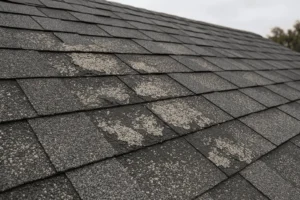
The reason shingles have a shorter lifespan is their material composition and how they interact with Georgia’s climate. Asphalt shingles are coated with ceramic granules that protect the underlying asphalt from UV degradation. Over time, those granules shed through normal weathering, hail impacts, and thermal cycling, exposing the asphalt beneath to direct UV rays that cause cracking, curling, and brittleness. In Georgia’s hot, humid climate with significant UV exposure, standard 3-tab shingles often begin showing end-of-life symptoms at 15 to 18 years, and even architectural shingles rated for 30 years commonly need replacement at 20 to 22 years. A metal roof installed today on a Watkinsville home will in all likelihood be the last roof that home needs for the current generation of owners.
Metal Roof vs Shingles: Side-by-Side Comparison for Georgia Homeowners
| Factor | Metal Roof | Asphalt Shingles |
|---|---|---|
| Average lifespan | 40 to 70+ years | 15 to 25 years |
| Upfront cost (2,000 sq ft) | $20,000 to $36,000+ | $10,000 to $16,000 |
| Energy savings | Up to 25% reduction in cooling costs | Minimal; absorbs heat |
| Surface temperature vs. asphalt | Up to 100°F cooler (Metal Roofing Council of America) | Baseline comparison |
| Solar reflectance | Reflects up to 70% of solar energy (DECRA) | Absorbs majority of solar energy |
| Insurance discount potential | Up to 35% (Metal Roofing Alliance) | Generally none |
| Wind resistance | Up to 140+ mph (PITCH Roofing) | Typically 60 to 110 mph |
| Hail resistance | Class 4 impact rating available | Class 1 to 4 depending on product |
| Fire resistance | Non-combustible; Class A | Class A with fiberglass mat |
| Maintenance frequency | Low: no granule loss, no curling | Higher: granule loss, algae, curling |
| Best for homeowners who… | Plan to stay 15+ years; want long-term value | Need lowest upfront cost; shorter ownership |
Sources: Metal Roofing Alliance, Metal Roofing Council of America, DECRA, State Farm, PITCH Roofing, Great State Roof, Western States Metal Roofing, Roof Maxx, U.S. Department of Energy, Florida Solar Energy Center, O’Connor Roofing
Frequently Asked Questions
Does a metal roof make a house hotter in Watkinsville, GA?
No. A metal roof makes a house cooler in Watkinsville, not hotter. Georgia’s long, hot summers and high UV intensity are precisely the conditions where metal roofing’s reflective advantage over asphalt shingles is most significant. According to the Florida Solar Energy Center as cited by HowStuffWorks, asphalt shingles can increase indoor temperatures by 20 to 25 degrees through heat absorption, while metal roofs reflect up to 70% of solar energy away from the building. For Watkinsville homeowners running air conditioning from April through October, the cooling benefit of a properly installed metal roof with a light or cool-roof-rated color is a real, year-over-year financial return. The combination of energy savings and potential insurance premium reductions makes metal roofing a financially stronger long-term choice for most Georgia homeowners who plan to stay in their homes.
How much does a metal roof cost in Oconee County, GA?
A residential metal roof replacement in Oconee County costs approximately $20,000 to $36,000 for a standard 2,000-square-foot home depending on the panel style, metal type, roof complexity, and contractor chosen. Standing seam metal, which is the highest-performance and longest-lasting system, runs at the higher end of that range. Exposed-fastener metal panel systems, which are appropriate for simpler roof designs and some agricultural or accessory structures, run lower. Metal shingle and stone-coated steel systems that replicate the look of traditional roofing materials fall in the middle of the range. Getting itemized written proposals from at least two licensed local metal roofing contractors, with material specifications, gauge, coating warranty, and installation details clearly stated, is the only reliable way to establish accurate pricing for your specific home in the Watkinsville area.
Does a metal roof help with humidity in Hiawassee, GA?
Yes, a metal roof offers advantages in Hiawassee’s mountain climate where humidity and rainfall are higher than in lower-elevation Georgia. Metal roofing does not absorb moisture, grow algae or moss the way asphalt shingles do in humid environments, and does not degrade when repeatedly wet and dried the way asphalt granules do over time. For mountain homes around Hiawassee that experience regular rain, fog, and humidity throughout the year, metal’s resistance to moisture-related degradation is a practical lifespan advantage. The key installation consideration for humid climates is ensuring the underlayment system and attic ventilation are properly designed to prevent condensation from forming between the metal panels and the roof deck, which requires a licensed metal roofing contractor familiar with the specific moisture dynamics of the North Georgia mountain environment.
Can I install a metal roof over my existing shingles in Watkinsville?
In many cases, yes, but it depends on how many layers of existing shingles are present, the condition of the existing deck, and local building code requirements in Oconee County. Most Georgia jurisdictions allow installation over one existing layer of shingles but not over two layers. The existing deck must be inspected for soft spots, moisture damage, and structural integrity before metal is installed over it, because locking damaged materials under a 50-year metal roof creates problems that will be expensive to address later. When installing metal over shingles, using 2×4 furring strips to create a ventilated air gap between the panels and the old roofing material is strongly recommended by experienced metal roofing contractors to prevent condensation issues. A licensed local contractor can inspect your current roof, assess the deck condition, and advise you on whether an over-shingles installation is appropriate or whether a full tear-off and replacement is the better path for your specific home.
What is the best metal roofing color for a Georgia home?
For maximum cooling performance in Georgia’s climate, lighter colors such as light gray, beige, tan, white, or light blue are the best choices because they reflect the most solar energy and keep attic temperatures lower. However, if a darker color is preferred for aesthetic reasons, specifying a cool-roof-rated metal panel with infrared-reflective pigments allows dark colors to achieve meaningful solar reflectance that conventional dark coatings cannot match. According to Drexel Metals, cool-roof-rated systems can reflect and re-emit solar radiation by up to 90% even in darker colors. For homeowners in the Watkinsville area choosing a metal roof color, discussing the specific solar reflectance and thermal emittance values of the color options with your roofing contractor before making a final selection is the most informed approach to balancing aesthetics and energy performance.
How do I find a qualified metal roofing contractor in Watkinsville, GA?
A qualified metal roofing contractor in Watkinsville should have a valid Georgia contractor’s license, verifiable commercial general liability and workers’ compensation insurance, documented completed metal roofing projects in Oconee County or surrounding counties with references you can contact, specific experience with the panel system being proposed, and a written proposal that itemizes the panel gauge, coating type, underlayment specification, warranty terms, and fastener system. Ask specifically how many metal roofs the contractor has installed and how long they have been doing metal work, because metal roofing requires specialized skills that take time to develop. A contractor who is new to metal roofing but experienced in asphalt shingles is not the right choice for a metal installation, regardless of how competitive their price is. A licensed metal roofing specialist who has installed dozens of metal roofs in the local area is the contractor you want for a project that is designed to last 50 years or more.
Final Thoughts
Metal roofing does not make your house hotter. It makes your house cooler, your insurance cheaper, your storm damage risk lower, and your long-term roofing costs significantly less than repeated shingle replacements over the same period. The upfront cost is real and higher than shingles, and it is the right trade-off for homeowners who plan to stay in their homes and want the most durable, energy-efficient, and low-maintenance roofing system available in today’s market. For Georgia homeowners in Watkinsville, Hiawassee, and throughout Oconee County and Towns County, the combination of the state’s hot summers, active storm season, and rising material costs makes metal roofing an increasingly compelling choice relative to the traditional shingle replacement cycle.
If you are ready to find out whether a metal roof is the right investment for your home in Watkinsville, Hiawassee, or the surrounding North Georgia communities, the team at Ridgeline Roofing and Exteriors provides free in-home consultations and detailed written proposals for metal roofing installations. We will give you honest information about what metal roofing will cost, what it will save, and whether it is the right fit for your specific home and plans.
Ready to get a clear picture of your options? Explore our metal roofing services in Watkinsville or learn more about a full roof replacement and contact us today to schedule your free assessment.