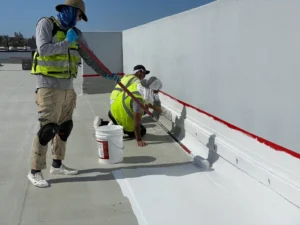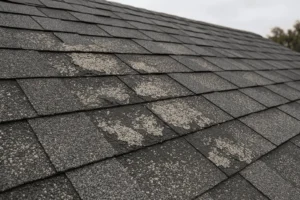
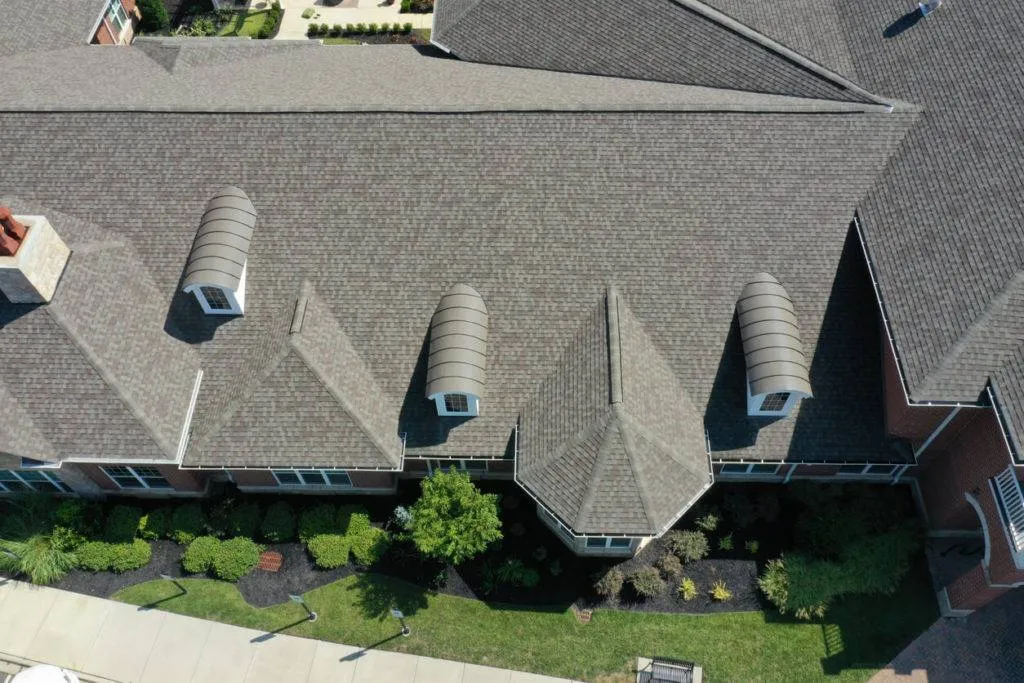
Flat roofs and pitched roofs serve commercial buildings in very different ways, and the right choice depends on your building size, budget, local climate, and long-term plans for the property. A flat roof, more accurately called a low-slope roof, has a slight pitch of roughly one-quarter to one-half inch of rise per foot of run, just enough to direct water toward internal drains or scuppers. A pitched roof has a visible slope with two or more angled surfaces meeting at a ridge. Flat roofs dominate commercial construction for reasons grounded in cost, functionality, and practicality for large building footprints. Pitched roofs offer better water shedding, longer lifespan, and lower long-term maintenance when properly built and maintained. For commercial property owners in Watkinsville and Hiawassee, understanding how each system performs in Georgia’s climate is the starting point for making a sound roofing decision. This guide answers every question commercial building owners ask about flat versus pitched roofs so you can move forward with confidence.
What Is the 25% Rule in Roofing?
The 25% rule in roofing is a building code standard that triggers a required full roof replacement when more than 25% of a commercial roof’s surface area is repaired or replaced within a single 12-month period. This rule applies across most Georgia jurisdictions, including Oconee County and Towns County, and prevents property owners from making large piecemeal repairs that bypass the permitting and code compliance requirements that apply to a complete roof replacement. When cumulative repairs cross that 25% threshold in a year, the building department treats the project as a full replacement, which means the entire roof must then be brought up to current code standards.
For commercial building owners in the Watkinsville area dealing with aging flat roofs, the 25% rule has real financial implications. A hail or wind event that damages 30% of a flat membrane could trigger a full code-compliant replacement rather than a targeted repair, even if the rest of the roof appears sound. Understanding this rule before authorizing any repair work is important because exceeding the threshold without permits can result in stop-work orders, fines, and insurance complications. A licensed local commercial roofing contractor will assess the damage extent and advise you on whether the repair scope keeps you under the threshold or whether a permitted replacement is the correct path forward.
What Type of Roof Do Most Commercial Buildings Have?
Most commercial buildings have flat or low-slope roofs. According to Colony Roofers, the average commercial building constructed in the United States during the 2000s is approximately 19,000 square feet, and covering that kind of footprint with a pitched roof would require significantly more structural framing, materials, and labor cost than a flat system. According to Weather Shield Roofing Systems, the popularity of flat roofs on commercial buildings is grounded in practical, cost-effective reasoning that has evolved over decades: lower construction costs, efficient space use for HVAC equipment, and compatibility with modern commercial construction methods.
Among flat roofing materials, TPO is the most commonly installed on new commercial buildings today, commanding approximately 40% of the commercial flat roofing market according to the National Roofing Contractors Association. EPDM follows at roughly 22% of new installations. PVC, modified bitumen, and built-up roofing account for much of the remainder. Pitched commercial roofs are more common on smaller retail buildings, churches, agricultural structures, and specialty commercial applications where the building footprint is manageable and the owner wants the aesthetic or long-term durability advantages a sloped system provides. For business owners in Hiawassee and Watkinsville evaluating roofing options, understanding that most commercial structures in their category will have flat systems helps frame what is standard practice in commercial construction versus what represents a deliberate upgrade choice.
What Is the Main Disadvantage of a Flat Roof?
The main disadvantage of a flat roof is its susceptibility to water pooling, drainage failures, and the shortened lifespan and maintenance demands those problems create. Unlike pitched roofs that shed water by gravity across their sloped surfaces, flat roofs rely entirely on properly functioning drains, scuppers, and internal drainage systems to move water off the surface. According to Cobex CG, flat roofs are more susceptible to leaks in heavy rainfall or when drains are clogged or inadequately sized, because water that cannot drain quickly sits on the membrane and increases the risk of infiltration at every seam, flashing, and penetration detail.
The second significant disadvantage is shorter lifespan compared to well-built pitched systems. According to Werner Roofing, a typical asphalt-shingle pitched roof lasts 20 to 30 years, and a metal pitched roof can last 40 to 70 years with proper care. Standard flat membrane systems, by comparison, last 15 to 30 years depending on the material and maintenance, with some systems reaching the low end of that range when drainage is chronically poor. For commercial building owners in North Georgia, where afternoon thunderstorms are frequent through spring and summer, maintaining clean drains and functional drainage details is the most important maintenance task for any flat roofing system. Letting drains go clogged through a Georgia storm season is the fastest way to shorten a flat roof’s service life regardless of how good the original installation was.
What Is the Golden Rule for Roof Pitch?
The golden rule for roof pitch is to design the roof so that water drains efficiently without overcomplicating installation or creating unnecessary structural cost. According to Overhead Roofing Contractors, the golden rule is achieved when the pitch provides adequate weather protection while remaining structurally sound, cost-effective, and visually appropriate for the building type and location. In practice, this means the pitch should match the rainfall intensity and climate of the building’s location, the material being installed, and the structural expectations the building’s design and use require.
According to Osborne Roofing, properties in high-rainfall areas typically benefit from pitches around 40 to 45 degrees for maximum water shedding, while those in sheltered or drier locations can use gentler slopes of 25 to 30 degrees successfully. For most commercial buildings, the golden rule points toward flat or low-slope systems because the economics of covering large footprints make a 30 to 45-degree pitch prohibitively expensive and structurally complex. For smaller commercial buildings in the Watkinsville and Hiawassee areas where a pitched system is appropriate, the golden rule in practice is to use the minimum pitch required for the chosen material to function properly, and not to add pitch beyond what water management, aesthetics, and budget support.
How to Tell If a Roofer Is Lying
You can tell if a roofing contractor is lying if they cannot explain the specific pitch recommendations for your building in technical terms, if they propose a flat system for a small commercial building where a pitched system would clearly serve better without providing a cost-benefit explanation, or if they claim a flat roof will last 40 or more years without qualifying the specific material and maintenance conditions that would be required to achieve that. For commercial roof projects specifically, a contractor who cannot describe in detail how drainage will work on a flat system, including drain sizing, scupper placement, and tapered insulation to eliminate low spots, is missing knowledge that will cost you in maintenance and repairs within the first five years.
Honest red flags to watch for on any commercial roofing quote include no itemized breakdown of materials versus labor, no specification of membrane thickness or manufacturer, pressure to decide quickly without time to get a second proposal, and inability to provide verifiable references from commercial projects in the Oconee County or Towns County area. A trustworthy commercial roofing contractor will walk you through the differences between flat and pitched options for your specific building, explain the drainage design in plain terms, and give you a written proposal that makes every component of the cost visible. When someone avoids your questions about pitch, drainage, or material specifications, that avoidance is the answer you need.
What Time of Year Is the Cheapest to Replace a Roof?
The cheapest time of year to replace a commercial roof is late fall through early winter, from November through February in Georgia. Commercial roofing contractors in the Watkinsville and Hiawassee areas run at peak capacity from spring through early fall, when storm damage repairs and the active construction season keep crews fully booked and scheduling backlogs extend project timelines. Scheduling a replacement during the slower winter season typically means better contractor availability, faster project start dates, and in many cases more competitive pricing from qualified contractors who have schedule gaps to fill.
For commercial building owners who have a planned roof replacement on the capital expenditure schedule, timing the project in winter can save 5% to 15% on a project that often runs $25,000 to $150,000 or more depending on building size and system type. That represents meaningful savings. However, an actively leaking commercial roof cannot wait for seasonal pricing. Water entry into a commercial building’s insulation, structural deck, interior finish, and electrical systems causes damage that accumulates rapidly and will cost far more to remediate than any seasonal pricing advantage is worth. A failing roof needs to be addressed immediately regardless of time of year, and a licensed commercial roofing contractor in the Watkinsville area can provide emergency stabilization measures while a full replacement is planned.
Why Are Commercial Building Roofs Flat?
Commercial building roofs are flat primarily because flat roofs cost less to install over large footprints, make HVAC and rooftop equipment placement practical, and are better suited to the structural and drainage requirements of wide-span commercial buildings. According to Weather Shield Roofing Systems, on expansive buildings like logistics centers or distribution facilities, the cost savings from a flat roof versus a pitched alternative during construction can be substantial. According to Cox Roofing, industrial properties in particular use flat roofs because they can place their ventilation and HVAC systems on top of flat surfaces that a sloped roof cannot accommodate at the same scale.
According to Colony Roofers, a pitched roof on a 19,000-square-foot commercial building would require significantly more structural framing, more labor, and more roofing material than the same building covered with a flat system. The structural complexity of spanning a wide commercial footprint with a peaked roof adds cost that most commercial building owners cannot justify when flat systems are available that perform adequately with proper installation and maintenance. Additionally, flat roofs maximize interior usable space by eliminating the tapered attic volume that a pitched design creates at the perimeter, which matters in commercial buildings where every square foot of usable height contributes to operational capacity. For commercial property owners in Oconee County, the practical dominance of flat systems in commercial construction reflects these economic and functional realities.
Do Flat Roofs Increase Property Value?
A flat roof on a commercial building can increase property value when it is well-maintained, recently installed with a quality membrane system, and appropriate for the building’s function and local market expectations. According to American Quality Remodeling, a well-built flat roof commercial building can save money, improve comfort, and increase overall property value because the cost efficiency, rooftop equipment capacity, and functional flexibility of a flat system are valued by commercial real estate buyers. A new or recently restored flat roof removes a major deferred maintenance liability that buyers discount heavily from a commercial property’s appraised value.
Conversely, an aging or poorly maintained flat roof is one of the most significant value-reducing conditions in commercial real estate. Buyers and lenders price in the cost of roof replacement when an inspection reveals a membrane at end of life, active leaks, widespread ponding areas, or failing seams. For commercial property owners in the Watkinsville and Hiawassee areas preparing for a sale or refinance, having a documented roof inspection report and maintenance history from a licensed contractor is important supporting documentation for the property’s value. A flat roof that is maintained, inspected annually, and repaired promptly retains its contribution to property value far longer than one that is deferred until forced replacement.
What Is the Lifespan of a Commercial Roof?
The lifespan of a commercial flat roof ranges from 15 to 30 years for most standard membrane systems, depending on the material, installation quality, maintenance frequency, and climate conditions. According to Carolina Atlantic Roofing Supply, a flat roof can last between 15 to 30 years depending on the materials used and the maintenance practices followed. TPO systems typically last 15 to 20 years for standard installations, with premium 60 mil systems reaching 25 to 30 years. EPDM systems typically last 20 to 30 years, with well-maintained premium installations reaching 40 or more years in favorable conditions. Metal flat roofs, where applicable, can last 40 to 70 years according to Best Roof Help.
For pitched commercial roofs, the lifespan depends heavily on the material chosen. According to Werner Roofing, a typical asphalt-shingle pitched roof lasts 20 to 30 years, while a metal pitched roof can last 40 to 70 years with proper care. The National Roofing Contractors Association reports that the average commercial roof is replaced approximately every 20 years, which reflects both the typical service life of standard membrane systems and the reality that many commercial roofs are replaced before their theoretical maximum lifespan when deferred maintenance or storm damage forces the issue. For commercial building owners in North Georgia planning capital expenditures, budgeting for a commercial roof replacement at the 20-year mark is a sound conservative assumption that avoids the emergency replacement scenario that comes with deferred maintenance.
Why Do Insurance Companies Not Like Flat Roofs?
Insurance companies do not like flat roofs because flat roofs are more susceptible to water pooling, drainage failures, membrane deterioration, and leak-related claims than pitched roofs that shed water by gravity. The flat geometry means any drainage system failure, whether from clogged drains, inadequate slope, or failed seams, immediately creates ponding conditions that a pitched roof would naturally prevent. Insurers have data showing that flat commercial roofs generate higher claim frequency than comparable pitched roofs, which is reflected in their underwriting practices, premium structures, and age-based coverage limitations.
For commercial building owners in Georgia seeking to maintain favorable insurance terms on a flat-roof property, keeping a documented inspection and maintenance schedule is the most practical protective measure available. According to standard commercial property insurance policy language, gradual deterioration, deferred maintenance, and neglect-related damage are excluded perils, which means water damage from a seam that has been separating for two years is unlikely to be a covered claim. Annual professional inspections documented in writing, prompt repair of any identified issues, and drain cleaning records give building owners the documentation to support legitimate claims and demonstrate the active stewardship that reduces an insurer’s concern about a flat-roof property.
What Is the Lifespan of a Flat Roof?
The lifespan of a flat roof is 15 to 30 years for most commercial membrane systems, with the specific lifespan depending on the material selected, the installation quality, how well drainage is maintained, and the local climate. TPO roofs last 15 to 20 years under standard conditions and up to 25 to 30 years for premium 60 mil installations with proper maintenance. EPDM roofs last 20 to 30 years on average, with some well-maintained systems documented at 40 or more years. Modified bitumen systems last 12 to 20 years in most applications. According to Best Roof Help, metal flat roofs adapted for low-slope commercial applications can last 40 to 70 years, making them the longest-lasting flat roofing option when the budget supports it.
In Georgia’s climate, flat roof lifespan is heavily influenced by UV intensity, summer heat cycling, and the frequency and intensity of storm events that test drainage systems and membrane seams. A TPO or EPDM roof installed in Watkinsville or Hiawassee that receives annual professional inspections, prompt repair of any seam or flashing issues, and clean drains twice per year can reasonably reach the upper end of its rated lifespan. The same roof that goes uninspected for five years, accumulates debris in drains, and develops ponding areas from clogged scuppers will often fail well short of its theoretical service life. Maintenance is the variable with the largest practical impact on flat roof longevity in Georgia’s climate.
What Is the Cheapest Longest Lasting Roof?
The cheapest longest lasting commercial roof is standing seam metal roofing when evaluating total cost over a 40-year ownership period. According to Werner Roofing, a metal pitched roof can last 40 to 70 years with proper care, and standing seam metal requires minimal maintenance because water sheds cleanly from the sloped surface without the ponding and drainage vulnerabilities of flat systems. The higher upfront installation cost of standing seam metal, typically $10 to $20 per square foot installed for commercial applications, is offset by its dramatically longer service life compared to flat membrane systems that must be replaced two to three times over the same period.
For flat commercial roofs specifically, EPDM offers the best combination of low material cost and long documented lifespan among single-ply membrane options, with material costs starting around $4 per square foot and service lives reaching 20 to 30 years with proper maintenance. For commercial building owners in Oconee County and Towns County who are evaluating what gives them the most roofing value per dollar over their planned ownership timeline, the honest answer is metal roofing for buildings where a pitched system is structurally and economically feasible, and EPDM for flat-roofed buildings where maximum lifespan per dollar is the priority over energy efficiency. A licensed commercial roofing contractor can model the total cost of ownership for both options on your specific building to help you make an informed decision.
What Is the Most Attractive Roof Pitch?
The most attractive roof pitch for residential and smaller commercial buildings is generally considered to be in the range of 6:12 to 8:12, which translates to approximately 26 to 34 degrees. This pitch range creates the classic triangular roofline that most people associate with a well-proportioned, traditionally designed building. According to Osborne Roofing, the most desirable roof pitch typically ranges between 30 to 45 degrees, with 35 degrees often considered the sweet spot for most applications because it provides excellent water runoff capabilities while maintaining structural efficiency and visual appeal.
Attractiveness in roof pitch is ultimately subjective and context-dependent. A sleek, low-slope modern commercial building looks intentional and contemporary with a nearly flat profile. A classic church or retail storefront in a traditional Georgia downtown looks more proportionate with a 6:12 or steeper pitch. The context that matters most for commercial buildings is whether the roof pitch looks appropriate for the building’s use, scale, and neighborhood. For commercial properties in Watkinsville’s historic downtown area, a pitched roof on smaller buildings reads as appropriate to the regional architectural character. For large warehouse or industrial properties on the commercial corridors outside of town, a flat roof is both the cost-appropriate and visually expected choice.
What Does a 10×12 Roof Pitch Mean?
A 10:12 roof pitch means the roof rises 10 inches vertically for every 12 inches of horizontal distance. This is a steep-slope roof with an angle of approximately 39.81 degrees. According to Weather Shield Roofers, pitches at 8:12 and above are classified as steep-slope roofs that provide excellent water shedding and dramatic curb appeal but cost more to install because of safety equipment requirements and additional labor time. A 10:12 pitch is near the upper end of what most residential and small commercial contractors work with routinely, and it produces a steeply angled roofline that sheds water and debris very effectively.
For commercial buildings, a 10:12 pitch is rarely used because the structural framing cost, material volume, and labor complexity increase substantially at this angle. The roof surface area of a 10:12 pitched roof is roughly 60% greater than the footprint of the building below it, which means significantly more material and installation labor than a lower-pitched or flat system covering the same building. According to Remato, a 45-degree roof (which is close to a 12:12 pitch) has around 40% more surface area than a flat projection of the same span. At 10:12, the cost premium over a flat system for the same commercial building footprint can be significant. For smaller commercial buildings in the Hiawassee area where a steep pitched metal roof is being considered for aesthetic or weather performance reasons, getting a full cost comparison from a licensed commercial roofing contractor who installs both systems is the right first step.
What Is the Minimum Slope for a Pitched Roof?
The minimum slope for a pitched roof depends on the roofing material being installed. According to the International Building Code, the absolute minimum roof pitch for any roof system is one-quarter inch of rise per 12 inches of horizontal run (1/4:12), which is the minimum required to allow water to move toward drains rather than pooling. For asphalt shingles specifically, the IRC requires a minimum pitch of 3:12 (three inches of rise per foot of run) to ensure proper shingle performance. Below 3:12, shingles are not rated for use without special low-slope modifications. For standing seam metal roofing, the minimum can be as low as 1/4:12 because the continuous seam design manages water at very low flow rates, according to US Vintage Wood.
For membrane roofing systems used on commercial flat roofs, the industry standard minimum slope is 1/4:12, just enough to direct water toward drains. Most commercial flat roof specifications call for tapered insulation systems installed under the membrane to create positive drainage toward all drains, because a perfectly level deck creates low spots where water pools. For commercial properties in Georgia, where heavy afternoon thunderstorms can deposit significant rainfall in short periods, ensuring positive drainage of at least 1/4:12 toward every drain is a design requirement that should be confirmed with the roofing contractor during the specification process for any new installation or replacement.
Is a 10-Degree Roof Pitch OK?
Yes, a 10-degree roof pitch is acceptable for many roofing applications, but it is near the boundary between low-slope and conventional roofing categories and places limitations on the materials that can be used correctly. A 10-degree pitch is approximately equivalent to a 2.1:12 ratio, which is above the minimum for flat membrane systems but below the 3:12 minimum required for standard asphalt shingles. According to Today’s Homeowner, low-pitched roofs with a slope of 4:12 or less require special waterproof materials and are harder to maintain. At 10 degrees, the roof sheds water more effectively than a near-flat commercial membrane, but not as effectively as a conventional 4:12 or steeper pitched system.
For commercial buildings in Watkinsville or Hiawassee considering a low-slope metal or modified bitumen installation at 10 degrees, the material choice must match the pitch. Standing seam metal is well-suited to this pitch range. Asphalt shingles are not. A licensed commercial roofing contractor will confirm whether the proposed pitch is compatible with the material being specified and whether any special underlayment, drainage design, or code provisions apply at the local level in Oconee County or Towns County for that specific pitch angle. Getting this confirmation in writing before installation prevents costly material compatibility failures.
What Is Grace for Roofing?
Grace in roofing refers to Grace Ice and Water Shield, a self-adhered roofing underlayment product made by GCP Applied Technologies. Grace Ice and Water Shield is a peel-and-stick membrane made of rubberized asphalt adhesive bonded to a high-density cross-laminated polyethylene film. It bonds directly to the roof deck, seals around fasteners, and creates a watertight layer that protects the roof against water intrusion from ice dams and wind-driven rain. According to GCP Applied Technologies, Grace Ice and Water Shield has been installed on more than two million homes and has a track record of more than 45 years protecting roofs from ice dams and wind-driven rain since its introduction in 1978.
Grace Ice and Water Shield is used on pitched roofs under the primary roof covering, particularly at the eaves, valleys, rakes, skylights, and other vulnerable detail areas where water is most likely to back up. It is installed on top of the roof deck before shingles, metal panels, slate, or tile are applied. The material seals around every nail driven through it, eliminating the fastener penetration leak risk that standard felt or synthetic underlayment cannot address. For commercial pitched roof applications on smaller buildings in the Watkinsville and Hiawassee areas, specifying Grace Ice and Water Shield or a comparable peel-and-stick underlayment at all valley and eave locations is the baseline best practice for a high-performance underlayment installation that is built to last the life of the roof covering above it.
Why Should a 45-Degree Roof Pitch Be Avoided?
A 45-degree roof pitch (which is a 12:12 pitch ratio) should be avoided in most commercial applications because it significantly increases material costs, labor complexity, safety requirements, and heating costs without providing performance benefits proportional to those added costs. According to Osborne Roofing, a 45-degree pitch creates substantial internal volume that may remain unused, leading to increased heating costs and structural complexity. The large, steeply angled attic space that a 45-degree pitch creates in a commercial building cannot be practically used for storage, office space, or equipment, which means the extra cubic volume is a liability in heating and cooling costs rather than an asset.
According to Remato, a 45-degree roof has around 40% more surface area than a flat projection of the same span, which translates directly to 40% more roofing material, 40% more labor to install that material, and ongoing wind uplift forces that are higher at steep pitches than at moderate ones. According to Omni Calculator, in the UK where 45-degree pitches are more common in some traditional architecture, the guidance is specifically that 45 degrees should be avoided for structural and cost reasons even when the general pitch range of 40 to 50 degrees is used. For commercial building owners in North Georgia evaluating a new construction or retrofit project, pitches in the 4:12 to 6:12 range provide excellent water shedding and material compatibility without the cost, structural, and maintenance penalties that come with a 45-degree design.
Can You Walk on a 5:12 Pitch Roof?
Yes, you can walk on a 5:12 pitch roof safely with proper footwear and reasonable care. A 5:12 pitch rises 5 inches for every 12 inches of horizontal run, which produces an angle of approximately 22.6 degrees. According to the Omni Calculator, a roof pitch of 6:12 or less is generally safe to walk on without special safety gear. At 5:12, most roofing contractors will walk the surface during inspection or installation work with standard rubber-soled work boots without additional safety equipment beyond basic fall protection awareness. According to Remato, roofs under 20 degrees (about a 4:12 pitch or 33% slope) are generally safe to walk on with appropriate footwear.
The 5:12 pitch is actually one of the most practical pitches for smaller commercial buildings that want the drainage and material performance benefits of a sloped system without the safety complications and material cost increases of steeper pitches. At 5:12, standard asphalt shingles perform well above their 3:12 minimum, standing seam and exposed-fastener metal roofing both work correctly, and maintenance inspectors can walk the surface safely. For commercial building owners in the Hiawassee area considering a pitched metal roof replacement on a smaller structure, a 5:12 pitch is a reasonable design target that balances water shedding performance, material compatibility, walkability for future maintenance, and structural cost.
Flat Roof vs Pitched Roof: Side-by-Side Comparison for Commercial Buildings
| Factor | Flat Roof | Pitched Roof |
|---|---|---|
| Typical lifespan | 15 to 30 years (membrane); up to 70 years (metal flat) | 20 to 30 years (shingle); 40 to 70 years (metal) |
| Installation cost | Lower: less material, simpler framing, faster labor | Higher: more framing, more material, more labor time |
| Long-term maintenance | More frequent: drain cleaning, seam inspection, membrane repair | Less frequent: water sheds naturally; fewer seam risks |
| Water shedding | Requires functional drains; vulnerable to ponding | Gravity-driven; sheds water and debris effectively |
| HVAC placement | Ideal: flat surface supports rooftop equipment easily | Difficult: steep slope prevents rooftop HVAC units |
| Energy efficiency | High with reflective membranes (TPO/PVC); can support solar | Good with proper insulation and ventilation; excellent for solar if south-facing |
| Insurance considerations | Higher risk profile; some insurers limit coverage on older flat roofs | Lower risk profile; generally preferred by insurers |
| Best building types | Warehouses, retail centers, offices, large industrial | Smaller commercial, churches, agricultural, specialty retail |
| Pitch range | 1/4:12 to 2:12 (2 to 10 degrees) | 3:12 and above (14 degrees or steeper) |
| Walkability during maintenance | Easy: flat surface is accessible without special gear | Varies: safe below 5:12; requires safety gear above 7:12 |
Sources: Werner Roofing, Cobex CG, TEMA Roofing Services, Osborne Roofing, Weather Shield Roofing Systems, Best Roof Help, Colony Roofers, National Roofing Contractors Association (NRCA), US Vintage Wood, Today’s Homeowner, Findlay Roofing, Remato
Frequently Asked Questions
Which is better for a commercial building in Watkinsville, GA: flat or pitched?
For most commercial buildings in Watkinsville, a flat roof is the practical standard because it costs less to install over large footprints, supports rooftop HVAC equipment efficiently, and is compatible with the wide range of membrane systems that perform well in Georgia’s climate. According to Weather Shield Roofing Systems, the dominance of flat roofs in commercial construction reflects decades of practical cost and functional advantages for large-scale buildings. The exception is smaller commercial buildings, churches, and specialty retail where a pitched system makes structural and aesthetic sense, and where the owner’s priority is maximum long-term lifespan with the lowest possible maintenance frequency. A licensed commercial roofing contractor in Oconee County can evaluate your specific building’s footprint, HVAC needs, and budget to recommend the right system for your situation.
How much does a commercial roof replacement cost in Oconee County, GA?
A flat commercial roof replacement in Oconee County costs approximately $5 to $12 per square foot installed for standard TPO or EPDM systems, with total project costs for typical commercial buildings ranging from $25,000 to well over $100,000 depending on building size, membrane type, insulation requirements, and drain and flashing complexity. A metal pitched commercial roof replacement costs approximately $10 to $20 per square foot installed, reflecting the additional framing, material, and labor complexity compared to flat systems. Getting written proposals from at least two licensed commercial roofing contractors, with materials, labor, insulation, and warranty terms itemized separately, is the reliable way to understand fair market pricing for your specific project in the Watkinsville area.
Does a commercial building in Hiawassee, GA need special roofing considerations for the mountain climate?
Yes, commercial buildings in Hiawassee have specific roofing needs tied to Towns County’s mountain climate. The higher elevation brings greater temperature swings between summer and winter, more rainfall than lower-elevation Georgia, and occasional snow and ice in winter months that create ice dam risk at vulnerable roof edges and valleys. For flat commercial roofs in Hiawassee, drainage design must account for the higher annual rainfall and potential for debris accumulation in drains from surrounding tree cover. For pitched commercial roofs, specifying a peel-and-stick underlayment like Grace Ice and Water Shield at eaves and valleys is appropriate given the potential for ice dam formation in winter. A licensed commercial roofing contractor with experience in the North Georgia mountain region will account for these climate-specific factors in their design recommendations and material specifications.
What is the best roofing material for a small commercial building in Watkinsville?
For a small commercial building in Watkinsville with a pitched roof, standing seam metal is the best overall roofing material because it provides the longest lifespan at 40 to 70 years, requires the least ongoing maintenance of any pitched system, performs well through Georgia’s storm season, and qualifies for the insurance discounts that the Metal Roofing Alliance reports can reach up to 35% in some cases. For small commercial buildings with flat or low-slope roofs, 60 mil TPO installed by a certified contractor is the best balance of energy efficiency, seam strength, and market-proven performance for Georgia’s hot, sunny climate. The specific recommendation for your building depends on the existing roof structure, pitch, HVAC equipment placement, and budget. A licensed roofing contractor serving the Watkinsville area can provide a system recommendation grounded in the actual conditions of your property.
How often should a commercial roof be inspected in Georgia?
A commercial roof in Georgia should be inspected professionally at least twice per year, in spring after winter and in fall after storm season, and after any significant hail or wind event that could have caused membrane or structural damage. Georgia’s storm season runs roughly from March through September, with the most intense thunderstorm activity peaking in summer months. That means flat-roofed commercial buildings in Watkinsville and Hiawassee are exposed to repeated hail, high winds, and heavy rainfall events across seven months of the year. Annual inspections that document the roof’s condition in writing allow building owners to track performance over time, plan for eventual replacement, and maintain the documentation that supports insurance claims when covered storm events cause damage. A licensed commercial roofing contractor offering a maintenance program with written inspection reports is the most cost-effective approach to managing this risk.
Can a flat commercial roof be converted to a pitched roof in Watkinsville?
Yes, a flat commercial roof can be converted to a pitched roof in Watkinsville, but it is a significant structural project that goes well beyond a standard roof replacement. Converting from flat to pitched requires adding structural framing above the existing roof deck to create the desired pitch, installing new decking over that framing, and then installing the pitched roofing system. The project also requires verifying that the existing building’s walls and structure can support the added load of the new framing and pitched system, which may require engineering review. The cost of conversion is substantially higher than a like-for-like flat roof replacement. It is most commonly done when a building owner wants to eliminate chronic flat roof drainage problems, gain the long-term maintenance advantages of a sloped system, or significantly change the building’s appearance. A licensed commercial roofing contractor and a structural engineer should both be involved in evaluating this option before any commitment is made.
Final Thoughts
The choice between a flat and pitched commercial roof is not primarily about which is better in the abstract. It is about which system matches your building’s size, structure, use, budget, and long-term ownership plans. Flat roofs dominate commercial construction because they cost less to install over large footprints, accommodate HVAC and rooftop equipment effectively, and are compatible with the membrane systems that perform well in Georgia’s climate. Pitched roofs serve smaller commercial buildings, specialized applications, and owners who prioritize maximum long-term lifespan and the lowest possible maintenance frequency over decades of ownership. For buildings in Watkinsville, Hiawassee, and throughout Oconee County and Towns County, the right system is the one that a licensed, experienced local contractor recommends based on your building’s specific conditions, not the one that is most common or most marketed.
If you own or manage a commercial building in Watkinsville, Hiawassee, or the surrounding North Georgia communities and are evaluating flat versus pitched roofing options, the team at Ridgeline Roofing and Exteriors provides honest assessments based on the actual conditions of your property. We install both flat commercial systems and pitched commercial systems and will recommend the right solution for your building, your climate, and your budget, not just the easiest one to sell.
Start with a free commercial roof inspection from the commercial roofing specialists in Watkinsville who understand the difference between what sells and what works.