Skip to content
Roof ventilation works by creating a continuous airflow cycle through your attic using two types of vents: intake vents at the lower edges and exhaust vents near the peak. Cool fresh air enters through the intake, pushes rising hot air upward, and that hot air escapes through the exhaust. The system runs passively, without electricity, using the basic physics principle that hot air rises. Without this cycle, heat and moisture trapped in the attic damage shingles, rot decking, grow mold, and drive up energy bills. This article explains exactly how the system works, what the different vent types do, how to know if your system is failing, and why inadequate ventilation is one of the most common roofing problems found in homes across Watkinsville and Hiawassee.
Do You Really Need Roof Ventilation?
Yes, you really do need roof ventilation. It is required by building codes in the United States and is critical to protecting your roof’s structural components, shingle lifespan, and the health of your home’s interior. The U.S. Federal Housing Authority recommends a minimum of 1 square foot of attic ventilation for every 300 square feet of attic floor space, split evenly between intake and exhaust. Per the International Residential Code (Section R806.2), attics require a minimum of 1/150 of net free ventilation area, which can be reduced to 1/300 when a vapor retarder and balanced intake-exhaust system are both in place.
Beyond code, research from Building Science Corporation confirms that poor or absent ventilation causes an average 24 percent reduction in shingle service life, based on field data compiled from roofing contractors across the country. The Asphalt Roofing Manufacturers Association (ARMA) reports that in buildings with poor ventilation, attic temperatures can reach 140 degrees Fahrenheit on a 90-degree day. Most shingle manufacturers also include specific ventilation requirements in their warranty terms. Ignoring ventilation does not just shorten your roof’s life. It can void your warranty entirely, according to the Colorado Roofing Association.
In Watkinsville and Oconee County, Georgia, where summers are hot and humid, this matters more than in many other parts of the country. Homes near Chicopee Woods and the established neighborhoods throughout Oconee County that were built before modern ventilation standards became common often have inadequate systems that are quietly shortening the life of otherwise good roofing materials.
How Does Roof Ventilation Actually Work?
Roof ventilation works by using the natural behavior of air: hot air is lighter than cool air, so it rises. When cool air enters the attic from intake vents near the soffit line, it moves upward through the attic space as it warms, pushing the hotter air ahead of it toward the peak of the roof, where it escapes through exhaust vents. This circulation is called the stack effect, and it runs continuously without any mechanical energy as long as both intake and exhaust are properly sized and clear of obstruction.
According to Jamar Roofing’s ventilation analysis, a well-balanced system keeps attic temperatures within 10 degrees Fahrenheit of outdoor air temperatures. Without adequate ventilation, attic temperatures during Georgia’s summer months can spike 20 to 40 degrees above outdoor air, essentially baking the underside of your roof from within.
The key principle is balance. GAF, one of the leading shingle manufacturers, states clearly that the amount of exhaust ventilation should never exceed the amount of intake ventilation. If exhaust capacity outweighs intake, the system can draw conditioned air from inside the house up through ceiling gaps instead of pulling cooler outside air through the soffits. That scenario raises energy bills and introduces moisture-laden house air into the attic rather than removing it. Every quality ventilation system starts with sufficient intake at the bottom.
What Are the Rules for Roof Ventilation?
The rules for roof ventilation in the United States are based on the 1/300 rule from the Federal Housing Authority and the International Residential Code. This means 1 square foot of net free ventilation area is required for every 300 square feet of attic floor space, divided equally between intake and exhaust. Some local codes and climate zones require the stricter 1/150 rule, which doubles the required ventilation area.
According to Bill Ragan Roofing’s ventilation guide, the 1/300 rule applies when two conditions are met: a Class I or II vapor retarder is installed on the warm-in-winter side of the ceiling, and at least 40 to 50 percent of the required ventilation area is provided by vents in the upper portion of the attic. When these conditions are not met, the 1/150 rule applies by default in most jurisdictions.
The practical application in Oconee County: a 1,500-square-foot attic under the 1/300 rule needs a total of 5 square feet of net free area, split roughly half to intake and half to exhaust. Under the 1/150 rule, that same attic needs 10 square feet total. A qualified roofing contractor calculates this during the inspection and designs the vent system accordingly. Any contractor doing a full replacement who is not addressing ventilation is skipping a critical step.
What Is the 7 and 7 Rule for Attics?
The 7 and 7 rule for attics is a ventilation standard used by some contractors and builders stating that 7 inches of net free vent area should be provided at the intake (soffit) and 7 inches at the exhaust for every 150 square feet of attic floor space. It is an applied interpretation of the 1/150 minimum standard in a format that translates more directly to product sizing during installation. This rule is not universally adopted across all codes and jurisdictions but is a common working framework used by experienced roofing crews to ensure adequate balanced airflow.
The principle behind any rule, whether 1/300, 1/150, or 7 and 7, is the same: balanced intake and exhaust. No formula works properly if one side is undersized or blocked. Homes in Hiawassee near Lake Chatuge with heavily wooded lots are particularly at risk for blocked soffit intake from debris and insulation, which disrupts the balance even when the correct number of vents was installed.
What Happens If a Roof Is Not Vented Properly?
If a roof is not vented properly, the consequences affect the roof, the attic structure, and the living spaces below. The problems develop gradually and are often invisible until significant damage has already occurred. Bill Ragan Roofing’s inspection data shows that poor attic ventilation is one of the most common problems found during roof inspections, and most homeowners do not know it exists until thousands of dollars of damage is already present.
The documented consequences of inadequate roof ventilation include these six distinct problems:
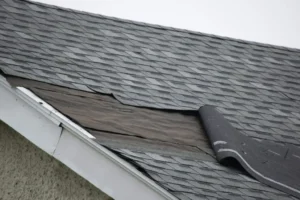
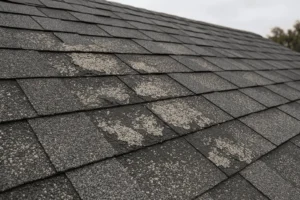
Premature shingle failure is the most direct damage. Research published in Roofing Contractor magazine found a 24 percent average reduction in shingle service life when ventilation is poor or absent. The trapped heat cooks the asphalt from underneath, causing shingles to curl, blister, crack, and lose granules well before their expected end of life. This can void shingle warranties since most manufacturers require ventilation minimums to be met.
Roof decking damage and sagging occurs when condensation from poor ventilation repeatedly wets the plywood or OSB decking. ARMA’s technical report documents how the decking begins to swell, causing waviness on the roof surface, and eventually loses its nail-holding capacity. When decking can no longer hold the weight of roofing materials, sagging and structural compromise follow.
Mold and mildew growth thrives in the warm, humid attic environment created by poor ventilation. According to the Centers for Disease Control and Prevention, mold exposure can cause sore throats, stuffy noses, coughing, wheezing, burning eyes, and skin rash. Once mold establishes in an attic, remediation is far more expensive than the original ventilation improvement would have been.
Ice dams form in winter when the warm attic melts snow on the roof, and that water refreezes at the cooler eaves and gutters. The resulting ice dam backs water up under the shingles, causing interior leaks. Proper ventilation keeps the attic close to outside temperatures, preventing this cycle entirely.
Higher energy bills result from the heat trapped in a poorly ventilated attic radiating down into the living spaces. Christian Brothers Roofing notes that the second floor of a poorly ventilated home can be up to 10 degrees hotter than the first floor. FoxHaven Roofing’s 2026 data states that homes with balanced ventilation can reduce summer cooling costs by up to 30 percent.
Pest infestations are an often-overlooked consequence. The warm, moist attic environment that poor ventilation creates attracts insects, and over time small rodents can follow. Termites are particularly drawn to the conditions that poor ventilation creates, according to Bill Ragan Roofing’s inspection records.
All of these problems are preventable. Roof installation in Watkinsville includes a thorough ventilation assessment as a standard part of the process, because a new roof installed over a poorly ventilated attic is a new roof that will fail prematurely.
What Types of Roof Vents Are There?
Roof vents fall into two categories: intake vents that bring cool air in, and exhaust vents that let hot air out. A properly balanced system uses both. Here is a breakdown of each type:
Intake Vent Types
Soffit Vents
Soffit vents are the most popular and most effective intake vent type. They are installed in the underside of the roof overhang along the eaves, where they draw cool outside air into the attic along the full perimeter of the home. Roof Hub’s ventilation analysis identifies the soffit plus ridge vent combination as the most common and effective balanced ventilation system for residential homes. Soffit vents are available as individual perforated panels or continuous strip vents, and they blend with most exterior designs.
The most common soffit vent failure is blocking. When insulation is blown into an attic without rafter baffles installed first, the insulation compresses against the soffit vents and cuts off intake airflow entirely. The ridge vent then has no source of cooler outside air to pull in, making the entire system ineffective despite having all the right hardware in place. Any re-insulation project should include a baffle inspection.
Gable Vents
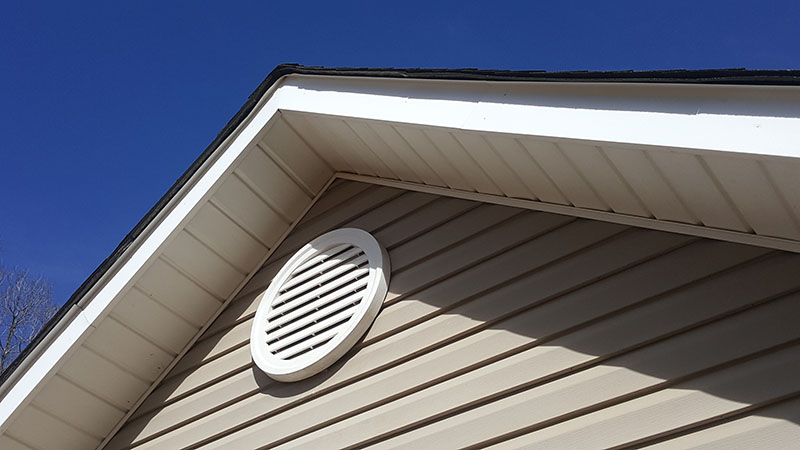
Gable vents are louvered openings in the exterior walls at the triangular gable ends of a home. They are more common in older construction and rely on cross-ventilation driven by wind rather than the stack effect. IIBEC’s attic ventilation guide cautions that gable vents used alongside a ridge vent system can interfere with the vertical airflow pattern, creating short circuits where air moves horizontally between gable vents without washing the full underside of the roof deck. Most ventilation professionals recommend blocking gable vents when a ridge and soffit system is installed.
Over-Fascia Vents and Drip Edge Vents
These are alternatives used when a home has minimal or no soffit overhang. Over-fascia vents sit on top of the fascia board just beneath the first course of shingles. Drip edge vents incorporate airflow openings into the drip edge metal itself. Both are less effective than full soffit venting because of their smaller surface area, but they are useful solutions for homes where soffit venting is structurally limited.
Exhaust Vent Types
Ridge Vents
Ridge vents are the gold standard for exhaust ventilation. A slot is cut along the peak of the roof deck during installation, and the ridge vent covers that slot, allowing hot air to escape continuously along the entire ridge line. Ridge cap shingles are then installed over the vent to provide weatherproofing and a clean finished appearance. GAF’s ventilation resources confirm that ridge vents paired with continuous soffit venting create the most effective passive ventilation system available for residential homes. They require no electricity, no moving parts, and minimal maintenance.
The one installation detail that matters most for ridge vents is the slot cut in the decking. A contractor who installs a ridge vent without cutting the slot in the deck is essentially providing no exhaust ventilation at all, since the vent has no opening to exhaust through. This is an unfortunately common installation error documented by RoofSmart in their ventilation inspection records.
Box Vents (Static Vents)
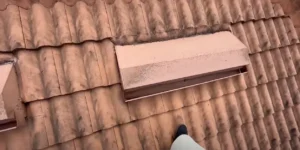
Box vents, also called static vents, turtle vents, or flat vents, are individual square or rectangular vents installed in the roof surface near the ridge. They require no moving parts or electricity and are a reliable low-profile alternative to ridge vents for homes that do not have a long enough ridge line for a continuous ridge vent. Multiple box vents are needed to cover the same exhaust area that a single ridge vent provides. Family Handyman’s ventilation guide notes that flat vents have no moving parts to break or squeak and can be an effective exhaust solution when properly sized and distributed.
Turbine Vents (Whirlybirds)
Turbine vents are the spinning circular exhaust vents often seen on older homes. They use wind to rotate, which creates a low-pressure zone that draws hot air from the attic. According to Bill Ragan Roofing’s calculations, one 12-inch turbine vent covers approximately 1,200 to 1,500 square feet of attic space, so a 2,000-square-foot attic would need approximately two of them. When the wind blows, turbines move more air than static vents. When the wind does not blow, they function as basic passive exhaust vents.
Turbine vents have several genuine disadvantages that limit their popularity. They protrude nearly 18 inches from the roof surface, which affects curb appeal. Their spinning bearings wear over time and become noisy. When bearings fail, the spinning stops and the vent becomes little more than a hole in the roof. Building science expert Joseph Lstiburek of Building Science Corporation has noted that powered turbines can depressurize the attic and pull conditioned house air through ceiling gaps if the attic ceiling is not airtight, which adds an energy and moisture risk that static systems do not create. For Watkinsville homeowners with existing turbine vents, having them evaluated during a roof replacement is worth the conversation.
Power Vents (Electric Attic Fans)
Power vents are electrically driven fans mounted near the ridge that actively pull hot air from the attic. They are controlled by a thermostat or humidistat and provide consistent exhaust regardless of wind conditions. They are most useful in homes with complex roof shapes where passive systems cannot provide uniform coverage.
The concern with power vents is the same as with turbines: if the attic ceiling is not properly air-sealed and there is insufficient intake, the powered fan can depressurize the attic and pull conditioned house air upward through ceiling gaps. This wastes energy and introduces moist house air into the attic instead of removing it. Power vents work well in properly sealed homes with adequate soffit intake but can cause problems in older homes with leaky attic ceilings.
Does Rain Get Into Whirlybirds?
No, rain does not typically get into whirlybirds under normal conditions. Turbine vents are designed with angled fins that shed water away as the turbine spins, and the spinning action also helps deflect incoming rain. Premiere Roofing’s product analysis acknowledges that in very heavy, wind-driven rain, water can occasionally enter through the fins if the turbine is stationary in low-wind conditions. High-quality turbine vents with permanently lubricated sealed bearings are the most weather-resistant, since they continue spinning even in light wind, which maintains the deflection effect.
The bigger risk with turbines is debris accumulation in the fins and bearing wear over time. Annual post-storm inspection of turbine vents is a practical habit for homeowners in Oconee County and the Hiawassee area, where summer thunderstorms can leave debris behind.
Do Whirlybirds Make Your House Colder in Winter?
No, whirlybirds do not make your house colder in winter when the system is properly balanced with adequate soffit intake. The turbine vents the attic space, not the living area below. When your attic insulation is properly installed and the ceiling between the living space and attic is well-sealed, the air movement in the attic has minimal effect on indoor temperature.
The concern some homeowners have is valid in a specific scenario: if the attic ceiling is leaky and the turbine creates negative pressure, it can pull warm conditioned air from the living space upward through ceiling gaps. The solution is not to remove the turbine but to seal the ceiling air bypasses around electrical fixtures, plumbing penetrations, and attic hatches. A blower door test by an energy auditor can identify those gaps precisely.
What Is Better Than an Attic Fan?
A balanced passive system using continuous ridge vents and continuous soffit vents is better than an attic fan for most residential homes. It is more reliable because it has no moving parts, no electricity cost, no risk of motor failure, and no risk of depressurizing the attic if the ceiling is not perfectly sealed. Roof Hub’s ventilation guide describes ridge and soffit combination as the most popular and effective ventilation approach for residential construction, offering what it calls “classic vertical ventilation” that works with natural air physics rather than against them.
Attic fans are a better choice for homes where natural passive airflow is insufficient due to the roof shape, where no adequate ridge line exists for a ridge vent, or where very high humidity requires mechanical air changes beyond what passive venting can provide. In those cases, a quality thermostat-controlled power vent with proper soffit intake is appropriate.
Roof Vent Types Compared: Intake and Exhaust at a Glance
| Vent Type | Intake or Exhaust | Key Benefit | Key Drawback | Best For |
|---|---|---|---|---|
| Continuous soffit vent | Intake | Full perimeter coverage; most effective intake | Can be blocked by insulation without baffles | Almost all residential homes |
| Gable vent | Intake or exhaust (wind-dependent) | Simple; works without soffits | Can short-circuit ridge vent systems | Older homes; used alone, not with ridge vents |
| Ridge vent | Exhaust | Continuous coverage; low profile; no moving parts | Requires slot in deck; not ideal for hip roofs | Gable roofs with long ridge lines |
| Box vent (static) | Exhaust | No moving parts; reliable; low profile | Multiple needed; leaves gaps between units | Homes without long ridge lines |
| Turbine vent (whirlybird) | Exhaust | Moves more air in wind; no electricity | Noisy bearings; protrudes 18 in.; wind-dependent | Budget installs; supplement to existing vents |
| Power vent (attic fan) | Exhaust | Consistent air movement; wind-independent | Electricity cost; risk of drawing house air if poorly sealed | Hip roofs; homes with complex geometry |
Sources: GAF ridge vent and ventilation calculator data; Roof Hub intake and exhaust vent analysis; Family Handyman flat vent vs turbine comparison; IIBEC gable vent guidance; FoxHaven Roofing 2026 vent type guide; Bill Ragan Roofing 1/300 ventilation rule explanation; ARMA attic temperature data; Building Science Corporation (Lstiburek) turbine and power vent concerns.
Do Roofers Install Attic Fans?
Yes, roofers install attic fans. Power vents and solar-powered attic fans are standard items that licensed roofing contractors install during a roof replacement or as a standalone ventilation upgrade. The installation involves cutting a penetration in the roof deck, flashing the unit properly, and connecting the thermostat and wiring. Any roofer who installs attic fans should also be evaluating whether the existing soffit intake is adequate to support the fan without creating a depressurization problem in the attic.
If your home needs an electrical attic fan, a licensed roofer handles the roofing portion of the installation and a licensed electrician handles the wiring. Some roofing companies have electricians on staff or regularly partnered for this type of work. For a full evaluation of what your attic needs, roof repair in Watkinsville includes an attic inspection where ventilation adequacy is assessed alongside any other roof condition findings.
Do I Need Vent Baffles in Every Rafter?
Yes, you need vent baffles in every rafter bay that runs from a soffit vent to the open attic above when insulation is present in those bays. Vent baffles, also called rafter baffles or insulation baffles, are plastic or cardboard channels that are stapled between the rafters to maintain a clear 1-inch-wide airway from the soffit vent to the open attic above, even when blown-in or batt insulation fills the rest of the rafter bay.
Without baffles, insulation pushes against the soffit vent opening and cuts off intake airflow completely. A ridge vent with blocked soffits is effectively a ridge vent with no intake, which means the system cannot function at all. IIBEC’s attic ventilation documentation confirms that this is one of the most common ventilation failures found in existing homes: ridge vents were installed during a re-roof, but the existing soffit vents were already blocked by insulation and no baffles were added, so the “upgrade” provided no actual improvement.
For homes in Watkinsville undergoing insulation upgrades or roof replacements, confirming that baffles are in place before blown-in insulation is added is the one step that protects everything else. Shingle roof repair in Watkinsville that involves the attic inspection will identify baffle status so you know exactly what your system is doing.
Are There Signs Before a Roof Collapses from Ventilation Issues?
Yes, there are signs before a roof collapses from ventilation-related structural damage. The damage pathway runs from poor ventilation to moisture accumulation, to decking rot, to loss of nail-holding capacity, to sagging, and eventually to structural failure if left unaddressed long enough. The warning signs appear well before collapse and are visible with an attic inspection.
From the outside, look for a wavy or uneven roof surface where sheathing has warped from moisture. From the ground, wavy sections that should be flat are a clear signal of decking problems. Inside the attic, darkened or stained rafters, wet or discolored insulation, rust on nail heads and metal components, and a musty smell all indicate moisture problems from ventilation failure. According to Bill Ragan Roofing’s field inspection data, once decking shows visible sagging or discoloration, the damage is already significant.
If you see any of these signs in a home in Oconee County or the Towns County area, have a licensed roofer inspect the attic before the next storm season. The window between visible signs and structural risk is not measured in years once active moisture damage is underway.
Frequently Asked Questions
Does Rain Come in Through Roof Vents in Watkinsville or Hiawassee?
Rain does not normally come in through properly installed roof vents in Watkinsville or Hiawassee. Quality ridge vents include external weather baffles that deflect wind-driven rain away from the slot in the deck. Box vents and soffit vents are also designed to shed water. Ridge vents without external wind baffles are the most vulnerable to heavy wind-driven rain entry, which is why specifying a ridge vent with proper weather protection is important in an area that sees strong summer and fall storms. If water is entering through a vent, that is a product quality or installation problem worth addressing before the next storm season.
What Is the Downside to an Air Admittance Valve?
An air admittance valve (AAV) is a one-way mechanical valve used in plumbing vent systems, not in roof ventilation systems. The downside to an air admittance valve is that it is a mechanical device that can fail over time, it is not permitted by all local plumbing codes, and it cannot handle positive-pressure situations where gases need to vent outward. AAVs are sometimes used when extending plumbing vent stacks through the roof is not practical, but they do not replace proper roof ventilation for attic airflow. They address a plumbing need, not a roofing need. If your plumber has recommended one for a plumbing vent situation, it is a different system from your attic ventilation entirely.
Why Don’t People Use Attic Fans Anymore as Their Primary System?
People have moved away from powered attic fans as primary ventilation systems because passive ridge and soffit vent combinations are more reliable, less expensive to operate, and eliminate the risk of attic depressurization. Building science research, particularly from Joseph Lstiburek at Building Science Corporation, has shown that powered attic fans in homes with leaky attic ceilings can draw conditioned house air upward through gaps around light fixtures and plumbing penetrations, which wastes energy and introduces moisture into the attic rather than removing it. Passive balanced systems do not create this risk. Attic fans are still installed where passive systems are insufficient for the roof geometry, but they are no longer considered the default best-practice solution for most residential homes.
How Do I Know If My Attic Ventilation Is Adequate in Oconee County?
To know if your attic ventilation is adequate in Oconee County, check for these indicators: the attic should feel close to outdoor air temperature rather than significantly hotter, there should be no musty odor or visible moisture on the decking or rafters, your shingles should not be showing premature curling or blistering for their age, and your upstairs rooms should not feel significantly hotter than the rest of the house in summer. A licensed roofing contractor can calculate your attic’s net free ventilation area and compare it against code requirements, check whether baffles are protecting soffit intake, and confirm that exhaust and intake are properly balanced. This kind of inspection takes about 30 minutes and gives you a definitive answer.
Can I Install a Ridge Vent Myself?
Installing a ridge vent yourself is technically possible but not recommended for most homeowners. The process requires cutting a slot along the ridge of the roof deck, selecting the right vent product for your roof’s geometry, properly sealing and nailing the vent to prevent water entry, and installing ridge cap shingles over it correctly. If the slot is cut incorrectly, too wide or too narrow, or if the flashing is wrong, the vent will either underperform or leak. Most roofing professionals install ridge vents with 3-inch hand nails rather than nail guns, per manufacturer requirements, which is a detail that matters for long-term hold. This is a job best left to a licensed roofer who can guarantee the work with a warranty.
What Is the Best Roof Ventilation System for Georgia Homes?
The best roof ventilation system for Georgia homes is a continuous ridge vent paired with continuous soffit vents and rafter baffles at every bay. This passive system takes full advantage of Georgia’s warm summers to create strong natural convection and requires no electricity, no maintenance, and no moving parts that can fail. For homes in Hiawassee near Lake Chatuge or in wooded Oconee County neighborhoods where debris accumulation can clog soffit vents, a combination of annual gutter cleaning and a soffit inspection every two to three years keeps the system running at full efficiency. Homes with hip roofs or short ridge lines benefit from adding box vents or a power vent to supplement the passive system where ridge venting alone is insufficient.
How Often Should Roof Ventilation Be Inspected in Watkinsville?
Roof ventilation should be inspected in Watkinsville at least once every two years as part of a routine roof maintenance checkup, and after any significant storm that drops debris across the roof. The most important things to check are soffit vent blockage from insulation or debris, ridge vent integrity and weather baffle condition, and any signs of moisture or staining in the attic from ventilation failure. Homes that have not been inspected since they were built, particularly those built before 2000 in Oconee County, are statistically likely to have ventilation deficiencies that have been silently shortening the life of the roof. A professional inspection catches these issues before they become expensive.
Not Sure If Your Attic Is Properly Ventilated?
Poor ventilation is one of the most common and most preventable causes of premature roof failure, and most homeowners do not know it is a problem until the damage is already done. A free inspection takes the guesswork out entirely.
The team at Ridgeline Roofing and Exteriors inspects attic ventilation on every roof assessment across Watkinsville, Hiawassee, and the surrounding Oconee and Towns County communities. They check soffit intake, exhaust coverage, baffle presence, and whether the system is balanced before any roof work is quoted.
Visit the Watkinsville roofing services page and schedule your free inspection today. A well-ventilated roof lasts longer, costs less to maintain, and protects your home better in every season.