Hail damage affects an asphalt shingle roof by stripping away protective granules, fracturing the fiberglass mat beneath the shingle surface, and creating impact points that expose the asphalt layer to direct UV radiation and moisture. The damage is not always visible from the ground, but it is real, it shortens the roof’s lifespan, and it almost always qualifies for an insurance claim when the hailstones are large enough. According to the Insurance Institute for Business and Home Safety, hail is responsible for an estimated 50% to 80% of annual damages from severe convective storms in the United States, and 2023 global insured losses from severe convective storms reached a record $64 billion according to Swiss Re Institute, with the United States accounting for 85% of those losses. For homeowners in Watkinsville and Hiawassee, where Georgia storm seasons include regular hail events, understanding what hail does to shingles, when it triggers an insurance claim, and how to navigate the process correctly is essential knowledge.
Do Hail Damaged Shingles Need to Be Replaced?
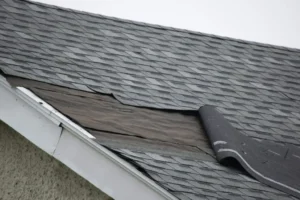
Yes, hail damaged shingles need to be replaced when the damage has compromised their ability to protect the roof deck from water intrusion. A hail impact that fractures the fiberglass mat beneath the granule surface has created a structural failure in the shingle, even if no hole is immediately visible. According to Alpine Intel’s hail damage research, mat fracture is a common result of damaging hail impact. Once the mat is fractured, the shingle’s waterproofing function is fully compromised, and a leak will develop over time even without a visible breach. According to Bill Ragan Roofing, hail damage does not generally cause an immediate roof leak, but it absolutely shortens the roof’s life and must be addressed promptly.
Granule loss alone, even without mat fracture, is also a reason to replace affected shingles. Granules are not cosmetic. They shield the asphalt layer from UV radiation, protect against thermal cycling, and provide fire resistance. When hail knocks them off, the exposed asphalt begins degrading from direct sunlight within months. According to research cited by the Insurance Institute for Business and Home Safety, the cumulative granule loss from just two rounds of sub-severe hail impacts exceeded the damage caused by a single two-inch hailstone strike. Replacing hail-damaged shingles is not optional if you want the roof to last its full rated lifespan.
What Is the 25% Rule in Roofing?
The 25% rule in roofing is a building code standard that requires a full permitted roof replacement when more than 25% of a roof surface is repaired or replaced within a 12-month period. This rule exists in most Georgia jurisdictions including Oconee County and Towns County to prevent large piecemeal repairs that bypass the permitting and code compliance requirements of a complete replacement. For hail damage specifically, this rule is highly relevant because widespread hail events often damage more than a quarter of the roof surface in a single storm. When that threshold is exceeded, code requires full replacement rather than partial repair.
According to wind damage insurance claim guidance, when damage affects 25% or more of a roof, full replacement is typically what adjusters approve because the building code requires it. For homeowners in the Watkinsville area filing a hail damage claim, having a licensed contractor present during the adjuster’s inspection ensures that the true scope of damage is properly documented and that the 25% threshold is applied correctly if the damage warrants it.
What Does Hail Damage Look Like on an Asphalt Shingle Roof?
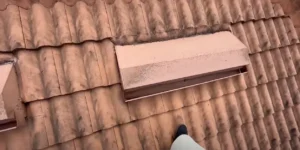
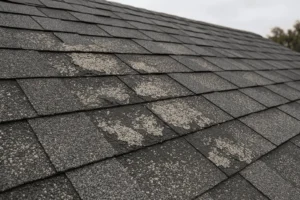
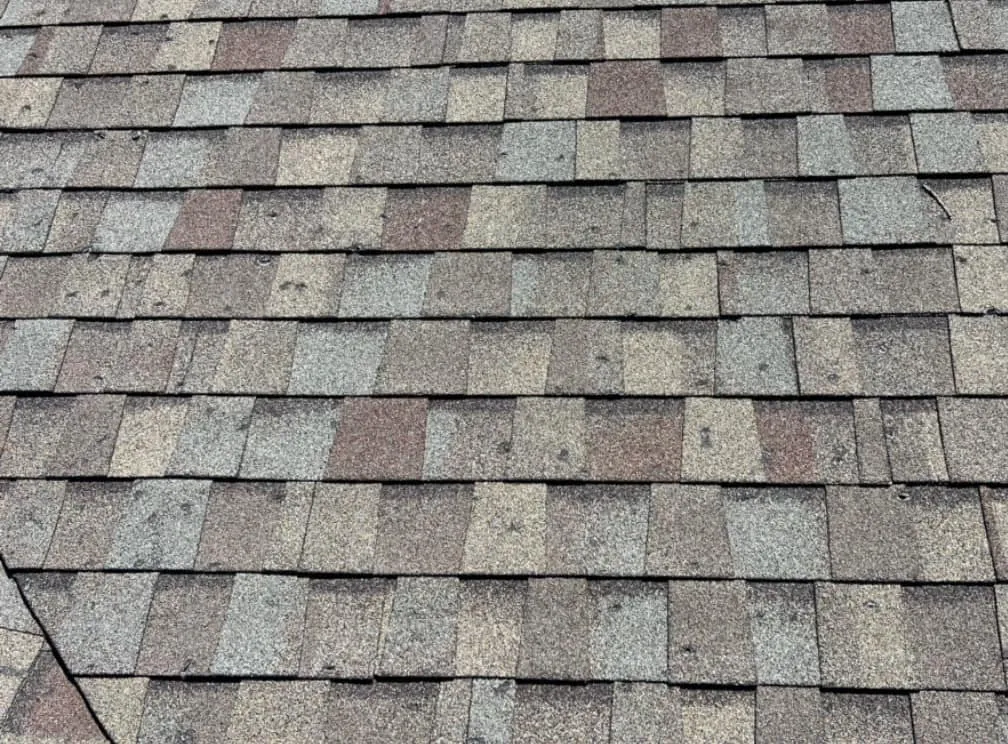
Hail damage on an asphalt shingle roof looks like circular or irregular dark spots where granules have been displaced, soft or spongy areas on the shingle surface where the fiberglass mat has been fractured beneath, and dents or dings on metal components like roof vents, gutters, and flashing. According to Red Rover Roofing, the most visible indicator on roofs with algae growth is a spatter mark: when a hailstone hits, it scrubs the algae clean and leaves behind a round, lighter-colored mark whose size gives an accurate read on the diameter of the hailstone. According to Rainbow Restores, hail damage also produces black scuffs that appear as dark, streaky marks on the shingle surface, and patches that appear slick or shiny where the rough granule texture has been stripped away.
The key diagnostic step is checking collateral indicators before going on the roof. According to Alpine Intel, the condition of downspouts, vent covers, and other metal surfaces provides clear clues about the size, direction, and density of hailstones. If these metal surfaces show denting, the shingles have almost certainly sustained damage. If the metal shows no impact marks, the hailstones were likely too small to functionally damage the shingles below them. A licensed contractor who knows what to look for will check gutters, flashing, AC unit shrouds, and painted wood surfaces before making any conclusion about shingle damage status.
How Large of Hail Can Damage a Shingle Roof?
Hail one inch or larger in diameter can cause clear and noticeable damage to standard asphalt shingles, according to Bill Ragan Roofing. Alpine Intel confirms that damage to three-tab and dimensional shingles requires a hailstone size of 1 to 1.25 inches, roughly quarter- to golf ball-sized hail. Impact marks smaller than three quarters of an inch are very rarely functional hail damage on standard shingles. For reference, a penny is three quarters of an inch in diameter, a nickel is about seven eighths of an inch, and a quarter is approximately one inch.
The National Weather Service classifies hail as severe when its diameter exceeds one inch (25.4 mm). According to a landmark 2025 study published in Frontiers in Materials by the Insurance Institute for Business and Home Safety, smaller sub-severe hail between 0.7 and 1 inch in diameter can cause significant cumulative damage over repeated exposures. The study found that shingles exposed to repeated sub-severe hail events aged to the equivalent of a full decade of weathering within just two years of controlled testing. For homeowners in the Hiawassee and Watkinsville areas, this research matters: even smaller hail events that individually seem minor may be causing meaningful cumulative damage over the course of multiple storm seasons.
Is It Worth Making an Insurance Claim for Hail Damage?
Yes, it is worth making an insurance claim for hail damage when the hail was one inch or larger, the damage is widespread across multiple roof slopes, and the estimated repair or replacement cost significantly exceeds your deductible. According to Bill Ragan Roofing, if hail is large enough to cause clear dents, there is no question the shingles are compromised and the damage should always lead to an approved insurance claim if it is covered by the policy. The question of whether to file is primarily financial: if the documented damage cost is close to or below your deductible, a claim may not make financial sense because the premium impact in following years could exceed the incremental payout.
The most important first step is always a professional roof inspection by a licensed contractor before deciding whether to file. An experienced contractor who knows how insurance documentation works will tell you honestly whether the damage is sufficient to support a claim, what type of evidence the adjuster will look for, and whether your estimated repair cost clearly exceeds your deductible threshold. Do not rely on a door-to-door contractor who appeared after the storm. Get a professional inspection from a contractor you chose, not one who chose you.
What Is the Average Cost to Replace Shingles on a Roof?
The average cost to replace shingles on a roof is approximately $10,500 for a standard residential home, with most homeowners spending between $7,500 and $24,000 depending on roof size, shingle grade, and complexity, according to Angi. In Georgia specifically, Angi data shows the state average is approximately $9,600, which is below the national average due to lower labor costs than states like California or New York. Asphalt shingles range from $3.44 to $12.00 per square foot installed. Labor accounts for approximately 60% of the total project cost, with tearoff and disposal adding $1 to $5 per square foot on top of installation labor.
For hail damage claims specifically, the final documented repair cost prepared by a licensed contractor is the most important number in the process. According to Bill Ragan Roofing, most initial insurance estimates run 30 to 40% below actual documented repair costs, and most claims need to be supplemented to reach the full amount. Having your contractor review the adjuster’s estimate line by line and identify missing items, including local code requirements, overhead, profit, and dump fees, is standard practice on a legitimate hail claim, not an adversarial act. The goal is accuracy, not inflation.
What Time of Year Is the Cheapest to Replace a Roof?
The cheapest time of year to replace a roof is late fall through early winter, from November through February in Georgia. According to Angi, scheduling a shingle roof installation during a contractor’s off-season can save 5% to 15% on total project cost. In the Watkinsville area and around Hiawassee in Towns County, storm season keeps roofing crews at capacity through summer and early fall. However, for hail damage, the timing advice changes: a hail-damaged roof should not wait for seasonal pricing advantages. Every subsequent rain event risks water intrusion through compromised shingle surfaces. Prompt inspection and timely repair after any significant hail event in North Georgia is always the right call.
How to Tell If a Roofer Is Lying
You can tell if a roofer is lying if they showed up uninvited at your door right after a storm, if they cannot show you photos of every specific area of damage they claim exists, if they describe widespread damage without pointing to any collateral indicators like dented gutters or vents to support it, or if their proposal is vague and does not itemize specific repair components. Storm chasers are particularly common after hail events and are known for exaggerating damage to maximize insurance claims. According to Alpine Intel, the professional standard for hail damage documentation includes matching shingle blemishes to the size, direction, and density established by collateral indicator evidence. Any contractor who claims hail damage without that systematic approach is not doing a professional inspection.
A trustworthy roofing contractor in Watkinsville or Hiawassee will take you through their findings step by step with photos, explain what each finding means functionally, provide a written proposal with every cost itemized, and give you time to review without pressure. They will also tell you honestly if the hail was below the damage threshold and the claim is not worth pursuing. Contractors who build their businesses on long-term community relationships have every incentive to tell you the truth.
At What Age Is a Roof Considered Old?
A roof is considered old at 15 to 20 years for standard asphalt shingles in Georgia’s climate. The National Roofing Contractors Association notes that most new roofs are designed to provide useful service for about 20 years. For hail insurance purposes, roof age matters enormously because most insurers now apply actual cash value calculations, depreciation schedules, or roof payment schedules to roofs over 10 to 15 years old. According to McKnight Insurance, many insurance carriers are moving toward ACV-only coverage once a roof reaches 10 to 15 years old, and some have added cosmetic damage exclusions that limit payouts for functional hail damage.
A homeowner in Watkinsville with a 17-year-old shingle roof who files a hail damage claim may receive an ACV payout that covers only 30% to 40% of replacement cost, leaving them responsible for the majority out of pocket. According to Roofing Force, a 15-year-old roof under a payment schedule policy might only receive 30% of replacement cost. This is a critical reason to review your homeowners policy carefully before storm season, not after a hail event forces the conversation. If your roof is approaching 15 years and you still have replacement cost coverage, the window to replace it before coverage shifts to ACV may be closer than you think.
What Not to Say to a Roof Insurance Adjuster
There are several things you should not say to a roof insurance adjuster when filing a hail damage claim. Do not speculate about when the damage occurred if you are not certain it happened in the specific storm you are claiming. Do not make statements that suggest the roof was already in poor condition before the storm, such as “we have had some granule loss for a while” or “the roof was due for replacement anyway.” Do not accept the adjuster’s scope of damage as final without comparing it to your contractor’s independent assessment. And do not make permanent repairs before the adjuster inspects the roof, because the damage must be verifiable in its pre-repair condition to support the claim.
According to GEICO’s insurance guidance, insurers can and will use statements made at the inspection to characterize storm damage as pre-existing maintenance issues. Let your contractor’s written damage assessment, supported by photos and collateral evidence documentation, do the technical work. Your role during the adjuster’s visit is to provide factual observations about the storm event and to ensure the adjuster physically examines every area your contractor has documented as damaged.
What Ruins Asphalt Shingles?
The things that ruin asphalt shingles fastest are inadequate attic ventilation that bakes shingles from below in Georgia summers, hail impacts that strip granules and fracture the fiberglass mat, wind uplift that breaks the sealant bond and creates lifted shingles, moss and algae growth that traps moisture against the shingle surface, clogged gutters that push water back under the eave shingles, and pressure washing that blasts away the protective granule layer. According to Bill Ragan Roofing, all of these failure modes accelerate the natural aging process and cut years off the expected roof lifespan.
The 2025 IBHS research adds an important dimension: repeated exposure to sub-severe hail between 0.7 and 1 inch in diameter accumulates more granule loss over time than a single major hail event. In areas like the North Georgia mountains around Hiawassee that see frequent afternoon thunderstorms, the cumulative effect of multiple smaller hail events over a five-year period may be ruining shingles faster than any single large storm. This is one reason annual professional inspections are especially important in storm-active regions: a contractor who knows what to look for will spot the progressive granule loss pattern before it reaches the point of functional failure.
How Bad Is 2.5 Inch Hail?
2.5 inch hail is golf ball size or larger and is considered very destructive to roofing systems. According to KPost Company, at 60 mph wind gusts, hailstones can tear off shingles that were previously in good condition, and wind-driven large hail amplifies the impact energy significantly. A 2.5 inch hailstone is approximately the size of a hen egg or baseball and carries enough kinetic energy to not only strip granules and fracture the fiberglass mat but potentially crack or shatter individual shingles and create actual penetrations in older or thinner shingle products. Dents on gutters, flashing, and AC units from 2.5 inch hail will be obvious and significant.
For homeowners in North Georgia who experience a storm with confirmed 2.5 inch or larger hailstones, there is no question that a professional inspection and insurance claim are warranted. The damage from hail of that size is not subtle, not marginal, and not limited to cosmetic granule loss. According to research data, hail-related property damage exceeds $1 billion annually nationally and continues rising. A storm with 2.5 inch hail in the Watkinsville or Hiawassee area should be treated as a definite damage event requiring prompt inspection and documentation, not a wait-and-see situation.
What Damage Does 1 Inch Hail Do?
1 inch hail causes granule displacement and in many cases fiberglass mat fracture on standard asphalt shingles. According to Alpine Intel, damage to three-tab and dimensional shingles requires hailstone sizes of 1 to 1.25 inches, roughly the size of a quarter to a golf ball. At one inch, the hailstone has enough kinetic energy to dislodge the granule coating over a visible circular area and in harder impacts to bruise the shingle, which means the fiberglass mat beneath has fractured even though no surface hole is present. According to Bill Ragan Roofing, 1 inch hail is the threshold at which damage is clear and noticeable on most asphalt shingles and should lead to an approved insurance claim.
The specific impact depends heavily on the shingle’s age and condition. A brand-new architectural shingle with a full granule layer and an intact sealant bond will absorb a 1 inch hailstone differently than a 15-year-old 3-tab shingle with already-thinning granule coverage. According to Red Rover Roofing, architectural shingles start showing damage when solid hailstones reach around three quarters of an inch, while older 3-tab shingles can sometimes survive impacts from 1.5 to 2 inch hailstones due to the different way they flex. Shingle type, age, and installation quality all affect the actual damage threshold for any specific storm event.
Do I Pay Excess for Hail Damage?
Yes, you pay a deductible for hail damage claims, and in many policies this deductible is higher than the standard deductible for other types of claims. Many homeowners insurance policies include a separate wind and hail deductible that is calculated as a percentage of the home’s insured value rather than a flat dollar amount. According to GAF roofing and insurance guidance, deductibles for wind and hail damage may differ from the general policy deductible, and it is important to ask your agent specifically about this distinction before assuming the flat dollar deductible applies.
According to McKnight Insurance, a 2% wind and hail deductible on a home insured for $350,000 means $7,000 out of pocket before insurance covers anything. Some policies in hail-prone states have pushed deductibles as high as 25% of insured value. For homeowners in the Watkinsville and Hiawassee areas of Georgia, reviewing the specific deductible structure in your policy before storm season begins is one of the most financially protective steps you can take. If your hail deductible is $5,000 and a claim results in a $6,000 documented repair cost, the $1,000 payout may not be worth the premium increase from filing.
What Not to Tell Your Insurance Company
There are specific things you should not tell your insurance company when filing a hail damage claim. Do not admit that you noticed granule loss or shingle wear before the storm and assumed it was just normal aging, because this opens the door for the insurer to deny the storm-related portion of the damage. Do not guess at the date of the storm if you are not certain, and do not tell them you have waited months to file because you were not sure it was worth it. Many policies have filing deadlines, and delayed filing can be used to deny claims.
Do not tell the insurance company you have already gotten on the roof and made some temporary repairs without documentation. Every repair made before the adjuster inspects the roof eliminates evidence the adjuster needs to verify the claim. According to wind damage and hail claim guidance, not documenting pre-repair conditions and making permanent repairs before adjuster inspection are two of the most common reasons legitimate claims are denied or underpaid. Take photos of everything before touching anything, report promptly, and let the adjuster do their job before authorizing any repairs beyond emergency tarping to prevent active water intrusion.
How Much Does Homeowners Insurance Go Up After a Hail Claim?
Homeowners insurance premiums typically increase 5% to 20% after filing a hail damage claim, though the exact amount depends on the insurer, claim history, and state regulations. According to wind damage claim guidance, weather-related claims rarely increase premiums as significantly as at-fault liability claims, but filing multiple claims within three years can meaningfully affect rates. According to McKnight Insurance, insurance companies are increasingly penalizing homeowners who file frequent claims by refusing renewals or requiring costly upgrades to continue coverage.
In hail-prone states and markets where claim costs have been rising, some insurers are applying additional premium increases after any hail claim regardless of claim size, and some are non-renewing policies for homes with older roofs following a claim. For homeowners in Georgia considering whether to file a hail claim, the financial calculation involves the net payout after the deductible, the expected premium increase over three to five years following the claim, and the cost of not replacing damaged shingles before they cause interior water damage. A licensed local contractor and your insurance agent are the right people to help you work through that calculation for your specific situation.
What Is the Actual Cash Value of a 20-Year-Old Roof?
The actual cash value of a 20-year-old asphalt shingle roof under most insurance depreciation schedules is approximately zero to 30% of replacement cost. According to Roofing Force, under a roof payment schedule policy, a 15-year-old roof might be covered at only 30% of replacement cost, meaning the homeowner pays 70% out of pocket on top of the deductible. If the roof depreciates at $750 per year over a 20-year life, its ACV at year 20 is zero, meaning an ACV policyholder would receive nothing from the insurer after paying their deductible. Mutual Benefit Group confirms this directly: if your roof is 20 years old and has ACV coverage, your payout may be minimal or even zero depending on the depreciation schedule.
This is why checking your coverage type before a storm event is essential. According to Bankrate, if your roof is past a certain age, generally 15 to 20 years, your insurer may automatically stipulate actual cash value coverage. Some homeowners do not discover this until they file a claim and receive a check for a fraction of replacement cost. If your roof in the Watkinsville area is approaching that age, contacting your insurance agent to verify whether you have RCV or ACV coverage, and whether that coverage can be changed before a storm, is one of the most financially important phone calls you can make.
How Much Should an Asphalt Roof on a 500 Square Foot House Cost?
An asphalt shingle roof on a 500 square foot house would cost approximately $2,300 to $6,000 fully installed, based on the national average of $3.44 to $12.00 per square foot from This Old House. The low end reflects basic 3-tab shingles on a simple gable roof, while the high end applies to premium architectural shingles on a more complex design. For a very small structure like a 500 square foot home, the per-square-foot rate often trends toward the higher end of the range because fixed costs like contractor mobilization, equipment, and dump fees are spread over fewer square feet.
For hail damage claims on small structures, the documented repair cost may fall below the deductible threshold, making an insurance claim financially impractical. In that situation, replacing the roof at market rate without a claim avoids any premium impact while still addressing the damage. A licensed local contractor can give you an honest estimate and help you decide whether a claim is worth pursuing based on the specific documented cost relative to your deductible.
What Is the Most Expensive Part of Replacing a Roof?
The most expensive part of replacing a roof is labor, which accounts for approximately 60% of the total project cost according to Angi and HomeAdvisor. On a standard 2,000 square foot home, labor alone runs $4,200 to $8,400. Materials including shingles, underlayment, drip edge, and starter strips are the second largest cost. Tearoff and disposal of old shingles add $1 to $5 per square foot, and if the deck has water-damaged sections from deferred hail repair that were left unaddressed, those deck repairs add $2 to $4 per square foot for each damaged section.
For hail damage claims, the most expensive surprise after a full tearoff is often deck damage discovered when the old shingles come off. Hail that stripped granules and fractured mats without creating visible interior leaks may have still allowed slow moisture infiltration over months or years, softening the decking. A licensed contractor who includes a full deck assessment in their inspection before filing the insurance claim will document any deck damage that should be part of the covered scope, preventing a mid-project surprise that is not covered because it was not documented in the original claim.
Is It Better to Repair Shingles or Replace a Roof After Hail Damage?
It is better to replace the roof rather than repair it when hail damage is widespread across multiple roof slopes, when the roof has already reached 15 or more years of age, or when the repair cost exceeds 30% of the replacement cost. According to Premier Roofing, when repairs are becoming frequent across multiple areas of the roof, it indicates system-wide aging rather than isolated damage, and replacement is the more cost-effective long-term path. For hail damage specifically, if the adjuster documents widespread impact marks across all roof planes, replacement is typically both the code-required and the practically sound outcome.
Repair is appropriate when hail damage is limited to a small, clearly defined section of the roof, the roof is relatively new, and the rest of the system is in sound condition. A licensed contractor can assess the pattern and extent of damage and give you an honest recommendation. The goal is always to make the right call for your specific situation, not to default to the most expensive option. For homeowners in Watkinsville dealing with storm damage claims, having a contractor who is both technically competent and honest about repair-versus-replace is essential to reaching the right decision.
Getting an honest assessment starts with a professional inspection. Shingle roof repair in Watkinsville from a licensed, insured contractor is the right first call after any hail event, both to document the damage accurately and to get an honest answer about whether repair or replacement is the right path forward.
Will Roofing Costs Go Down in 2026?
Roofing costs are unlikely to go down significantly in 2026. According to roofing industry statistics from multiple sources, roofing material costs rose 6 to 10% in 2025. The Bureau of Labor Statistics projects roofer employment will grow 6% from 2024 to 2034, faster than average, indicating demand is outpacing labor supply. With materials costs elevated and skilled labor in short supply, the conditions for a meaningful price reduction are not present. IBISWorld projects the roofing contractors industry will continue growing through 2025 and beyond, and increasing storm frequency from changing weather patterns keeps demand for roof inspections, repairs, and replacements persistently high.
For homeowners considering delaying a post-hail roof replacement in hopes of lower pricing in 2026, the risk-reward calculation is unfavorable. A hail-damaged roof left unaddressed through another storm season in Watkinsville or Hiawassee may sustain additional damage that expands the scope of the insurance claim and increases interior repair costs beyond whatever pricing differences might materialize. Prompt replacement after a documented hail event is almost always the better financial decision.
How to Pay for a Roof When You Can’t Afford It
You can pay for a roof when you can’t afford it through several pathways: homeowners insurance claim proceeds covering the documented storm damage, manufacturer or contractor financing programs, personal loans or home equity lines of credit, USDA Section 504 Home Repair Program loans at 1% interest for qualifying rural low-income homeowners, and for eligible seniors age 62 and older in rural areas, USDA Section 504 grants of up to $10,000 that do not need to be repaid. According to USDA Rural Development documentation, loans under Section 504 run up to $40,000 at 1% fixed interest over 20 years and can be used for roof replacement on qualifying rural properties.
Watkinsville and the surrounding Oconee County area, as well as Hiawassee in Towns County, may qualify as eligible rural areas under USDA guidelines. Qualifying homeowners contact their local USDA Rural Development office to verify address eligibility and income requirements. For homeowners who do not qualify for government assistance, many reputable roofing contractors offer structured payment plans through third-party financing partners that allow roof replacement projects to be completed and paid over time rather than requiring full upfront payment.
How Long Do 50-Year Shingles Really Last?
50-year shingles really last 25 to 40 years in most real-world conditions including Georgia’s climate. The 50-year rating is a manufacturer’s maximum rating under controlled laboratory conditions, not a field-performance guarantee for actual rooftops. According to Cobex Construction Group, premium shingles that carry the highest lifespan ratings can last 40-plus years, but actual performance depends heavily on installation quality, attic ventilation, climate exposure, and maintenance. The 2025 IBHS research adds a further dimension: repeated sub-severe hail exposure over multiple storm seasons can age shingles at a dramatically accelerated rate, with laboratory shingles exposed to repeated sub-severe hail aging to the equivalent of a decade of natural weathering within just two years.
For homeowners in North Georgia who invested in 50-year premium shingles but have experienced multiple hail seasons since installation, the effective remaining lifespan of those shingles may be shorter than the rated number implies. A professional inspection that assesses granule retention, sealant bond integrity, and evidence of cumulative hail impact is the only reliable way to know how much useful life remains in any shingle system regardless of its original rating.
Will Insurance Pay for Hail Damage to a Roof?
Yes, insurance will pay for hail damage to a roof when the damage was caused by a covered hail event, the damage is documented and meets the insurer’s threshold for functional damage, and the policy covers hail as a peril. According to the Insurance Information Institute, HO-3 homeowners policies list hail as a covered peril, making it one of the most commonly covered forms of storm damage. According to Bankrate, hail and water damage together accounted for 27.6% of all homeowners insurance claims filed in 2022.
The payout amount depends entirely on whether you have replacement cost value coverage or actual cash value coverage, and increasingly whether your policy includes a roof payment schedule endorsement. According to McKnight Insurance, many insurers have shifted toward ACV coverage and are adding cosmetic damage exclusions that limit payouts for damage that does not create an immediate leak. Understanding your specific policy coverage type before a storm hits is the most important step any Georgia homeowner can take to protect their financial position when hail season arrives.
How Can I Get My Roof Replaced for Free?
You can get your roof replaced for free through three legitimate pathways. First, homeowners insurance covering the full replacement cost of hail damage, with the insurer paying the documented replacement cost minus your deductible under an RCV policy. Second, for qualifying very-low-income homeowners in rural areas, the USDA Section 504 program provides grants of up to $10,000 to homeowners age 62 and older to address health and safety hazards including leaky or damaged roofs, and these grants do not need to be repaid. Third, documented manufacturer defects in shingles that have caused premature failure within the warranty period may entitle the homeowner to a free replacement under the manufacturer’s material warranty.
None of these pathways are guaranteed, and all require specific qualifying conditions. An insurance payout requires documented storm damage and a policy that covers it. The USDA program requires income eligibility and rural area designation. A warranty claim requires a licensed contractor to document that the failure meets the manufacturer’s warranty criteria. A licensed local contractor who has experience navigating insurance claims in the Watkinsville and Hiawassee areas can help you identify which pathway applies to your situation and what documentation is needed to pursue it correctly.
Is It Worth It to Get Hail Damage Fixed?
Yes, it is worth it to get hail damage fixed, even when the damage does not immediately cause a leak. Hail damage that strips granules and fractures the fiberglass mat shortens the roof’s remaining lifespan, accelerates UV degradation of the exposed asphalt, and creates structural weaknesses that worsen with every subsequent rain event and hail storm. According to DECRA Metal Roofing, unfixed hail damage exposes the roof to the elements, increasing the risk of leaks that lead to expensive interior water damage, mold growth, and structural problems.
For homeowners with active insurance coverage, getting hail damage fixed is almost always financially worthwhile when the documented cost exceeds the deductible and the claim qualifies for replacement cost coverage. The longer hail damage sits unaddressed, the more the subsequent weather events compound the degradation. A roof that was inspected and replaced promptly after a qualifying hail event will serve its full rated lifespan. A roof left with documented hail damage through additional storm seasons will fail years ahead of schedule, and the claim for that failure may be partially denied because the insurer can point to the unrepaired prior damage as a pre-existing condition.
Hail Size, Damage Threshold, and Expected Insurance Outcome
| Hail Size | Common Object Comparison | Expected Shingle Impact | Insurance Outcome |
|---|---|---|---|
| Under 3/4 inch | Pea size or smaller | Minimal; very rarely functional damage on standard shingles | Claim unlikely to be approved |
| 3/4 to 1 inch | Penny to nickel size | Possible granule loss; may bruise older or thinner shingles | Borderline; collateral damage evidence critical |
| 1 to 1.25 inch | Quarter to nickel size | Clear granule displacement; likely mat fracture on standard shingles | Claim typically approved; meets NWS severe threshold |
| 1.5 to 1.75 inch | Marble to golf tee size | Widespread granule loss; frequent mat fracture; dents on metal | Claim approved; replacement likely required |
| 2 inch (golf ball) | Golf ball size | Severe shingle damage; potential shingle cracks or splits | Full replacement claim strongly supported |
| 2.5 inch or larger | Hen egg to baseball size | Major destruction; cracks, splits, possible deck penetrations | Emergency inspection and full replacement |
Sources: Alpine Intel, Bill Ragan Roofing, Red Rover Roofing, National Weather Service, IBHS, NOAA Storm Prediction Center, Insurance Information Institute
Frequently Asked Questions
How do I know if my roof has hail damage in Watkinsville, GA?
You know your roof has hail damage in Watkinsville if you find dents on gutters, flashing, or AC unit shrouds after a confirmed hail event, or if a licensed roofing contractor finds circular impact marks on the shingles with granule displacement or a soft, spongy feel at the impact point indicating fiberglass mat fracture below. The most reliable way to confirm hail damage is to contact a licensed local contractor for a professional inspection promptly after any storm with confirmed hail of three quarters of an inch or larger. The contractor will check both the collateral indicators on metal surfaces and the shingle surface itself, then document every finding with photos for the insurance claim process.
Does hail damage always require full roof replacement in Georgia?
No, hail damage does not always require full roof replacement in Georgia. If hail damage is limited to a clearly defined section of the roof and the rest of the shingles are in sound condition, a targeted repair replacing only the damaged section may be appropriate and sufficient. Full replacement is required when damage is widespread across multiple roof slopes, when the 25% building code threshold is exceeded, when the roof has reached or passed its useful service life, or when the cost of repairs exceeds a threshold that makes replacement more economically sound. A licensed contractor can assess the specific pattern and extent of damage after a storm in the Watkinsville or Hiawassee areas and give you an honest recommendation about which path makes sense for your roof’s condition and age.
How long after a hail storm do I have to file an insurance claim in Georgia?
Georgia homeowners generally have one year from the date of the hail event to file a property insurance claim under standard policy language, though specific policy terms and endorsements can modify this timeline. Filing promptly, ideally within 24 to 72 hours of discovering the damage, is strongly recommended for two reasons. First, prompt reporting satisfies the insurer’s notification requirements and avoids disputes about when the damage occurred. Second, the evidence of the hail event, including spatter marks, fresh impact points, and collateral damage patterns on metal surfaces, fades over time as algae grows back, oxidation changes metal surfaces, and accumulated dirt blends with the damage indicators. The sooner a licensed contractor documents the damage, the stronger the claim documentation.
What is the difference between ACV and RCV for a hail claim on a Hiawassee, GA home?
For a hail damage claim on a home in Hiawassee, ACV coverage pays the depreciated current value of the damaged roof while RCV coverage pays the full cost to replace it with comparable materials minus the deductible. On a 10-year-old roof worth $15,000 new that has depreciated by 50%, an ACV policy pays approximately $7,500 minus the deductible, while an RCV policy pays $15,000 minus the deductible. According to Mutual Benefit Group, a 20-year-old roof under ACV coverage may receive zero payout if the roof has depreciated to its end of life under the insurer’s schedule. For homeowners in Towns County with older roofs, verifying your coverage type with your insurance agent before the next storm season is the most financially protective step you can take.
Can hail damage be repaired without filing an insurance claim?
Yes, hail damage can be repaired without filing an insurance claim, and in some cases this is the right financial decision. If the estimated repair cost is close to or below your deductible, or if your roof is covered under actual cash value and the net payout after depreciation and the deductible would be minimal, paying out of pocket and avoiding any premium impact from a claim may be the better choice. A licensed contractor will give you an honest repair estimate that you can compare to your deductible and expected coverage payout before you decide whether to file. For minor hail events with small stones and limited shingle contact, self-pay repair is often the practical choice that keeps your claim history clean for larger future events.
What impact-resistant shingles are best for hail-prone areas near Watkinsville and Hiawassee?
The best impact-resistant shingles for hail-prone areas near Watkinsville and Hiawassee are Class 4 impact-rated architectural shingles from manufacturers including GAF, Owens Corning, and CertainTeed. The Underwriters Laboratories UL 2218 Class 4 rating is the highest available for impact resistance and is achieved by dropping a two-inch steel ball from specified heights without the shingle cracking or splitting. Homes with Class 4 shingles may qualify for insurance premium discounts of 5% to 35% depending on the insurer and state, according to the Metal Roofing Alliance and multiple insurance industry sources. For homeowners in North Georgia who experience hail multiple times per season, upgrading to Class 4 rated shingles during a replacement project reduces both long-term physical damage risk and insurance premium costs.
Final Thoughts
Hail damage affects asphalt shingle roofs by stripping the granule protection that shields the asphalt from UV degradation, by fracturing the fiberglass mat that gives shingles their structural integrity, and by creating impact points that gradually allow moisture intrusion even when no immediate leak is visible. The threshold for insurance-qualifying damage is generally hail of one inch or larger, and the coverage you receive depends on whether your policy provides replacement cost or actual cash value for your specific roof’s age. For homeowners in Watkinsville and Hiawassee, where Georgia storm seasons deliver regular hail events, the most protective steps are knowing your coverage type, scheduling a professional inspection promptly after any confirmed hail event, and not letting hail damage sit unaddressed through additional storm seasons that compound the degradation.
If your home was in the path of a recent hailstorm or you want to know whether your roof has sustained cumulative hail damage over recent storm seasons, the team at Ridgeline Roofing and Exteriors serves homeowners throughout Watkinsville, Hiawassee, and the surrounding North Georgia communities with honest hail damage inspections, thorough insurance claim documentation, and professional shingle roof repairs and replacements. Contact Ridgeline Roofing today to schedule your free roof inspection and get a clear, documented picture of exactly what your roof needs.
Ready to replace a hail-damaged roof and do it right the first time? Start with the roof replacement team in Watkinsville who know North Georgia homes, work with insurance adjusters every day, and build every installation to last through whatever the next storm season brings.