Skip to content
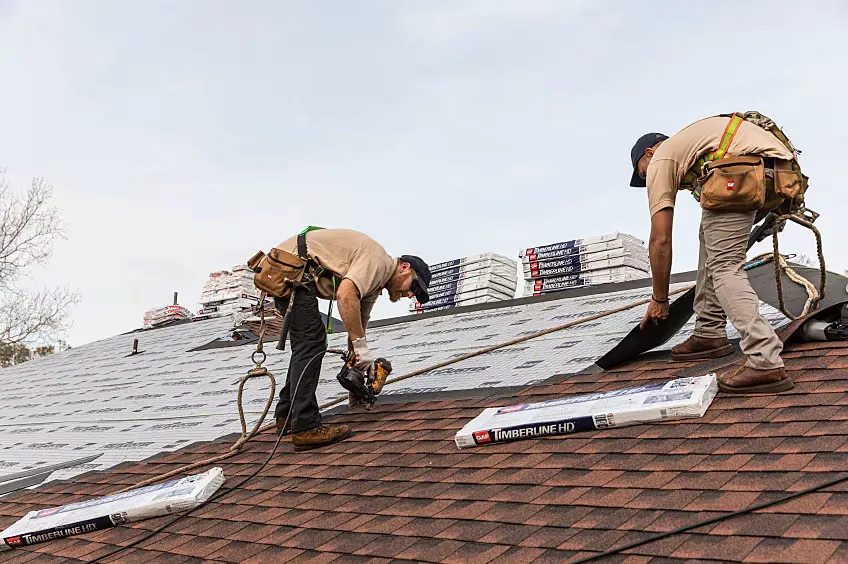
A roof replacement takes one to three days for most homes with asphalt shingles, from the first tear-off shovel to final cleanup. The full project timeline from first call to completed installation typically runs one to two weeks when you include scheduling, material ordering, and permit processing. Larger homes, complex rooflines, premium materials, weather delays, or hidden deck damage can extend the on-site work to four or five days. For homeowners in Watkinsville and Hiawassee, Georgia, understanding what drives that timeline helps you plan around the project, protect your household during the work, and set realistic expectations before the crew arrives.
How Long Does It Take to Remove and Install a Roof?
It takes one to three days to remove and install a roof on a standard 2,000-square-foot home with architectural asphalt shingles and a full, experienced crew. According to Bill Ragan Roofing’s 35-year roofing analysis, most roofs on average-sized residences can be replaced in a single day when weather cooperates and the roofline is not overly complex. Larger homes, steeper pitches, more complex rooflines, and premium materials all push the timeline longer.
The removal phase, also called tear-off, is typically the fastest part of the job and also the loudest and most disruptive. A crew of five to six experienced roofers can strip a 2,000-square-foot asphalt shingle roof in two to four hours under good conditions. The deck inspection, any repairs to rotted or damaged sheathing, underlayment installation, shingle installation, ridge cap, flashing, and final cleanup take the remaining hours of the first day and potentially a second day depending on complexity.
According to Angi’s roof replacement timeline guide, the full range from material to material runs from one day for asphalt shingles on a simple home all the way to 12 days for premium materials like slate or copper on a complex roofline. Metal roofing typically takes four to six days because of the precision required for panel installation and seam work. Clay and concrete tile typically run eight to nine days. For most Watkinsville and Hiawassee homeowners replacing asphalt shingles, the one to three day window is the realistic expectation.
The Watkinsville roof replacement page covers the full installation process so you know what to expect from start to finish before your first call.
Roof Replacement Timeline by Material and Home Size
| Roofing Material | Under 1,500 sq ft | 1,500 – 2,500 sq ft | 2,500 – 4,000 sq ft | Complexity Factor |
|---|---|---|---|---|
| 3-Tab Asphalt Shingles | 1 day | 1 – 2 days | 2 – 3 days | Low |
| Architectural Asphalt Shingles | 1 day | 1 – 2 days | 2 – 4 days | Low – Moderate |
| Standing Seam Metal | 2 – 3 days | 3 – 5 days | 5 – 7 days | High |
| Exposed Fastener Metal | 1 – 2 days | 2 – 3 days | 3 – 5 days | Moderate |
| Cedar Shakes | 2 – 3 days | 4 – 6 days | 6 – 8 days | High |
| Clay / Concrete Tile | 4 – 5 days | 7 – 9 days | 10 – 14 days | Very High |
| Slate | 5 – 7 days | 8 – 12 days | 12 – 21+ days | Very High |
Sources: Bill Ragan Roofing 35-Year Roofing Analysis, Angi Roof Replacement Timeline Guide, Amstill Roofing 2025 Complete Timeline, FoxHaven Roofing 2025 Timeline Guide, Shake Guys 2026 Roof Replacement Timeline, CD Roofing & Construction 2025 Timeline Breakdown. Times reflect on-site installation days only and assume no major deck damage. Weather delays, permit timing, and deck repairs add additional days.
Can I Live in My House While the Roof Is Being Replaced?
Yes, you can live in your house while the roof is being replaced. The vast majority of homeowners stay in their homes throughout a roof replacement without any need to relocate. The work is entirely exterior and does not require access to the interior of the home except in rare situations such as attic ventilation evaluation or an active interior leak that must be located during the inspection phase.
Expect the tear-off day to be the noisiest and most disruptive. Old shingles being stripped off produce significant impact vibration through the home’s framing, which can rattle pictures on walls, cause vibrations in ceiling-mounted items, and produce a substantial level of roof noise. This is temporary and limited to the tear-off hours. The actual shingle installation that follows is considerably quieter.
A few practical steps make the project more comfortable for everyone in the home. Move vehicles away from the roofline perimeter to protect them from falling debris. Take down framed photos and wall decorations that could be knocked by overhead vibration during tear-off. Keep children and pets safely away from the work perimeter throughout the entire day. A responsible crew will set protective tarps around the home before tear-off begins and will perform a magnetic nail sweep of the yard at the end of each workday to collect any fasteners that have landed in the grass or driveway.
The work is dusty and there will be roofing debris in the yard during the project. A professional crew manages this throughout the project with on-site waste collection and a thorough cleanup at completion. You should not need to do anything to prepare the interior of your home beyond the photo and decoration takedown before the crew arrives.
What Is the 25% Rule in Roofing?
The 25% rule in roofing is the industry guideline that when more than 25% of a roof’s surface is damaged, deteriorated, or missing, full replacement is more cost-effective than ongoing repairs. Patching 25% or more of a roof rarely solves the underlying cause, and the accumulated cost of repeated partial repairs in that range typically exceeds the cost of a planned full replacement performed at the right time.
Roofing contractors and insurance adjusters use this benchmark when evaluating storm damage claims and aging roofs. After a hail or wind event in the Watkinsville area or near Hiawassee in Towns County, a contractor who finds that 30% of the shingle surface shows significant impact damage, broken seal strips, or granule loss will typically recommend full replacement over targeted patching. The 25% threshold is where the economics consistently favor starting clean rather than continuing to build on a deteriorating base.
The 25% rule also matters for insurance claims. When matching replacement shingles are unavailable because a 3-tab product line has been discontinued, even minor storm damage to an older roof can trigger full replacement coverage under some policies. If your 3-tab roof experiences hail damage and the original color or style is no longer manufactured, insurance may be required to cover a full replacement regardless of the damage percentage. This makes the 25% rule more of a threshold that interacts with policy terms rather than a hard universal cutoff.
For homeowners who are unsure whether their situation calls for targeted repair or full replacement, the Watkinsville roof repair page covers what targeted repairs address and when a full replacement is the right call for your specific situation.
What Is the Most Expensive Part of Replacing a Roof?
The most expensive part of replacing a roof is labor, which accounts for approximately 40% to 60% of the total project cost for asphalt shingle replacements in Georgia, according to myproroofing.com’s 2026 Georgia cost breakdown. Professional roofers in the Georgia market charge between $40 and $90 per hour per worker. On a $15,000 architectural shingle roof, that means roughly $7,500 to $9,000 goes to the labor involved in tear-off, deck preparation, underlayment, shingle installation, flashing, trim, and cleanup.
Within material costs, the shingle product itself is the single largest line item. Architectural shingles cost significantly more than 3-tab shingles per square, and premium or luxury shingle lines cost more than standard architectural products. The underlayment is another material cost that varies significantly based on specification. Standard felt paper runs approximately $1 per square foot. High-temperature rubberized self-adhering underlayment like Grace Ice & Water Shield HT runs $1.20 to $1.30 per square foot. The underlayment choice affects both the shingle system’s long-term performance and the manufacturer warranty tier available through certified contractors.
Hidden costs that regularly surprise homeowners are the deck repairs discovered during tear-off. In Georgia’s humid climate, long-term moisture infiltration causes plywood sheathing to rot and soften, particularly around old penetrations, in valleys, and along eaves where water tends to concentrate. A single rotted sheet of plywood costs $75 to $100 to replace in Georgia in 2026 according to myproroofing.com. Widespread deck damage involving 20% to 30% of the roof surface can add thousands to the base project cost, which is why any realistic budget should include a 10% to 15% contingency for deck repairs that cannot be confirmed until after tear-off begins.
Can a Roof Replacement Be Done in One Day?
Yes, a roof replacement can be done in one day for homes under 2,000 square feet with a simple gable or hip roofline, one existing shingle layer, healthy decking, and a full experienced crew of five to six roofers. According to Bill Ragan Roofing’s analysis, most roofs on average-sized homes with architectural asphalt shingles can be replaced in a day when weather cooperates and there is not much roofline complexity.
Single-day completion depends on several conditions all being met at once. The materials must be on-site and pre-staged before the crew arrives. The weather must cooperate for the entire working day with no rain risk. The existing decking, once the old shingles are removed, must be confirmed sound without requiring repairs. The roofline must not have multiple dormers, skylights, chimneys, or other penetrations that slow flashing work. The crew must be large enough and experienced enough to move efficiently through tear-off and installation within the available daylight hours.
In Georgia, summer days offer more working daylight than winter days, which matters for single-day completion on larger projects. According to Bill Ragan Roofing’s seasonal analysis, March through late summer provides the longest working windows for roofing crews, while December and January bring shorter days that limit daily production and make single-day completions harder on anything larger than a small home.
For commercial properties in the Watkinsville area that need to remain operational during a roof project, the commercial roofing team can discuss phased installation approaches that minimize disruption to business hours.
How to Tell If a Roofer Is Lying?
You can tell a roofer is lying by watching for these patterns: same-day pressure to sign a contract before you have time to compare quotes, guaranteed promises about what your insurance will pay before an adjuster has inspected the roof, refusal to provide a written itemized estimate, demands for more than 10% to 15% upfront before work begins, inability to produce a valid Georgia contractor’s license number or a current certificate of general liability and workers’ compensation insurance, and no verifiable local address or community reviews.
Timeline claims are another area where dishonest contractors mislead homeowners. A contractor who promises a one-day completion on a 3,000-square-foot complex roofline with multiple valleys and skylights is not being honest about what that job requires. A contractor who disappears for weeks between signing and scheduling without communication is another concern. A written contract should include a clear start date, an estimated completion timeline with specific milestones, and a communication plan for delays caused by weather or material shortages.
After storms near Watkinsville and Hiawassee, out-of-area storm-chasing contractors canvass neighborhoods with low prices and fast promises. These contractors typically have no local presence, no community reviews, and no intention of being available if the workmanship warranty needs to be honored a year after the project closes. Verifying a local physical address, checking Google reviews from homeowners in Oconee County or Towns County specifically, and confirming GAF Master Elite or equivalent manufacturer certification are the most reliable tools for distinguishing legitimate local contractors from opportunistic visitors.
What Time of Year Is the Cheapest to Replace a Roof?
The cheapest time of year to replace a roof in Georgia is late winter, from January through early March. Roofing contractor demand is lowest during this period, scheduling is fastest, and Georgia’s climate keeps temperatures above 40 degrees Fahrenheit, which is the minimum temperature for proper asphalt shingle sealing, even during the coldest weeks of the year in Watkinsville and most of Oconee County.
According to Instant Roofer’s Georgia replacement guide, the ideal replacement windows in Georgia are spring from March through May and mid-to-late fall from October through early November, when temperatures are comfortable and afternoon storm frequency drops. These windows balance good installation conditions with moderate contractor demand. The actual lowest-demand and potentially lowest-cost window is January through February, before spring storms drive demand up sharply across the state.
Off-peak scheduling can reduce pricing by 10% to 20% in some markets according to roofing industry cost research. Beyond direct cost savings, scheduling your replacement in a low-demand period gives you more control over contractor selection. After a major storm in Oconee County or Towns County, every licensed local contractor books out quickly. Homeowners who are not dealing with an active leak often benefit significantly from waiting a few months post-storm to get better access to their preferred contractor at more competitive pricing.
The one month to avoid in Georgia for roofing in most years is August, when the combination of peak tropical storm activity, extreme afternoon heat, and high humidity creates the worst safety and scheduling conditions of the year. The peak of Atlantic hurricane season runs August through September, and even inland storms during this period can disrupt roofing schedules across Oconee County and in the mountain communities near Hiawassee.
What Adds $100,000 to Your House?
Adding $100,000 of home value through a single improvement is primarily achievable through major additions like a finished basement, an accessory dwelling unit (ADU), a significant kitchen gut renovation in a high-value market, or an outdoor living space addition in a competitive neighborhood. A roof replacement alone does not typically add $100,000 in value, though in premium markets it can add more than the national average figures suggest.
For most Georgia homeowners, a new roof adds $12,000 to $15,427 in market value according to Remodeling Magazine’s Cost vs. Value data, delivering a 60% to 68% ROI on the installation cost. Achieving $100,000 in added value typically requires combining a new roof with several other exterior and interior improvements together. The combination of a new architectural shingle roof, new exterior siding or paint, updated windows, and a refreshed landscape creates the total first-impression package that buyers respond to most strongly. Each element adds some value individually, but together they create the impression of a fully updated, well-maintained home that justifies full asking price without negotiation.
For homeowners in the Watkinsville area with higher-value properties, a new architectural shingle roof combined with new gutters and soffit work, fresh exterior paint, and attention to landscaping can move a home’s market position meaningfully. In a market where buyers are comparing your home to similar listings with newer roofs, removing the old-roof concern from the buyer’s inspection checklist is worth more than the straight ROI calculation shows because it eliminates the most common reason buyers discount their offers during due diligence.
The roofing choices page covers how different roofing materials affect both curb appeal and market value so you can make an informed decision before committing to a specific product for a pre-sale project.
What Can Go Wrong During a Roof Replacement?
The most common things that go wrong during a roof replacement are hidden deck damage discovered after tear-off, unexpected rain that halts the project before the new roof is sealed, incorrect flashing installation around chimneys and penetrations, improper nailing of shingles that voids the manufacturer’s warranty, and inadequate cleanup that leaves roofing nails in the yard and gutters.
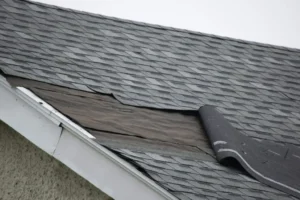
Hidden deck damage is the most frequent timeline and budget disruption. Old shingles can mask rotted plywood sheathing, particularly around valleys, chimneys, skylights, and eave areas where water tends to pool or wick. Once tear-off reveals the extent of deck damage, the crew cannot install new shingles until the deck repairs are complete. This can add one to two days to the timeline depending on the severity and extent of the damage. Any homeowner budget that does not include a contingency for deck repairs is setting itself up for a surprise.
Rain that arrives mid-project is the most disruptive weather event during a roof replacement. A reputable contractor monitors weather forecasts carefully and will not begin tear-off on a day when afternoon storms are likely. Georgia’s summer afternoon thunderstorm pattern, particularly in the Hiawassee and Towns County area where mountain weather develops rapidly, requires experienced local contractors to understand and plan around the specific patterns of the area. If rain arrives unexpectedly, the crew will cover the exposed deck with heavy tarps to prevent water infiltration until conditions allow work to resume.
Incorrect flashing is the most consequential installation error because flashing failures are the leading cause of roof leaks on otherwise sound roofing systems. Chimneys, skylights, pipe boots, HVAC penetrations, and wall-to-roof transitions all require properly formed and sealed flashing to remain watertight. A contractor who installs flashing incorrectly may not create a visible problem for months or years, making it essential to choose an installer with verified experience and manufacturer certification rather than relying on price alone.
At What Age Is a Roof Considered Old?
A roof is generally considered old when it reaches 15 years for 3-tab asphalt shingles, 20 years for architectural asphalt shingles in Georgia’s climate, or 40 years for metal roofing. These thresholds mark the point when roofing professionals and insurance carriers begin treating the roof as approaching or at end-of-life for planning and underwriting purposes.
Georgia’s climate accelerates asphalt shingle aging compared to national averages. The combination of intense summer UV exposure, high humidity that promotes algae growth, and active storm seasons shortens realistic shingle lifespan by approximately 25% to 30% compared to the manufacturer’s stated lifespan. J&M Roofing’s regional research shows asphalt shingles in warmer southern climates averaging approximately 14 years of realistic service life. A roof that appears fine from the street at 15 years may have reached the end of its effective protective life when inspected by an experienced contractor who can assess granule coverage, adhesive seal strip integrity, and underlayment condition.
Some insurance carriers in Georgia now impose coverage limitations or non-renewal risks on asphalt shingle roofs over 15 to 20 years old, reflecting the higher claim probability associated with older roofing materials in a storm-active climate. A homeowner with a 20-year-old roof may find that their carrier requires a professional inspection before renewing or that the replacement cost coverage terms change at policy renewal. Proactive replacement eliminates this insurance risk along with the structural risks of continued aging.
What Is Grace in Roofing?
Grace in roofing refers to Grace Ice & Water Shield, the industry’s leading self-adhering rubberized asphalt roofing underlayment made by GCP Applied Technologies, which was acquired by CertainTeed in recent years. Grace Ice & Water Shield is a waterproof membrane installed on the roof deck beneath shingles that provides a secondary line of defense against water infiltration from ice dams, wind-driven rain, and shingle failure at vulnerable areas including eaves, valleys, chimneys, skylights, and wall intersections.
Unlike standard felt underlayment or synthetic underlayment, Grace Ice & Water Shield is self-adhering, meaning it bonds directly to the roof deck without staples or nails and self-seals around roofing nails after shingles are installed. This self-sealing property means that even if individual nails penetrate the membrane during shingle installation, the rubberized asphalt closes around each fastener and prevents water from tracking down the nail shaft into the deck below.
In Georgia’s climate, Grace Ice & Water Shield HT (high temperature) is the recommended specification for the eave and valley areas of most residential roofs. The HT variant is engineered to withstand the high attic temperatures Georgia’s summers produce without losing its adhesive bond, whereas standard Grace Ice & Water Shield can soften and lose performance at sustained temperatures above approximately 185 degrees Fahrenheit. Quality contractors throughout Watkinsville and the Hiawassee area specify the HT product to ensure the underlayment performs through Georgia’s long, hot summers.
As a GAF Master Elite certified contractor, Ridgeline Roofing and Exteriors specifies appropriate high-performance underlayment products for every installation. The underlayment specification is one of the most important items to confirm in any contractor’s written quote, because it is invisible after installation and is easy for lower-quality contractors to substitute with cheaper products without the homeowner knowing. Any quote that lists “felt” or does not specify the underlayment product by name should prompt a follow-up question before signing.
What Temperature Is Too Cold to Replace a Roof?
The minimum safe temperature for installing asphalt shingles is 40 degrees Fahrenheit (4 degrees Celsius). Below this threshold, asphalt shingles become brittle and more prone to cracking during handling and nailing, and the self-sealing adhesive strips on the shingle’s underside will not activate properly, leaving the new roof vulnerable to wind uplift until warmer weather arrives and the seal strips can thermally bond. According to IKO Roofing’s cold weather installation guide, citing Roofing Construction & Estimating by Daniel Benn Atcheson, the optimal installation temperature range for asphalt shingles is 40 to 85 degrees Fahrenheit (4 to 26 degrees Celsius).
For most of Watkinsville and Oconee County, winter temperatures rarely drop below 40 degrees Fahrenheit for sustained periods, meaning roofing can continue through the winter months in this part of Georgia with appropriate scheduling and weather monitoring. For homeowners near Hiawassee in Towns County, mountain elevations bring colder temperatures and occasionally sustained cold snaps that push below the 40-degree threshold for multiple consecutive days. In those conditions, a responsible contractor will pause the project rather than install shingles that cannot seal properly.
At the other end of the temperature range, extreme heat above 85 to 90 degrees Fahrenheit creates its own challenges. Shingles become very soft and can be scuffed or deformed by foot traffic during installation in Georgia’s peak summer heat. Roofers working in direct July and August sun in Georgia face heat safety risks that responsible contractors manage through early start times, hydration protocols, and crew rotation. This is another reason late winter through spring tends to produce the best combination of conditions for a quality, timely roof installation in the Georgia climate.
How Much Does a New Roof Cost for a 2,000-Square-Foot House?
A new roof for a 2,000-square-foot house costs between $8,000 and $20,000 for architectural asphalt shingles in Georgia, with the midpoint around $12,000 to $15,000, according to RST Roofing & Renovations’ 2025 Georgia pricing data. The average cost to replace a roof in Georgia is approximately $15,756 according to Instant Roofer’s March 2026 data update, which reflects the state’s average roof size of 2,904 square feet including pitch, which is larger than the 2,000-square-foot floor plan for most homes.
For a 2,000-square-foot home specifically, the range reflects real variation in project complexity. A simple gable roof with one existing shingle layer, healthy decking, and no skylights or chimneys lands at the lower end. A complex hipped or multi-valley roof with two existing shingle layers, deck repairs, and multiple penetrations requiring custom flashing lands toward the higher end. Labor accounts for approximately 40% to 60% of the total project cost in Georgia, meaning contractor selection and roof complexity drive the final number as much as the shingle product chosen.
Beyond the base installation cost, budget separately for tear-off at $1 to $3 per square foot, deck repairs if discovered during the project, permits at $250 to $500, and a 10% to 15% contingency for unexpected conditions. A complete written estimate from a licensed local contractor who has physically inspected your roof is the only reliable starting point for a real project budget.
How Do Most People Afford a New Roof?
Most people afford a new roof through one of four paths: homeowner’s insurance when the damage was caused by a storm or covered event, personal savings, home equity financing, or contractor-arranged financing programs. According to the National Roofing Contractors Association, insurance-covered replacements represent a significant portion of all residential roof replacements in storm-active markets like Georgia, where wind and hail drove more than half of all residential roofing claims in 2024 according to Fixr.com’s 2025 industry data.
For damage-related replacements, the homeowner’s deductible is the primary out-of-pocket cost after insurance pays the covered claim. Standard homeowner’s deductibles range from $1,000 to $2,500 for most Georgia policies, though policies with separate wind or hail deductibles tied to a percentage of the home’s insured value can require higher out-of-pocket contributions. Understanding your specific policy terms before a storm, rather than after, is the most important financial preparation any homeowner can make.
For non-insurance replacements, home equity financing is one of the most financially efficient options because home equity loan or HELOC interest rates are typically lower than personal loan rates and the interest may be tax-deductible for some homeowners when used for home improvement. Contractor-arranged financing through programs like GreenSky provides another path, with terms including 12 months interest-free for qualifying projects up to $65,000. Ridgeline Roofing and Exteriors offers GreenSky financing for qualified homeowners in Watkinsville and Hiawassee, allowing the right roof to be installed now and paid over time. Details are on the residential roof financing page.
Does a New Roof Lower Insurance?
Yes, a new roof can lower your homeowner’s insurance premium in many cases. According to the Metal Roofing Alliance, qualifying metal roofs may reduce insurance premiums by up to 35% annually due to their higher wind resistance ratings and fire performance. For asphalt shingle roofs, insurance premium savings vary by carrier but are typically less dramatic than metal. The primary insurance benefit of a new asphalt shingle roof is the removal of age-related underwriting concerns and surcharges that apply to older roofs rather than a significant annual discount.
Insurance carriers assess roof age and condition as a significant factor in premium calculation and coverage eligibility. A 20-year-old 3-tab shingle roof in Georgia may trigger surcharges, coverage limitations, or non-renewal considerations from carriers applying stricter underwriting standards. A new architectural shingle roof removes those age-related premium pressures and can qualify the home for lower rates. The specific savings depend on your carrier’s underwriting model, the product installed, and your home’s location and risk profile.
Class 4 impact-resistant architectural shingles from manufacturers like Owens Corning Duration FLEX offer the highest hail impact rating under UL 2218 testing, and some Georgia insurance carriers offer meaningful premium discounts specifically for Class 4 rated products. In the storm-active markets around Hiawassee in Towns County and throughout the Watkinsville and Oconee County area, the impact resistance rating of the shingle product can have a real annual financial impact beyond just the long-term durability benefit.
Always contact your insurer before and after a roof replacement to confirm what discount your new product qualifies for, what documentation they require from the contractor, and whether any deductible or coverage terms change at the next renewal.
What Not to Say to a Roof Insurance Adjuster?
You should never tell a roof insurance adjuster that you are unsure when the damage occurred, that the damage has been there a while, that the roof is already old and you were planning to replace it, or that you agree with their scope of damage before your own licensed contractor has independently reviewed their findings. These statements are commonly used to reclassify a storm damage claim as age-related wear and tear, which shifts the replacement cost from insurance coverage to your out-of-pocket expense.
Keep your statements factual. State the date of the storm event. Describe what you observed after the storm. Request a copy of the adjuster’s written findings before agreeing to any scope or settlement. Have a licensed contractor perform an independent inspection and provide a written assessment before the adjuster’s visit if possible, so you have professional documentation to compare against the adjuster’s conclusions.
Do not sign any settlement agreement, release, or scope of work authorization based on the adjuster’s verbal statements. Get everything in writing and compare the adjuster’s scope against your contractor’s independent assessment before committing to any outcome. If the two assessments differ significantly, you have the right to request a supplemental inspection or engage a public adjuster to advocate for a more complete claim settlement.
Can I Be Home While My Roof Is Being Replaced?
Yes, you can absolutely be home while your roof is being replaced, and most homeowners stay home throughout the project. The crew works entirely on the exterior and does not need access to the inside of the home except in rare situations involving attic ventilation assessment or interior leak investigation.
Plan for the tear-off day to be the loudest and most disruptive. The impact vibration of old shingles being stripped travels through the home’s structure and produces significant noise indoors. Keep the sound in perspective by understanding that it is temporary, limited to the working hours of one day, and the result of work that will protect your home for the next 20 to 30 years. Many homeowners find it easier to schedule the tear-off day with plans to be away from home during working hours, particularly if working from home requires concentration or if young children’s nap schedules are affected by the noise.
If you prefer to be present throughout the project, the most useful things you can do are make yourself available if the crew foreman has questions about existing penetrations, utility locations, or access issues, and stay clear of the active work perimeter so the crew can move efficiently and safely. Let the professionals do their job without interruption and wait for the foreman to come to you with questions rather than approaching the work area.
How Messy Is a Roof Replacement?
A roof replacement is messy by nature, particularly on the tear-off day, but the mess is manageable and should be cleaned up by a professional crew before they leave each day. Old shingles, torn underlayment, nails, and debris fall to the ground around the home’s perimeter during tear-off. A responsible contractor places tarps and drop cloths around the perimeter before tear-off begins to catch the majority of this falling material and protect landscaping, air conditioning equipment, and outdoor furniture beneath the roofline.
The yard will have some debris throughout the project that is not fully contained by the tarps. This is inevitable. What distinguishes a professional crew is how thoroughly they manage this during the project and how completely they clean up at completion. End-of-day cleanup should include collecting all visible debris, performing a thorough magnetic nail sweep of the entire yard perimeter to collect loose fasteners in the grass, sweeping the driveway and any hard surfaces where nails or granules have accumulated, and confirming that gutters have been cleared of debris shaken loose during installation.
The neighbor relationship is worth a moment of consideration. Old shingle debris and nails can reach neighboring properties during tear-off, particularly on windy days. A quick heads-up conversation with neighbors whose property is adjacent to your roofline is a courteous preparation step. A professional contractor will also be aware of this and take precautions during the tear-off process to minimize debris spread.
What If It Rains During Roof Installation?
If it rains during roof installation, the crew will stop work and protect the exposed area with heavy-duty tarps until conditions improve. Installing shingles in rain is not safe for the crew on a wet, slick roof surface, and wet decking cannot accept shingles correctly because the moisture trapped beneath the shingles can promote mold, rot, and adhesion failure over time. A professional contractor will not install shingles over wet sheathing or in active rain under any circumstances.
The critical concern when rain arrives mid-project is the protection of any exposed roof deck. Once old shingles have been torn off but before the new underlayment is fully installed, the deck is temporarily unprotected. A responsible crew keeps heavy-duty poly tarps on-site and deploys them quickly at the first sign of incoming rain to prevent water from reaching the exposed sheathing. The tarps are weighted or fastened to prevent wind from displacing them during the storm.
If the rain delay extends for more than a day and there is standing water or significant saturation of the exposed deck, the contractor should confirm the decking has dried adequately before proceeding with underlayment and shingle installation. Shingles installed over wet decking are one of the most common installation errors that leads to premature roof failure. Do not allow a contractor to proceed over wet materials simply to stay on schedule.
In Georgia, experienced local contractors schedule projects around forecast windows rather than fixed calendar dates precisely because of the state’s active afternoon thunderstorm pattern, particularly from May through September. Near Hiawassee in the north Georgia mountains, where afternoon storms develop rapidly from rising mountain terrain, this local weather awareness is especially important for contractors serving that area.
How Many Man-Hours to Replace a Roof?
It takes approximately 30 to 90 man-hours to replace a standard residential asphalt shingle roof, depending on home size, complexity, and the number of workers on the crew. A 2,000-square-foot home with a straightforward gable roofline typically requires 30 to 50 man-hours of labor. A larger or more complex home can push into the 70 to 90 man-hour range or beyond.
Crew size is the primary variable that translates man-hours into calendar days. A crew of five roofers completing 50 man-hours of work finishes the job in approximately 10 hours, or one productive working day. The same 50 man-hours with a crew of two takes 25 hours, or three working days. Professional roofing companies staff projects based on roof size and complexity specifically to balance efficiency with quality, which is why larger crews on larger projects are a sign of professional project management rather than unnecessary expense.
Labor accounts for approximately 40% to 60% of total roof replacement cost in Georgia. On a $15,000 project, that represents $7,500 to $9,000 in labor cost for the man-hours of work performed. This is why the crew experience and certification level matter to your outcome. An experienced crew that has worked together for years moves more efficiently, makes fewer installation errors, and catches potential problems earlier in the project than an inexperienced crew on the same roofline.
What Is the Average Cost to Replace Shingles on a Roof?
The average cost to replace shingles on a roof in Georgia runs from $8,000 to $20,000 for architectural asphalt shingles on a standard 2,000-square-foot home, according to RST Roofing & Renovations’ 2025 Georgia pricing data. The state average across all home sizes and shingle types is approximately $15,756 according to Instant Roofer’s March 2026 Georgia data, though this reflects the average Georgia roof size of 2,904 square feet including pitch rather than a flat 2,000-square-foot footprint.
Georgia’s construction costs run approximately 10% below the national average according to Roof Observations’ 2025 Georgia cost guide, giving Oconee County and Towns County homeowners a cost advantage over the national figures published by most online calculators. Nationally, This Old House’s 2026 survey of 1,000 homeowners found an average new roof cost of $15,439, with a range of $6,885 to $23,993. Georgia homeowners typically land below those national midpoints for equivalent work scope.
Per-square-foot costs for installed architectural shingles in Georgia run approximately $4 to $7 per square foot, and 3-tab shingles run $3 to $5 per square foot, according to Roof Observations and RST Roofing’s Georgia data. These per-square-foot figures include materials and labor but not tear-off, which adds $1 to $3 per square foot separately. Any complete and honest estimate will separate these line items so you can compare quotes accurately.
For homeowners considering replacement versus repair, the new replacement roofing page provides context on what a full project includes and what documentation you should receive from a licensed contractor at every project milestone.
When Not to Put on a New Roof?
You should not put on a new roof when temperatures drop below 40 degrees Fahrenheit, when the forecast includes rain or high winds during the planned installation window, when the existing roof has meaningful remaining service life and no active damage that warrants the expense, or when the project budget requires quality shortcuts that will create problems under the new shingles.
Asphalt shingles installed below 40 degrees Fahrenheit cannot activate their self-sealing adhesive strips properly. The strip remains stiff and does not bond to the shingle above until temperatures warm, leaving the newly installed shingles vulnerable to wind uplift for weeks or months until the seal activates. In most of Watkinsville and Oconee County, this is not a frequent winter concern because temperatures rarely sustain below 40 degrees for extended periods. In the north Georgia mountain communities near Hiawassee, this is a more meaningful seasonal consideration where installation timing in December and January requires more careful weather monitoring.
You should also not proceed with a new roof installation over a deck that has not been confirmed to be sound. An overlay installation, adding new shingles over an existing layer without tear-off, saves $2,000 to $6,000 in tear-off cost but conceals whatever deck condition exists beneath the old shingles. If the deck has rot, moisture damage, or soft spots, those problems continue to worsen invisibly beneath the new shingles for years. Full tear-off and deck inspection is the only way to confirm you are building a 20 to 25-year roof system on a foundation capable of supporting it.
For homeowners who want an objective assessment of whether their current roof warrants immediate replacement or still has meaningful service life remaining, Drone Zone AI Roofing Inspections from Ridgeline Roofing and Exteriors provide detailed photographic documentation of every area of concern without requiring anyone to walk the roof surface, making them particularly useful for steep-pitched mountain homes near Hiawassee.
What Is the Average Age of a Roof Before Replacement?
The average age of a roof before replacement in the United States is 17 to 19 years for asphalt shingle roofs, according to RubyHome’s 2025 Roofing Statistics. This figure reflects the real-world performance of the majority of residential roofs across all climate types, which includes many roofs replaced after storm damage well before their natural end of life.
In Georgia’s climate, the average replacement age is likely shorter than the national figure because the combination of heat, humidity, UV exposure, and storm activity accelerates shingle aging. J&M Roofing’s regional research shows southern asphalt shingles averaging approximately 14 years of realistic service life, roughly 25% shorter than the national average. Homeowners who plan around a 15-year inspection and replacement planning horizon for 3-tab shingles, and a 20-year horizon for architectural shingles, are well-positioned in Georgia’s climate compared to those waiting for the manufacturer’s stated lifespan to arrive.
The timing of replacement also depends heavily on storm history. A roof installed in Oconee County that experienced major hail events in its 10th and 13th years may reach functional end of life well before a comparable roof that experienced no significant storm events. This is why annual professional inspections after the 10-year mark are more valuable in Georgia’s active storm environment than they are in calmer climates, because the condition difference between two same-age roofs in Georgia can be dramatic depending on the storm events each has weathered.
Frequently Asked Questions About Roof Replacement Timelines in Watkinsville and Hiawassee, GA
How long does a roof replacement take on a typical Watkinsville home?
A typical roof replacement on a standard 2,000-square-foot home in Watkinsville takes one to two days for asphalt shingles with a full experienced crew. The total project timeline from first contact through completed installation typically runs one to two weeks when scheduling, material ordering, and permit processing are included. Oconee County permit timelines are generally efficient, and material delivery for standard architectural shingle products is typically available within a few days of scheduling. Weather delays during Georgia’s active spring and summer storm seasons are the most common cause of timeline extensions for Watkinsville-area projects.
Does Ridgeline Roofing serve both Watkinsville and Hiawassee?
Yes, Ridgeline Roofing and Exteriors is a GAF Master Elite certified contractor based at 1725 Electric Ave Suite 330 in Watkinsville, GA, and serves homeowners throughout Oconee County and in Hiawassee and Towns County in the north Georgia mountains. The team is familiar with the specific roofing challenges of both the Piedmont climate of Oconee County and the mountain climate of the Hiawassee area, including the steeper pitches common in mountain communities and the different storm patterns that affect the two areas at different times of the year.
What should I do to prepare before a roof replacement?
Before a roof replacement, move vehicles away from the roofline perimeter and to the street or a neighboring driveway if possible. Remove or protect outdoor furniture, potted plants, air conditioning units, and anything else that sits within the debris fall zone around the home’s perimeter. Inside, take down framed photos and wall decorations that could be knocked by vibration during tear-off. Alert neighbors whose property is adjacent to your roofline about the project timing so they can move their vehicles and outdoor items as well. On the day of installation, keep children and pets away from the work perimeter and make sure the roofing crew has clear access to the property without vehicles blocking their material staging areas.
How long does GAF Golden Pledge warranty work take compared to a standard installation?
A GAF Golden Pledge warranty installation follows the same timeline as a standard installation in terms of on-site work. The difference is not in the duration of the installation itself but in the specification of materials, installation process compliance, and the post-installation documentation and warranty registration steps that the contractor completes on the homeowner’s behalf. As a GAF Master Elite certified contractor, Ridgeline Roofing and Exteriors can offer the Golden Pledge warranty providing 50-year non-prorated material coverage and 25 years of workmanship protection. This level of warranty is only available through Master Elite certified contractors, regardless of which GAF shingles are being installed.
Can roof replacement be scheduled in the winter in the Hiawassee area?
Yes, roof replacement can be scheduled in the winter in the Hiawassee area with appropriate weather monitoring. The primary constraint is the 40 degree Fahrenheit minimum temperature threshold for asphalt shingle installation. In Towns County’s mountain elevation, sustained cold snaps below this threshold occur more frequently and for longer periods than in lower-elevation Watkinsville. A responsible contractor serving the Hiawassee area monitors daily and extended forecasts carefully during winter scheduling and will not start a shingle installation on days where temperatures are expected to remain below 40 degrees throughout the working hours. Winter replacements in the mountains are feasible from November through February in mild weather windows, and January and February can offer competitive pricing due to lower contractor demand across the region.
What’s included in Ridgeline Roofing’s inspection before a roof replacement?
Ridgeline Roofing and Exteriors offers Drone Zone AI Roofing Inspections that document the full roof surface with aerial photography and AI-assisted analysis, providing a detailed visual record of every area of concern without requiring anyone to walk the roof. The inspection documents shingle condition, granule coverage, flashing integrity, ridge and hip condition, valley condition, penetration seals, and any visible deck issues detectable from the surface. The inspection report provides the basis for an accurate written replacement estimate and also serves as useful documentation for insurance purposes when storm damage has occurred. Free inspection scheduling is available through ridgelineroofingcompany.com or by calling 770-706-ROOF (7663).
How long after a storm should I wait to schedule a roof inspection in Watkinsville?
You should schedule a roof inspection within one to two weeks after a significant hail or wind storm in Watkinsville. Most insurance policies have claim filing deadlines that vary by carrier, typically ranging from one year to three years after the damage event, but waiting longer than necessary reduces the quality of documentation available to support your claim. Additionally, after major storms in Oconee County, licensed local contractors’ schedules fill up quickly, and waiting too long may mean longer lead times before an inspection and estimate can be completed. Scheduling promptly gives you the most options and the most time to navigate the insurance process carefully before any deadline pressure arrives.
Final Thoughts
A roof replacement is one to three days of active disruption in exchange for 20 to 30 years of protection for one of your home’s most critical systems. Understanding the full timeline from first call to completed installation, what drives that timeline longer or shorter, and what to expect each day of the project helps you plan around it rather than being surprised by it.
For homeowners in Watkinsville and throughout Oconee County, and for those in the north Georgia mountains near Hiawassee in Towns County, choosing a licensed local contractor with genuine experience in your specific climate conditions is the most important decision in the entire process. The materials, the timeline, and the warranty are all shaped by the quality of the installer behind them. A GAF Master Elite certified contractor with verified local experience and community reviews is the starting point for a project you can trust for the next generation of weather events your home will face.
Ready to Schedule Your Roof Replacement or Inspection?
Ridgeline Roofing and Exteriors is a GAF Master Elite certified contractor serving Watkinsville, Hiawassee, and homeowners throughout Oconee and Towns County, GA. Free inspections, honest written estimates with clear timelines, and GreenSky financing available for qualified homeowners.
Call 770-706-ROOF (7663) or schedule online. When you are ready to understand exactly what your project involves, the Watkinsville roof replacement page covers every step of the process, and the asphalt roofing page covers available shingle products so you can come to your first conversation already informed.