Skip to content
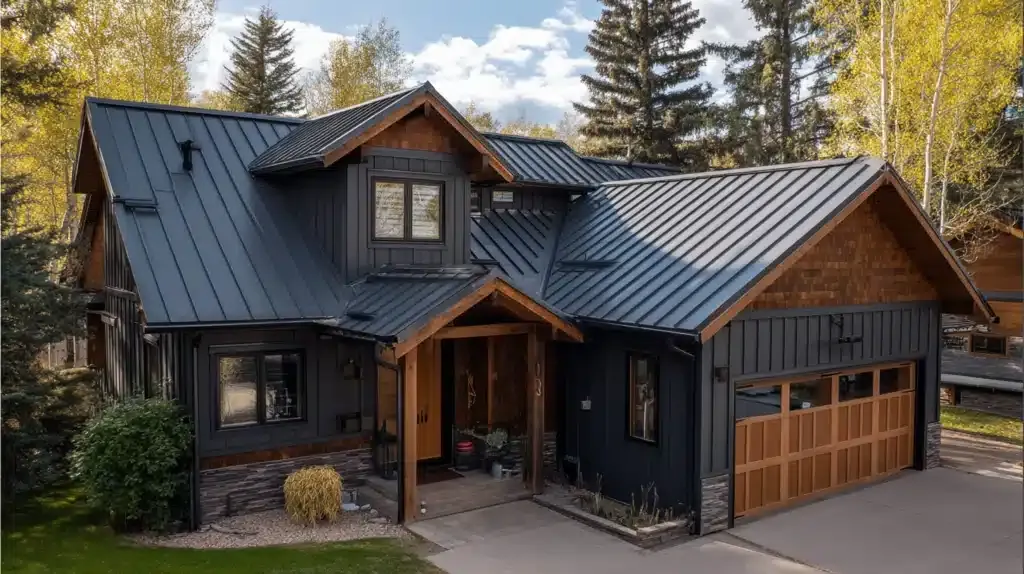
A metal roof costs between $10,000 and $40,000 for most Georgia homes, depending on the metal type, system design, roof size, and complexity. Exposed fastener systems start as low as $4.50 to $6.50 per square foot installed. Standing seam steel systems run approximately $16 per square foot installed. Premium metals like copper and zinc push costs significantly higher. For a standard 2,000-square-foot home in the Watkinsville and Hiawassee areas, a steel standing seam metal roof typically runs $15,000 to $30,000, while Georgia’s construction costs average about 10% below the national average, which gives local homeowners a modest cost advantage. This guide breaks down every cost factor, answers every common question from the People Also Ask results, and gives you a clear picture of what to budget before requesting your first quote.
How Much Does a Metal Roof Cost for a House?
A metal roof costs between $10,000 and $40,000 for a standard house in Georgia, depending on the home’s size, the metal system selected, and the complexity of the roof. According to Angi’s 2026 metal roofing cost data, compiled from thousands of real customer projects, the national average cost of a new metal roof is approximately $11,741, with most homeowners spending between $5,745 and $17,740. Total costs can run as low as $1,500 for a small structure or as high as $34,900 for a larger home with a complex roofline or premium materials.
Georgia’s construction costs average about 10% below the U.S. national average, according to Roof Observations’ 2025 Georgia cost guide, which means Watkinsville and Hiawassee homeowners typically pay less than the national average for the same scope of work. Angi’s regional data shows average metal roof costs in Georgia running approximately $10,600, compared to $16,800 in California and $14,300 in New York. That regional cost advantage, combined with metal’s 40 to 70-year lifespan, makes the math more favorable for Georgia homeowners than for those in higher-cost markets.
The single biggest variable in metal roof cost is the system type. Exposed fastener systems cost roughly half as much as standing seam systems, but they also require more maintenance and last 20 to 30 years rather than 40 to 70. For a home over a heated living space, standing seam is almost always the better choice. For outbuildings, garages, or agricultural structures, exposed fastener systems are often the right call.
The Watkinsville metal roofing page covers available metal systems for homes in this area and what a written quote process looks like when you are ready to get a project-specific number.
Metal Roof Cost by Home Size in Georgia (2025)
| Home Size | Exposed Fastener Steel | Standing Seam Steel | Standing Seam Aluminum | Copper / Zinc |
|---|---|---|---|---|
| 1,000 sq ft | $5,500 – $9,000 | $10,000 – $20,000 | $13,000 – $25,000 | $28,000 – $55,000+ |
| 1,500 sq ft | $8,000 – $13,000 | $16,000 – $28,000 | $19,000 – $35,000 | $38,000 – $75,000+ |
| 2,000 sq ft | $10,000 – $17,000 | $20,000 – $38,000 | $25,000 – $48,000 | $50,000 – $100,000+ |
| 2,500 sq ft | $13,000 – $22,000 | $26,000 – $48,000 | $32,000 – $60,000 | $65,000 – $125,000+ |
| 3,000 sq ft | $16,000 – $27,000 | $32,000 – $58,000 | $39,000 – $72,000 | $80,000 – $150,000+ |
Sources: Angi 2026 Metal Roofing Cost Data, Bill Ragan Roofing 2025 Metal Roof Cost Analysis, RST Roofing 2025 Georgia Metal Roof Cost Guide, Roof Observations 2025 Georgia Cost Guide, Western States Metal Roofing 2025 Price Guide, HomeAdvisor 2025 Metal Roof Installation Cost Data. Note: Figures reflect Georgia market conditions, approximately 10% below national averages. Actual costs vary by roof complexity, pitch, tear-off requirements, and specific contractor.
How Much Does It Cost to Put a Metal Roof on a 1,000-Square-Foot House?
It costs between $5,500 and $20,000 to put a metal roof on a 1,000-square-foot house in Georgia, depending on the system selected. An exposed fastener steel system on a simple 1,000-square-foot structure runs approximately $5,500 to $9,000. A standing seam steel system on the same structure runs $10,000 to $20,000. Copper and zinc push well beyond that range.
Smaller projects often cost more per square foot than larger ones, not less. According to Western States Metal Roofing’s pricing guide, jobs under 500 square feet can cost double to triple the per-square-foot rate of a 2,000-square-foot project because the fixed costs of setup, mobilization, material delivery, and permits are spread over far fewer squares. A 1,000-square-foot project still benefits from some economy of scale, but not nearly as much as a full 2,000-square-foot or larger home roof.
Small homes and cottages near Watkinsville, and mountain cabins near Hiawassee that are smaller than 1,500 square feet, should budget on the higher per-square-foot end of metal roofing estimates and get at least three written quotes from licensed local contractors with metal roofing experience before committing.
How Much Should I Budget for a Metal Roof?
You should budget between $15,000 and $35,000 for a standing seam steel or aluminum metal roof on a standard 2,000 to 2,500-square-foot home in Georgia, which covers the majority of residential metal roofing projects. If your budget is closer to $8,000 to $15,000, an exposed fastener steel system is possible, though it comes with more maintenance requirements and a shorter lifespan. If you are considering copper or zinc, budget $50,000 and up for the same home size.
Beyond the base installation cost, homeowners should budget for several additional line items that are not always included in initial quotes. Tear-off and disposal of the existing roof typically adds $1 to $3 per square foot, or $1,000 to $5,000 for a standard home, according to HomeAdvisor’s 2025 cost data. Roof deck repairs, if the existing decking has soft spots or rot discovered during tear-off, add more. Permits typically run $250 to $500, according to Angi’s 2026 data. Gutters may need to be re-hung or replaced after the new roof is installed, adding several hundred to several thousand dollars depending on linear footage and gutter type.
A practical budgeting approach is to take your best estimate of the base metal roof installation cost and add 15% to 20% as a buffer for the additional items above. This gives you a realistic total to plan around rather than being caught short when the full project scope is defined.
How Much Is a 2,000-Square-Foot Metal Roof?
A 2,000-square-foot metal roof costs between $20,000 and $38,000 for standing seam steel in Georgia, and between $10,000 and $17,000 for an exposed fastener steel system on the same home. The wide range reflects the significant difference between metal system types more than it reflects uncertainty in pricing. Once you know which system you want, the range narrows considerably.
It is important to understand that a 2,000-square-foot home does not have 2,000 square feet of roof surface. The actual roof area is larger than the home’s floor plan footprint because pitch adds surface area. A standard 4:12 pitch adds roughly 5% to the flat footprint, while a steeper 8:12 pitch adds about 20%, according to roof cost calculator research from roof-installation.com. This means a 2,000-square-foot home with a moderate pitch typically has 2,100 to 2,400 square feet of actual roof surface, which affects both material quantities and total installed cost.
Labor accounts for approximately 60% of the total metal roof cost, according to both Angi’s 2026 data and HomeAdvisor’s 2025 analysis. On a $30,000 standing seam project, that means roughly $18,000 goes to labor and about $12,000 to materials, fasteners, underlayment, and trim. This is why installer experience and certification matter so much for metal roofing. Skilled metal roofing crews cost more per hour than standard shingle crews, and that labor premium is a direct result of the additional expertise the system requires.
For homes in the Watkinsville area, a free inspection and written estimate gives you a project-specific number based on your actual roof surface area, pitch, complexity, and current material pricing. The Watkinsville roof installation page explains what the full process looks like from inspection through completion.
Are Metal Roofs Cheaper Than Shingles?
No, metal roofs are not cheaper than shingles upfront. Metal roofs cost two to four times more at installation than asphalt shingles for the same home. In Georgia, an architectural asphalt shingle roof on a 2,000-square-foot home runs $8,000 to $20,000. A standing seam metal roof on the same home runs $20,000 to $38,000. That upfront gap is real and significant.
Metal roofs become cheaper than shingles over time for homeowners who stay in their homes long enough. According to McElroy Metal’s life cycle cost analysis, homeowners who stay in their homes for 30 to 40 years can save $25,000 to $30,000 by choosing metal over repeated shingle replacement cycles, even after accounting for metal’s higher first cost. An architectural shingle roof in Georgia lasts 18 to 25 years realistically, which means a 40-year homeowner replaces it once or twice. A metal roof installed in the same period never needs replacing.
When you add annual energy savings of up to 25% on cooling costs, insurance premium discounts of up to 35% from the Metal Roofing Alliance, and the elimination of future replacement cycles, the lifetime cost of metal often falls below the lifetime cost of asphalt shingles for long-term homeowners. For short-term homeowners or those on tight budgets, asphalt shingles remain the more financially accessible choice.
What Is the Biggest Problem with Metal Roofs?
The biggest problem with metal roofs is the higher upfront cost. The two to four times higher first cost compared to asphalt shingles is the most common reason homeowners who would benefit from metal end up choosing shingles. Beyond cost, the other significant problems metal roofs can develop include leaks at flashing points around penetrations (the most common issue on standing seam systems), surface rust on steel panels where the coating has been scratched, and fastener degradation on exposed fastener systems if maintenance is deferred.
According to RoofCrafters’ 30-year analysis of metal roof repairs in Georgia, South Carolina, and Florida, metal panels themselves rarely fail. The problems that occur are almost always installation errors or deferred maintenance, not material failure. Choosing a contractor with genuine metal roofing experience eliminates the installation error category before the panels ever go on the roof.
For homeowners in Watkinsville dealing with a current issue on an existing metal roof, the roof repair team in Watkinsville handles metal roof leak diagnosis and repair alongside shingle systems throughout Oconee County.
What Time of Year Is the Cheapest to Replace a Roof?
The cheapest time of year to replace a metal roof is late winter, from January through early March. Georgia roofing contractors are least busy during these months, and temperatures stay mild enough to install metal panels correctly. Less demand often translates to faster scheduling and occasionally more pricing flexibility on both materials and labor.
Late fall, October through November, is the second-best window. The summer storm demand has cleared, crews are available, and contractors want to fill their schedules before the slower winter period. Off-peak installation can save 10% to 20% on labor in some cases, according to roof cost calculator research from roof-installation.com.
The most expensive and difficult time to schedule is immediately after a major storm event. After a hail or wind storm in the Watkinsville or Hiawassee area, every licensed contractor gets booked quickly. If your project is not driven by urgent damage, targeting an off-peak window gives you more control over scheduling, material selection, and pricing.
Does a Metal Roof Add Value to a Home?
Yes, a metal roof adds value to a home. According to Angi’s home value research, a metal roof adds approximately $7,000 to $8,100 to a home’s market value on an average installation cost of $11,600, representing a 60% to 70% return on installation cost. According to the Metal Roofing Alliance, homeowners can recoup nearly 86% of the metal roof installation cost in home value at resale in some markets.
Homes with metal roofs have seen up to a 6% increase in resale value compared to comparable homes with asphalt roofs, according to Mountaintop Metal Roofing’s analysis of industry data. On a $400,000 home in the Watkinsville market, that 6% translates to $24,000 in additional market value. Metal roofs signal to buyers that the home’s most significant exterior protection system will not need replacement for decades, eliminating one of the most common buyer concerns during inspection negotiations.
The Journal of Light Construction’s 2024 Cost vs. Value Report puts the national ROI for metal roof replacement at 48.1%, compared to 60.7% for asphalt shingle replacement. The percentage is lower for metal because the installation cost is higher, but the dollar value added is often greater. The metal roof’s total value extends beyond resale to include energy savings, insurance discounts, and eliminated re-roofing cycles that are not captured in standard ROI calculations.
Is a Metal Roof Better Than Shingles for Insurance?
Yes, a metal roof is better than shingles for insurance in most cases. According to the Metal Roofing Alliance, homeowners with qualifying metal roofs may see insurance premium discounts of up to 35% annually. Metal’s Class A fire rating, wind resistance up to 140 mph on standing seam systems, and Class 4 hail impact resistance on qualifying steel panels all reduce the insurer’s risk profile significantly compared to standard asphalt shingles, which typically carry rated wind resistance of only 60 to 90 mph.
The discount is not universal across all carriers or all metal systems. Contact your specific insurer before installation to confirm what credit your policy qualifies for, and ask whether it applies to the replacement cost coverage or the premium calculation. Getting any promised discount confirmed in writing before installation begins protects you from miscommunication after the project is done.
In Georgia’s active storm environment, where wind and hail drove more than half of all residential roofing claims in 2024 according to Fixr.com’s 2025 industry data, the insurance performance difference between metal and shingles carries more real-world value than it would in a calmer climate. For homeowners near Hiawassee in the storm-active north Georgia mountains, this benefit is especially meaningful.
Are Metal Roofs Noisy During Rain?
Metal roofs are not noticeably noisy during rain when they are installed correctly over solid sheathing with proper underlayment beneath the panels. According to HomeAdvisor’s 2025 metal roof installation guide, when properly insulated and installed, rain on a metal roof produces a muted thud rather than the loud drumming sound commonly associated with metal, and should not differ dramatically from rain on asphalt shingles in terms of audible noise inside the home.
The noise concern mostly applies to metal roofs installed over open framing without solid decking, or in buildings without proper insulation between the roof and living spaces. These conditions are common for agricultural structures and pole barns, which is where most homeowners first experience the dramatic rain sound on metal. A residential standing seam system installed on solid sheathing with a quality underlayment, such as Grace Ice & Water Shield HT or an approved synthetic, eliminates the rain noise problem entirely for most homeowners.
Before installation, ask your contractor specifically about the underlayment and decking specification planned beneath the panels. The right specification eliminates rain noise concerns while simultaneously improving the thermal and moisture management performance of the entire roof assembly.
How Long Does It Take to Install a 2,000-Square-Foot Metal Roof?
It takes one to three days to install a metal roof on a 2,000-square-foot house under normal conditions with an experienced crew. According to This Old House’s 2025 metal roofing survey, nearly 73% of homeowners who purchased metal roofing reported that their replacement project took seven days or less, with most standard residential installations completing within the first three days of that window.
Standing seam metal roofing takes longer to install than exposed fastener systems because the concealed clip installation requires more precision and more time per panel. A 2,000-square-foot standing seam project with a straightforward roofline typically runs two to three days. A complex roofline with multiple valleys, dormers, skylights, and chimney flashings can take longer.
Weather is always a variable in Georgia. Summer afternoon thunderstorms can pause work mid-project, especially near Hiawassee in Towns County where mountain storms develop quickly in July and August. A reputable contractor will plan around the weather forecast and will not leave your home without temporary protection if the project extends to multiple days.
How Does Snow Affect Metal Roofs?
Snow affects metal roofs differently than asphalt shingles, and mostly in a positive way. Metal roofs shed snow faster than asphalt shingles because of their smooth, slick surface and their ability to conduct heat from the attic below more evenly across the panel surface. This faster snow shedding reduces structural load from heavy snow accumulation and minimizes the conditions that create ice dams.
Ice dams form when heat escaping through a roof melts snow near the ridge, and that water refreezes at the cold eaves, backing up behind the ice and potentially forcing water under roofing materials. Metal roofing’s faster, more even snow shedding and proper attic ventilation underneath the panels both reduce ice dam formation risk compared to asphalt shingles. According to Classic Metal Roofs’ air gap research, proper ventilation under metal panels also reduces the temperature differentials that trigger ice dam formation.
The one snow-related consideration unique to metal roofing is snow slides. Because metal sheds snow so effectively, accumulated snow can release suddenly and slide off the roof edge. For homes in the north Georgia mountains near Hiawassee where snowfall occurs, installing snow guards along the eaves is a standard practice that controls the rate and timing of snow release, preventing sudden snow slides that could harm people or property below the roofline.
In lower-elevation Watkinsville and the rest of Oconee County, snowfall is rare and generally light. Snow guard installation is far less commonly needed at that elevation, but contractors serving both areas will advise appropriately based on your specific location and roof pitch.
What Is the Most Expensive Part of Replacing a Roof?
The most expensive part of replacing a roof is labor, which accounts for approximately 60% of the total project cost for both metal roofing and asphalt shingles, according to Angi’s 2026 cost data. On a $30,000 standing seam metal roof installation in Georgia, roughly $18,000 goes to the labor of tear-off, deck preparation, underlayment, panel installation, flashing, trim, and cleanup.
Within the material costs, the metal panel itself is the single most expensive material line item. Standing seam panels cost significantly more than exposed fastener panels, and premium metals like copper and zinc cost far more than steel or aluminum. The panel material choice sets the ceiling for the entire material budget and drives the majority of the difference between a $15,000 and a $35,000 metal roofing project on the same home.
Additional costs that homeowners often underestimate include tear-off at $1 to $3 per square foot, deck repairs if the existing sheathing has damage, underlayment at $1 to $1.30 per square foot depending on the type, trim at $5 to $15 per linear foot, and permit fees of $250 to $500. On a complex roofline with multiple penetrations, the flashing at each chimney, skylight, vent, and valley can also add meaningfully to the total labor cost.
Does a Metal Roof Lower Your Insurance?
Yes, a metal roof can lower your insurance in many cases. According to the Metal Roofing Alliance, homeowners with qualifying metal roofs may see insurance premium reductions of up to 35% annually. Insurers offer these discounts because metal’s Class A fire rating, high wind resistance, and impact resistance ratings reduce the statistical likelihood of a large claim compared to a standard asphalt shingle roof.
The discount varies by carrier, by the specific metal system installed, and by your home’s location and existing risk profile. Not every insurance company offers a metal roofing discount, and some may partially offset any discount by noting that metal is more expensive to replace than asphalt, which affects the replacement cost portion of your premium.
To confirm what your specific policy will change to after a metal roof installation, contact your insurer before the project begins. Ask directly: what discount does your company offer for Class 4 impact-resistant roofing? What is the premium effect of the higher replacement cost? What documentation do you need from the contractor after installation? Getting these answers in advance prevents surprises on your renewal statement.
What Is the Cheapest Roof to Put on a House?
The cheapest roof to put on a house is a 3-tab asphalt shingle roof. In Georgia, 3-tab shingle replacements start as low as $5,000 to $8,000 for smaller homes, making them the most affordable roofing option available. They cost less per square foot than architectural shingles, exposed fastener metal, standing seam metal, tile, or slate.
For metal roofing specifically, the cheapest metal option is an exposed fastener corrugated or R-panel steel system, which runs approximately $4.50 to $6.50 per square foot installed, or roughly $8,000 to $15,000 for a 2,000-square-foot home in Georgia. This is the cheapest entry point into metal roofing, though it comes with 20 to 30 years of lifespan rather than the 40 to 70 years of standing seam.
The cheapest roof upfront is not always the cheapest roof over a lifetime of ownership. A 3-tab shingle roof at $6,000 that needs replacing in 15 years costs $12,000 over 30 years before you factor in maintenance and repair. A standing seam metal roof at $25,000 that needs no replacement over the same 30 years costs less in total while delivering superior storm protection and energy performance throughout.
For homeowners in Oconee County who need to balance first cost against long-term value, the roofing material choices page covers all available options with honest comparisons of cost, lifespan, and performance so you can make the right call for your specific situation.
Why Not Put a Metal Roof Over Shingles?
You should not put a metal roof over shingles in most cases because it conceals the condition of the roof deck underneath. If there is existing rot, water damage, or soft spots in the decking, installing metal over existing shingles traps that damage where it continues to worsen invisibly. When the deck eventually fails, both the shingles below and the metal panels above must be removed simultaneously, costing far more than if the deck had been inspected and repaired before the metal went on.
Georgia building code limits roofs to two total shingle layers. If your home has one existing shingle layer and the deck is confirmed to be in solid condition, a metal overlay may be permitted. If it has two existing layers, everything must come off first. Most experienced metal roofing contractors recommend a full tear-off regardless of existing layer count, because it is the only way to know what condition the deck is in before committing to a 40 to 70-year material on top of an unknown substrate.
There is also an aesthetic concern. Standing seam metal panels installed over wavy or irregular old shingles are more prone to oil canning, a visible waviness in the flat panel face that is a cosmetic defect. A clean, flat deck eliminates this risk and gives the metal installation the best possible starting position.
When Should You Not Use a Metal Roof?
You should not use a metal roof when your upfront budget cannot accommodate the higher first cost, when you plan to sell the home within five years and will not recoup the premium at resale, when your homeowner’s association prohibits or restricts metal roofing in your community, or when the roof pitch is outside the acceptable range for the specific metal system you are considering.
If you are selling within a few years, the 2024 Cost vs. Value Report from the Journal of Light Construction shows metal roofing returns 48.1% of its cost at resale nationally, compared to 60.7% for asphalt shingles. For a short-term hold, shingles produce a better immediate resale percentage. The long-term savings from eliminated replacement cycles do not materialize before you hand the keys to a buyer.
Very low-slope roofs also present compatibility challenges. Not every metal panel profile works on every pitch. Some require a minimum pitch of 3:12 or higher. A licensed contractor experienced in metal roofing can confirm whether your specific roof pitch is compatible with the system you are considering and suggest alternatives if it is not.
Can a Tornado Take Off a Metal Roof?
Yes, a tornado that is strong enough can take off a metal roof, just as it can destroy any building material. However, a properly installed metal roof handles extreme winds far better than asphalt shingles. According to the Metal Roofing Alliance, standard metal roofing systems are rated to withstand wind speeds up to 140 mph, and some engineered systems are rated to 180 mph or higher. Asphalt shingles typically carry a rated wind resistance of 60 to 90 mph under standard installation conditions.
The Enhanced Fujita (EF) tornado scale classifies an EF-1 tornado at 73 to 112 mph, and an EF-2 at 113 to 157 mph. A properly installed metal roof can handle EF-1 winds with minimal damage and has a significantly better survival rate against EF-2 winds than asphalt shingles. EF-3, EF-4, and EF-5 tornadoes produce winds from 136 mph to over 200 mph that can destroy virtually any residential structure regardless of roofing material.
Georgia’s spring tornado season creates real wind risk for homeowners across Oconee County and in the north Georgia mountain communities near Hiawassee. Metal roofing’s superior wind resistance is one of its most practical benefits for Georgia homeowners who face active spring storm seasons every year.
What Not to Say to a Roof Insurance Adjuster?
You should never tell a roof insurance adjuster that you are unsure when the damage occurred, that the damage has been there for a while, that the roof is old and you were planning to replace it anyway, or that you agree with their assessment before your own contractor has independently reviewed the damage.
Keep your statements factual. State the date of the storm event, describe what you observed after the storm, and say you are filing a claim for storm-caused damage. Let the adjuster complete their inspection without your commentary directing their conclusions. Before the adjuster arrives, document all visible damage with timestamped photos from the ground, and if possible have a licensed contractor inspect the roof independently first so you have a professional written assessment ready.
Wind and hail drove more than half of all residential roofing insurance claims in 2024, according to Fixr.com’s 2025 industry data. Adjusters evaluate large volumes of claims and have financial incentives to look for grounds to classify damage as age-related rather than storm-caused. Your documentation and an independent contractor assessment are your two strongest tools during this process.
How Does Snow Affect Metal Roofs? (Georgia-Specific)
For most Georgia homeowners in Watkinsville and the surrounding Oconee County flatlands, snow is rare and usually light when it does occur. Asphalt shingles and metal roofing both handle occasional light snow accumulation without significant stress in this part of the state.
For homes in the north Georgia mountains near Hiawassee in Towns County, snowfall is more common and occasionally significant. Here, metal roofing’s snow-shedding advantage is real and meaningful. Metal panels shed snow faster than asphalt shingles, reducing structural load. Proper attic ventilation beneath metal panels minimizes the temperature differential that triggers ice dam formation. Snow guards installed along the eaves control snow release and prevent sudden heavy slides off a slick metal surface.
Georgia’s north Georgia mountain counties, including Towns County near Hiawassee, fall into climate zone 4 under the International Residential Code, which has specific insulation and ventilation requirements for roofing assemblies. A licensed contractor serving this area will be familiar with these requirements and should specify the roof assembly accordingly, including appropriate underlayment, attic ventilation, and any snow guard installations needed for your specific roof pitch and exposure.
Do You Need an Air Gap Under a Metal Roof?
Yes, an air gap under a metal roof is beneficial and often necessary for optimal performance. An air gap is a ventilated space, typically created by furring strips or battens, between the metal panels and the roof deck below them. This space allows heated air to move freely from eaves to ridge, carrying away moisture and reducing heat buildup under the panels.
According to research from Oak Ridge National Laboratory sponsored by the Metal Construction Association, metal roofing with above-sheathing ventilation (ASV) through an air gap can reduce heat flow into the attic by approximately 45% compared to metal installed directly on the deck without ventilation. In Georgia’s long, hot summers, this heat reduction benefit is significant for homeowners in Watkinsville and the Hiawassee area who want metal roofing to deliver its full energy efficiency advantage.
Air gaps also address moisture management. Metal roof panels expand and contract with temperature changes. Without adequate space and ventilation, condensation can form on the underside of panels during temperature differentials between the cold metal and the warmer air beneath it. This condensation can damage the roof deck, underlayment, and insulation over time if it has no path to escape. According to Mangold Roofing’s metal roof ventilation guide, an air gap with proper intake at the soffits and exhaust at the ridge creates a natural airflow path that prevents this condensation from accumulating.
Not every metal roof requires a dedicated air gap. Metal roofs installed directly to solid decking with a quality high-temperature underlayment can perform well when attic ventilation is adequate. The decision depends on the roof assembly type, the home’s attic ventilation system, and the specific metal panel manufacturer’s recommendations. A licensed contractor experienced in metal roofing will specify the appropriate assembly for your home’s conditions.
Can I Live in My House While the Roof Is Being Replaced?
Yes, you can live in your house while the roof is being replaced with metal panels. Most homeowners stay home throughout a roofing project without serious disruption. The process is loud, especially during tear-off and panel installation, but it is entirely contained to the exterior and does not require you to vacate.
A few practical steps help the project go smoothly while you are home. Move vehicles away from the work zone to avoid damage from falling debris and to give the crew clear access. Take down framed photos or wall decorations that could be knocked by overhead vibrations during installation. Keep children and pets away from the perimeter of the home throughout the workday, where falling debris and nails are present. A responsible crew will set protective tarps around the home’s perimeter to catch falling material and perform a magnetic nail sweep of the yard at the end of each workday.
Metal panel installation is typically faster than asphalt shingle replacement and carries less exposure period for the home because the panels are larger and cover the deck more quickly. For commercial properties near Watkinsville that need to stay operational during a re-roofing project, the commercial roofing team in Watkinsville can discuss how to sequence work to minimize disruption to business operations.
How to Tell If a Roofer Is Lying?
You can tell a roofer is lying by watching for these patterns: same-day pressure to sign a contract, inflated damage claims beyond what a licensed contractor would document, refusal to provide a written itemized estimate, demands for large cash payments before any work starts, inability to show a valid Georgia contractor’s license and insurance, and no verifiable physical address or community reviews.
After major storms in the Watkinsville and Hiawassee areas, out-of-area contractors sometimes canvas neighborhoods making promises about free roofs, instant insurance coverage, and deals they cannot guarantee. Legitimate contractors do not make guarantees about what your insurance will pay. They do not pressure you to sign before comparing quotes. They produce proof of license and insurance without hesitation when asked.
Protect yourself by verifying the Georgia contractor’s license number independently, getting at least three written itemized quotes, checking reviews from homeowners in your specific community, and limiting your deposit to no more than 10% to 15% of the total project cost before work begins. A contractor who pushes back on any of these reasonable steps is not one you want on your roof.
Metal Roof Cost Per Square Foot by Material (Georgia, 2025)
| Metal Type | Cost Per Sq Ft (Installed) | Expected Lifespan | Best Application |
|---|---|---|---|
| Exposed Fastener Steel | $4.50 – $6.50 | 20 – 30 years | Outbuildings; budget residential |
| Galvanized / Galvalume Steel (Standing Seam) | $9 – $16 | 40 – 60 years | Most common residential choice |
| Aluminum (Standing Seam) | $10 – $20 | 50 – 70 years | Humid climates; corrosion-prone areas |
| Corrugated / R-Panel Steel | $7 – $12 | 20 – 35 years | Agricultural; commercial; sheds |
| Stone-Coated Steel | $7 – $13 | 40 – 50 years | Traditional look with metal durability |
| Zinc (Standing Seam) | $18 – $30 | 60 – 100 years | Premium long-term investment |
| Copper (Standing Seam) | $28 – $40+ | 70 – 100+ years | Historic / high-end homes |
Sources: Bill Ragan Roofing 2025 Metal Roof Cost Analysis, Angi 2026 Metal Roofing Cost Data, RST Roofing 2025 Georgia Cost Guide, PACC Solutions 2025 Metal Roof Cost Breakdown, HomeAdvisor 2025 Metal Roof Installation Cost, Western States Metal Roofing 2025 Price Guide. Georgia costs reflect approximately 10% below national averages.
Frequently Asked Questions About Metal Roof Cost in Watkinsville and Hiawassee, GA
What is the average cost of a metal roof in Watkinsville, GA?
The average cost of a metal roof in Watkinsville, GA runs between $15,000 and $38,000 for a standing seam steel system on a standard 2,000 to 2,500-square-foot home. Angi’s regional cost data shows Georgia metal roof installations averaging approximately $10,600 compared to $16,800 in California, reflecting Georgia’s approximately 10% below-average construction costs. Exposed fastener steel systems on the same homes start lower, around $10,000 to $17,000, though they carry shorter lifespans and require more maintenance. A written estimate from a licensed local contractor with metal roofing experience is the only reliable way to get a project-specific number for your specific home.
Is a metal roof worth the extra cost for Georgia homes near Hiawassee?
Yes, a metal roof is worth the extra cost for homes near Hiawassee for homeowners who plan to stay long-term and can manage the higher upfront investment. The mountain climate in Towns County delivers more aggressive thermal cycling, active storm seasons, and occasional snow events that metal handles significantly better than asphalt shingles. The energy savings of up to 25% on cooling costs, insurance premium discounts of up to 35%, and elimination of future replacement cycles all contribute to a long-term financial case that favors metal. According to McElroy Metal’s life cycle analysis, homeowners who stay in their homes 30 to 40 years can save $25,000 to $30,000 by choosing metal over repeated shingle replacements, even after accounting for metal’s higher first cost.
How do I get the most accurate metal roof quote near Watkinsville?
You get the most accurate metal roof quote near Watkinsville by having a licensed contractor with documented metal roofing experience physically inspect your specific roof, measure the actual roof surface area (not just the home footprint), assess the existing deck condition, and provide a written itemized quote that shows materials, labor, tear-off, underlayment, trim, and permit costs as separate line items. Get at least three written quotes to compare scope, product specifications, warranty terms, and pricing. Any quote that arrives as a single lump-sum number without itemization, or that is delivered via phone without an in-person inspection, cannot be considered accurate or complete.
What factors increase metal roof cost beyond the base installation price?
The factors that increase metal roof cost beyond the base installation price include steep roof pitch (anything above 6:12 significantly increases labor costs and safety equipment requirements), complex rooflines with multiple valleys, dormers, skylights, and chimneys requiring flashing at each penetration, tear-off of existing shingles at $1 to $3 per square foot, deck repair costs if sheathing damage is discovered during tear-off, permits at $250 to $500, underlayment upgrades for high-temperature performance under metal panels, and delivery fees for panel materials. In the Hiawassee area, mountain-style steep pitches are common and can add 20% to 40% to the labor portion of the total cost compared to flatter rooflines typical of Watkinsville-area homes.
Can I finance a metal roof in Watkinsville or Hiawassee, GA?
Yes, you can finance a metal roof in Watkinsville or Hiawassee, GA. Ridgeline Roofing and Exteriors offers residential roof financing through GreenSky for qualified homeowners, with terms including 12 months interest-free for qualifying projects up to $65,000. Financing allows you to get a quality standing seam metal roof installed now and manage the cost in monthly payments rather than absorbing the full $20,000 to $38,000 upfront. Home equity loans and HELOCs are also common financing paths for metal roofing, typically at lower interest rates than personal loans. Details on available financing terms are on the residential roof financing page.
How long does a metal roof last in Georgia’s climate?
A standing seam metal roof lasts 40 to 60 years in Georgia’s climate with proper installation and annual maintenance. Georgia’s humid summers and active storm seasons create more UV exposure and thermal cycling stress than cooler northern climates, but metal handles these conditions far better than asphalt shingles. Aluminum standing seam is particularly well-suited to Georgia’s humidity because it does not rust, while steel standing seam with Kynar 500 coating performs excellently when coating integrity is maintained. Exposed fastener systems in Georgia’s climate realistically last 20 to 25 years with consistent maintenance before fastener degradation creates widespread leak risk.
Does Ridgeline Roofing install metal roofs in Watkinsville and Hiawassee?
Yes, Ridgeline Roofing and Exteriors installs metal roofs for homeowners in Watkinsville, Hiawassee, and throughout Oconee and Towns County, GA. As a GAF Master Elite certified contractor serving both locations from their Watkinsville office at 1725 Electric Ave Suite 330, the team brings the highest residential roofing certification level available to every metal roofing project. Free inspections are available for homeowners who want a professional assessment of whether metal or shingles is the better choice for their specific home, budget, and timeline before committing to a quote.
Final Thoughts
Metal roofing is one of the most durable investments a Georgia homeowner can make in their property, and the cost question is really two questions: what does it cost today, and what does it cost over the lifetime of the home? The upfront cost of $15,000 to $35,000 for a standing seam steel system on a standard home is real and substantial. But for a homeowner in Watkinsville or Hiawassee who plans to stay in that home for 25 to 40 years, the long-term math consistently favors metal over repeated shingle replacement cycles when energy savings, insurance discounts, and eliminated re-roofing costs are included in the calculation.
The most important decision after choosing metal is choosing the right contractor. Metal roofing requires specialized skills that not every licensed roofer possesses. Installation errors are the leading cause of metal roof problems, and those problems do not always show up immediately. Working with a GAF Master Elite certified contractor with documented metal roofing experience gives your investment the best possible foundation before the first panel goes on the roof.
Ready for a Real Number on Your Metal Roof?
Ridgeline Roofing and Exteriors is a GAF Master Elite certified contractor serving Watkinsville, Hiawassee, and homeowners throughout Oconee and Towns County, GA. Free inspections, written itemized estimates, and financing options available for qualified homeowners so your budget does not have to stand in the way of the right roof.
Call 770-706-ROOF (7663) or schedule your free inspection online. When you are ready to see what a metal roof would cost for your specific home, start with the Watkinsville metal roofing page for an overview of available systems before your first conversation with the team.