Skip to content
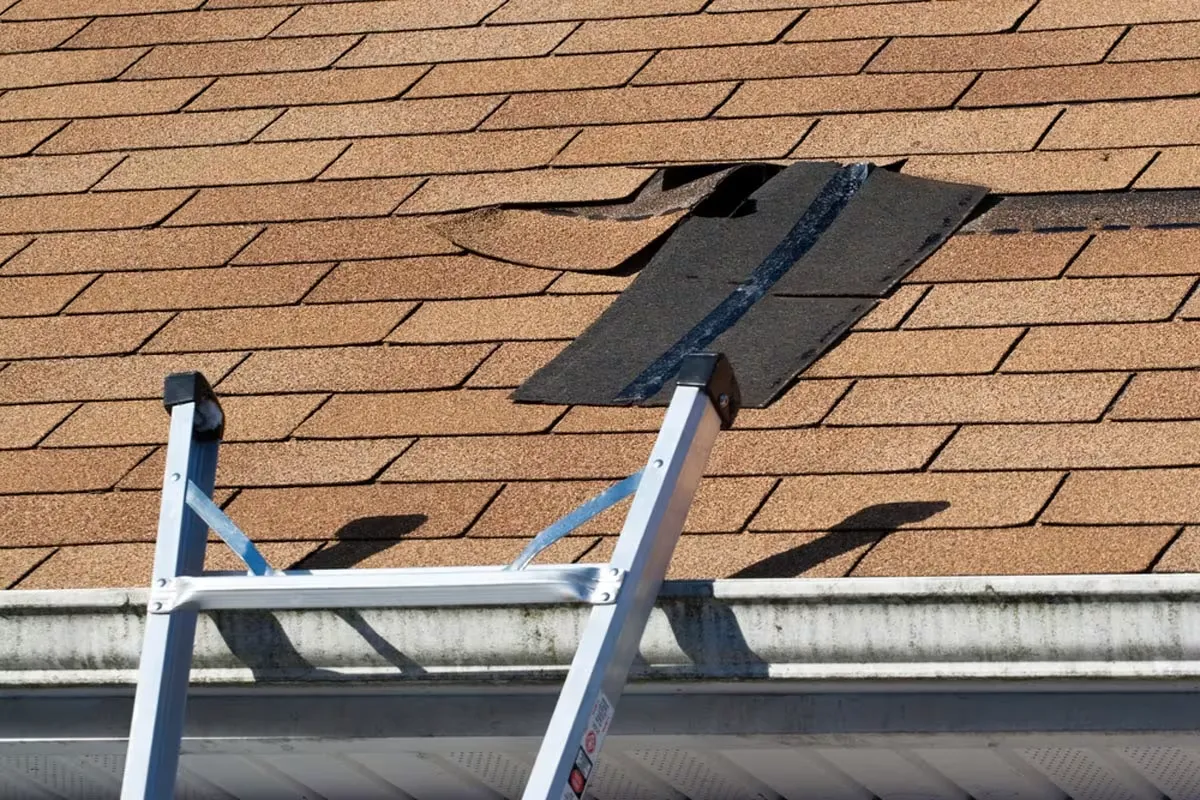
The cost to repair a roof leak ranges from $150 to $2,000 for most homeowners, depending on what is causing the leak, how long it has been going on, and how much secondary damage has accumulated in the deck, insulation, and framing beneath. A simple pipe boot replacement or resealed flashing around a vent can run $150 to $400. A chimney flashing repair or valley repair that has been dripping for weeks can reach $800 to $2,500. A structural repair involving rotted decking pushes costs to $2,000 to $8,000 or more. For homeowners in Watkinsville and Hiawassee, Georgia, catching a roof leak early is the single most effective way to keep the repair in the lower end of that range, before Georgia’s humidity and heat turn a $300 fix into a $3,000 remediation project.
How Much Does It Cost to Repair a Roof Leak?
A roof leak repair costs between $150 and $2,000 for most homeowners, with the national average around $800 to $1,147 according to Fixr.com’s 2025 data and roofrivercity.com’s 2025 analysis. Angi’s 2026 survey of over 30,000 real roofing customers found that most homeowners spend an average of $1,159 for roof repair, with minor repairs like patching leaks or fixing flashing running $360 to $1,550. At the extreme end, repairs involving extensive water damage, rotted structural components, or full decking replacement can reach $6,000 to $8,000.
The range is wide because the cost of a roof leak repair is almost entirely determined by two factors: what is causing the leak and how long it has been active. A pipe boot that is replaced the same season it starts leaking costs $150 to $400. The same pipe boot that has been leaking for six months, soaking the plywood sheathing below, rotting the decking, and growing mold in the insulation and ceiling drywall costs $2,000 to $8,000 once every affected system is repaired. The leak itself is often the cheapest part. The damage it causes while going unaddressed is almost always the expensive part.
Georgia’s climate makes prompt repair especially important for Watkinsville and Hiawassee homeowners. The state’s warm humidity accelerates mold growth in wet insulation and promotes wood rot in damp sheathing far faster than drier northern climates. According to Angi’s roof damage analysis, a small leak left unaddressed in a humid climate like Georgia’s can turn a manageable repair into a water damage restoration project within weeks. Addressing a leak quickly is the most effective cost control available to any homeowner.
The Watkinsville roof repair page covers what the inspection and diagnostic process looks like before any repair begins, and what homeowners should expect from a written repair estimate.
Roof Leak Repair Cost by Type (2026)
| Repair Type | Typical Cost Range | What Drives Cost Higher |
|---|---|---|
| Pipe Boot / Vent Boot Replacement | $150 – $400 | Multiple boots; deck damage beneath |
| Missing / Damaged Shingles | $200 – $600 | Many shingles; discontinued style; deck exposure |
| Flashing Repair (vent, wall, drip edge) | $150 – $1,000 | Extent of failure; shingle removal required |
| Chimney Flashing Repair | $500 – $2,500 | Chimney size; mortar condition; deck damage |
| Skylight Leak Repair | $300 – $1,500 | Seal failure vs. full reseat; deck damage |
| Valley Repair | $400 – $1,500 | Valley length; extent of deck damage |
| Nail Pop / Improperly Driven Nails | $200 – $400 | Number of nails; shingle condition around them |
| Flat / Low-Slope Section Repair | $150 – $1,000 | Area of damage; membrane type |
| Roof Deck Replacement | $3 – $8 per sq ft; $2,400 – $8,600 typical | Area affected; access difficulty; mold remediation |
| Emergency / After-Hours Repair | $300 – $1,500 premium added | Weekend, evening, storm-season demand |
| Temporary Tarp Installation | $200 – $500 | Roof pitch; tarp size; emergency timing |
Sources: Angi 2026 Roof Repair Cost Data (30,000+ customer surveys), Fixr.com 2025 Roof Leak Repair Cost, HomeAdvisor 2025 Roof Repair Cost, Bill Ragan Roofing Most Common Roof Leaks Analysis, WeatherShield Roofers 2026 Roof Leak Repair Guide, Integrity Home Exteriors 2025 Roof Repair Pricing, Veteran Roofing Systems 2026 Roof Leak Price Guide. Georgia costs track approximately 10% below national averages (Roof Observations 2025 Georgia Cost Guide).
Does Homeowners Insurance Cover a Leaking Roof?
Homeowners insurance covers a leaking roof when the cause is a sudden and accidental covered peril, such as a wind storm, hail event, falling tree, fire, or lightning strike. It does not cover leaks caused by wear and tear, age, gradual deterioration, deferred maintenance, or improper installation. The specific cause of the leak is the single factor that determines whether your claim is approved or denied, according to GEICO’s homeowners insurance coverage guide and Progressive’s roof leak policy analysis.
The covered perils most relevant for Georgia homeowners in Watkinsville and Hiawassee include wind and hail damage from spring and summer storms, falling tree damage, and fire-related damage. Wind and hail drove more than half of all residential roofing claims in 2024 according to Fixr.com’s 2025 industry data, which means the majority of legitimate roof repair claims in Georgia are weather-related and potentially covered. After any significant storm event in Oconee County or Towns County, document the damage with timestamped photos, contact your insurer promptly, and have an independent contractor inspection completed before you agree to any adjuster’s scope.
There are two important coverage subtleties to understand. First, if your policy is replacement cost value (RCV), your insurer pays the full cost of repair or replacement of the damaged portion after your deductible. If your policy is actual cash value (ACV), your insurer pays the replacement cost minus depreciation based on the roof’s age, which on a 15 to 18-year-old roof can reduce the payout to a small fraction of actual repair cost. Second, most policies require prompt reporting. Leaks that appear to have been ongoing for weeks or months before reporting can be classified as gradual deterioration rather than sudden damage, which shifts the entire cost to the homeowner. Report the moment you discover damage, even if you are not yet sure of the cause.
What Is Considered a Minor Roof Leak?
A minor roof leak is considered any water entry point that is localized to a single small area, has not been ongoing long enough to damage the roof deck or interior structure below, and can be addressed with a single targeted repair rather than a section replacement. The most common minor roof leaks are failed pipe boots, a small number of missing or cracked shingles, isolated nail pops, and small flashing gaps around vent pipes or drip edge sections.
According to Global Exterior Experts’ 2025 roof leak cost guide, minor leaks cost between $150 and $400 to repair and typically require less than a day of work. What keeps a minor leak minor is prompt action. A pipe boot that starts leaking in April and is repaired in April is a $150 to $400 job. The same pipe boot that leaks every rain event from April through August, soaking the decking below it with repeated wet-dry cycles in Georgia’s humid summer, may have created $2,000 to $5,000 of deck rot and mold damage by the time October’s inspection catches it.
Minor leaks do not always announce themselves loudly. The most common first sign of a roof leak in a well-insulated Georgia home is a small water stain on a ceiling that appears after a rain event. That stain does not necessarily indicate a minor leak directly above it. Water travels along rafters, sheathing, and insulation before finding the path of least resistance to drop and stain. The visible stain on the ceiling may be six to twelve feet from the actual entry point on the roof surface. A professional inspection from the attic is required to trace the water path back to the actual source and confirm whether the damage has affected structural components.
Can You Fix a Roof Leak Without Replacing the Whole Roof?
Yes, you can fix a roof leak without replacing the whole roof in most cases, as long as the damage is localized, the roof has meaningful remaining service life, the repair does not exceed roughly 25% to 30% of the roof’s surface area, and the deck beneath the leak area is structurally sound. According to HomeAdvisor’s 2025 roof repair cost data, stopping a roof leak costs between $150 and $2,000 for most scenarios, which is a fraction of the $10,000 to $20,000 cost of a full architectural shingle replacement in Georgia.
The decision between repairing a leak and replacing the whole roof comes down to three factors: the age of the existing roof, the extent of the damage, and whether the specific leak source is a fixable component rather than widespread shingle failure. If your roof is under 15 years old with an isolated leak from a failed pipe boot or loose flashing, targeted repair is almost always the right answer. If your roof is 20-plus years old in Georgia’s climate and the leak is accompanied by widespread granule loss, curling shingles in multiple roof sections, or evidence of previous repairs in other areas, the honest answer may be that a full replacement delivers better long-term value than chasing individual leaks on a roof that is approaching functional end of life.
Ridgeline Roofing and Exteriors’ approach to every leak call in Watkinsville and Hiawassee starts with an inspection that honestly assesses both the specific repair need and the broader condition of the surrounding roof. A homeowner deserves to know whether they are investing a repair cost in a roof that has five to ten years of remaining life, or in a roof that is likely to present the next leak within the following year. That context changes the repair-versus-replace calculation significantly.
How Much Should It Cost to Fix a Leaking Roof?
Fixing a leaking roof should cost $150 to $400 for a simple pipe boot or single-point flashing repair, $400 to $1,500 for moderate repairs involving valley work, chimney flashing, or several damaged shingles, and $1,500 to $8,000 for major repairs involving deck damage, structural replacement, or extensive water damage to multiple areas. According to Fixr.com’s 2025 roof leak repair cost guide, the average cost to fix a roof leak is $800, with most projects totaling between $350 and $1,500.
Labor accounts for approximately 60% of roof repair cost, according to both Fixr.com and HomeAdvisor’s 2025 data. Professional roofers in Georgia charge $45 to $75 per hour for standard work, with minimum visit fees typically running $150 to $300 even for small repairs. This minimum visit fee is why two small repairs done during the same visit are far more cost-efficient than two separate service calls for the same combined work. If your contractor is already on the roof addressing one issue and you know of another potential problem area, ask for it to be evaluated and repaired during the same visit.
Emergency repairs, specifically those performed after hours, on weekends, or during active storm events, typically cost 25% to 50% more than the same repair performed during normal business hours, according to Integrity Home Exteriors’ 2025 roof repair pricing guide. In Georgia’s active storm season, particularly the spring and summer thunderstorm period in Watkinsville and the mountain weather season near Hiawassee, the premium for emergency repairs can add $300 to $1,500 to a job that would cost far less during a calm week. Having a relationship with a trusted local contractor before emergencies occur is the most direct way to avoid emergency pricing and ensure you receive prompt scheduling when storms hit.
What Is the Cheapest Way to Fix a Leaking Roof?
The cheapest way to fix a leaking roof is to address it the moment you discover it, before the damage spreads to the deck, insulation, and interior structure below. Early intervention consistently costs 50% to 80% less than delayed repair, because the repair scope stays limited to the entry point itself rather than expanding to include all the secondary damage that accumulates while a leak is left active.
For immediate temporary protection while waiting for professional repair, a heavy-duty polyethylene tarp at least 6 millimeters thick, installed over the problem area and extending at least four feet in each direction with the top edge tucked under dry shingles near the ridge, can prevent additional water intrusion until conditions are safe for permanent repair. Tarping runs $200 to $500 and can prevent thousands of dollars in additional interior damage during the waiting period.
Roofing cement, silicone sealant, or flashing tape applied over a small crack, nail pop, or visible gap is a legitimate emergency measure for tiny, clearly visible entry points that you can safely reach. These are not permanent fixes and should not replace a professional repair, but they can buy time and prevent additional water entry when weather is coming and professional service is not immediately available. Never attempt to work on a wet or rain-slick roof surface, and never attempt repairs on a steep-pitch roof without appropriate fall protection equipment.
For homeowners near Watkinsville who have experienced storm damage and need both a repair assessment and documentation for an insurance claim, the team at Ridgeline Roofing and Exteriors can provide both with a single inspection visit, eliminating the need for separate appointments with different professionals.
What Not to Say to a Roof Insurance Adjuster?
You should never tell a roof insurance adjuster that you are unsure when the damage started, that the leak has been there a while, that you knew the roof was getting old and were planning to replace it, or that you agree with their damage assessment before your own contractor has reviewed the same area independently. Each of these statements can be used to reclassify your claim from covered storm damage to age-related wear and tear or neglect, which shifts the entire repair cost from insurance coverage to your out-of-pocket expense.
Keep your statements factual and specific. State the date of the storm event. Describe what you observed after the storm and when you first noticed interior evidence of water entry. Say you are filing a claim for storm-caused damage and that you are working with a licensed contractor for an independent assessment. Let the adjuster complete their inspection without directing their conclusions through commentary about the roof’s age, condition history, or your awareness of prior issues.
Before the adjuster arrives, take timestamped photographs of all visible damage, both on the roof surface from the ground and any interior ceiling or wall staining inside the home. Have a licensed local contractor inspect the roof independently and provide a written assessment. This independent documentation protects you if the adjuster’s scope underestimates the damage or misclassifies the cause. Do not sign any settlement agreement or release before both the adjuster’s written findings and your contractor’s independent assessment are in hand and reviewed side by side.
For homeowners in Oconee County and Towns County who have experienced storm damage and need documentation support for an insurance claim, Ridgeline Roofing and Exteriors’ Drone Zone AI Roofing Inspections provide aerial photographic documentation of the full roof surface that can support insurance claims with objective, timestamped visual evidence.
What Is the Most Common Location to Find a Roof Leak?
The most common location to find a roof leak is at a penetration or transition point where the roofing material meets a different surface or material. According to Bill Ragan Roofing’s analysis of the seven most common roof leaks across 30-plus years of roofing experience, the leading leak locations in order of frequency are: flashing failures around chimneys, skylights, walls, and penetrations; failed pipe boots or vent boots around plumbing and HVAC vent pipes; nail pops where improperly driven nails back out through shingles; valley leaks where two roof slopes meet; and gutter-related leaks where water backs up behind improperly flashed eaves.
The reason penetrations and transitions dominate the leak location list is that they are the places where the continuous water-shedding plane of a shingle or metal roof is interrupted. Every penetration point is a potential entry point when its sealing system degrades. Pipe boots crack from UV exposure and thermal cycling in Georgia’s intense summers. Chimney flashing separates from mortar joints as the masonry expands and contracts with temperature changes. Valley flashing corrodes or shifts over time. These failure modes are gradual and predictable, which is exactly why annual professional inspections are so much more cost-effective than waiting for visible water entry to prompt action.
It is important to understand that where a roof leak appears inside the home almost never corresponds directly to where it is entering. Water follows rafters, sheathing boards, and insulation along the path of least resistance, sometimes traveling four to twelve feet before dropping and producing a ceiling stain. A stain appearing in a bedroom ceiling does not mean the entry point is directly above that bedroom. Tracing the water path from the interior stain back to the roof surface entry point requires an attic inspection by an experienced contractor who knows how to read water tracks and staining patterns on structural framing from the interior.
Can a Roof Collapse from a Leak?
Yes, a roof can collapse from a leak if the leak is allowed to progress long enough to cause structural damage to the roof deck, rafters, and ceiling joists. This is not an immediate risk from a fresh leak, but it becomes a real and serious risk when a leak is left unaddressed for months or years and the moisture progressively rots the structural framing that supports the roof’s weight. According to Angi’s roof damage analysis, what begins as a small roof leak can eventually develop into systemic failure of a home’s structural foundation when water damage is allowed to penetrate continuously.
The progression from active leak to structural risk follows a predictable pattern. First, the insulation becomes saturated and loses its structural support function. Second, the plywood sheathing absorbs repeated wet-dry cycles and begins to soften and delaminate. Third, when the sheathing fails to support the weight of roofing materials above it, visible sagging appears in the roofline. A sagging roof section is a structural emergency that requires immediate professional evaluation, not temporary patching. The weight of accumulated wet insulation, rain water pooled above a sagging deck, or additional precipitation can trigger collapse in a compromised section.
Heavy snow adds significant load. In the north Georgia mountains near Hiawassee in Towns County, snow accumulation on a compromised roof section represents a more immediate collapse risk than the same roof section would face in flatter, lower-elevation Watkinsville, where snowfall is rare and light. Mountain homeowners near Hiawassee should be particularly attentive to any sagging or visible deck deflection, especially before and during winter weather events when additional load could push a compromised section to failure.
How Long Will a Leaking Roof Last?
A leaking roof will last as long as the leak is small, localized, and not causing cumulative structural damage. There is no reliable answer to how long a leaking roof can continue without intervention because the progression depends entirely on the size of the entry point, the frequency and volume of rain events, and how quickly moisture damages the deck and structure beneath. Some small pipe boot leaks produce only minor staining for months before worsening. Other valley leaks or flashing failures can cause significant deck damage within weeks during a wet Georgia spring.
The practical answer is that any actively leaking roof should be repaired as soon as a licensed contractor can safely access it. There is no safe waiting period that applies universally. The direct cost of repair stays smallest at the earliest intervention, and the risk of the problem worsening increases with every rain event that adds more moisture to already wet materials. The concept of a safe delay only applies when a reliable temporary protection measure, such as a properly secured tarp, is in place.
Georgia’s climate makes delay particularly costly. The state averages 45 to 70 inches of rain per year according to Instant Roofer’s 2026 Georgia data, which means an unrepaired leak is getting repeatedly wet throughout every season. The warm, humid conditions that follow each rain event create near-ideal conditions for mold growth in wet insulation and wood rot in damp sheathing. In Georgia, two to three months of an unaddressed leak in summer conditions can produce secondary damage that quadruples the original repair cost.
Is It Normal for a Roof to Leak in Heavy Rain?
No, it is not normal for a properly maintained roof to leak in heavy rain, even during the severe thunderstorms common in the Watkinsville area and the rapid mountain storms near Hiawassee. According to Results Roofing’s 2025 roof leak analysis, a well-maintained roof should not leak under any rain conditions. If a roof leaks during heavy rain, it indicates an existing problem, whether damaged shingles, cracked flashing, a failed pipe boot, clogged gutters causing water backup, or a compromised valley, that requires professional attention.
Some homeowners observe that their roof only leaks during particularly heavy or sustained rain events and assume this means the roof is functioning normally except in extreme conditions. This reasoning is not accurate. A healthy roof sheds even heavy rain effectively. A roof that leaks only in very heavy rain has a defect that heavy rain is exposing. The defect does not disappear between heavy rain events. It continues to degrade, and each subsequent rain event that finds the entry point adds more moisture to the structure below.
The one condition that can cause even a sound roof to show water intrusion during extremely heavy rain combined with strong wind is wind-driven rain entering through soffit vents, gable vents, or ridge vents. This is not a shingle or flashing failure but rather a ventilation system issue where wind force drives rain laterally into vent openings. If you observe water only during high-wind rain events and it appears to be coming from ventilation points rather than from ceiling stains, this is a different diagnostic situation than a shingle or flashing leak and requires a different evaluation approach.
How Many Years Does a Roof Usually Last?
A roof’s lifespan depends entirely on the material installed. Three-tab asphalt shingles last 15 to 20 years under normal conditions. Architectural asphalt shingles last 25 to 30 years. Metal roofing lasts 40 to 70 years. Tile and slate last 50 to 100-plus years. In Georgia’s climate specifically, asphalt shingle lifespan is approximately 25% to 30% shorter than national averages because of the state’s intense UV exposure, high humidity, and active storm seasons, according to J&M Roofing’s regional research.
RubyHome’s 2025 roofing statistics find that the average age of a roof at replacement in the United States is 17 to 19 years. This figure includes roofs replaced after storm damage well before their natural end of life, which compresses the average below the product’s rated lifespan. For Georgia homeowners planning around their roof’s service life, a realistic planning horizon for architectural shingles installed in Watkinsville or Hiawassee is 18 to 22 years before inspections start finding conditions that indicate approaching end of life, and 22 to 25 years before a planned proactive replacement is the economically sensible decision.
Regular inspections are the most reliable tool for understanding where your specific roof is in its service life and when to plan for replacement before leaks and interior damage begin. Annual inspections after the 10-year mark give you advance warning rather than a surprise emergency.
Can I Spray Roof Maxx Myself?
Roof Maxx is a commercial soy methyl ester treatment applied to asphalt shingles by licensed Roof Maxx dealers to restore flexibility to dry, brittle shingles and extend their service life. It is not sold directly to homeowners for DIY application. According to Roof Maxx’s own guidance, the treatment must be applied by a trained and certified Roof Maxx dealer using professional application equipment to ensure even coverage and to comply with the product’s warranty terms. DIY application is not supported and would not qualify for any Roof Maxx warranty coverage.
Roof Maxx markets its treatment as a product that can extend asphalt shingle life by up to five years per application, with up to three treatments available for a total of up to 15 additional years of shingle life. The treatment works by replenishing the petrochemical oils in asphalt shingles that dry out over time from UV exposure, which is one of the primary causes of shingle brittleness and granule loss. For roofs that are aging but structurally sound, Roof Maxx treatment through a licensed dealer is a legitimate option to extend service life at a lower cost than full replacement.
For homeowners in Watkinsville and Hiawassee who are evaluating whether their aging asphalt shingle roof is a better candidate for a rejuvenation treatment or a proactive replacement, a professional inspection is the right starting point. A GAF Master Elite certified contractor can assess granule coverage, adhesive seal strip integrity, deck condition, and overall structural health to give you an honest recommendation on whether the roof has meaningful remaining life that makes treatment worthwhile, or whether it is approaching the point where continued investment in the existing system is not the best use of your roofing budget.
What Time of Year Is the Cheapest to Replace a Roof?
The cheapest time of year to replace a roof in Georgia is late winter, from January through early March, when contractor demand is lowest and scheduling is fastest. According to Equity Roofing’s 2026 roof pricing trend analysis, off-peak installation can save 10% to 20% on labor in some markets compared to the post-storm peak summer months when every licensed contractor in Georgia is fully booked.
Late fall from October through November is the second-best pricing window, combining moderate demand with good installation temperatures. Both windows avoid the spring and summer thunderstorm peak seasons in Watkinsville and the active mountain storm season near Hiawassee that creates emergency demand and drives up both pricing and wait times across the state.
The most expensive and hardest time to schedule in Georgia is immediately after a major storm event in either of these communities. After significant hail or wind storms, every licensed contractor books out within days. Homeowners without an emergency leak can often save meaningfully by waiting a few months after the post-storm rush to schedule their project. For current financing options that allow a quality repair or replacement now without absorbing the full cost upfront, visit the residential roof financing page.
Can a Handyman Fix a Roof Leak?
A handyman can perform minor roof repairs such as applying roofing caulk or sealant around small cracks, re-nailing a few loose shingles, or replacing an accessible pipe boot on a low-pitch roof. However, for any repair that involves removing and reinstalling multiple shingles, replacing flashing around chimneys or skylights, repairing valleys, or addressing deck damage, a licensed roofing contractor is strongly recommended over a general handyman for several important reasons.
First, most roof repair work in Georgia requires a state contractor’s license for work above a certain value threshold. Hiring an unlicensed person for covered work creates liability exposure for the homeowner if something goes wrong during the job. Second, the repairs most likely to cause insurance claim complications are those performed by unlicensed contractors. If a DIY or handyman repair makes the damage worse, some insurance carriers will deny the claim on the grounds of faulty repairs. Third, roofing work involves fall risk that most handymen are not equipped with the proper safety harnesses, anchoring systems, and liability insurance to manage on pitches above 4:12.
For legitimate minor repairs on a low-pitch, accessible roof surface where the scope is clearly defined and the risk is low, a skilled handyman can handle it safely. For anything involving chimney flashing, valley work, skylight seals, structural components, or insurance documentation, a licensed roofing contractor with proof of insurance is the right person for the job.
What Causes Most Roof Leaks?
Most roof leaks are caused by flashing failures, failed pipe boots, nail pops, compromised roof valleys, and age-related shingle deterioration, in that order of frequency according to Bill Ragan Roofing’s 35-year analysis of the most common residential roof leaks.
Flashing failures are the leading cause because flashing is the thin metal installed at every transition point on the roof, including around chimneys, skylights, vents, dormers, and wall intersections, and every one of these points is a potential entry point when the flashing degrades. Flashing can crack, rust, pull away from its substrate, or separate at joints due to thermal expansion and contraction. In Georgia’s climate, where summer heat drives significant thermal movement in roofing materials, flashing joint separation is a common and gradual failure mode.
Pipe boots are the second most common leak source. Every plumbing vent pipe that exits the roof has a rubber boot seal around its base. In Georgia’s intense summer heat, those rubber boots dry out, crack, and pull away from the pipe, creating a direct water entry point around the pipe shaft. According to Veteran Roofing Systems’ 2026 leak repair guide, a cracked pipe boot is the single most common roof leak they see, and it is also the easiest and cheapest to repair when caught early at $150 to $400.
Nail pops and improperly driven nails are the third most common cause. Nails that were driven sideways or not driven far enough during installation gradually work their way back up through shingles over years of thermal cycling. Once a nail head breaks the shingle surface, it creates a small but direct water entry point that channels rain directly down the nail shaft into the deck below.
How Serious Is a Small Roof Leak?
A small roof leak is more serious than it appears from the inside of the home, because the visible ceiling stain represents only the endpoint of a water path that may have traveled through insulation, over sheathing, and along rafters for several feet before finding the path of least resistance to drop. The amount of moisture accumulating along that entire water path may be significantly larger than the small stain suggests.
According to Angi’s roof damage analysis, a small roof leak can cause water to damage ceiling drywall, which typically costs $350 to $2,000 to restore. It can lead to mold growth in wet insulation, which requires professional remediation at $500 to $3,000 or more depending on the extent. It can rot the plywood sheathing, which costs $3 to $8 per square foot to replace. And it can weaken structural framing members like rafters and ceiling joists, which can cost thousands to repair. None of these secondary damages are visible at the ceiling stain stage, but all of them are actively developing in Georgia’s warm, humid climate from the moment water begins entering the roof.
The concept of a “small” roof leak should be understood as a description of the visible symptom, not the actual scale of the problem. Small leaks deserve immediate professional evaluation, not because they are immediately dangerous but because the window for a low-cost repair is short in Georgia’s climate. Every wet season that passes without addressing an active entry point expands the secondary damage that will eventually accompany the repair.
Can a Roof Leak Be Fixed in Winter?
Yes, a roof leak can be fixed in winter in most Georgia locations, though some constraints apply. For the Watkinsville area in lower-elevation Oconee County, winter temperatures rarely sustain below 40 degrees Fahrenheit for extended periods, and most roof repairs including shingle work can proceed throughout the winter months with appropriate weather monitoring. For homeowners near Hiawassee in the north Georgia mountains, where cold snaps can bring sustained below-40 temperatures, some repair timing limitations apply.
For flashing repairs, pipe boot replacements, sealant applications, and any repair that does not require installing new asphalt shingles, temperature is not a significant constraint. These repairs can proceed in any dry weather condition where it is safe for a crew to work on the roof surface. For repairs that involve installing new shingles, the 40-degree minimum temperature for proper asphalt shingle seal strip activation applies, and the contractor should verify forecast temperatures before beginning installation to confirm the seal strips will thermally activate within a reasonable period after installation.
If a winter leak is actively causing interior damage and a permanent repair cannot be scheduled immediately, a properly secured temporary tarp is the appropriate emergency measure until the repair can be performed safely. Do not leave a known active entry point unprotected through a wet Georgia winter season, even if the repair must wait for better conditions. The cost of interior damage accumulation through a full winter of repeated wet events will almost always exceed the cost of temporary protection.
How to Get Insurance to Pay for a Leaking Roof?
Getting insurance to pay for a leaking roof requires documenting that the cause of the leak was a sudden and accidental covered peril rather than age or deferred maintenance. The key steps are: document the damage with timestamped photos immediately after discovering the leak, report to your insurer promptly without delay, identify and provide evidence of the specific storm event or covered cause that precipitated the damage, have an independent licensed contractor assessment completed before agreeing to the adjuster’s scope, and keep all receipts for any emergency measures like temporary tarps or emergency repair work.
The most common reason insurance claims for roof leaks are denied is that the insurer determines the cause is wear and tear, age, or gradual deterioration rather than a covered event. Proactive annual inspections and documented roof maintenance create a record that demonstrates the roof was being maintained and was in reasonable condition before the covered event damaged it. A roof with documented annual inspections and prompt repair history is far easier to defend in a claim than a roof with no maintenance history.
If the adjuster’s scope appears to underestimate the damage, you have the right to request a reinspection or to submit a supplemental claim based on your contractor’s independent assessment. Do not accept a settlement that clearly does not cover the documented repair scope without first discussing the discrepancy in writing with your insurer. For homeowners in Watkinsville and Hiawassee dealing with storm damage claims, Ridgeline Roofing and Exteriors assists homeowners through the documentation and independent assessment process as part of its standard inspection and repair service.
Will My Roof Collapse If It’s Leaking?
Your roof is unlikely to collapse from a fresh or recently discovered leak, but it can collapse if a leak is left completely unaddressed for an extended period and structural components rot and weaken to the point of failure. Roof collapse from a leak is not an immediate risk from a new water entry point but is a real risk from a multi-year deferred leak that has progressively rotted rafters, ceiling joists, or the deck system.
The warning sign that a collapse risk is developing is visible sagging in the roofline or ceiling. Any section of the roof that sags, dips, or shows a wavy profile from the exterior, or any ceiling section that bulges downward from the interior, indicates that the structural integrity of that area has been compromised. This is a professional emergency situation, not a candidate for temporary repair. A sagging roof section should be evaluated by a licensed contractor immediately to determine whether emergency shoring, structural repair, or replacement is required before additional loading, such as rain accumulation, wet insulation weight, or any precipitation, triggers a failure.
For most Georgia homeowners in Watkinsville who discover a leak while it is relatively fresh and the ceiling shows only staining without structural deflection, collapse risk is not an immediate concern. The concern is the progressive damage that accumulates if the leak is not repaired promptly, which may eventually compromise structural integrity if left unaddressed for a full year or more in the warm, humid Georgia climate.
How to Tell If a Roofer Is Lying?
You can tell a roofer is lying by watching for these specific patterns: creating urgency by claiming structural collapse is imminent on a roof that does not show any sagging or structural symptoms, recommending full replacement for a leak that is clearly an isolated pipe boot or flashing repair, providing a verbal estimate only without a written itemized breakdown, requiring large cash payments before any work begins, inability to show a valid Georgia contractor’s license or current insurance certificate, and no verifiable local address or reviews from homeowners in your specific community.
For roof leak repairs specifically, watch for contractors who cannot explain clearly what is causing your specific leak, where the water entry point is, what the repair involves, and what the repair will and will not include. A contractor who inspects your roof and recommends a full replacement for a single isolated leak source on a roof that is less than 15 years old, without finding widespread evidence of system failure, is a significant red flag. Full replacement is appropriate when the roof is near end of life with multiple failure indicators, not when the only documented problem is a single failed pipe boot or cracked flashing section.
After storms in Watkinsville and Hiawassee, out-of-area storm chasers regularly canvass neighborhoods offering fast inspections and same-day contracts. Legitimate local contractors do not pressure homeowners to sign before comparing quotes. Verify the Georgia contractor’s license number independently, check reviews specifically from homeowners in your local community, and limit any deposit to no more than 10% to 15% of the total project cost before work begins.
How to Fix a Leaky Roof While It’s Raining?
To manage a leaky roof while it is actively raining, the most practical immediate measures are: place buckets or containers under active drips to collect water, lay plastic sheeting or tarps on floors and furniture in the affected area, and if the ceiling is visibly bulging with pooled water behind it, carefully poke a small drain hole at the lowest point of the bulge to allow the water to drain in a controlled stream into a bucket rather than letting the ceiling collapse unpredictably.
Do not attempt to work on the exterior roof surface while it is actively raining. A wet, rain-slick roof is one of the most dangerous surfaces a person can stand on, and the risk of a fall far exceeds the benefit of any emergency repair that could be attempted in those conditions. The only exterior action appropriate during active rain is deploying a pre-prepared tarp if conditions allow safe access to the ground-level area of the roofline, or if the damaged area can be reached safely from a second-story window rather than directly from the roof surface.
Once the rain stops and the roof surface is dry enough to safely access, roofing cement, butyl-based flashing tape, or a temporary caulk application over a small visible entry point can reduce re-entry of the next rain event while a permanent repair is scheduled. A licensed contractor can typically assess and perform permanent emergency repairs within one to three days of a storm event in the Watkinsville area, and can provide written documentation of the damage for an insurance claim at the same visit. For immediate scheduling after a storm event, call 770-706-ROOF (7663) to reach the Ridgeline Roofing and Exteriors team directly.
Frequently Asked Questions About Roof Leak Repair in Watkinsville and Hiawassee, GA
What is the most common roof leak I should watch for in Watkinsville, GA?
The most common roof leak in Watkinsville and Oconee County homes is a failed pipe boot or vent boot, the rubber seal around plumbing vent pipes that exit the roof. Georgia’s intense summer UV exposure and heat cause the neoprene rubber in these boots to crack, shrink, and pull away from the pipe within 10 to 15 years on many installations. The resulting gap channels water directly down the pipe shaft into the attic. The good news is that this is also the cheapest common roof repair at $150 to $400 when caught early. The second most common leak source in Georgia homes is chimney flashing failure, where thermal cycling causes the metal flashing at chimney base transitions to separate from the masonry, creating gaps that direct water into the wall assembly behind the chimney.
How do I know if my roof leak in Hiawassee needs repair or full replacement?
A roof leak near Hiawassee needs only repair if the roof is under 18 years old with an isolated, identifiable single-point entry that has not caused widespread deck damage. It likely needs full replacement if the roof is 18 to 22-plus years old for architectural shingles, if the leak is accompanied by widespread granule loss or curling shingles in multiple roof sections, if previous repairs have already been made in other areas, or if deck damage discovered during the repair inspection extends beyond the immediate leak area. A professional inspection with honest assessment of the entire roof surface is the only reliable way to make this determination. Ridgeline Roofing offers free inspections for Hiawassee-area homeowners and will give you an honest recommendation before any work is authorized.
Does Ridgeline Roofing handle insurance claims for storm damage roof repairs?
Yes, Ridgeline Roofing and Exteriors assists homeowners in Watkinsville, Hiawassee, and throughout Oconee and Towns County with storm damage documentation and insurance claim support. The team uses Drone Zone AI Roofing Inspections to provide aerial photographic documentation of storm damage across the full roof surface, which supports insurance claims with objective, timestamped visual evidence. Written repair assessments from a GAF Master Elite certified contractor are among the strongest independent documentation available for insurance claim support. The team can also communicate directly with adjusters during the claims process to help ensure the damage scope is accurately assessed and covered.
How quickly can Ridgeline Roofing respond after a storm in Watkinsville?
Ridgeline Roofing and Exteriors aims to respond to storm damage calls in the Watkinsville and Oconee County area within one to two business days under normal conditions, with priority scheduling for active leaks causing interior damage. After major storm events that affect multiple homes in Oconee County simultaneously, lead times extend as demand across all local contractors increases. Homeowners who have an established relationship with Ridgeline Roofing before an emergency occurs receive scheduling priority over new calls during peak demand periods, which is one of the practical benefits of using the same contractor for annual inspections as for emergency repair work.
Can I finance an emergency roof repair with Ridgeline Roofing?
Yes, Ridgeline Roofing and Exteriors offers GreenSky financing for qualified homeowners for both repair and replacement projects in Watkinsville, Hiawassee, and throughout Oconee and Towns County. Financing terms include 12 months interest-free for qualifying projects up to $65,000, which means a homeowner facing an emergency repair that exceeds their immediate cash budget can have the work completed properly now and manage the cost in monthly payments rather than delaying the repair and accumulating additional secondary damage costs. Details on available terms are on the residential roof financing page.
Is a roof repair or replacement covered by GAF warranty through Ridgeline Roofing?
As a GAF Master Elite certified contractor, Ridgeline Roofing and Exteriors can offer the GAF Golden Pledge warranty on qualifying new roof installations, providing 50-year non-prorated material coverage and 25 years of workmanship protection. For repair work specifically, a Ridgeline repair comes with a workmanship warranty that covers the repair quality and installation for a defined period. The manufacturer’s warranty on shingles or components installed during the repair may also apply, depending on the specific products used. All warranty terms and coverage details are provided in writing at the completion of every project. Ask specifically about warranty coverage when requesting your estimate so you understand exactly what protection accompanies the work before you authorize it.
What should I do if I see a water stain on my ceiling after a storm in Georgia?
If you see a water stain on your ceiling after a storm, the right sequence is: photograph it immediately with a timestamped photo, check the attic for active dripping or wet insulation if you can safely access it, contact your homeowner’s insurance company to report potential storm damage, and schedule a professional roof inspection as soon as possible. Do not wait for the stain to grow larger or for a second rain event to confirm the problem before acting. Water damage claims that are reported promptly with clear documentation of a storm event are significantly more likely to be approved than claims reported weeks after the fact. A stain that appears after a known storm event is strong evidence of sudden damage from a covered peril, which is exactly what you want to establish before the adjuster visits.
Final Thoughts
The cost of a roof leak repair is almost always determined by two factors: what is causing it and how long it has been active. Every additional rain event that finds an unrepaired entry point adds moisture to the structure below. In Georgia’s warm, humid climate, that moisture produces mold growth and wood rot at a rate that consistently makes delayed repairs several times more expensive than prompt ones. The homeowners who spend the least money on leak repairs are almost always the ones who act within days of discovering a problem, not the ones who wait to see if it gets worse.
For homeowners in Watkinsville and Hiawassee who currently have an active leak, a known entry point, or a visible ceiling stain from a past rain event, the right next step is a professional inspection from a licensed local contractor who can trace the water path to its actual source, assess the secondary damage, and give you an honest written estimate for what the repair requires. That inspection is the most cost-effective thing you can do for your home’s protection.
Dealing With a Roof Leak in Watkinsville or Hiawassee?
Ridgeline Roofing and Exteriors is a GAF Master Elite certified contractor serving Watkinsville, Hiawassee, and homeowners throughout Oconee and Towns County, GA. Free inspections, honest written assessments, insurance claim support, and GreenSky financing for qualified homeowners.
Call 770-706-ROOF (7663) or schedule online. If you are dealing with an active leak right now, call directly for priority scheduling. For a full overview of available repair services, visit the Watkinsville roof repair page or the shingle roof repair page for shingle-specific issues.