Skip to content
A roof should be replaced every 20 to 25 years for most asphalt shingle roofs in Georgia, though the realistic window is often 18 to 22 years in the state’s warm, humid climate where heat and storm activity accelerate shingle aging. Metal roofing lasts 40 to 70 years and typically requires no planned replacement within a homeowner’s tenure. Slate and tile roofs can last 50 to 100-plus years. The single most important factor in deciding when to replace is not the calendar but the actual condition of the roof, because installation quality, ventilation, storm history, and climate all determine whether a specific roof reaches its rated lifespan or falls short. For homeowners in Watkinsville and Hiawassee, Georgia, understanding what drives replacement timing helps you plan proactively rather than react to an emergency.
How Often Should a Roof Be Replaced?
A roof should be replaced on a schedule driven by material type, climate, and condition rather than a fixed calendar date. For the most common residential roofing material, asphalt shingles, most roofs need replacing every 20 to 25 years according to Roof Maxx’s roofing research, though the actual lifespan varies considerably based on shingle type, installation quality, and local weather conditions.
According to RubyHome’s 2026 roofing statistics, the average roof being replaced in the United States was slightly over 19 years old, which is well below most manufacturers’ stated lifespans. This gap between rated lifespan and actual replacement age reflects the real-world impact of storm damage, poor ventilation, inadequate maintenance, and substandard installation that shortens roofs’ service lives below their theoretical maximums.
In Georgia’s climate, the realistic replacement timeline for asphalt shingles is shorter than national averages. J&M Roofing’s regional lifespan research shows asphalt shingles in warmer southern climates averaging approximately 14 years of realistic service life compared to 19 or more years in cooler northeastern states. Georgia’s combination of intense summer UV exposure, high humidity that promotes algae growth, and active spring and summer storm seasons creates more cumulative stress on asphalt shingles than the manufacturer’s testing conditions assume. Homeowners in Watkinsville and Hiawassee should plan around a 15 to 20-year inspection and replacement horizon for asphalt shingles rather than waiting for the full 25-year manufacturer statement to arrive.
The Watkinsville roof replacement page provides a full overview of what the replacement process looks like from first inspection through completed installation for both shingle and metal roofing systems.
Roof Replacement Frequency by Material (Georgia Climate)
| Roofing Material | Manufacturer Lifespan | Realistic GA Lifespan | Plan Inspection At | Plan Replacement At |
|---|---|---|---|---|
| 3-Tab Asphalt Shingles | 20 – 25 years | 12 – 17 years | 10 years | 15 years |
| Architectural Asphalt Shingles | 25 – 30 years | 18 – 22 years | 12 – 15 years | 20 – 22 years |
| Premium / Luxury Asphalt | 30 – 50 years | 25 – 35 years | 15 years | 25 – 30 years |
| Exposed Fastener Metal | 20 – 40 years | 20 – 30 years | 10 years | 25 – 30 years |
| Standing Seam Metal | 40 – 70 years | 40 – 60 years | Annual | Likely never in your ownership |
| Cedar Shake | 30 – 40 years | 20 – 30 years (with maintenance) | 5 years | 25 years |
| Concrete Tile | 50 years | 40 – 50 years | 15 years | 40 – 50 years (underlayment sooner) |
| Clay Tile | 50 – 100+ years | 50 – 80 years | 15 years | 50+ years (underlayment at 25-35 yrs) |
| Natural Slate | 75 – 150 years | 75 – 100+ years | Annual | Once per century (or never) |
Sources: RubyHome 2026 Roofing Statistics (average replaced roof was 19 years old), J&M Roofing Regional Lifespan Research (southern climate shortens asphalt ~25-30%), NAHB Roofing Material Lifespan Data, Fixr.com 2025 Roof Lifespan Guide, Erie Home 2025 Roof Replacement Frequency Guide, Roof Maxx 2025 Replacement Research. Georgia realistic lifespans reflect approximately 25-30% shorter service life than national averages for asphalt products due to climate conditions.
How Do You Know When It’s Time to Replace a Roof?
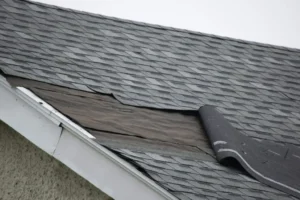
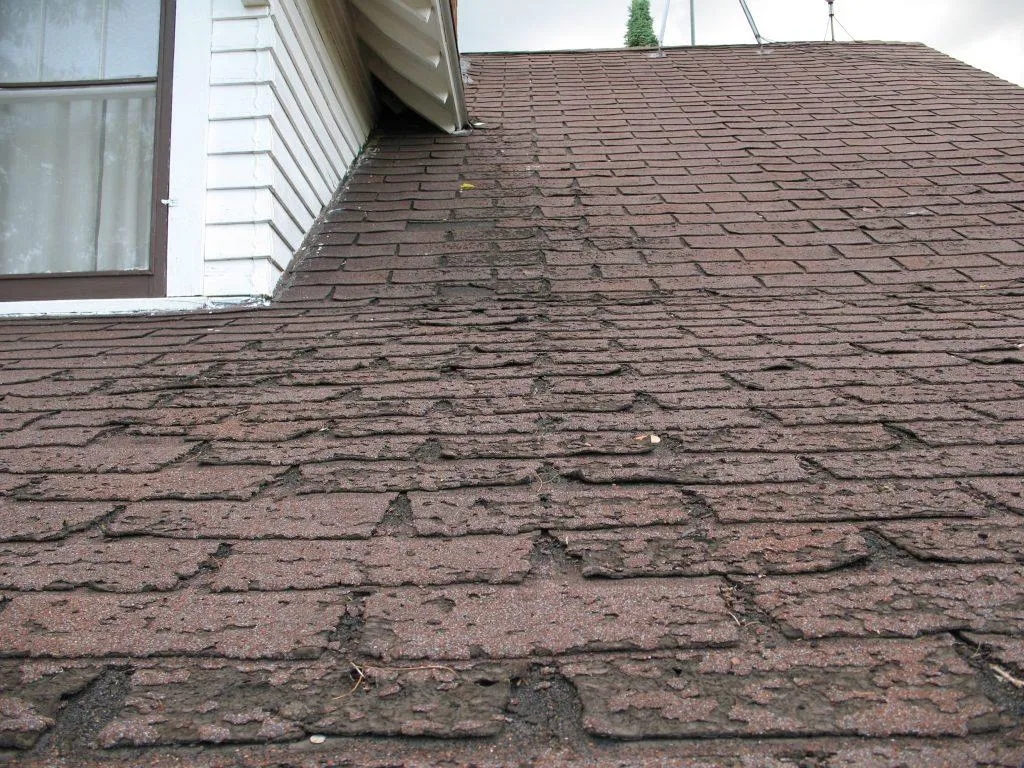
You know it is time to replace a roof when multiple warning signs appear simultaneously, particularly on a roof that has reached or is approaching its material lifespan. The clearest signs are: curling, cracking, or missing shingles across more than 25% of the roof surface; heavy granule loss visible in gutters or around downspouts; a sagging roofline or ceiling that indicates structural deck failure; active interior water stains from multiple leak sources; and a roof that is 15-plus years old in Georgia showing any combination of these symptoms.
A single isolated issue, like one missing shingle or a single failed pipe boot, is typically a repair situation rather than a replacement trigger. The replacement decision arrives when problems are widespread across the roof surface, when repairs have been performed repeatedly in different areas over a short period, or when the roof’s remaining service life is so short that further repair investment does not make financial sense. According to the RSI Group’s workmanship data, proper installation accounts for 66% of a roof’s ability to reach its full lifespan, which means that a roof installed by an inexperienced contractor may reach end-of-life years before a properly installed roof of the same material.
Annual inspections after the 10-year mark are the most reliable tool for understanding where your specific roof is in its service life. These inspections catch developing problems, like granule loss, seal strip failure, or minor flashing degradation, before they become emergency leaks. A homeowner who schedules an inspection every year after year 10 will almost never be caught in a roof emergency; the inspection process gives advance warning rather than a surprise crisis.
For homeowners who want an objective, documented assessment of their current roof’s condition, Drone Zone AI Roofing Inspections from Ridgeline Roofing and Exteriors provide aerial photographic documentation of the full roof surface with analysis of every area of concern, without requiring anyone to walk the roof surface.
How Old May a Roof Be Before Insurance Claims It’s Too Old?
Most insurance carriers in Georgia treat an asphalt shingle roof as approaching end-of-life when it reaches 15 to 20 years old, and some major insurers now have underwriting thresholds as low as 10 years for full replacement cost coverage, according to White Oak Insurance Services’ Georgia insurance market analysis. The “too old” threshold varies by carrier, but the pattern is consistent: the older the roof, the more coverage restrictions apply.
According to eRoofQuote’s 2025 roof insurance analysis, many insurers refuse to write new policies on roofs older than 15 to 20 years, only offer actual cash value (ACV) coverage instead of replacement cost value (RCV) on older roofs, and may require a roof inspection before deciding on coverage at renewal. In Georgia, myproroofing.com’s 2026 insurance guide confirms that many insurance companies will not fully insure a roof that is 15 to 20 years old, especially if it shows signs of wear. Some major insurers operating in the Atlanta and surrounding Georgia market have tightened standards to only insure roofs up to 10 years old for full replacement cost coverage.
The practical implication is significant for Watkinsville and Hiawassee homeowners: a roof that reaches 15 to 18 years old without replacement is not just a physical risk but an increasingly expensive and limited insurance risk. Carriers may switch older roofs from RCV to ACV coverage at renewal without the homeowner actively requesting the change. On a 20-year-old roof with ACV coverage, a storm damage claim might produce a payout close to zero after depreciation is subtracted from the replacement cost value, leaving the homeowner to fund most of the replacement out of pocket despite having active insurance coverage.
Georgia’s 2026 insurance law SB 35 now requires insurers to provide at least 60 days’ notice before non-renewing a policy, giving homeowners more time to schedule inspections, dispute assessments, or arrange replacement before losing coverage. Under the previous 30-day notice standard, homeowners had minimal time to respond to a non-renewal based on roof age or condition.
What Is the Typical Life Expectancy of a Roof?
The typical life expectancy of a roof is 20 to 50 years depending on the material, according to Fixr.com’s roofing lifespan analysis and RubyHome’s 2026 roofing statistics. The broad range reflects the enormous difference between the shortest-lived common material and the longest-lived: 3-tab asphalt shingles last 15 to 20 years while natural slate can last 75 to 150 years or more. Most American homes have asphalt shingle roofs, so the national average replacement age of approximately 19 years reflects primarily asphalt performance rather than the full potential range.
Five factors have the largest influence on whether any specific roof reaches its rated life expectancy. First, installation quality accounts for 66% of a roof’s ability to reach its rated lifespan, according to RSI Group’s workmanship research. A poorly installed roof begins deteriorating earlier and develops problems that do not appear in properly installed systems of the same material. Second, attic ventilation directly affects shingle aging from below: an unventilated attic in Georgia’s summer heat can reach 140 to 160 degrees, cooking shingles from below and dramatically shortening their service life. Third, storm history matters because each significant hail or wind event accelerates the deterioration of already-aging shingles. Fourth, maintenance, specifically annual inspections, clean gutters, and prompt repair of minor issues, keeps small problems from becoming large ones. Fifth, climate, and Georgia’s climate is one of the harder environments for asphalt shingles in the United States.
The practical planning horizon for a Georgia homeowner is to treat the manufacturer’s stated lifespan as the maximum achievable under ideal conditions and to plan inspections and eventual replacement around 75% to 80% of that stated lifespan for asphalt shingle systems. For architectural shingles rated at 25 to 30 years, plan your first serious replacement evaluation around year 20 in Georgia.
Does a 20-Year-Old Roof Need to Be Replaced?
A 20-year-old roof needs to be assessed by a licensed contractor to determine whether it should be replaced, and the answer depends on the material, the specific condition, and the insurance implications. For 3-tab asphalt shingles, a 20-year-old roof in Georgia has almost certainly reached functional end of life and replacement is strongly recommended. For architectural asphalt shingles, a 20-year-old roof in Georgia is nearing the end of its realistic service life and warrants serious professional evaluation. For metal roofing or tile, a 20-year-old roof is typically in the early to middle portion of its lifespan and likely does not need replacement.
For asphalt shingle roofs specifically, Gerald Delaune, senior building envelope consultant at Childress Engineering Services, notes that a roof reaching 20 years has likely exceeded the roofing membrane life expectancy and may have moisture within the system that cannot be seen from the exterior, making replacement a financially sound decision even if the roof appears acceptable from the street.
The insurance context makes the 20-year decision even more pressing in Georgia’s tightening coverage market. Many Georgia carriers now impose ACV coverage or coverage limitations on 20-year-old roofs, meaning a storm damage claim on a 20-year-old roof may return a very small payout due to depreciation deductions. A homeowner who replaces a 20-year-old architectural shingle roof proactively with a new architectural system restores full RCV coverage and may qualify for meaningful premium reductions from the new installation, making the financial case for replacement stronger than the physical condition alone might suggest.
What Time of Year Is the Cheapest to Replace a Roof?
The cheapest time of year to replace a roof in Georgia is late winter from January through early March, when contractor demand is lowest and scheduling is fastest. Off-peak installation can save 10% to 20% on labor according to industry pricing research, and the combination of mild Georgia winter temperatures and reduced storm-season activity makes this the most favorable window for both pricing and scheduling flexibility.
Late fall from October through November is the second-best pricing window, offering moderate demand and good installation temperatures. Both windows allow asphalt shingles to be installed above the 40-degree Fahrenheit minimum temperature for proper seal strip activation, and both avoid the spring and summer peak storm season when emergency demand fills contractors’ schedules and drives up pricing across Oconee County and Towns County.
The most expensive and difficult time to schedule in Georgia is immediately after a major storm event. After significant hail or wind storms affect Watkinsville or the north Georgia mountains near Hiawassee, every licensed local contractor books out quickly. Homeowners who are not dealing with an active emergency can often save meaningfully by waiting a few months after the post-storm rush, when contractor availability returns to normal and competitive pricing resumes. The residential financing page covers GreenSky financing options for homeowners who want to schedule the replacement on their own timeline rather than waiting to accumulate the full upfront cost.
What Is the 25% Rule in Roofing?
The 25% rule in roofing is the industry guideline that when more than 25% of a roof’s surface is damaged, deteriorated, or missing, full replacement is more cost-effective than ongoing targeted repairs. When a quarter or more of the roof surface needs attention, the cost of repeated partial repairs typically accumulates to more than a well-timed full replacement would have cost, and the remaining roof surface will likely present additional failure points in the near term.
Insurance adjusters and contractors both use this benchmark when evaluating storm damage claims. After a significant hail or wind storm in Watkinsville or near Hiawassee, a contractor who finds that 30% or more of the shingle surface shows damage, broken seal strips, or missing granule coverage will typically recommend full replacement over targeted patching. HomeGuide’s 2026 replacement data confirms that if more than 25% to 30% of the roof is damaged, full replacement is often more financially sound long-term due to labor efficiency on a full project compared to multiple return visits for repeated spot repairs.
The 25% rule has an additional dimension for homeowners with aging 3-tab shingle roofs in Georgia. As more 3-tab product lines are discontinued by manufacturers, partial matching repairs are increasingly difficult to complete with exact color and style matches. When a discontinued 3-tab style sustains storm damage affecting 20% or more of the surface, the inability to match replacement shingles may effectively force a full replacement even at damage levels below the 25% threshold. Consulting a licensed local contractor before any partial repair decision on an older 3-tab roof is the best protection against this scenario.
How Much Does It Cost to Put a Roof on a 2,000-Square-Foot House?
It costs between $8,000 and $20,000 for architectural asphalt shingles on a 2,000-square-foot house in Georgia, with the midpoint around $12,000 to $15,000, according to RST Roofing’s 2025 Georgia pricing data. The average cost to replace a roof in Georgia is approximately $15,756 according to Instant Roofer’s March 2026 data, which reflects the state’s average roof size of approximately 2,904 square feet including pitch rather than a flat 2,000-square-foot floor plan.
Georgia’s construction costs run approximately 10% below the national average according to Roof Observations’ 2025 Georgia cost guide, giving Oconee County and Towns County homeowners a modest cost advantage over the national figures published by most online calculators. Labor accounts for approximately 40% to 60% of the total project cost. Additional costs beyond base installation include tear-off at $1 to $3 per square foot, deck repairs if discovered during the project, permits at $250 to $500, and a 10% to 15% contingency for unexpected deck damage.
For a standing seam metal roof on the same 2,000-square-foot home, the cost in Georgia runs $20,000 to $35,000 depending on panel type, complexity, and specific contractor pricing. The higher first cost is offset over 40 to 70 years by eliminated replacement cycles, energy savings, and insurance premium reductions that collectively produce lower total cost of ownership for long-term homeowners.
What Not to Say to a Roof Insurance Adjuster?
You should never tell a roof insurance adjuster that you are unsure when the damage occurred, that the damage has been there a while, that the roof is old and you were already planning to replace it, or that you agree with their assessment before your own licensed contractor has independently reviewed the same damage. Each of these statements can be used to reclassify a storm damage claim as age-related wear and tear or gradual deterioration, which shifts the entire cost from insurance coverage to your out-of-pocket expense.
Keep your statements factual. State the date of the storm event. Describe what you observed after the storm. Say you are filing a claim for storm-caused damage and that you have had an independent contractor inspection completed. Let the adjuster complete their inspection without your commentary directing their conclusions about the damage’s cause, timeline, or your awareness of the roof’s age.
Before the adjuster arrives, take timestamped photographs of all visible damage and have a licensed local contractor perform an independent inspection and provide a written assessment. Having your contractor present during the adjuster’s inspection is strongly recommended, as an experienced roofer can point out subtle hail damage, granule loss patterns, and impact marks that adjusters may miss or underestimate. According to Bill Ragan Roofing’s insurance claims guide, having your trusted roofing contractor at the adjuster inspection is one of the most important steps in ensuring all documented damage is properly captured in the claim scope. Do not sign any settlement agreement before both assessments are in hand and compared.
How Can I Get My Roof Replaced for Free?
You can get your roof replaced at no out-of-pocket cost beyond your deductible when the damage was caused by a covered peril like hail, wind, fire, or a fallen tree and your policy provides replacement cost value (RCV) coverage. This is not technically “free” because you pay the deductible and your premiums over the policy life, but the insurance payment covers the full replacement cost of the new roof minus only the deductible amount. For many Georgia homeowners, this is the most common path to a roof replacement with minimal personal expense.
The seven steps to getting insurance to pay for roof replacement, according to Bill Ragan Roofing’s 30-year insurance claims experience, are: document any visible damage with timestamped photos; get an independent inspection from a licensed contractor before filing; file the claim promptly with your insurer; have your contractor present at the adjuster inspection; review the insurance estimate carefully for missing line items; supplement the claim if the estimate is incomplete; and after installation, submit photo documentation to trigger the recoverable depreciation payment on an RCV policy.
Outside of insurance, legitimate free or subsidized roof replacement programs exist for qualifying low-income homeowners through HUD’s HOME Investment Partnerships Program, local community development block grants, and some faith-based organizations. In Georgia, state and county weatherization assistance programs occasionally cover roof work for qualifying households. Eligibility typically requires income below 80% of area median income and ownership of the home being improved. These programs have limited funding and often have waiting lists, so contact your county’s community development office directly to determine current availability in Oconee County or Towns County.
Any contractor who promises a completely free roof through insurance without any deductible, or who offers to pay or waive your deductible as part of the deal, is proposing insurance fraud. In Georgia, it is illegal for a roofing contractor to pay, waive, or rebate a homeowner’s insurance deductible. This is not a small rule: participating in this arrangement as the homeowner can expose you to legal liability alongside the contractor. A legitimate claim process always requires the homeowner to pay the deductible.
What Is the Most Expensive Part of Replacing a Roof?
The most expensive part of replacing a roof is labor, which accounts for approximately 40% to 60% of the total project cost for asphalt shingle replacements in Georgia, according to myproroofing.com’s 2026 Georgia cost breakdown. On a $15,000 architectural shingle roof project, roughly $7,500 to $9,000 goes to the labor of tear-off, deck preparation, underlayment installation, shingle installation, flashing, trim, and cleanup.
Within material costs, the shingle product is the single most expensive line item. Architectural shingles cost significantly more per square than 3-tab shingles, and premium or luxury shingles cost more than standard architectural products. The gap between a budget architectural shingle and a GAF Timberline HDZ or Owens Corning Duration adds $1 to $2 per square foot in material cost, which on a 20-square roof translates to $2,000 to $4,000 more in total project cost for the shingle material alone.
Hidden costs that regularly exceed homeowner expectations are deck repairs when rotted or water-damaged sheathing is found during tear-off. In Georgia’s humid climate, deck damage from long-term moisture infiltration is common on older roofs. A single sheet of rotted plywood costs $75 to $100 to replace in Georgia in 2026, and widespread deck damage can add $2,000 to $5,000 to the base replacement cost. Any realistic budget for a planned roof replacement on a home over 18 years old in Georgia should include a 10% to 15% contingency for deck repairs that cannot be confirmed until after tear-off begins.
How to Tell If a Roofer Is Lying?
You can tell a roofer is lying by watching for these patterns: same-day pressure to sign before comparing quotes, promises that insurance will cover the full cost before an adjuster has evaluated your specific claim, refusal to provide a written itemized estimate, demands for large upfront payments before work begins, inability to show a valid Georgia contractor’s license or current insurance certificates, and no verifiable local address or community reviews from homeowners in your specific area.
For roof replacement conversations specifically, watch for these red flags according to HomeHero Roofing’s contractor verification guide: contractors who recommend full replacement for a single isolated repair issue on a relatively young roof; contractors who cannot explain what product they are proposing by manufacturer name and model; and contractors who offer to cover your deductible, which as noted above is illegal in Georgia and constitutes insurance fraud for both parties.
After storms near Watkinsville and Hiawassee, storm-chasing contractors from out of state canvass neighborhoods with promises about free roofs. These contractors have no local presence, no community reviews, and no accountability if their work fails. Protect yourself by verifying the Georgia contractor’s license number independently through the Georgia Secretary of State database, requesting a current certificate of general liability and workers’ compensation insurance before signing anything, getting at least three written itemized estimates, and limiting any deposit to 10% to 15% of the total project cost. A contractor who resists any of these steps is not someone you want on your roof.
What Type of Roof Lasts the Longest?
Natural slate lasts the longest of any common residential roofing material, with documented lifespans of 75 to 150 years or more. Behind slate, copper roofing can reach 80 to 100-plus years. Clay tile can last 50 to 100 years in appropriate climates. Standing seam metal delivers 40 to 70 years with proper installation and maintenance. Architectural asphalt shingles last 25 to 30 years under ideal conditions, and 3-tab asphalt shingles last 15 to 20 years.
For most Georgia homeowners, the most practical long-lasting option that does not require structural reinforcement or extreme installation specialization is standing seam steel or aluminum metal roofing. It delivers 40 to 70 years of protection, resists the algae growth endemic to Georgia’s humid climate, provides Class A fire performance as a non-combustible material, and qualifies for insurance premium discounts that help offset its higher first cost. A homeowner who installs standing seam metal in their forties may genuinely never need to replace it again during their ownership of the home.
For homeowners who want the long-lasting option at a premium aesthetic level, composite synthetic shingles from manufacturers like Brava or DaVinci deliver 30 to 50-year lifespans while mimicking the appearance of slate or cedar shake without the structural reinforcement requirements of natural stone. These products combine long service life with Class A fire ratings and Class 4 impact resistance, making them one of the strongest overall performance choices for Georgia homeowners who want premium aesthetics without natural slate’s weight and cost.
Can You Sell a House with a 20-Year-Old Roof?
Yes, you can sell a house with a 20-year-old roof, but it will create complications in Georgia’s current insurance market that can slow or derail a sale if not addressed proactively. According to the homesforsaleteam.com’s 2026 Georgia roof and insurance guide, buyers who cannot obtain homeowners insurance due to roof age cannot get mortgage approval from most lenders. Without financing, the deal falls through. In Georgia’s tightened insurance market, a buyer’s insurer may refuse to write a policy on a 20-year-old asphalt shingle roof or offer coverage only on an ACV basis that is unappealing to the lender.
A 20-year-old roof in Georgia will almost certainly attract buyer concerns during the inspection period. Home inspectors flag roofs approaching or past their expected lifespan as significant findings, and buyers often request repair credits, price reductions, or seller-funded roof replacement as a condition of closing. The negotiation concessions extracted from a seller with a 20-year-old roof at inspection typically exceed the cost of a proactive pre-listing replacement, particularly when the buyer’s negotiating position is strengthened by an inspector’s report.
The practical advice for homeowners in Watkinsville or Hiawassee preparing to sell a home with a roof at or near 20 years: replace the roof before listing, use it as a marketing asset in the listing description, and provide the transferable warranty documentation to buyers during due diligence. A new architectural shingle roof from a GAF Master Elite certified contractor with a Golden Pledge warranty is a significant buyer benefit that can justify full asking price rather than a negotiated discount.
How Much Does It Roughly Cost to Replace a Roof?
It roughly costs $8,000 to $20,000 for a standard architectural asphalt shingle roof replacement in Georgia, with the midpoint around $12,000 to $15,000 for most 2,000-square-foot homes, according to RST Roofing’s 2025 Georgia pricing data and myproroofing.com’s 2026 Georgia cost analysis. For standing seam metal, the cost runs $20,000 to $35,000 on the same home. For tile, slate, or premium materials, costs can reach $30,000 to $60,000 or more depending on the material and roof complexity.
The national average for roof replacement as of This Old House’s 2026 survey of 1,000 homeowners is $15,439, with a range of $6,885 to $23,993. Georgia homeowners typically see costs approximately 10% below national averages due to the state’s below-average construction labor costs according to Roof Observations’ 2025 data. The wide national range reflects the enormous difference in scope between a small, simple home with a single shingle layer and a large, complex home with multiple roof planes, steep pitch, skylights, and premium materials.
The only reliable number for your specific home is the one on a written, itemized estimate from a licensed local contractor who has inspected your roof. Online calculators and general ranges are useful for rough budgeting, but your roofline complexity, existing deck condition, current material pricing, and local labor market all move the final number meaningfully away from any national or state average. For homeowners interested in financing options, the new replacement roofing page covers the full project scope and what documentation you should receive at each stage of a quality installation.
What Are the Signs of Needing a New Roof?
The signs of needing a new roof fall into two categories: things visible from the ground or attic without professional equipment, and things a licensed inspector confirms during a professional evaluation. The clearest visible signs are curling, cracking, or missing shingles across a significant portion of the surface; granules accumulating in gutters and around downspouts; dark staining or moss growth on multiple roof sections; and daylight visible through the roof boards when viewed from the attic during the day.
Interior signs are often the first that homeowners notice: water stains on ceilings or walls appearing after rain events, musty smells in the attic or upper floor spaces, and sudden increases in heating or cooling costs that suggest compromised insulation or ventilation. These interior symptoms represent damage that is already occurring in the structural system beneath the visible symptoms, which is why they signal greater urgency than exterior cosmetic wear.
The most critical exterior sign is sagging or deflection in the roofline itself. Any section of the roof that appears to sag, dip, or show a wavy profile from the exterior, or any ceiling that bulges downward, indicates structural compromise in the deck or framing below. This is an emergency inspection situation, not a cosmetic concern. The weight of rain accumulation, wet insulation, or any additional precipitation can push a compromised section toward failure.
For a detailed list of every warning sign with urgency levels and repair-versus-replace guidance, the Watkinsville roof repair page covers what targeted repairs address and when the condition of the surrounding roof warrants full replacement rather than a focused repair.
Will Roofing Costs Go Down in 2026?
Roofing costs are not expected to go down meaningfully in 2026. The long-term trend for roofing prices is upward, and the structural drivers behind that trend, including ongoing labor shortages, rising insurance premiums for contractors, and persistent material cost increases, have not reversed. According to Equity Roofing’s 2026 pricing trend analysis, drawing on National Roofing Contractors Association data, roofing costs typically increase 3% to 5% per year in a normal year. Prices rarely return to previous levels even when the rate of increase slows.
The 2025 State of the Roofing Industry reported calmer material cost increases compared to the dramatic supply chain disruptions of 2021 to 2023. However, calmer cost increases is not the same as cost reductions. The material cost base established during the 2021 to 2023 spike remains the new floor. Additionally, new tariff implementations in 2026 have introduced upside risk to material costs that some contractors are already factoring into forward pricing conversations.
For Georgia homeowners watching the market and considering whether to wait for better pricing, the consistent industry advice is to replace on your roof’s timeline rather than on the expectation that the market will provide a better price in the future. A roof that needs replacement in 2026 will cost more to replace in 2027 after an additional year of 3% to 5% price increase is baked in, and may produce additional hidden repair costs if Georgia’s storm season causes further deterioration in the waiting period.
When Not to Put on a New Roof?
You should not put a new roof on when temperatures are below 40 degrees Fahrenheit, when the forecast includes rain or high winds during the installation window, when the existing roof has meaningful remaining service life and no active damage that warrants the expense, or when the project budget requires quality shortcuts on materials or labor that will create problems under the new roofing.
Asphalt shingles installed below 40 degrees Fahrenheit cannot activate their self-sealing adhesive strips properly. This leaves newly installed shingles vulnerable to wind uplift until temperatures warm sufficiently for the seal strips to thermally bond. In Watkinsville and lower-elevation Oconee County, Georgia’s mild winters rarely produce sustained temperatures below this threshold for extended periods. Near Hiawassee in the north Georgia mountains, winter cold snaps can bring sustained temperatures below 40 degrees, making installation timing more critical in that location.
You also should not install a new roof over a deck that has not been confirmed to be structurally sound. An overlay installation, adding new shingles over an existing layer without tear-off, conceals the deck condition and can mask rotted sheathing that continues to worsen invisibly beneath the new shingles. Full tear-off with deck inspection is the professional standard for quality residential roof replacement and is what most major shingle manufacturers require to provide the strongest available warranty coverage through certified contractors.
Will a New Roof Lower Homeowners Insurance?
Yes, a new roof typically lowers homeowners insurance premiums in Georgia, though the amount depends on the material installed, the specific carrier’s underwriting program, and the home’s risk profile. A new asphalt shingle roof on a home with an aging existing roof removes age-related underwriting surcharges and may qualify for a new roof discount from the carrier. A new metal roof with Class 4 impact resistance can qualify for discounts of 5% to 35% according to the Metal Roofing Alliance and Georgia-specific insurance data from myproroofing.com’s 2026 coverage guide.
The premium reduction from a new roof comes from two mechanisms. First, the new installation eliminates the age-related risk factors that drove up the premium on the old roof: brittleness, granule loss, failed seal strips, and the higher probability of storm damage claims on aging materials. Second, qualifying new roofing materials with documented impact resistance, fire ratings, or wind resistance certifications may qualify for specific product-based discounts that the old material did not earn.
Always notify your insurer after a roof replacement and provide documentation of the installation date, the contractor name and license number, the specific product installed, and any impact resistance or fire rating certifications the product carries. This single notification step unlocks the premium reassessment and can save hundreds of dollars per year in ongoing premiums that the homeowner would otherwise continue paying at the pre-replacement rate. Never assume the premium reduction is automatic. You must actively trigger it by contacting your insurer with the new installation documentation.
Under Georgia’s 2026 FORTIFIED Home Discount program, insurers are now required to offer premium discounts to homeowners who retrofit their roofs to FORTIFIED storm-resistant standards. Metal roofing systems and Class 4 impact-resistant shingles commonly qualify for these discounts, creating an additional layer of potential insurance savings on top of standard new-roof credits.
What Are the Red Flags for Roofing Contractors?
The red flags for roofing contractors that every Watkinsville and Hiawassee homeowner should know are: no verifiable Georgia contractor’s license number, no proof of current general liability and workers’ compensation insurance, same-day pressure to sign a contract without time to compare quotes, vague contracts without itemized material and labor cost separation, demands for more than 10% to 15% as a deposit before work begins, and no verifiable local address or reviews from homeowners in your community.
For Georgia-specific red flags, watch for contractors who offer to cover or waive your insurance deductible, which is illegal in Georgia and constitutes insurance fraud for both parties. Watch for contractors who submit a claim scope on your behalf without your review and authorization, since policyholders are the only parties legally authorized to file and supplement a claim in most states. Watch for contractors who pressure you to sign an assignment of benefits (AOB) that transfers your insurance rights to the contractor, which can expose you to financial and legal risk if the contractor’s work or billing is later disputed.
After major storms, storm chasers are the most common source of contractor complaints in Georgia. These out-of-area operators arrive quickly after storms, promise fast turnaround and insurance-covered replacements, collect deposits, begin some work, and then either disappear, do poor-quality work, or submit inflated claims that trigger insurance disputes that fall back on the homeowner. A legitimate local contractor will have a verifiable physical address in Oconee County or Towns County, will have reviews from community members you can contact or find online, and will never refuse to show you current insurance certificates and a valid license number. These verification steps take five minutes and protect against the most common contractor fraud scenario in Georgia’s post-storm market.
Which Insurance Company Has the Most Complaints?
The insurance company with the most complaints varies annually and by state, and is tracked publicly through the National Association of Insurance Commissioners (NAIC) Consumer Complaint Index, which standardizes complaints relative to each company’s market share. The NAIC’s complaint index is available publicly at naic.org and provides a current, standardized comparison of complaint ratios by company. No single company consistently holds the top complaint position across all markets and years, and rankings change as companies adjust practices, lose or gain market share, and enter or exit specific state markets.
For Georgia homeowners specifically, the Georgia Office of Insurance and Safety Fire Commissioner maintains a consumer complaint database that shows complaint patterns for carriers operating in the Georgia market. These state-specific records are more relevant than national rankings because they reflect how carriers actually handle claims in Georgia’s specific weather and regulatory environment. Filing a complaint with the Georgia Insurance Commissioner is a legitimate option if you believe your roof claim was handled unfairly, denied without proper grounds, or processed in bad faith.
Rather than naming specific carriers in a context that changes frequently, the more useful guidance is this: before your next policy renewal, compare your current carrier’s NAIC complaint index score against alternatives using the NAIC’s public tool, and specifically ask your insurance agent about their company’s Georgia roof claim handling practices, what roof age triggers a coverage change from RCV to ACV, and what discount applies to Class 4 impact-resistant materials. These questions give you the carrier-specific information relevant to your roof situation rather than relying on complaint rankings that do not directly answer your coverage questions.
How to Scare a Home Insurance Adjuster?
The intent behind this question is usually how to get a fair claim settlement rather than how to frighten an individual. The most effective approach is not intimidation but documentation and professional advocacy. An adjuster who sees thorough timestamped photographs of all damage, an independent written assessment from a licensed GAF Master Elite certified contractor detailing every damage point, and an itemized repair estimate using industry-standard Xactimate pricing software has no legitimate grounds to understate the scope. Documentation is more effective than confrontation at every stage of the claims process.
Having your contractor present during the adjuster’s inspection is the single most impactful step you can take to ensure all damage is captured. According to Bill Ragan Roofing’s insurance claims guide, an experienced roofer at the adjuster inspection can identify subtle hail impact marks, granule loss patterns, and fastener damage that an adjuster unfamiliar with roofing specifics may miss or undervalue. This is not adversarial, it is professional advocacy using expertise the homeowner alone does not possess.
If the initial adjuster assessment is materially lower than the contractor’s independent estimate, the homeowner has several legitimate escalation options: request a reinspection with a different adjuster, submit a detailed supplement request through the contractor documenting the specific line items missing from the adjuster’s scope, hire a licensed public adjuster who works exclusively for the homeowner on a contingency basis to negotiate the claim, or consult with an attorney specializing in property insurance claims if the carrier appears to be acting in bad faith. These are your actual rights under Georgia insurance law, and exercising them professionally and documentally is far more effective than any approach that could be characterized as intimidation.
Frequently Asked Questions About Roof Replacement in Watkinsville and Hiawassee, GA
How do I know if my roof needs repair or replacement near Watkinsville, GA?
Your roof needs replacement rather than repair near Watkinsville, GA if it is 18 or more years old with multiple concurrent failure indicators, if more than 25% of the surface is damaged or deteriorated, if the deck beneath shows widespread water damage, if you have had multiple repairs in different areas within the past three years, or if your 3-tab shingle style has been discontinued and cannot be matched for partial repairs. If damage is isolated to a single area on a roof with fewer than 15 years of service, targeted repair is almost always the right answer. The only reliable way to determine which situation you are in is a professional inspection. Ridgeline Roofing offers free inspections for Watkinsville-area homeowners.
At what age should I start planning for roof replacement in Georgia?
You should start planning for roof replacement at year 12 to 15 for 3-tab shingle roofs and at year 15 to 18 for architectural shingle roofs in Georgia. Planning at this stage does not mean replacing immediately, but it means scheduling annual professional inspections, building a replacement budget, reviewing your insurance policy’s ACV versus RCV coverage terms before the roof reaches insurer thresholds, and getting at least one written replacement estimate to anchor your budget planning. Proactive planning at this stage almost always produces a better outcome than reactive planning after an emergency or an insurance non-renewal notice.
Does Ridgeline Roofing serve both Watkinsville and Hiawassee for roof replacements?
Yes, Ridgeline Roofing and Exteriors is a GAF Master Elite certified contractor based at 1725 Electric Ave Suite 330 in Watkinsville, GA, and serves homeowners throughout Oconee County and in Hiawassee and Towns County in the north Georgia mountains. The team is familiar with the specific roofing demands of both the lower-elevation Piedmont climate around Watkinsville and the mountain climate near Hiawassee, including the steeper-pitched rooflines common in mountain communities, the different storm patterns affecting the two areas, and the specific attic ventilation and snow guard requirements for mountain-elevation homes.
What warranty comes with a Ridgeline Roofing replacement in Watkinsville?
As a GAF Master Elite certified contractor, Ridgeline Roofing and Exteriors can offer homeowners access to the GAF Golden Pledge warranty on qualifying installations, providing 50-year non-prorated material coverage and 25 years of workmanship protection. This warranty level is only accessible through Master Elite certified contractors, meaning homeowners who receive the same GAF shingles from a non-certified installer cannot access equivalent protection. All warranty terms and documentation are provided in writing before any project is authorized. Call 770-706-ROOF (7663) or visit ridgelineroofingcompany.com to schedule your free inspection and get a written estimate with full warranty details.
Can I finance a roof replacement with Ridgeline Roofing in Oconee County?
Yes, Ridgeline Roofing and Exteriors offers GreenSky financing for qualified homeowners in Watkinsville, Hiawassee, and throughout Oconee and Towns County. Terms include 12 months interest-free for qualifying projects up to $65,000, making a proactive replacement on your own timeline financially accessible without waiting to accumulate the full $10,000 to $20,000 upfront. Proactive replacement with financing is almost always less expensive than emergency replacement after interior water damage has developed, because the interior damage restoration costs add thousands to what the roof replacement alone would have cost. Details on available terms are on the residential roof financing page.
What does a free roof inspection from Ridgeline Roofing include?
Ridgeline Roofing and Exteriors’ free roof inspection includes the Drone Zone AI Roofing Inspection, which uses aerial photography and AI-assisted analysis to document the full roof surface with photographic evidence of every area of concern. The inspection documents shingle condition, granule coverage, flashing integrity, valley condition, ridge and hip condition, penetration seals, and any visible deck issues detectable from the roof surface. The report provides an honest assessment of current condition, estimated remaining service life, and whether targeted repair or full replacement is the appropriate recommendation for your specific situation. This documentation also serves as useful evidence for insurance claims when storm damage has occurred.
How do Georgia insurance changes in 2026 affect my roof replacement decision?
Georgia’s 2026 insurance changes make proactive roof replacement more financially important than it has been in previous years. Under Senate Bill 35, insurers must now provide 60 days’ notice before non-renewing a policy, giving homeowners more time to respond to age-based non-renewal threats. Under House Bill 511, Georgia homeowners can contribute to Catastrophe Savings Accounts to fund insurance deductibles and disaster repairs with tax-advantaged dollars. Under FORTIFIED Home legislation, insurers must offer discounts for roofs that meet FORTIFIED storm-resistance standards, and metal roofing and Class 4 impact-resistant shingles qualify for discounts of 5% to 35%. For homeowners with aging roofs, these changes create both more protection against sudden non-renewal and new financial incentives to replace with storm-resistant materials that qualify for the new FORTIFIED discounts.
Final Thoughts
The right answer to how often a roof should be replaced is: when condition, insurance implications, and long-term cost of ownership analysis together support the decision, not simply when the manufacturer’s clock runs out. Georgia’s climate creates more aggressive roof aging conditions than most of the country, which compresses replacement timelines compared to national averages and makes proactive management more important here than in milder markets.
The homeowners who handle roof replacement most successfully are those who plan ahead, who schedule annual inspections after year 10, who understand their insurance policy’s coverage terms before the roof reaches the carrier’s age thresholds, and who work with a licensed local contractor whose community track record they have verified. Every one of these steps is within any homeowner’s control, and every one of them reduces the likelihood of an expensive emergency or an unwelcome coverage surprise.
Ready to Know Where Your Roof Stands?
Ridgeline Roofing and Exteriors is a GAF Master Elite certified contractor serving Watkinsville, Hiawassee, and homeowners throughout Oconee and Towns County, GA. Free Drone Zone AI Roofing Inspections, honest written assessments with clear remaining-life guidance, no-pressure estimates, and GreenSky financing for qualified homeowners.
Call 770-706-ROOF (7663) or schedule online. For a full overview of replacement options and what the process looks like from first call to completion, visit the Watkinsville roof replacement page or the roofing material choices page to compare options before your first conversation.