Skip to content
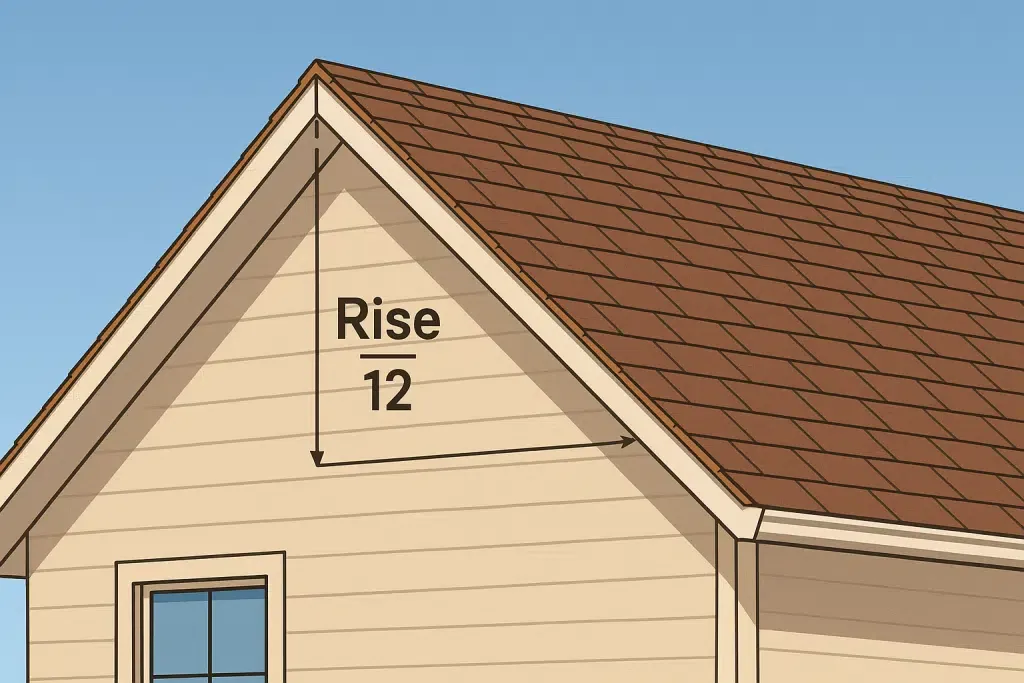
Roof pitch directly affects both the materials you can use and how much your roof will cost. The steeper the slope, the more materials it needs, the more labor goes into it, and the more options you have for roofing products. According to the National Roofing Contractors Association (NRCA), pitch is one of the single biggest cost drivers in any roofing project. Whether you own a home in Watkinsville, GA or near the mountains in Hiawassee, GA, knowing how pitch works helps you plan your roof project the right way. This article covers how pitch categories affect your material choices, what it means for your labor bill, how slope connects to insurance, and what Georgia homeowners should think about before replacing or installing a roof.
Does Roof Pitch Affect Cost?
Yes, roof pitch affects cost in several direct ways. A steeper slope means more surface area, harder access for workers, extra safety equipment, more underlayment, and limited material choices. All of those things add money to the final bill.
According to data from roofing industry sources and contractor reports, steep-pitch roofs with slopes of 9:12 and higher can add 20 to 50 percent to total labor costs compared to walkable pitches in the 4:12 to 6:12 range. Installers must use harnesses, tie-off anchors, and scaffolding on very steep roofs. That takes longer. It costs more.
There is also the material side of the equation. A lower-pitch roof cannot use standard asphalt shingles without the risk of water backup. That forces homeowners into specialty membrane systems or metal roofing, which carry a higher price per square foot. More on that below.
Homeowners around Watkinsville, GA often ask about costs before calling a contractor. The honest answer is that pitch is one of the first things a roofer looks at when pricing a job, and for good reason.
What Is the Golden Rule for Roof Pitch?
The golden rule for roof pitch in residential roofing is that a slope of 4:12 is the sweet spot. It drains water well, accepts the widest range of materials, and is still walkable for installers without special equipment. Most roofing manufacturers design their products around this assumption.
According to the NRCA, pitches from 4:12 to 6:12 offer the best combination of function, material flexibility, and installation cost. These are the most common pitches on single-family homes. They shed water fast enough to prevent pooling, but they are not so steep that workers need scaffolding.
For homeowners in Oconee County and the surrounding area, most traditional homes fall right in this 4:12 to 6:12 range. That means standard asphalt shingles, metal roofing, and architectural shingles all work without special installation workarounds.
What Does a 10:12 Roof Pitch Mean?
A 10:12 roof pitch means the roof rises 10 inches vertically for every 12 inches it extends horizontally. This is considered a steep-slope roof, and it changes both what materials you can use and how much the job will cost.
At a 10:12 pitch, workers cannot walk freely on the roof surface. Per OSHA safety guidelines, contractors must use personal fall protection systems on any roof with a slope greater than 4:12 when working within 6 feet of the edge. At 10:12, that means harnesses, anchor points, and often scaffolding. That safety gear slows the pace of the job and adds to the labor cost.
The upside of a steep pitch like 10:12 is that it sheds water and debris very quickly. Snow slides off. Leaves do not collect as easily. That can extend the life of your roof over the long run.
What Happens If the Roof Pitch Is Too Low?
If the roof pitch is too low, water does not drain fast enough and begins to pool on the surface. Pooling water is one of the fastest ways to destroy a roof. It seeps under shingles, creates leaks, causes wood rot, and leads to mold growth inside the home.
Standard asphalt shingles require a minimum pitch of 2:12 with special underlayment to qualify for a manufacturer’s warranty, and most shingle makers recommend 3:12 or higher for normal installation. Below 2:12 and shingles simply cannot be used at all. At that point, a homeowner must use membrane roofing systems like EPDM rubber, TPO, or modified bitumen. These materials are designed for low-slope and flat applications.
In Hiawassee, GA, where rainfall totals are higher than many parts of Georgia due to the mountain terrain, a low-pitch roof that is not properly waterproofed will develop problems faster. The heavy seasonal rain in that part of Towns County puts real stress on any roof that does not drain quickly.
Homeowners who need help evaluating their drainage and pitch situation can explore roof repair in Watkinsville to understand what fixes are possible before a full replacement becomes necessary.
Is a 4×12 Roof Pitch Good?
Yes, a 4:12 roof pitch is good. It is considered the minimum recommended slope for standard asphalt shingles without special underlayment, and it falls right in the middle of the residential sweet spot. Water drains well, materials seal correctly, and installers can work on it without harnesses in most cases.
A 4:12 pitch also gives homeowners the widest selection of roofing products. Asphalt shingles, architectural shingles, metal panels, and even certain wood shakes all perform reliably at this slope. For cost-conscious homeowners in Watkinsville or Hiawassee, 4:12 is often the most affordable pitch to replace because material options are broad and labor is straightforward.
Is a 10 Degree Roof Pitch OK?
A 10-degree roof pitch, which converts to roughly a 2:12 slope in standard roofing terms, is technically usable but comes with real limitations. It is generally considered a low-slope roof and is not suitable for standard asphalt shingles without significant extra waterproofing measures.
At 10 degrees, water moves slowly across the surface. That slow movement increases the chance of water backing up under shingles. If you have a roof close to this angle, your best material options are metal roofing, single-ply membranes, or built-up roofing systems. All of these cost more per square foot than standard shingles, and they require contractors with specific low-slope installation experience.
What Is the Best Option for a Low-Pitch Roof?
The best options for a low-pitch roof are metal roofing, TPO membranes, EPDM rubber roofing, and modified bitumen systems. These materials are designed to handle slow drainage and pooling without leaking or failing prematurely.
Metal roofing works well on slopes as low as 1:12 when installed with proper sealants and standing seam panels. It is durable, long-lasting, and holds up well to Georgia’s summer rain. TPO and EPDM membranes are common on commercial buildings but increasingly used on residential low-slope applications too. They create a seamless, waterproof layer that does not rely on overlapping panels to keep water out.
Families near Watkinsville with low-slope additions, garages, or sunroom roofs often benefit from a professional consultation on the best membrane system for their specific design. A roofing contractor familiar with metal roofing in Watkinsville can help determine whether a standing seam system makes sense for your low-slope section.
Is a Higher-Pitch Roof Better?
A higher-pitch roof is better for water drainage, material longevity, and attic ventilation, but it costs more to build and replace. The answer depends on what you value most.
Steep-pitch roofs shed water and snow faster, which protects the decking and structural components underneath. They also allow for better attic airflow because the taller attic space gives heat and moisture more room to escape. According to research in the roofing industry, higher roof slopes improve attic ventilation efficiency by creating stronger natural air convection currents. That can reduce cooling costs during Georgia summers.
The downside is that steep-pitch roofs have more surface area, which means more material, and they take longer to install safely. A 12:12 pitch can have 40 to 50 percent more surface area than a 4:12 pitch on the same home footprint. That directly increases both material and labor costs on any roofing project.
What Are the Disadvantages of a Pitch Roof?
The disadvantages of a pitched roof are higher construction costs, greater material use, and more complex installation compared to flat or low-slope alternatives. Very steep pitches also limit the ability of homeowners or contractors to access the roof easily for maintenance.
Pitch multipliers are real numbers in the roofing world. Industry practice uses a pitch factor to calculate actual roof surface area. A 6:12 pitch has a pitch factor of about 1.12, meaning the surface area is 12 percent larger than the footprint. A 12:12 pitch carries a factor of about 1.41. That added area costs real money in materials and labor on every project.
For homeowners around Oconee County, steeply pitched older homes, especially Victorian or Tudor-style designs, can carry significantly higher replacement costs simply because of slope. Getting a thorough inspection before planning a replacement is the smart move.
Why Should 45-Degree Roof Pitch Be Avoided?
A 45-degree roof pitch, which equals a 12:12 slope, should be avoided in many residential applications because it drives up costs sharply, limits contractor access, and requires specialized equipment at every step of installation and maintenance. It is not a practical choice for most budgets.
At 12:12, roofers cannot move freely on the surface. Scaffolding is mandatory. Safety equipment time increases significantly. Material costs go up because the surface area is about 41 percent larger than the home’s footprint. And if you ever need a repair, even a small one, the same access challenges apply.
That said, some homes are built with very steep pitches for architectural or historical reasons. In those cases, the right materials become even more important. Lightweight metal panels, synthetic slate, or premium architectural shingles are the safest bets at extreme slopes.
Can You Walk on a 10:12 Pitch Roof?
No, most people cannot safely walk on a 10:12 pitch roof without fall protection equipment. A 10:12 slope is steep enough that normal footing becomes unreliable. Roofing professionals use harnesses, rope anchors, and roof brackets at this pitch as a standard safety measure.
OSHA regulations require fall protection on any roof where there is a risk of falling more than 6 feet. At 10:12, that requirement kicks in immediately. DIY maintenance on a roof this steep is dangerous and is not recommended. If you own a home in the Watkinsville or Hiawassee area with a steep-pitch roof, rely on a licensed contractor who knows how to work safely on that slope.
What Does a 7:12 Pitch on a Roof Look Like?
A 7:12 pitch on a roof looks noticeably steep from the street. The roof rises 7 inches for every 12 inches it runs horizontally. In degree terms, this is about 30 degrees. You can see a clear angle from the curb, and the roof lines look sharp and prominent.
At 7:12, the roof is at the upper edge of the walkable range. Most installers still consider it workable without scaffolding, but it requires extra care. Material choices are still broad at this slope. Architectural asphalt shingles, metal panels, wood shakes, and even certain tile products work well. This pitch is common on traditional Craftsman and Colonial-style homes found throughout the Watkinsville historic district and older neighborhoods of Oconee County.
Homeowners considering a roof replacement at 7:12 should know that material selection at this slope can make a real difference in the final look of the home. Products with dimensional texture and shadow lines tend to show beautifully at this angle. Exploring asphalt roofing options for Watkinsville homes is a good starting point for understanding what products look best at a 7:12 pitch.
What Is the Most Attractive Roof Pitch?
The most attractive roof pitch for most homes is between 6:12 and 9:12. These slopes create strong visual interest from the street, give the home a prominent roofline, and support a wide range of material types that can enhance curb appeal.
A 6:12 pitch has enough steepness to look substantial without becoming overpowering. At 8:12 or 9:12, the roof becomes a major architectural feature of the home. Both ranges work well with dimensional architectural shingles, metal roofing with exposed fasteners or standing seam profiles, and even premium shake-style products.
In areas like Hiawassee and the surrounding mountain towns of Towns County, steeper pitches are common on cabin-style and craftsman homes. They fit the landscape visually and also handle the higher rainfall totals in the Georgia mountains more efficiently.
Is a 15-Degree Roof Pitch OK?
A 15-degree roof pitch, which equals roughly a 3:12 to 3.2:12 slope, is workable but considered on the low end of standard residential use. It is the minimum slope that most asphalt shingle manufacturers allow for standard installation, though many recommend at least 4:12 for full warranty coverage.
At this pitch, water moves relatively slowly. You need a quality underlayment system to prevent water from backing up under the shingles, especially in heavy rain events. For Georgia properties that deal with sudden downpours and storm rain, a 15-degree pitch needs extra care in both material selection and installation technique.
How Much Does It Cost to Increase the Pitch of a Roof?
Increasing the pitch of a roof is a major structural project and one of the most expensive roofing changes a homeowner can make. It involves rebuilding the framing, raising the ridge, and replacing all decking and roofing materials. Industry reports indicate that this type of structural reroofing can run two to four times the cost of a standard roof replacement.
It is not something most homeowners need to do unless they are converting a flat commercial building to a residential structure or dealing with chronic low-slope drainage problems. In most cases, the smarter investment is choosing the right material for the existing pitch rather than changing the pitch itself.
For homeowners in Watkinsville or the Hiawassee area who are considering major structural roofing changes, a consultation with a licensed contractor is the first step. Ridgeline Roofing and Exteriors can help assess whether a pitch change is truly necessary or whether the right material system on the current slope can solve the problem.
Roof Pitch, Materials, and Cost: A Side-by-Side Comparison
The table below summarizes how pitch category affects material choices and relative cost. Pricing ranges reflect general industry data and vary based on project size, local labor rates, and material brands.
| Pitch Category | Slope Range | Suitable Materials | Relative Labor Cost | Water Drainage |
|---|---|---|---|---|
| Flat / Low-Slope | 1:12 to 3:12 | TPO, EPDM, Modified Bitumen, Metal (standing seam) | Lower (but specialty materials) | Poor without membrane |
| Standard Residential | 4:12 to 6:12 | Asphalt shingles, Architectural shingles, Metal, Wood shake | Standard | Good |
| Steep Residential | 7:12 to 9:12 | Architectural shingles, Metal, Tile, Synthetic shake | 20-30% premium | Excellent |
| Very Steep | 10:12 and above | Metal, Synthetic slate, Luxury shingles, Clay tile | 30-50% premium | Excellent |
Sources: National Roofing Contractors Association (NRCA); Asphalt Roofing Manufacturers Association (ARMA); OSHA Fall Protection Standards; Industry cost data aggregated from roofing contractor reports.
Is a 20-Degree Roof Pitch Good?
Yes, a 20-degree roof pitch, which translates to roughly a 4.3:12 to 4.5:12 slope, is a good pitch for residential use. It clears the minimum threshold for standard asphalt shingles, drains water efficiently, and keeps labor costs in a reasonable range.
This is a common pitch on 1990s and 2000s-era homes throughout Oconee County and across northeast Georgia. Homeowners with roofs in this range have solid material flexibility and do not face the steep-pitch labor surcharges that come with 9:12 and above.
What Roof Will Last 50 Years?
A metal roof or slate roof installed on the correct pitch will last 50 years or more. Copper roofing can last over 100 years. Among more affordable options, a standing seam metal roof properly installed on a slope of 3:12 or higher can realistically last 40 to 70 years with minimal maintenance.
According to data from the roofing industry, the average asphalt shingle roof lasts 20 to 30 years. Architectural shingles stretch that to 25 to 30 years in many climates. Metal roofing outperforms both categories significantly. For homeowners in Hiawassee, GA who face harsh mountain weather including heavy snow in some winters and strong summer storms, a longer-lasting material is worth the upfront investment.
Choosing a metal roof that is properly matched to your pitch is critical. A standing seam panel installed on a low-slope section has different requirements than one installed on a steep gable. Getting that right from the start determines how long the roof actually lasts. Homeowners interested in long-lasting solutions can learn more about roof replacement options in Watkinsville that include both metal and premium asphalt products.
Will Roofing Costs Go Down in 2026?
Roofing costs in 2026 are not expected to decrease significantly based on current material and labor trends. According to data from the Bureau of Labor Statistics, roofing wages have increased steadily, with the national median roofer wage reaching $50,970 per year in 2024. Material prices for asphalt, metal, and underlayment products remain elevated compared to pre-2020 levels due to supply chain and manufacturing cost pressures.
If you have been waiting for prices to drop before replacing your roof, the data does not strongly support that strategy. Delaying a needed replacement often leads to water damage, rotted decking, and interior repairs that cost far more than the roof itself. Homeowners in Watkinsville and Hiawassee who have aging roofs, especially those approaching 20 to 25 years old, are better served by replacing now rather than waiting for a price correction that may not arrive.
Why Is It Harder to Insure Homes With a Flat Roof?
It is harder to insure homes with a flat roof because flat roofs drain poorly, have shorter lifespans, and are more prone to water pooling and leaks compared to sloped roofs. Insurance companies treat those risk factors as higher exposure.
According to insurance industry data, homeowners with flat roofs often face either higher premiums or limited coverage options. The National Roofing Contractors Association (NRCA) defines a low-slope roof as having a slope of 3:12 or less. At that angle, insurers see a greater risk of water infiltration, which leads to structural damage claims. Flat roofs also tend to have shorter lifespans than well-maintained sloped roofs, which increases the chance of claims over the life of a policy.
On the other hand, a steep-slope roof with a durable material like metal or impact-resistant architectural shingles can lower your premium. Data from insurance industry sources shows that homeowners who replace aging roofs can realize a 5 to 35 percent reduction in their annual premiums, with a national average reduction of around 20 percent. In Georgia, where storm activity is real and insurers are paying attention to roof age and condition, a new roof is one of the strongest risk-reduction moves a homeowner can make.
Homeowners who have questions about how their roof condition affects their insurance standing can start by scheduling an inspection. Drone Zone AI roofing inspections give homeowners documented photographic evidence of their roof’s condition, which is useful when working with an insurance adjuster.
What Is the 80 Percent Rule in Homeowners Insurance?
The 80 percent rule in homeowners insurance means that your home must be insured for at least 80 percent of its full replacement value to receive a full payout on a covered claim. If your coverage falls below that threshold, your insurer can reduce the payout on a claim, even if the damage is fully covered under your policy.
This matters for roofing because roof replacement is one of the most expensive covered claims in homeowners insurance. If your home is underinsured and you experience storm damage, you may find yourself paying a much larger out-of-pocket share than expected. For homeowners in Oconee County who have owned their home for a decade or more, it is worth reviewing your coverage amount, especially given how much replacement costs have risen in recent years.
What Is the 25 Percent Rule in Roofing?
The 25 percent rule in roofing refers to a building code standard used in many jurisdictions that says if more than 25 percent of your roof is being repaired or replaced within a 12-month period, it may trigger a requirement to bring the entire roof up to current code. This can mean upgrading underlayment, improving ventilation, or meeting updated load requirements.
This rule matters most for homeowners who are trying to patch an older roof in stages. In some cases in Georgia, a repair that crosses the 25 percent threshold will require a full permit and potentially a full replacement to meet current standards. Homeowners in Watkinsville, GA should check with their local building authority and their contractor about how this applies to their specific project before beginning work.
A licensed roofing contractor familiar with shingle roof repair in Watkinsville can help you understand what code requirements apply to your repair before any work begins.
What Is the Most Expensive Part of Replacing a Roof?
The most expensive part of replacing a roof is usually the roofing materials themselves, which account for the majority of the total project cost on most jobs. Labor is the second-largest cost, and steep pitch adds significantly to that number.
For a standard home, roofing materials including shingles, underlayment, flashing, and fasteners can represent 40 to 60 percent of the total project cost. Premium materials like metal panels, slate, or synthetic shake push that percentage higher. Labor costs are the other major variable, and as discussed throughout this article, slope is the most direct driver of labor expense.
According to industry data, roof replacement costs an average of $9,526 nationally, with a typical range of $5,868 to $13,217. Steep-pitch homes and premium material selections can push projects to $20,000 or beyond. Georgia homeowners who need help with financing for a major roof project can explore residential roof financing options to make the investment more manageable.
What Time of Year Is the Cheapest to Replace a Roof?
The cheapest time of year to replace a roof is typically late fall or early winter, when contractor demand slows and scheduling flexibility increases. In Georgia, that often means October through early December, after the peak summer storm season and before the spring rush that comes with tax refund season.
Booking off-season does not always mean large price discounts, since material costs stay relatively stable year-round. But it can mean faster scheduling, more contractor attention to your project, and in some cases, better availability of premium materials without the long lead times that come in peak season.
Homeowners around Watkinsville and Hiawassee who are planning ahead for a new roof should consider getting an inspection and estimate in the summer so they can schedule an off-peak installation and avoid the spring backlog. New roof and replacement services are available for both standard residential pitch ranges and steep-slope applications.
Homeowners ready to plan a full installation can start by reviewing roof installation services in Watkinsville to understand the process and what to expect at each stage.
Frequently Asked Questions
Does roof pitch affect cost in Watkinsville, GA?
Yes, roof pitch directly affects cost in Watkinsville, GA and everywhere else. A steeper pitch means more surface area, more material, slower installation, and higher labor costs because workers need safety equipment on steep slopes. Homes in Oconee County with pitches above 8:12 typically see a 20 to 40 percent premium on labor compared to standard residential slopes.
What is the best roof pitch for Georgia weather?
The best roof pitch for Georgia weather is in the 6:12 to 8:12 range. This slope drains the heavy rain common throughout the state quickly, handles wind uplift well, and works with most standard roofing materials. In mountain areas like Hiawassee, GA, a steeper pitch can also handle occasional snow load better than a flatter slope.
What not to say to a roof insurance adjuster in Georgia?
Do not tell a roof insurance adjuster that your roof is old but “looks fine.” Age matters to insurers even when visible damage is minimal. Do not admit to deferred maintenance or delayed repairs, as this can reduce your payout. Do not agree to a settlement amount before you have gotten an independent contractor estimate. In Watkinsville and the surrounding area, having a documented inspection report from a licensed roofer before the adjuster visit is the smartest move.
Is a flat roof harder to insure in Georgia?
Yes, a flat roof is harder to insure in Georgia because insurers view low drainage and a higher risk of water damage as elevated exposure. Many homeowners insurance companies charge higher premiums for flat or very low-slope roofs, and some may decline to cover them at replacement value if the roof is aging. Georgia homeowners with flat roof sections should discuss their coverage with both their insurer and a roofing contractor who handles low-slope systems.
How long does a metal roof last on a steep pitch in Hiawassee, GA?
A properly installed metal roof on a steep pitch in Hiawassee, GA can last 40 to 70 years. Metal performs especially well in the mountain climate of Towns County, where heavy rain and occasional snow put real stress on roofing systems. Standing seam metal roofing with concealed fasteners is particularly durable at steep pitches because there are no exposed fastener points for water to infiltrate. Annual visual inspections and keeping debris clear of valleys are the main maintenance steps needed to hit the upper end of that lifespan.
What commercial roofing systems work on low-slope roofs in Watkinsville?
The best commercial roofing systems for low-slope roofs in Watkinsville are TPO single-ply membranes, EPDM rubber roofing, and modified bitumen systems. These are designed specifically for slopes under 3:12 where water drains slowly. Commercial properties near the Watkinsville business corridor and in Oconee County have several options depending on building size, existing structure, and budget. A licensed commercial roofing contractor can evaluate which system fits the specific pitch and drainage conditions of your property. You can learn more about commercial roofing in Watkinsville to see what solutions are available locally.
What makes a roof uninsurable in Georgia?
A roof becomes uninsurable in Georgia when it is too old (typically 20 or more years), shows significant wear like missing shingles, active leaks, or sagging, uses high-risk materials like untreated wood shake, or has a history of repeated claims. Flat roofs and those with known drainage problems are also harder to insure. Georgia insurers take roof condition seriously, especially given the storm activity in the region. Replacing a roof before it hits the uninsurable threshold protects both the home and the insurance policy.
Final Thoughts
Roof pitch is not just a measurement on a blueprint. It controls what materials you can use, how much the job costs, how long the roof lasts, and whether your home is easy to insure. From the low-slope sections of newer homes to the steep gables of historic properties in the Watkinsville historic district or mountain cabins near Hiawassee, GA, every slope category comes with its own set of rules and costs. Understanding those rules before you start a roofing project saves money and prevents costly surprises.
The right pitch-and-material combination also connects directly to your home’s long-term value. A roof replacement is one of the few exterior projects that can return close to its full cost in home value, according to national remodeling data. Getting it right the first time, with the right material for your slope and a contractor who knows how to install it properly, is the most important decision in the whole process.
Ready to get your roof evaluated by a local expert? Ridgeline Roofing and Exteriors serves homeowners in Watkinsville, Hiawassee, and throughout northeast Georgia. Whether your roof has a low slope, a steep pitch, or something in between, the team at Ridgeline can recommend the right materials, give you an honest assessment of your current roof’s condition, and walk you through every step of the process. Call 770-706-ROOF or contact us online to schedule your free inspection. Don’t let the wrong pitch choice cost you more than it should, let the right contractor help you make the smart call from the start. Visit Ridgeline’s Watkinsville roofing services to get started today.