Skip to content
You know your roof needs to be replaced when you see curling, cracking, or missing shingles across a large portion of the surface, when granules are filling your gutters, when your roof is approaching or past its expected lifespan, or when you have active leaks that cannot be traced to a single small repair point. For homeowners in Watkinsville and Hiawassee, Georgia, where summer thunderstorms, UV heat, and high humidity accelerate shingle aging beyond national averages, catching these signs early protects the roof deck, insulation, and structural framing below. This guide covers every warning sign, answers every common question from the People Also Ask results, and gives you honest cost and timing information so you can make the right decision for your home and budget.
What Are the Signs of Needing a New Roof?
The signs that you need a new roof fall into two categories: things you can see from the ground or your attic without professional equipment, and things a licensed inspector can confirm during a professional evaluation. Knowing both categories helps you recognize when a call is worth making before a problem gets expensive.
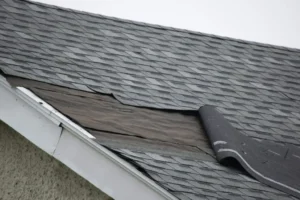
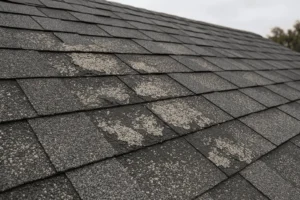
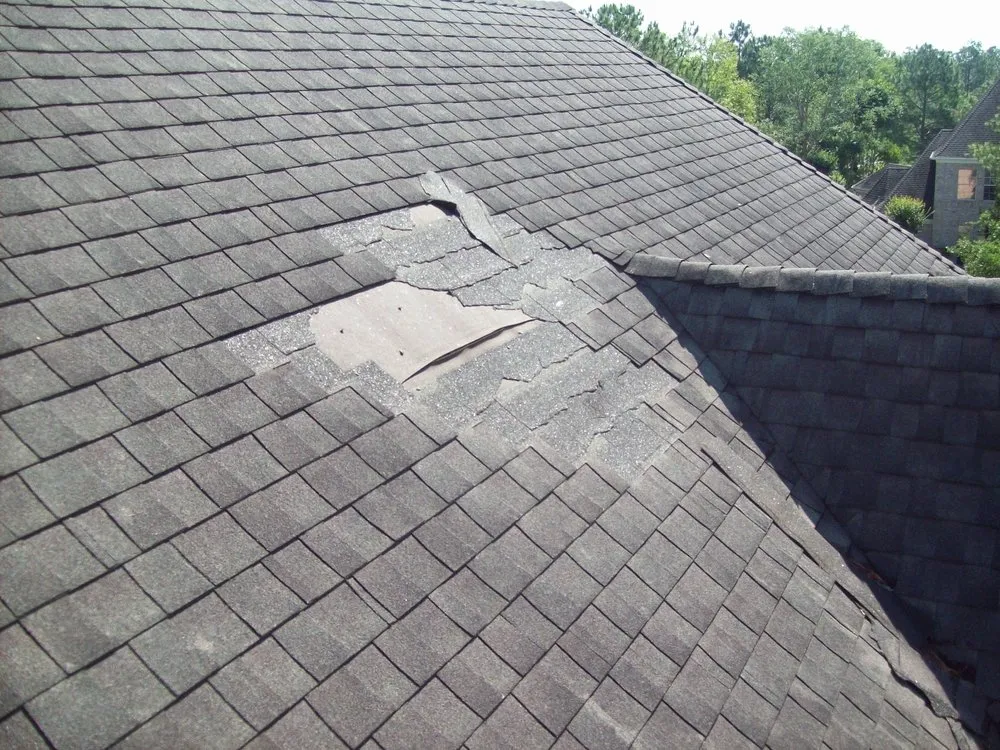
The clearest visible signs are curling shingles, cracked shingles, missing shingles, and bald patches where granules have worn away entirely. Granule loss is particularly significant because granules are what protect the asphalt binder beneath each shingle from UV radiation. According to Angi’s roofing inspection guide, excessive granule buildup in your gutters is a reliable indicator that your shingles are deteriorating. Once the granules wear away and the dark asphalt layer beneath is exposed, the shingle’s protective life is nearly over.
Interior signs are often more alarming because they indicate damage is already progressing inside the home. Water stains on ceilings or walls, daylight visible through the attic roof boards, and sudden increases in heating and cooling bills all suggest the roofing system has been compromised. According to WeatherShield Roofing’s analysis, soaked insulation loses approximately 50% of its R-value when wet, meaning a leaking roof is also actively raising your energy costs while it deteriorates the structure around it.
Sagging or drooping areas in the roof deck are the most urgent sign of all. A sagging section means the underlying decking, rafters, or ceiling joists have absorbed enough moisture to lose structural integrity. This is not a repair situation. Sagging anywhere on the roof surface, in the ridge line, or along the eaves is a replacement emergency that needs professional attention immediately.
For homeowners who want a professional assessment of their current roof’s condition before making a decision, Drone Zone AI Roofing Inspections from Ridgeline Roofing and Exteriors provide a detailed, non-invasive evaluation of the full roof surface with photographic documentation of every area of concern.
10 Warning Signs Your Roof May Need Replacement
| Warning Sign | What It Means | Urgency Level | Repair or Replace? |
|---|---|---|---|
| Curling or cupping shingles | UV damage, age, poor ventilation | High | Replace if widespread (>25%) |
| Cracked shingles | Thermal stress, wind damage, age | High | Repair if isolated; replace if widespread |
| Missing shingles | Wind uplift, poor installation | Immediate | Repair if few; replace if extensive |
| Granules in gutters | Shingle aging, UV degradation, hail | Moderate–High | Inspect; replace if roof is 15+ years old |
| Sagging deck | Structural moisture damage, rot | Emergency | Replace immediately |
| Water stains on ceilings/walls | Active or recent leak penetration | Immediate | Inspect to confirm; often replacement |
| Daylight in attic | Gaps, failing boards, or open penetrations | Immediate | Inspect; often replacement needed |
| Moss or algae growth | Moisture retention, shaded roof sections | Moderate | Clean if young; replace if old and widespread |
| Flashing failure | Rust, crack, or separation at penetrations | High | Repair if isolated; replace if system-wide |
| Age at or past lifespan | Material degradation even if invisible | Plan now | Plan proactive replacement |
Sources: Angi Roofing Warning Signs Guide, Bill Ragan Roofing Signs of Roof Replacement, WeatherShield Roofing 2025 Roof Failure Analysis, Rescue My Roof Repair vs. Replace Guide, Amica Insurance 10 Signs of Roof Failure, HomeGuide 2026 Roof Replacement Cost Data.
What Is the 25% Rule in Roofing?
The 25% rule in roofing is the widely used threshold that when more than 25% of a roof’s surface is damaged, deteriorated, or missing, full replacement is more practical and cost-effective than ongoing repair. Patching a quarter or more of a roof’s shingle surface usually addresses the symptoms without solving the underlying cause, and the cost of repeated repairs in that range typically exceeds the cost of a full replacement performed at the right time.
Insurance adjusters, licensed contractors, and roofing consultants all use this benchmark when evaluating storm damage claims and aging roofs. After a hail or wind event in the Watkinsville area or in the north Georgia mountains near Hiawassee, a contractor who finds that 30% or more of the shingle surface shows significant impact damage, broken seal strips, or granule loss will typically recommend full replacement over targeted patching. HomeGuide’s 2026 roof replacement cost guide confirms this: if more than 25% to 30% of the roof is damaged, a full replacement is often more financially sound long-term because labor efficiency on a full project is better than multiple return visits for repeated spot repairs.
The 25% rule also interacts with insurance coverage. Many policies have provisions that require full replacement when matching replacement shingles are unavailable for partial repairs, which is increasingly common now that 3-tab shingle product lines have been discontinued at scale across the industry. If your roof has 3-tab shingles and experiences storm damage, your specific color or style may simply no longer be manufactured, which can trigger full replacement coverage regardless of the percentage of damage.
For homeowners who are unsure whether their situation calls for repair or full replacement, the roof repair page in Watkinsville provides an overview of what targeted repairs cover and when they are the right call versus when a full replacement is the smarter path.
Should a 20-Year-Old Roof Be Replaced?
A 20-year-old roof should be assessed by a licensed contractor and replaced if it shows significant deterioration, even if it appears acceptable from the ground. For 3-tab asphalt shingles, 20 years is at or past the end of realistic service life in Georgia’s climate. For architectural asphalt shingles, 20 years places the roof at the midpoint of a realistic 20 to 25-year lifespan in this region, meaning the remaining service years are worth evaluating carefully.
According to J&M Roofing’s regional lifespan research, asphalt shingles in warmer southern climates average approximately 14 years of service life compared to 19 or more years in cooler northeastern states. Georgia’s combination of intense summer heat, high humidity, and active storm seasons creates more accelerated shingle aging than the manufacturer’s stated lifespan assumes. A 20-year-old shingle roof in Watkinsville or near Hiawassee has experienced more cumulative stress than a 20-year-old roof in a milder climate, and that accelerated aging shows up in granule loss, brittleness, and adhesive failure that may not be visible from the street but are visible to an experienced inspector on the roof surface.
The practical guidance is this: any asphalt shingle roof over 15 years old in Georgia should receive an annual professional inspection to monitor its remaining service life. A roof that reaches 20 years with no active leaks, solid granule coverage, flat shingles, and no deck issues may have a few years remaining. A 20-year-old roof with curling, granule loss, or any evidence of past leak activity should be planned for replacement immediately rather than waiting for the failure to become an emergency.
Proactive replacement also protects the roof deck. The most common hidden cost discovered during tear-off is rot or water damage in the plywood sheathing beneath aging shingles. According to Georgia roof replacement data from myproroofing.com, replacing a single sheet of rotted plywood in Georgia costs $75 to $100 in 2026, and widespread deck damage can add thousands to a replacement project. Replacing before the deck deteriorates keeps the additional cost manageable.
How Much Does It Cost to Put a Roof on a 2,000-Square-Foot House?
It costs between $8,000 and $20,000 to put a new asphalt shingle roof on a 2,000-square-foot house in Georgia, with the midpoint around $12,000 to $15,000 for a standard architectural shingle installation, according to RST Roofing & Renovations’ 2025 Georgia pricing data and myproroofing.com’s 2026 Georgia cost breakdown. The average cost to replace a roof in Georgia is approximately $15,756 according to Instant Roofer’s March 2026 data update, which reflects the state’s average roof size of 2,904 square feet with pitch factored in.
For a 2,000-square-foot home specifically, the range reflects real variation in project complexity. A simple gable roof with one layer of existing shingles, healthy decking, and no dormers or skylights lands at the lower end. A complex hipped or multi-valley roof with two existing shingle layers, deck repairs, and multiple penetrations requiring custom flashing lands higher.
Labor accounts for approximately 40% to 60% of total roof replacement cost in Georgia in 2026, according to myproroofing.com’s cost breakdown, reflecting both a national shortage of skilled roofing tradespeople and rising insurance premiums for contractors. The hourly rate for professional roofers in the Georgia market runs $40 to $90 per hour per worker. Beyond base installation, tear-off adds $1 to $3 per square foot, or roughly $2,000 to $6,000 for a standard 2,000-square-foot home. Permits typically run $250 to $500. Deck repairs, if discovered during tear-off, add separately depending on the extent of damage found.
For homeowners comparing material options, the Watkinsville roof replacement page provides a clear overview of what to expect from the written quote process and what line items should appear in any complete, honest estimate.
How Many Years Does a Roof Usually Last?
How many years a roof usually lasts depends entirely on the material installed. Asphalt shingles, which cover approximately 80% of American homes according to RubyHome’s 2025 Roofing Statistics, last 15 to 30 years depending on the shingle type. Three-tab asphalt shingles last 15 to 20 years. Architectural asphalt shingles last 25 to 30 years. Metal roofing lasts 40 to 70 years. Tile and slate last 50 to 100 years or more.
In Georgia’s climate, realistic lifespans are shorter than manufacturer statements for asphalt shingles. The combination of intense summer heat, UV radiation, high humidity that promotes algae and moss growth, and active storm seasons accelerates shingle aging compared to the moderate northern climates that form the basis of most manufacturer testing. J&M Roofing’s regional research shows southern asphalt shingle roofs averaging around 14 years of realistic service life, roughly 25% to 30% shorter than the manufacturer’s stated lifespan.
Proper attic ventilation is the single most impactful variable in how long a shingle roof lasts in Georgia’s climate. When heat cannot escape the attic through balanced ridge and soffit ventilation, temperatures can reach 140 to 160 degrees Fahrenheit in the attic space during Georgia’s summers, according to MK Best Roofing’s ventilation analysis. That trapped heat bakes shingles from below, dramatically shortening lifespan. A properly ventilated roof installed by a skilled contractor will outlast the same product installed with inadequate ventilation by years, sometimes by a decade or more.
For homeowners considering a longer-lasting alternative to asphalt shingles, the Watkinsville metal roofing page covers available metal systems that deliver 40 to 70 years of service life in Georgia’s climate with proper installation and maintenance.
What Not to Say to a Roof Insurance Adjuster?
You should never tell a roof insurance adjuster that you are unsure when the damage occurred, that the damage has been there a while, that the roof is old and you were already planning to replace it, or that you agree with their assessment before your own licensed contractor has independently reviewed the damage. Each of these statements can be used to reclassify your claim from storm-caused damage to age-related wear and tear, which shifts the cost from insurance coverage to your out-of-pocket expenses.
Keep your statements factual and specific. State the date of the storm event. Describe what you observed after the storm. Say you are filing a claim for storm-caused damage and that you want a licensed contractor’s independent assessment before agreeing to any scope of repairs. Let the adjuster complete their inspection without your commentary directing their conclusions about cause or timeline.
Before the adjuster arrives, take timestamped photographs of all visible damage from the ground. If possible, have a licensed contractor inspect the roof independently first and provide a written assessment of the storm damage they observe. This gives you professional documentation to compare against the adjuster’s findings and protects you if the adjuster’s assessment underestimates the damage scope.
According to Fixr.com’s 2025 roofing industry data, wind and hail drove more than half of all residential roofing claims in 2024. Adjusters process large volumes of claims and have financial incentives to identify grounds for age-related classification rather than storm damage. Your photographic documentation and an independent contractor assessment are your two strongest tools in this process. Do not sign any agreement or accept any settlement before both are in hand.
What Time of Year Is the Cheapest to Replace a Roof?
The cheapest time of year to replace a roof in Georgia is late winter, from January through early March. Contractor demand is lowest during this period, scheduling is fastest, and roofing crews are available without the post-storm competition that drives up both price and wait times during peak seasons.
According to Instant Roofer’s Georgia replacement guide, the ideal replacement windows in Georgia are spring from March through May and mid-to-late fall from October through early November, when temperatures are comfortable and afternoon storm frequency drops. These windows combine good weather conditions for installation with moderate demand levels. The actual lowest pricing window is January through February, before spring storms drive demand up sharply.
Scheduling during off-peak periods can save 10% to 20% on labor costs in some markets according to industry pricing research. Beyond direct cost savings, off-peak scheduling gives you more control over contractor selection because you are not competing with every other homeowner in Oconee County or Towns County who had storm damage at the same time. Scheduling your replacement before your roof fails, rather than after an emergency, is the single most effective way to manage both cost and outcome.
The most expensive and difficult time to schedule is immediately after a major storm event in the Watkinsville or Hiawassee areas. After a significant hail or wind storm, every licensed local contractor books quickly. If your damage is not creating an active leak, waiting a few months gives you better access to your preferred contractor at more competitive pricing.
How to Tell If a Roofer Is Lying?
You can tell a roofer is lying by watching for these patterns: same-day pressure to sign without time to compare quotes, claims that your insurance will definitely cover a full replacement before an adjuster has inspected, refusal to provide a written itemized estimate, demands for large upfront payments before any work begins, inability to show a valid Georgia contractor’s license and current insurance certificates, and no verifiable local address or community reviews.
After major storms near Watkinsville and Hiawassee, out-of-area storm-chasing contractors canvass neighborhoods making promises that no legitimate contractor would make. A roofer who guarantees a free roof through insurance, who insists you sign before getting a second opinion, or who cannot answer detailed questions about the specific shingle product they are proposing is not someone you want on your roof regardless of how low their price appears.
Protect yourself with these four steps: verify the Georgia contractor’s license number independently through the Georgia Secretary of State’s licensing database, request a current certificate of general liability and workers’ compensation insurance before any work starts, get at least three written itemized estimates that list material, labor, tear-off, permits, and warranty terms as separate line items, and limit your deposit to no more than 10% to 15% of the total project cost before work begins. A contractor who pushes back on any of these reasonable requests is not one you want on your property.
At What Age Is a Roof Considered Old?
A roof is generally considered old when it reaches 15 years for 3-tab asphalt shingles, 20 years for architectural asphalt shingles in Georgia’s climate, or 40 years for metal roofing. In practical terms, these ages are when roofing professionals and insurance carriers begin treating the roof as approaching or at end-of-life for planning and underwriting purposes.
Some insurance carriers in Georgia have tightened underwriting standards and now require professional inspections or impose coverage limitations on asphalt shingle roofs over 15 to 20 years old. This reflects the industry’s recognition that older shingle roofs carry higher claim risk, particularly in Georgia’s storm-active environment. A homeowner with a 20-year-old 3-tab roof may face non-renewal notices or higher premiums from carriers applying stricter standards to older roofing materials.
Age alone is not always a replacement trigger, because installation quality, attic ventilation, storm history, and maintenance all affect how a roof ages. A 22-year-old architectural shingle roof installed on a well-ventilated attic with no history of major storm events may have meaningful remaining life. A 15-year-old architectural shingle roof on a poorly ventilated attic that has been through several severe hail and wind events in the Hiawassee or Watkinsville area may already be past its practical service life. Professional inspection is the only reliable way to know where your specific roof falls on that spectrum.
Is There a Tax Credit for Replacing a Roof?
A standard asphalt shingle or metal roof replacement on your primary residence is not tax-deductible and does not qualify for federal tax credits for projects installed in 2026. The federal Energy Efficient Home Improvement Credit (Section 25C) and the Residential Clean Energy Credit (Section 25D), which previously offered credits for qualifying energy-efficient roofing and solar installations, expired on December 31, 2025, according to the Energy Star program’s official credit guidance.
Homeowners who installed qualifying roofs in 2025, specifically solar roofing tiles or shingles that function as both structural roofing and solar energy generators, can still claim those credits when filing their 2025 federal tax return in 2026. Standard metal roofs, asphalt shingles, and other conventional roofing materials did not qualify for the Section 25C credit even when it was active, unless they were specifically designated as Energy Star certified cool roofing products.
For rental property or commercial property owners, roof replacement is treated differently. A roof replacement on a rental property can be claimed as a depreciation expense over multiple years rather than an immediate deduction. For commercial property owners, the Section 179D Energy Efficient Commercial Buildings Deduction was still active through mid-2026 for qualifying energy efficiency improvements. Both scenarios require consultation with a qualified tax professional for accurate guidance on your specific situation.
The practical takeaway for most Watkinsville and Hiawassee homeowners replacing an asphalt shingle roof in 2026 is that there is no federal tax credit available for the project. A roof replacement on a primary residence is treated as a capital improvement that increases your home’s cost basis, which may reduce capital gains tax when you eventually sell, but provides no immediate tax benefit in the year of installation.
What Is the Most Expensive Part of Replacing a Roof?
The most expensive part of replacing a roof is labor, which accounts for approximately 40% to 60% of the total project cost for asphalt shingle installations in Georgia, according to myproroofing.com’s 2026 Georgia cost breakdown. On a $15,000 architectural shingle roof replacement in Georgia, roughly $7,500 to $9,000 goes to labor costs covering tear-off, deck preparation, underlayment installation, shingle installation, flashing, trim, and cleanup.
Within material costs, the shingle product itself is the largest single material line item. Architectural shingles cost more than 3-tab shingles, and premium or luxury shingle lines cost more than standard architectural products. The gap between a budget architectural shingle and a premium architectural product adds $1 to $2 per square foot in material cost, which on a 2,000-square-foot home translates to a $2,000 to $4,000 difference in total project cost for the shingle product alone.
Hidden costs that homeowners frequently underestimate include deck repairs when rotted or water-damaged sheathing is discovered during tear-off. In Georgia’s humid climate, deck damage from long-term moisture infiltration is common, particularly on older roofs that have been leaking for extended periods before visible interior symptoms appeared. A single sheet of plywood replacement costs $75 to $100 in Georgia in 2026 according to myproroofing.com. Widespread deck damage across 20% to 30% of a roof’s surface can add $2,000 to $5,000 or more to the base replacement cost depending on the home’s size and pitch.
How Many Times Can You Reroof a House?
You can reroof a house once over an existing layer before the building code requires full tear-off. Most cities and counties, including those in Georgia’s Oconee County and Towns County jurisdictions, follow the International Residential Code provision that limits residential roofs to a maximum of two total shingle layers. One existing layer plus one new layer is the practical limit for most homes.
Reroofing over existing shingles, called an overlay, saves the cost of tear-off and disposal, which typically runs $1 to $3 per square foot. On a 2,000-square-foot home, that saves roughly $2,000 to $6,000 in tear-off cost. However, most experienced roofing contractors, including Ridgeline Roofing and Exteriors, recommend full tear-off for the following reasons: an overlay conceals the deck condition so any rot, water damage, or structural issues are hidden beneath the new shingles, the added weight of two shingle layers accelerates deck wear, and the warranty on new shingles installed over existing shingles is typically voided or significantly limited by most major manufacturers including GAF.
The one scenario where an overlay makes genuine sense is when the existing roof has a single layer of shingles in acceptable condition, the deck has been confirmed to be sound by a licensed contractor who has visually inspected sample areas, the attic is adequately ventilated, and the project is on a structure where long-term warranty protection is less critical, such as an outbuilding, shed, or rental property where cost minimization is the primary objective.
For most primary residences in Watkinsville and Hiawassee, the full tear-off is the right call. The $2,000 to $6,000 savings from skipping tear-off does not justify the risk of a warranty void on a $12,000 to $20,000 investment and the risk of concealing deck damage that will worsen silently for the next 20 to 25 years.
How Long Does It Take to Reroof a 2,000-Square-Foot House?
It takes one to three days to reroof a 2,000-square-foot house under normal conditions with an experienced crew. According to 614 Exteriors’ reroofing timeline analysis, a typical 2,000-square-foot replacement follows this schedule: Day 1 covers tear-off of the old roof and deck inspection and repairs. Day 2 covers underlayment installation and the majority of new shingle installation. Day 3, if needed, covers ridge caps, flashing, remaining trim, and final cleanup.
Simple gable roofs on single-story homes often complete in two days with a full crew. Complex hipped roofs with multiple valleys, dormers, skylights, and chimney flashings may extend to three to four days. Weather is always a variable in Georgia, particularly near Hiawassee in Towns County where mountain afternoon storms develop quickly during July and August. A responsible contractor will not leave your home without temporary weather protection if the project extends across multiple days due to weather delays.
The tear-off phase is the loudest and most disruptive day of any roofing project. The actual shingle installation is significantly quieter. A reputable crew will perform a magnetic nail sweep of the yard at the end of each workday and keep protective tarps around the home’s perimeter to catch falling debris throughout the project. Plan for noise, dust, and some vibration through the home during the tear-off day, and keep pets and children safely away from the work perimeter throughout.
How Much Does a New Roof Add to the Value of a Home?
A new roof adds approximately $7,000 to $8,100 to the market value of a typical home, based on Angi’s home value research showing that a $11,600 average roof replacement returns approximately 60% to 70% of its cost in added market value. According to the Journal of Light Construction’s 2024 Cost vs. Value Report, asphalt shingle roof replacement delivers a national average ROI of approximately 60.7% at resale.
The value impact extends beyond the simple resale calculation. Buyers who see a new roof on a listing eliminate one of their most common negotiating concerns during due diligence. An old or deteriorating roof is among the most consistent sources of buyer price negotiations, credit requests, and walkaway decisions after inspection. A home with a new architectural shingle roof backed by a strong warranty enters the market without that negotiating vulnerability.
According to the National Association of Realtors’ 2025 Remodeling Impact Report, 37% of Realtors recommend that sellers install new roofing before listing, and new roofing achieved a perfect Joy Score of 10 out of 10 for homeowner satisfaction upon completion. Only three home improvement projects earned a 10 out of 10 Joy Score in the entire 2025 report. The combination of strong resale performance and high personal satisfaction makes roof replacement one of the most consistently rational home improvement investments available to Georgia homeowners.
For homeowners in Oconee County or Towns County preparing to sell, completing a proactive roof replacement with a GAF Master Elite certified contractor also provides a transferable warranty that can be a selling point in the listing, demonstrating to buyers that the roof is not only new but backed by the manufacturer’s strongest available protection.
What Is the Cost to Tear Off an Existing Roof?
The cost to tear off an existing roof runs $1 to $5 per square foot depending on the material being removed, the number of existing layers, and the accessibility and pitch of the roof. For standard asphalt shingles, tear-off costs run $1 to $3 per square foot. For heavier materials like slate or tile, costs run $2 to $5 or more per square foot, according to HomeGuide’s 2026 roof replacement cost data.
On a standard 2,000-square-foot home with one layer of asphalt shingles, tear-off typically adds $2,000 to $6,000 to the project cost. This includes the labor of removing existing material, loading it into dump containers or roll-off trucks, and hauling it to disposal facilities. Landfill and disposal fees have increased in recent years, according to myproroofing.com’s Georgia cost breakdown, and are often a separate line item on detailed quotes rather than included in the per-square-foot labor rate.
Two-layer tear-offs cost significantly more than single-layer tear-offs because of the doubled material weight, extended removal time, and higher disposal fees. Homes that previously had an overlay (new shingles installed over the original layer) may have a combined weight and volume that is 50% to 100% more than a single-layer tear-off on the same roof size, which contractors account for in both labor and disposal cost estimates.
Any roof replacement quote that does not separate tear-off cost as its own line item should be questioned. Bundling tear-off into a single lump-sum price makes it impossible to compare quotes apples-to-apples and may hide a significantly higher actual tear-off cost than comparable quotes include.
How Much Does It Roughly Cost to Replace a Roof?
It roughly costs $8,000 to $20,000 to replace a standard residential asphalt shingle roof in Georgia, with the midpoint around $12,000 to $15,000 for most 2,000-square-foot homes, according to RST Roofing’s 2025 Georgia pricing data and myproroofing.com’s 2026 Georgia cost breakdown. Georgia’s construction costs run approximately 10% below the national average according to Roof Observations’ 2025 Georgia cost guide, giving local homeowners a modest price advantage over the national figures cited in most online calculators.
Nationally, This Old House’s 2026 survey of 1,000 homeowners found that a new roof costs $15,439 on average, with a range of $6,885 to $23,993 depending on material, location, and complexity. For Georgia specifically, Instant Roofer’s March 2026 data update puts the average asphalt shingle replacement at approximately $15,756, reflecting the state’s average roof size with pitch factored in rather than floor plan square footage alone.
A 2,000-square-foot home with a standard gable roof, one existing shingle layer, and healthy decking in the Watkinsville area will typically land in the $10,000 to $16,000 range for a quality architectural shingle replacement installed by a licensed contractor. Steep-pitched mountain-style rooflines common in Hiawassee and Towns County add to labor cost because safety equipment requirements and slower crew movement on steeper pitches increase the per-square installation cost meaningfully compared to flatter residential profiles.
The new replacement roofing page provides a full overview of what the replacement process looks like from first inspection through completed installation, and what documentation and warranty terms homeowners should receive at the end of every project.
Will Roofing Costs Go Down in 2026?
Roofing costs are not expected to go down meaningfully in 2026. The long-term trend for roofing prices is upward, and the structural drivers behind that trend, including ongoing labor shortages, rising insurance premiums for contractors, and persistent material cost increases, have not reversed. According to Equity Roofing’s 2026 roof pricing trend analysis, based on data from the National Roofing Contractors Association, roofing costs typically increase 3% to 5% per year in a normal year, and prices rarely return to previous levels even when the rate of increase slows.
The 2025 State of the Roofing Industry report noted calmer material cost increases compared to the dramatic supply chain disruptions of 2021 to 2023, which provides some relative stability. However, calmer cost increases is not the same as cost reductions. The material cost base established during the 2021 to 2023 spike remains the new floor. New tariff implementations and potential supply chain disruptions in 2026 introduce additional upside risk to material costs that contractors are already factoring into their pricing conversations.
For Georgia homeowners watching the market and considering whether to wait for better pricing, the consistent industry advice is to replace on your roof’s timeline, not on the expectation that the market will provide a better price in the future. A roof that needs replacement in 2026 will cost more to replace in 2027 with higher inflation baked into it, and may deliver additional hidden costs if deterioration accelerates in the intervening storm season. Waiting for lower prices is a strategy that has not produced results historically in the roofing market.
When Not to Put a New Roof on a House?
You should not put a new roof on a house when the existing roof has meaningful remaining service life and no active damage, when the project cannot be properly budgeted without quality shortcuts that will create problems later, when selling the home in the very near term means you will not recoup the investment in the sale price, or when the existing roof has multiple layers and the only option being presented is an overlay that conceals deck damage that warrants a full replacement.
You also should not install new shingles when temperatures are below 40 degrees Fahrenheit. Asphalt shingles require a minimum temperature for the self-sealing adhesive strips to activate and seal properly. Shingles installed in cold weather below this threshold may not seal correctly until the weather warms, leaving the new installation vulnerable to wind uplift before the seal strip has activated. In the north Georgia mountain climate near Hiawassee, winter temperatures can drop well below the minimum sealing temperature on a regular basis, making mid-winter installation timing a legitimate concern in that specific location.
Additionally, do not put a new roof on when the decking below is compromised and the contractor recommends an overlay without addressing the structural issue. A new shingle layer on a failing deck does not fix the deck. It conceals the problem for a few years while it worsens invisibly, creating a more expensive repair situation when the deck finally fails with new shingles on top of it. Any contractor who recommends overlaying without having inspected sample sections of the deck should be questioned carefully about their reasoning.
For homeowners who are unsure whether their current roof warrants immediate replacement or has meaningful remaining service life, a professional inspection through Ridgeline Roofing’s Drone Zone AI Roofing Inspection service provides an objective, documented assessment that takes the guesswork out of this decision.
Frequently Asked Questions About Roof Replacement in Watkinsville and Hiawassee, GA
How do I know if my roof needs replacement or just repairs near Watkinsville, GA?
You need replacement rather than repairs near Watkinsville if any of these are true: more than 25% of your shingle surface is damaged or deteriorated, your roof is 15 years old or older and showing multiple signs of aging, you have a sagging roof deck, you have interior water stains from more than one leak point, or your 3-tab shingle style has been discontinued and a partial repair cannot be matched. If damage is limited to a small, isolated section and the roof is under 15 years old, targeted repair through the Watkinsville shingle roof repair team is often the right call. The only reliable way to distinguish between these scenarios is a professional inspection.
How much does a roof replacement cost in Watkinsville, GA specifically?
A roof replacement in Watkinsville, GA costs approximately $8,000 to $20,000 for a standard architectural asphalt shingle installation on a 2,000-square-foot home. Georgia’s statewide construction costs average approximately 10% below the national average, according to Roof Observations’ 2025 Georgia cost guide, which gives Oconee County homeowners a modest cost advantage over national figures. Angi’s regional data shows average metal roof costs in Georgia running approximately $10,600, and standard shingle replacement costs tracking similarly below the national average. The only accurate number for your specific home is the one on a written estimate from a licensed local contractor who has physically inspected your roof.
Does Ridgeline Roofing offer financing for roof replacement in Hiawassee and Watkinsville?
Yes, Ridgeline Roofing and Exteriors offers residential roof financing through GreenSky for qualified homeowners in Watkinsville, Hiawassee, and throughout Oconee and Towns County. Financing terms include 12 months interest-free for qualifying projects up to $65,000, allowing homeowners to replace a failing roof now and manage the cost in monthly payments rather than absorbing $10,000 to $20,000 upfront. Proactive replacement with financing is almost always less expensive than waiting for an emergency failure that adds water damage restoration to the already significant cost of a new roof. Details on available terms are on the residential roof financing page.
What does a GAF Master Elite certification mean for my roof replacement?
GAF Master Elite certification means Ridgeline Roofing and Exteriors is among the top tier of roofing contractors in the country, a designation held by a very small percentage of roofing companies nationally. This certification gives homeowners access to the GAF Golden Pledge warranty, which provides 50-year non-prorated material coverage and 25 years of workmanship protection, a level of warranty that most contractors cannot access regardless of what GAF shingles they install. The shingles from a Master Elite installer are identical to those from a non-certified contractor. The warranty protection is dramatically different. For homeowners replacing a roof in Watkinsville or Hiawassee and wanting the strongest available protection on that investment, Master Elite certification is the most meaningful credential to look for.
How does Georgia’s climate affect how often I need to replace my roof?
Georgia’s climate shortens asphalt shingle lifespan compared to national averages by approximately 25% to 30%. The combination of intense summer UV exposure, high humidity that promotes algae growth, and an active spring and summer storm season with frequent wind and hail events accelerates granule loss, adhesive degradation, and shingle brittleness faster than the moderate northern climates that form the basis of most manufacturer testing. J&M Roofing’s regional research shows southern asphalt shingles averaging approximately 14 years of realistic service life compared to 19 or more years in cooler northern states. Homes near Hiawassee in the north Georgia mountains face additional thermal cycling stress from the elevation’s cooler nights and warmer days that adds another dimension of shingle stress beyond what lower-elevation Watkinsville homes experience.
What should I look for when getting a roof replacement quote in Georgia?
A complete roof replacement quote in Georgia should include separate line items for: shingle material (by product name, model, and color), labor for installation, tear-off and disposal of existing materials, underlayment type and cost, new pipe boots and penetration flashing, drip edge, ridge cap, permit fees, and any identified deck repairs. A quote that arrives as a single lump sum without this breakdown is incomplete and cannot be accurately compared against other quotes. Also confirm what warranty is being offered, whether it is the contractor’s workmanship warranty and the manufacturer’s material warranty separately, and what certification level qualifies the contractor to offer the warranty tier they are proposing. GAF Golden Pledge, for example, is only available through Master Elite certified installers.
Should I replace my roof before or after selling my home in Watkinsville?
You should replace your roof before selling your home in Watkinsville if the roof is within five years of its end of life or showing signs that would raise buyer or inspector concerns. A buyer who sees an old or deteriorating roof will either negotiate a credit larger than the replacement cost, condition the sale on a contractor’s repair estimate, or walk away after inspection. A new architectural shingle roof removes all of those risks and can be highlighted in the listing with the transferable warranty documentation. According to the National Association of Realtors’ 2025 Remodeling Impact Report, 37% of Realtors recommend new roofing before listing, and new roofing returns approximately 60.7% of installation cost in added market value while eliminating one of the most common buyer negotiation points in the inspection period.
Final Thoughts
Most homeowners replace their roofs reactively, after a leak has caused interior damage that brings the roof’s condition suddenly and expensively to their attention. The warning signs covered in this guide, curling shingles, granule loss, flashing failures, sagging, and interior water stains, are almost always visible weeks or months before the emergency leak occurs. Acting on those signs during a planned project rather than an emergency gives you control over contractor selection, material choice, timing, and cost.
For homeowners in Watkinsville and the surrounding Oconee County area, and for those in the north Georgia mountains near Hiawassee in Towns County, Georgia’s climate makes proactive roof management more important than national averages suggest. The combination of heat, humidity, UV exposure, and active storm seasons shortens shingle lifespan and accelerates deterioration. Getting ahead of that curve through annual inspections after the 10-year mark and planned replacement before deck damage begins is the most financially sound approach to one of your home’s most significant protective systems.
Not Sure If Your Roof Needs Repair or Replacement?
Ridgeline Roofing and Exteriors is a GAF Master Elite certified contractor serving Watkinsville, Hiawassee, and homeowners throughout Oconee and Towns County, GA. Free inspections with honest assessments, no-pressure written estimates, and financing available for qualified homeowners so you can make the right decision on your timeline rather than in a crisis.
Call 770-706-ROOF (7663) or schedule your free inspection online. When you are ready to understand exactly what your roof needs, start with the Watkinsville roof replacement page for a full overview of the process, or the Watkinsville roof repair page if your situation may call for targeted repairs rather than a full project.