Skip to content
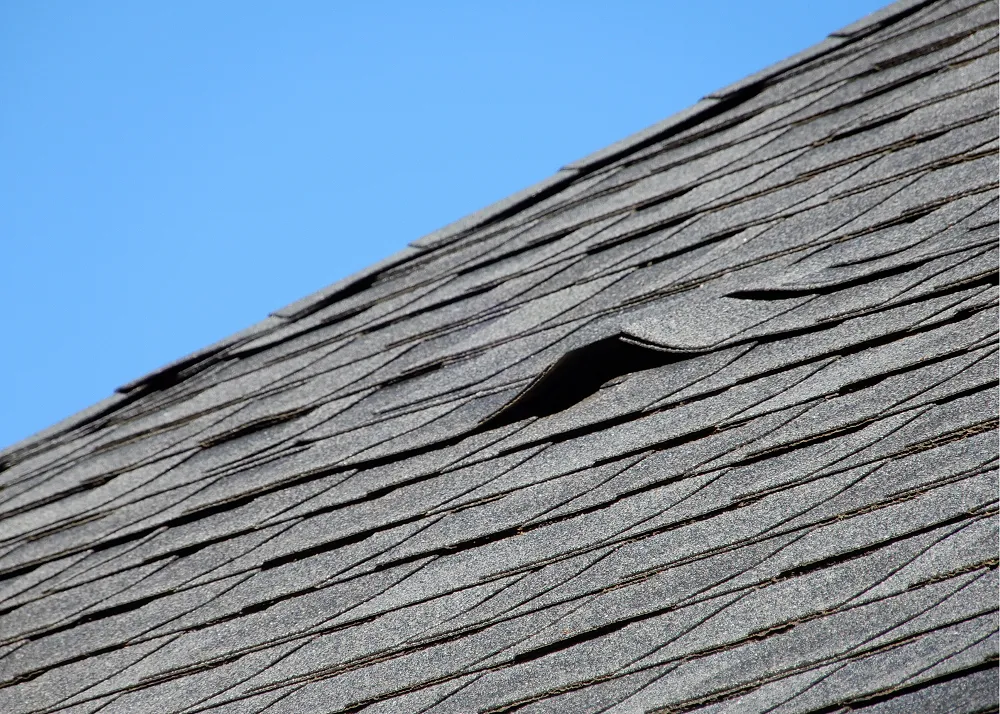
Wind damage affects your roof and shingles by creating uplift pressure that lifts, creases, tears, and dislodges shingles from the roof deck. Wind does not just blow shingles off the surface. It creates negative pressure zones that act as suction, pulling shingles upward from edges, ridges, and valleys where the roof changes direction. According to the National Severe Storms Laboratory, winds above 50 to 60 miles per hour can rip a roof off, and even sustained winds in the 45 mph range can lift and damage older or already-weakened shingles. For homeowners in Watkinsville and Hiawassee, where Georgia summer thunderstorms and mountain wind events are regular occurrences, knowing how wind damages a roof, how to document it for insurance, and how to get it repaired correctly can save thousands of dollars and weeks of stress. This guide answers every question homeowners commonly ask about wind damage to roofs and shingles.
Does Homeowners Insurance Pay for Wind Damage to a Roof?
Yes, homeowners insurance generally pays for wind damage to a roof when the damage is sudden and caused by a covered peril like a windstorm. According to the Insurance Information Institute, HO-3 policies list windstorm as a covered peril, meaning roof repairs from wind damage are typically covered. According to Progressive Insurance, homeowners insurance may cover roof damage under the dwelling coverage portion of the policy, minus your deductible, if it was caused by a covered peril such as a windstorm or fire.
Insurance will not cover wind damage if the insurer determines the roof was already weakened by age, deferred maintenance, or pre-existing deterioration before the storm. According to the Vargas Gonzalez legal analysis, insurers frequently argue that storm damage is actually age-related wear-and-tear to avoid paying claims. Homeowners who keep documentation of professional inspections, regular maintenance, and any prior repairs have a much stronger position when arguing that the damage resulted from the storm and not from neglect. Report wind damage claims to your insurer within 24 to 72 hours of the event to avoid denial on procedural grounds according to Pro Roofing Tips data.
What Is the 25% Rule in Roofing?
The 25% rule in roofing is a building code standard that requires a full permitted roof replacement when more than 25% of the roof surface is repaired or replaced within a 12-month period. This rule applies in most Georgia jurisdictions including Oconee County and Towns County and prevents property owners from doing large piecemeal repairs that avoid the permitting and code compliance requirements of a full replacement. According to wind damage insurance claim guidance, when wind damage affects 25% or more of a roof, full replacement is typically approved by insurance adjusters because the code requires it regardless of whether the insurer initially attempts to limit the scope to a repair.
For homeowners in the Watkinsville area filing a wind damage claim, this threshold matters. If your contractor and the insurance adjuster both document that more than a quarter of the roof surface was damaged by the storm, the legally compliant and practically sound outcome is full replacement, not a patch. Understanding this rule before the adjuster arrives, and having a licensed local contractor present during the adjuster’s inspection, helps make sure this threshold is applied correctly to your property.
What Does Wind Damage Do to Shingles?
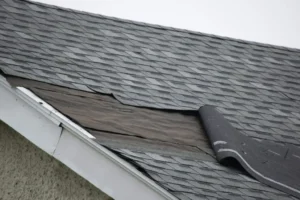
Wind damage does several things to shingles: it lifts and creases them, tears them partially or fully off the deck, breaks the sealant strip bond that holds tabs in place, strips away protective granules, and on older roofs can cause widespread unsealing across large sections of the surface. According to Owens Corning’s technical roofing guidance, when wind moves across a roof surface, it creates negative pressure that acts as suction and may lift shingles off the deck. The sealant strip that bonds each shingle course to the one below it is the primary resistance against this uplift, and once it breaks, the shingle can flutter, crease, and eventually detach.
The Southern Loss Association notes that shingles are considered wind-damaged when they are torn, creased, or detached. Unsealed shingles without physical mat damage are not technically wind-damaged, but they are vulnerable to future damage because the protective bond is gone. Wind damage is not always visible from the ground. A shingle can sustain significant creasing, granule loss, or sealant failure that is only apparent to an experienced inspector walking the roof surface. For homeowners in North Georgia, any storm with wind gusts at or above 45 mph warrants a professional roof inspection even if no shingles are visibly missing from the yard.
At What Wind Speed Do Shingles Come Off?
Shingles begin coming off at wind speeds of 45 to 60 miles per hour depending on the shingle grade, age, installation quality, and condition. According to the National Weather Service data cited by KPost Company, wind gusts reaching 45 mph can lift loose shingles, and at 60 mph wind gusts can tear off shingles that were previously in good condition. According to Roof Maxx, at 58 to 74 mph shingles once in good condition can be ripped off entirely, and at 75 mph or above winds are strong enough to damage even well-installed asphalt shingles significantly.
Shingle grade determines the rated threshold. Basic 3-tab shingles are rated for approximately 60 mph. Architectural or dimensional shingles are typically rated 110 to 130 mph. Premium shingles in the highest wind-resistance category are rated for 130 mph or higher, according to Best Choice Roofing. In practice, the actual threshold depends heavily on installation quality, the age of the sealant strip, and how many previous wind events have already loosened the bond. An older 3-tab roof in the Hiawassee mountain area that has seen a decade of wind events may lose shingles in a 40 mph gust that a new architectural shingle installation would barely notice.
What Not to Say to a Roof Insurance Adjuster
There are several things you should not say to a roof insurance adjuster when filing a wind damage claim. Do not speculate about the cause of the damage if you are not certain, because off-the-cuff statements like “the roof has always been a little loose in that area” or “we’ve had some problems with it for a while” can be used by the insurer to argue the damage is pre-existing rather than storm-caused. Do not accept a verbal settlement offer or verbal denial without everything in writing. Do not make permanent repairs before the adjuster inspects the damage, because according to wind damage claim guidance, making permanent repairs before the adjuster arrives can void a claim because the damage can no longer be verified.
Do not tell the adjuster your budget or what you have already spent. Do not sign any documentation at the inspection that limits the scope of damage or waives future supplemental claims. And do not negotiate the settlement on the spot without having reviewed the full written estimate from a licensed roofing contractor first. According to Bill Ragan Roofing, initial insurance offers average 30 to 40% below actual repair costs, so reviewing the offer carefully and having a contractor help you identify every missing line item is standard practice, not an adversarial act.
How Can I Get My Roof Replaced for Free?
You can get your roof replaced for free through three legitimate pathways: homeowners insurance coverage for covered storm damage, federal and state assistance programs for qualifying low-income homeowners, and manufacturer or contractor programs for documented defect claims. For storm damage, if wind or hail caused the damage and your policy covers it and the cost exceeds your deductible, the insurer covers the replacement minus the deductible. This is the most common path to a free or nearly free roof replacement for most homeowners.
For income-qualifying homeowners in rural areas, the USDA Section 504 Home Repair Program provides loans of up to $40,000 at 1% interest for 20 years for very-low-income homeowners, and grants of up to $10,000 for qualifying homeowners age 62 or older to address health and safety hazards including a leaky roof, according to the USDA Rural Development program documentation. Both Watkinsville and Hiawassee and surrounding rural areas in Georgia may qualify as eligible rural areas under USDA guidelines. Contact your local USDA Rural Development office to verify eligibility for your specific address and income level.
What Time of Year Is the Cheapest to Replace a Roof?
The cheapest time of year to replace a roof is late fall through early winter, from November through February in Georgia. According to Angi, scheduling a shingle roof installation during a contractor’s off-season can save 5% to 15% on total project cost. In the Watkinsville and Hiawassee areas, storm season keeps roofing crews at full capacity from spring through October. Planning a replacement in the winter months means better contractor availability and more competitive pricing than peak season rates.
This seasonal savings advice applies to planned replacements, not wind-damaged roofs that are actively compromised. A roof with missing shingles after a storm cannot wait for better pricing. Every subsequent rain event drives water into the exposed areas, expanding interior damage. If your roof sustained wind damage, prompt professional repair is always the right call regardless of season.
How to Tell If a Roofer Is Lying
You can tell if a roofer is lying if they cannot show you photos of every specific area of damage they claim exists, if they recommend immediate full replacement without itemized documentation of what they found and why repair is insufficient, if they arrived uninvited at your door right after a storm, or if their written proposal lacks specific line items and uses vague general descriptions. Storm chasers who operate in the Watkinsville and Hiawassee areas after every significant weather event are known for exaggerating damage to maximize insurance claim amounts.
A trustworthy contractor will inspect the roof in person, take detailed photos of every damaged section, explain each finding clearly, present a written proposal with itemized costs, and give you time to review it without pressure. They will also be honest about whether a targeted repair is viable rather than automatically recommending full replacement. A licensed contractor who builds their business on long-term relationships in Oconee County and Towns County has no incentive to exaggerate, and every incentive to tell you the truth.
At What Age Is a Roof Considered Old?
A roof is considered old at 15 to 20 years for standard asphalt shingles and at 25 to 30 years for premium architectural shingles in Georgia’s climate. The National Roofing Contractors Association notes that most new roofs are designed to provide useful service for about 20 years. For insurance purposes, an aging roof changes how wind damage claims are handled. According to Amstill Roofing, insurance companies are increasingly using roof age as a primary underwriting factor, and many now issue actual cash value coverage rather than replacement cost coverage for roofs over 20 years old. This means the insurer pays the depreciated value of the old roof rather than the full cost of a new replacement.
Roofing industry data shows that homes with roofs over 20 years old are three times more likely to file a wind or hail claim, because older shingles have lost the sealant bond strength and material flexibility needed to withstand the same wind speeds that a newer installation handles without damage. For homeowners in the Watkinsville area with a 15-plus-year-old roof, getting a professional inspection and possibly replacing the roof before a major storm season is a financially protective move.
Are There Signs Before a Roof Collapses?
Yes, there are signs before a roof collapses that every homeowner should know. These include visible sagging or bowing of the roofline when viewed from outside, a ceiling that bows or dips noticeably in the living space below, creaking or cracking sounds from the roof structure during wind load or after heavy rain, widespread soft spots in the decking that compress underfoot during a roof inspection, and widespread mold in the attic combined with visible wood rot in the structural framing. These are structural warning signs, not just surface wear indicators.
Wind damage can accelerate the progression toward structural failure. When wind lifts and creases shingles and opens pathways for water, the water infiltrates the decking and framing over repeated storms. Wood rot weakens the rafters and sheathing from inside. By the time the structural distress is visible from the living space below, the damage has been developing for months or years. For homes in Hiawassee with complex roof geometry and heavier precipitation loads, having a licensed contractor physically inspect the attic framing after any significant wind event is the only way to catch structural deterioration before it reaches a dangerous stage.
How to Prove Wind Damage to a Roof
You prove wind damage to a roof by gathering weather service records confirming the date and wind speed of the storm event, having a licensed roofing contractor inspect the roof and produce a written damage assessment with photos, and presenting that documentation to your insurance company promptly. According to wind damage claim guidance from Pro Roofing Tips, the steps are: document the damage with photos and video as soon as it is safe to do so, report to your insurer within 24 to 72 hours, and have a contractor inspect and produce a written assessment before the insurance adjuster arrives.
According to the Southern Loss Association, wind-damaged shingles have specific physical characteristics including creasing perpendicular to the shingle tabs, tearing around or over nail heads, and dislodgement following the wind direction across the roof surface. A pattern of shingle damage concentrated on the windward side of the roof and at the edges and ridges is consistent with wind damage. A pattern of random damage in no particular directional alignment is more consistent with age or installation failure. A contractor familiar with insurance documentation in the Watkinsville area will know how to photograph and describe damage in the specific language that insurance adjusters recognize as consistent with a covered wind event.
How Often Will Insurance Pay for a New Roof?
Insurance will pay for a new roof each time a covered wind or hail event causes sufficient documented damage to qualify for a claim, with no set minimum interval between claims. There is no rule that prevents you from filing a valid wind damage claim two years after a prior hail claim. However, filing multiple claims within a three-year period may affect your premium rates according to Pro Roofing Tips insurance data. And insurers will scrutinize each successive claim more carefully for evidence that the roof condition before the storm was already compromised by neglect.
The practical reality is that insurers are tightening roof coverage requirements in 2025, according to Amstill Roofing. More companies are moving older roofs to actual cash value coverage, requiring proof of recent professional maintenance before issuing or renewing policies, and conducting pre-renewal inspections. For homeowners in the Watkinsville and Hiawassee areas who want to maintain strong replacement cost coverage, keeping documentation of annual professional inspections and any repairs done is not just a good maintenance habit. It is an insurance strategy.
Can 60 MPH Winds Cause Roof Damage?
Yes, 60 mph winds can and do cause significant roof damage to asphalt shingles. According to Elite Construction Solutions and data from NOAA, severe wind is classified at 58 mph and above, and winds of 60 mph or greater begin to damage 3-tab asphalt shingles and flashing. According to the National Weather Service data cited by KPost Company, at 60 mph wind gusts can uproot trees, snap large branches, and tear off shingles that were previously in good condition. Standard 3-tab shingles are only rated for approximately 60 mph, meaning a 60 mph gust is at the very limit of what they are designed to withstand.
Architectural shingles handle 60 mph much better, with ratings typically between 110 and 130 mph. But even architectural shingles can be damaged at 60 mph if the sealant strip has dried out from age, if the shingles were improperly installed with misaligned nail placement, or if previous wind events have already loosened the bond. Georgia summer thunderstorms regularly produce wind gusts in the 50 to 70 mph range, and the North Georgia mountain area around Hiawassee sees additional wind exposure from elevation and topography. Scheduling a professional inspection after any confirmed storm with 45 mph or higher gusts is sound practice for any homeowner in the region.
How to Fix Wind-Damaged Shingles
You fix wind-damaged shingles by replacing missing shingles, re-nailing or replacing lifted shingles that have not torn or creased, applying roof cement to reseal any shingles where the adhesive bond has separated without physical damage, and replacing any shingles that have been creased, torn, or fractured since those cannot be repaired to their pre-damage condition. According to KPost Company, a professional roofer can nail lifted shingles back into place if they are intact, but cracked or damaged ones need full replacement. A single missing shingle can leave the roof vulnerable to water infiltration that leads to leaks and structural damage if not addressed promptly.
For widespread wind damage affecting large sections of the roof, a full replacement section is more practical than individual shingle repairs across dozens of locations. A licensed contractor in the Watkinsville area can assess the pattern and extent of damage and give you an honest recommendation about whether targeted repair or section replacement is the most cost-effective and durable solution for your specific situation. Never attempt to walk a wind-damaged roof yourself without proper safety equipment and roofing experience. The combination of possibly loose shingles, compromised fasteners, and potential structural damage makes a post-storm roof a serious fall hazard.
When wind damage has occurred and you need professional assessment, shingle roof repair in Watkinsville from a licensed and insured contractor is the right first call, both to document the damage for your insurance claim and to get the repairs done correctly before the next storm event.
How Long Do 50-Year Shingles Really Last?
50-year shingles really last 25 to 40 years in most real-world conditions, including Georgia’s climate. The 50-year rating is a manufacturer’s maximum rating under laboratory testing conditions, not a field-performance guarantee. According to Cobex Construction Group, premium shingles that carry the highest lifespan ratings are designed for maximum weather resistance and durability, but actual performance depends heavily on installation quality, attic ventilation, climate exposure, and maintenance. According to Roof Maxx, today’s shingles contain less asphalt than shingles manufactured decades ago, making them more susceptible to premature brittleness and granule loss than older shingles of the same rated lifespan.
For homeowners in North Georgia considering 50-year premium shingles after a wind damage replacement, the investment is worthwhile if the full installation system is done correctly: quality underlayment, proper ventilation, correct nail placement, and professional installation by a contractor experienced with high-wind-rated shingle systems. A 50-year shingle installed over a poorly ventilated attic in Georgia’s summer heat will not come close to its rated performance. The system as a whole determines how long the shingles actually last.
How to Scare a Home Insurance Adjuster
You do not need to scare a home insurance adjuster. The more productive framing is knowing how to be a well-prepared, well-documented homeowner who advocates effectively for a fair claim settlement. The practical steps that give you the strongest position are: having a licensed roofing contractor inspect and document the damage with photos and a written assessment before the adjuster arrives, comparing the adjuster’s scope of damage estimate line by line against your contractor’s estimate, and requesting re-inspection or supplemental review if the adjuster’s estimate is significantly lower than what your contractor has documented.
According to Bill Ragan Roofing, initial insurance offers average 30 to 40% below actual repair costs. Homeowners who push back with detailed contractor documentation, request specific line items be added to the estimate, and reference applicable local building code requirements consistently receive higher final settlements than those who accept the first offer without review. If the gap between the insurer’s offer and the actual repair cost is substantial, hiring a licensed public adjuster who works for you rather than the insurance company is a recognized and legitimate option.
What Are the Red Flags for Roofing Contractors?
The red flags for roofing contractors are showing up uninvited at your door right after a storm event, requiring full payment upfront before any work begins, unable to provide a Georgia contractor’s license number on request, lacking proof of liability insurance and workers’ compensation coverage, offering a written proposal that is vague with no itemized line items, pressuring you to sign immediately on the day of the initial visit, and offering to waive your insurance deductible in exchange for signing a contract. According to ATR Roofing, waiving or paying a deductible on behalf of a homeowner is illegal insurance fraud in most states including Georgia, and any contractor who offers this is committing a crime, not doing you a favor.
Legitimate roofing contractors have a physical business address in the local area, carry documented licensing and insurance, provide detailed written proposals that break out every cost, and give you time to review without pressure. They do not make unsolicited post-storm door calls. The Watkinsville and Hiawassee communities have reputable local contractors who build their businesses on long-term community relationships and will never pressure you to sign on the spot.
How to Apply for the $3,000 Senior Assistance Program
The $3,000 senior assistance you may have heard about likely refers to the USDA Section 504 Home Repair Program, which provides grants of up to $10,000 to qualifying senior homeowners age 62 or older in rural areas to address health and safety hazards including leaky roofs. According to the USDA Rural Development program documentation, grants under Section 504 have a lifetime limit of $10,000 and do not need to be repaid as long as the homeowner remains in the property for at least three years after receiving the grant. Loans of up to $40,000 are also available at 1% interest over 20 years for qualifying very-low-income homeowners of any age.
To apply, contact your local USDA Rural Development office. Both Watkinsville, GA and Hiawassee, GA are in rural Georgia and may fall within eligible areas for the Section 504 program. Eligibility requires owning and occupying the home, having household income below 50% of the area median income, and being unable to obtain affordable credit elsewhere. For the grant specifically, applicants must be 62 or older and demonstrate inability to repay a loan. The USDA Income and Property Eligibility website allows you to verify whether your specific address qualifies before beginning the application process.
Do Roofing Companies Offer Senior Discounts?
Some roofing companies offer senior discounts, but there is no industry-wide standard or requirement. Individual contractors set their own pricing and may offer 5% to 10% discounts for seniors, veterans, or other groups as part of their business practices. The best way to find out is to ask directly when requesting quotes. Getting at least two to three competitive written bids from licensed local contractors is always the most reliable way to confirm you are receiving fair market pricing regardless of whether any specific discount is available.
For qualifying senior homeowners in rural areas, the USDA Section 504 program described above is a far more significant source of financial assistance than a typical contractor discount. A $10,000 grant does not require repayment and is specifically designed to help seniors address health and safety concerns including roof repairs and replacement. Contact your local USDA Rural Development office or a nonprofit housing counselor to assess eligibility before shopping for a discount.
What Is a 504 Grant?
A 504 grant is a federal home repair grant administered by the USDA Rural Development program under Section 504 of the Housing Act of 1949, officially called the Single Family Housing Repair Loans and Grants program. According to USDA Rural Development documentation, the 504 grant provides up to $10,000 in non-repayable funds to qualifying homeowners who are 62 years of age or older, live in a designated rural area, have household incomes below 50% of the area median income, and need to address health and safety hazards in their home. A leaky roof that threatens structural integrity or poses mold and health risks qualifies as a health and safety hazard eligible for this funding.
In presidentially declared disaster areas, the grant limit increases to $15,000. Loans and grants can be combined for up to $50,000 in total assistance under the program. The loan portion carries a 1% fixed interest rate over a 20-year term, making it one of the most affordable home improvement financing options available anywhere. For rural homeowners in Oconee County and Towns County, Georgia, this program is worth investigating if income eligibility is a concern. Apply through your state’s USDA Rural Development office.
What Is the Biggest Mistake People Make When Dealing With an Insurance Claim?
The biggest mistake people make when dealing with a roof insurance claim is accepting the insurer’s first offer without reviewing it against a detailed contractor estimate. According to wind damage insurance claim analysis, initial insurance offers average 30 to 40% below actual repair costs. Homeowners who do not push back, or who do not involve an experienced roofing contractor in the documentation process, consistently end up paying thousands of dollars out of pocket that the insurer should have covered.
Other major mistakes are making permanent repairs before the adjuster inspects the damage, not documenting the storm event with weather service records and photos immediately after the storm, failing to report the claim within the policy’s required timeframe, and not reading the policy before filing to understand whether the roof is covered at replacement cost value or actual cash value. These are avoidable errors. Having a licensed contractor who has worked with insurance claims in the Watkinsville area involved from the beginning of the process significantly improves the outcome for most homeowners.
At What Wind Speed Will a Roof Come Off?
A roof will come off at wind speeds of 75 mph or higher for most residential structures when shingles are old or improperly installed, and at speeds of 100 mph or more for properly installed modern roofing systems, according to data from FEMA and the National Severe Storms Laboratory. FEMA reports that new wood-frame houses constructed to building codes perform well structurally in winds up to 150 mph. But this refers to the structural frame, not the roofing materials. Shingles can begin coming off at 45 to 60 mph for older or damaged roofs.
The distinction matters for insurance claims. A wind event at 70 mph that partially lifts a section of an older shingle roof is a covered wind damage event. An insurer who argues the damage resulted from pre-existing weakness is attempting to reframe a covered peril as a maintenance issue. Having documentation of recent professional inspections showing the roof was in sound condition before the storm is the homeowner’s strongest defense against that argument.
Is It Smart to Submit an Insurance Claim for Your Roof?
Yes, it is smart to submit an insurance claim for your roof when the damage was caused by a covered peril like wind or hail and the repair cost exceeds your deductible. According to NerdWallet, the average roof leak repair costs $360 to $1,550, but significant wind damage affecting large sections of shingles, flashing, and possibly the deck can cost $5,000 to $25,000 or more. When the damage repair cost substantially exceeds your deductible, filing a claim is financially sound.
It is not always smart to file if the damage cost is close to or below your deductible, because filing a claim can raise your premium in subsequent years. Filing multiple claims within three years may negatively affect rates according to wind damage claim guidance. The decision should be based on the actual estimated repair cost compared to your deductible and the likely premium impact. A licensed contractor can give you an honest estimate of the repair scope before you decide whether to file, which is always the right first step.
What Is the Average Deductible for Wind Damage?
The average deductible for wind damage on a standard homeowners policy is $500 to $2,000 as a fixed dollar amount, according to GAF roofing and insurance guidance. However, in some states and coastal areas, wind and hail deductibles are applied as a percentage of the home’s insured value rather than a flat dollar amount, typically ranging from 1% to 5% of insured value. On a home insured for $350,000, a 2% wind deductible would mean $7,000 out of pocket before the insurance covers anything.
For homeowners in the Watkinsville and Hiawassee areas of Georgia, checking whether your policy uses a flat dollar deductible or a percentage-based wind deductible is an important step before any storm season. The Texas Department of Insurance guidance suggests asking your agent specifically whether the deductible for wind and hail damage is different from the general deductible, because in many policies they differ. Knowing your actual out-of-pocket obligation before a storm hits helps you plan your budget and make a fully informed decision about whether to file a claim after damage occurs.
What to Avoid Saying to an Insurance Adjuster
What to avoid saying to an insurance adjuster when filing a wind damage roof claim includes any statements that suggest the roof had problems before the storm, any admissions that maintenance has been deferred for an extended period, any speculation about the repair scope or replacement cost before your licensed contractor has completed their assessment, and any agreement to settle the claim on the spot without reviewing the full written documentation. According to GEICO’s insurance guidance, insurers can and will use statements made at the initial inspection to characterize a storm damage claim as a maintenance issue, which shifts the responsibility back to the homeowner.
Stick to describing what you observed after the storm: specific areas where damage is visible, when you first noticed the damage, and what the weather conditions were during the storm event. Let your contractor’s written assessment do the technical work. Your job during the adjuster’s visit is to provide factual observations and to ensure the adjuster physically inspects every area your contractor has documented as damaged. Having your contractor present during the adjuster’s inspection whenever possible is the most effective way to make sure all documented damage is properly assessed.
What Is the 80% Rule in Homeowners Insurance?
The 80% rule in homeowners insurance is a standard that says you should insure your home for at least 80% of its full replacement cost value to receive full reimbursement on a covered loss. If your home is insured for less than 80% of its replacement cost, your insurance company may only pay a proportional share of any covered claim rather than the full cost of repairs. For example, if your home would cost $400,000 to fully rebuild and you are only insured for $240,000 (60% of replacement value), a covered wind damage claim may result in a partial payout rather than the full documented repair cost.
This rule matters for roofing claims because construction costs have risen significantly since many homeowners last reviewed their coverage limits. A home insured based on an appraisal from five or seven years ago may now be significantly underinsured relative to current replacement costs. Reviewing your coverage limits annually with your insurance agent and updating the insured replacement cost to reflect current construction pricing in the Watkinsville and Hiawassee markets is a practical step every homeowner should take, especially before storm season.
Wind Speed and Shingle Damage Reference Guide
| Wind Speed | Expected Shingle Impact | Most Vulnerable Shingle Type | Recommended Action |
|---|---|---|---|
| Under 45 mph | Minimal for sound roofs; loosens already-weakened seals | Old 3-tab, age-brittle shingles | Visual check after storm |
| 45 to 57 mph | Lifts loose shingles; can break weakened tree limbs onto roof | 3-tab shingles, roofs over 15 years old | Professional inspection recommended |
| 58 to 74 mph | Tears off 3-tab shingles in good condition; bends flashing | 3-tab shingles; unsealed architectural shingles | Immediate professional inspection required |
| 75 to 100 mph | Damages all shingle types; widespread uplift and dislodgement | All shingle types, all ages | Emergency inspection and repair |
| 100+ mph | Structural roof damage likely; decking and framing at risk | All roof types | Emergency structural assessment |
Sources: National Weather Service, National Severe Storms Laboratory (NSSL), Owens Corning, Elite Construction Solutions (NOAA data), Best Choice Roofing, KPost Company, Roof Maxx, PITCH Roofing
Frequently Asked Questions
Does homeowners insurance cover wind damage to roofs in Watkinsville, GA?
Yes, homeowners insurance covers wind damage to roofs in Watkinsville when the damage was caused by a sudden, accidental wind event and the policy lists windstorm as a covered peril, which is standard in most HO-3 policies. To protect your claim, document damage with photos immediately after the storm, report to your insurer within 24 to 72 hours, and have a licensed local contractor inspect and produce a written assessment before the insurance adjuster visits. Insurers in Georgia may deny or reduce wind damage claims if they determine the roof was already weakened by age or deferred maintenance before the storm, so keeping documentation of annual professional inspections and any prior repairs significantly strengthens your position.
What are the most common wind damage patterns on North Georgia roofs?
The most common wind damage patterns on North Georgia roofs are missing shingles at the windward edge and ridge, lifted and creased shingles along the eaves and rakes, separated flashing at chimney bases and vent pipe collars, and debris impact damage from tree branches and limbs. The mountain terrain around Hiawassee in Towns County creates channeled wind events that can concentrate uplift on specific roof planes. Homes with high-pitched gable roofs and wide overhangs are more susceptible to wind uplift than aerodynamic hip roofs, according to Owens Corning’s wind resistance research. After any storm with confirmed gusts at or above 45 mph in the Watkinsville or Hiawassee areas, a professional inspection is the only reliable way to find all the damage because much of it is not visible from the ground.
Can I get a free roof replacement after wind damage in Georgia?
You may be able to get a roof replacement covered by insurance after wind damage in Georgia if your homeowners policy covers windstorm as a covered peril, the damage exceeds your deductible, and you can document that the damage resulted from the storm event rather than from pre-existing deterioration. For qualifying low-income homeowners age 62 or older in rural areas of Georgia including the Hiawassee and Watkinsville regions, the USDA Section 504 Home Repair Program offers grants of up to $10,000 that do not need to be repaid. For income-qualifying homeowners of any age, Section 504 loans of up to $40,000 at 1% interest over 20 years are also available to address safety-related repairs including roof replacement.
How do I document wind damage on my roof for an insurance claim near Hiawassee, GA?
You document wind damage on your roof near Hiawassee for an insurance claim by first photographing all damage from the ground and any interior signs like ceiling stains or attic moisture immediately after the storm while conditions are safe. Obtain a weather service record from NOAA or the National Weather Service confirming the storm date and wind speed in Towns County. Then have a licensed roofing contractor perform a full inspection and produce a written damage assessment with photographs of each affected area, noting which damage is consistent with wind uplift patterns. Have this contractor assessment ready before the insurance adjuster arrives. Do not make permanent repairs before the adjuster inspects the roof, as this can void the claim by preventing the insurer from verifying the pre-repair damage condition.
Should I hire a public adjuster for a wind damage roof claim in Georgia?
Hiring a public adjuster for a wind damage roof claim in Georgia is worth considering when the insurer’s initial settlement offer is significantly below the actual documented repair cost, when the insurer has denied a legitimate claim, or when the damage is extensive and the gap between the insurer’s estimate and contractor estimates is large. A public adjuster works for you, not the insurance company, and can negotiate on your behalf. They typically charge 10% to 20% of the final settlement as their fee. According to the National Association of Public Insurance Adjusters, claims handled by public adjusters produce on average significantly higher payouts than homeowner-negotiated settlements, though your specific circumstances determine whether the fee is worth it. For most straightforward wind damage claims in the Watkinsville or Hiawassee area, having an experienced licensed roofing contractor document the damage thoroughly and participate in the adjuster’s inspection resolves most settlement gaps without the added cost of a public adjuster.
What type of shingles holds up best against wind in North Georgia?
Architectural or dimensional shingles with a wind rating of 110 mph or higher hold up best against wind in North Georgia. Architectural shingles are thicker and laminated compared to basic 3-tab shingles, giving them greater resistance to wind uplift. The sealant strip adhesive bond on quality architectural shingles is also stronger and more durable than on 3-tab products, making them harder to unseal in sustained wind. For homes in the mountain communities around Hiawassee that experience elevated wind exposure from terrain effects, choosing architectural shingles with a 130 mph wind rating and having them installed by a licensed contractor using the manufacturer’s specified nail pattern and fastener count is the most practical combination of cost and wind resistance available in the asphalt shingle category.
Final Thoughts
Wind damage to asphalt shingles is the most common type of storm roof damage, affecting millions of homes each year. The key facts to remember: shingles begin to lift and fail at 45 to 60 mph for older roofs, and at 58 to 74 mph for newer 3-tab shingles in good condition. Architectural shingles rated for 110 to 130 mph provide significantly better protection. Homeowners insurance generally covers wind damage when it is sudden, documented, and the roof was in sound condition before the storm. The most common mistakes in wind damage claims are accepting the first settlement offer without comparing it to a contractor’s assessment, making permanent repairs before the adjuster visits, and failing to document the damage promptly.
If your roof has sustained wind damage or you want to know how your roof would hold up in the next Georgia storm, the team at Ridgeline Roofing and Exteriors serves homeowners throughout Watkinsville, Hiawassee, and the surrounding North Georgia communities with honest inspections, accurate damage documentation, insurance claim support, and professional shingle roof repairs and replacements backed by real warranties. Contact Ridgeline Roofing today to schedule your free roof inspection and find out exactly what your roof needs before the next storm season tests it.
Ready to get a professional assessment of wind damage or prepare your roof for the next storm? Start with the roof replacement specialists in Watkinsville who know North Georgia roofs and work with Georgia homeowners through the insurance claim process every day.