Skip to content
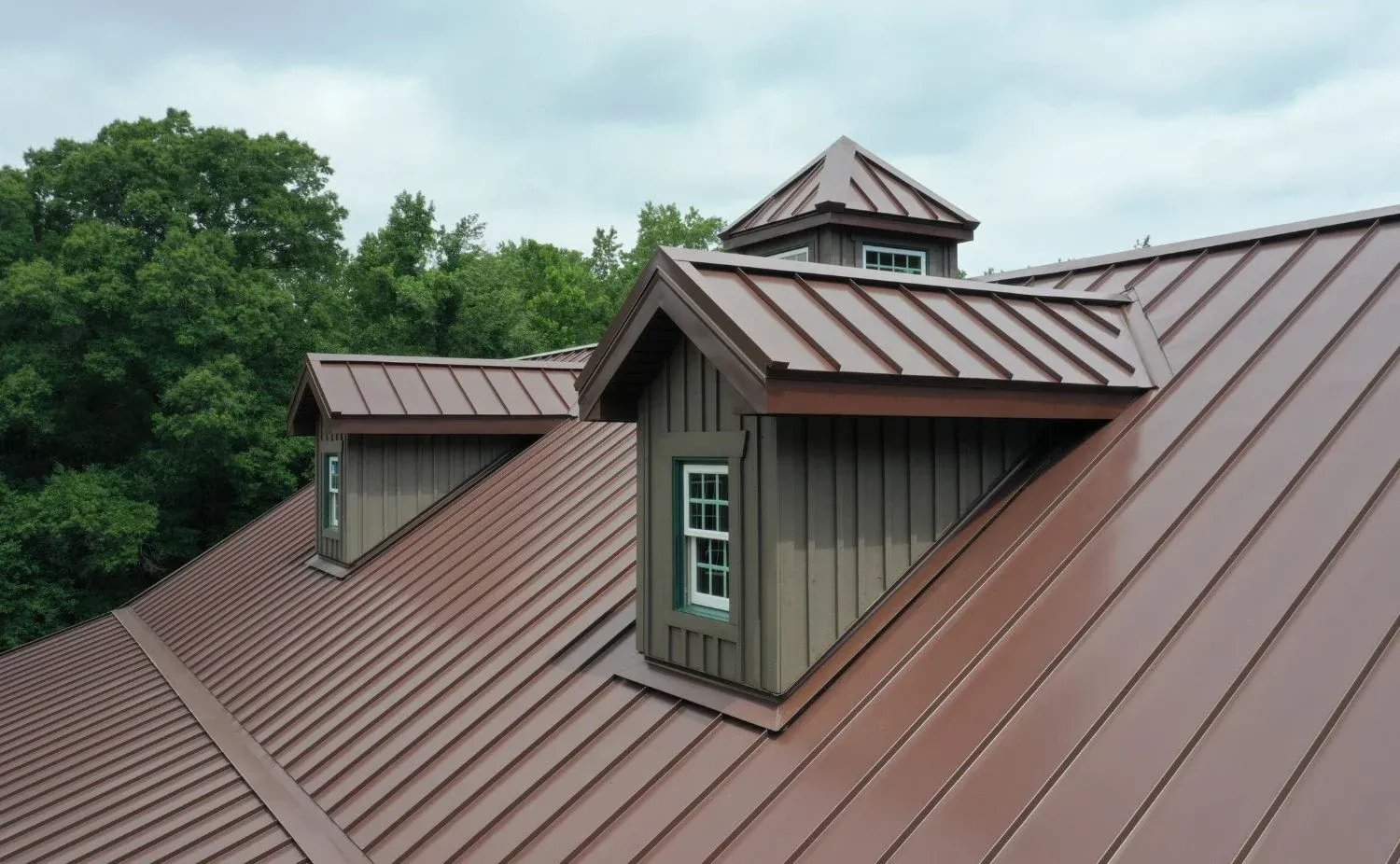
The pros of metal roofing for homes are a 40 to 70-year lifespan, superior wind and hail resistance, energy savings of up to 25% on cooling costs, a Class A fire rating, very low maintenance requirements, and the potential for insurance premium discounts of up to 35%. The cons of metal roofing for homes are the higher upfront cost compared to asphalt shingles, noise during heavy rain without proper underlayment, the potential for denting from large hail on softer metals, and the need for a contractor experienced specifically in metal systems. For homeowners in Watkinsville and Hiawassee, Georgia, who are comparing roofing options, this guide covers every common question from the Google People Also Ask results so you can make a confident decision.
Pros and Cons of Metal Roofing for Homes
The pros and cons of metal roofing for homes break down clearly when you look at them side by side. Metal roofing delivers unmatched long-term durability, energy performance, and storm resilience at the cost of a higher upfront price and a smaller pool of qualified installers. Whether the pros outweigh the cons depends entirely on how long you plan to stay in the home, what your budget allows, and what your local climate demands of your roof.
According to RubyHome’s 2025 Roofing Statistics, roughly 5 million roofs are installed in the United States every year. Asphalt shingles cover approximately 80% of American homes. Metal roofing accounts for around 12% of the home remodel roofing market, a share that has grown steadily over the past decade as more homeowners discover that the long-term math favors metal over repeated shingle replacements. According to Eagle Roofing & Restoration’s 2025 metal roofing analysis, the global metal roofing market is projected to reach $24.8 billion by 2027, driven by demand for more durable and energy-efficient roofing solutions.
Georgia’s climate makes this comparison especially important for homeowners in Watkinsville in Oconee County and in the mountain communities near Hiawassee in Towns County. Hot, humid summers accelerate asphalt shingle degradation. Active storm seasons bring wind and hail that challenge both material types. The mountain climate near Hiawassee adds temperature swings and occasional ice events that metal handles better than standard shingles. Understanding the specific pros and cons of each material for your local conditions is the key to a good decision.
Metal Roofing Pros and Cons at a Glance
| Pros | Cons |
|---|---|
| Lifespan of 40 to 70 years (standing seam) | Higher upfront cost than asphalt shingles |
| Withstands winds up to 140 mph or higher | Requires specialist installer; not all roofers qualify |
| Reduces cooling costs up to 25% | Can be noisy in rain without proper underlayment |
| Class A fire rating (non-combustible) | Softer metals (aluminum) can dent from large hail |
| Very low maintenance requirements | Panel color matching is difficult after years of fading |
| Insurance discounts of up to 35% | Exposed fastener systems need periodic maintenance |
| 100% recyclable; made from recycled content | Some HOAs restrict metal roofing styles or colors |
| Resistant to algae, mold, rot, and pests | Thermal expansion can loosen fasteners over time |
| Increases home value by 60%–70% of install cost | Lower ROI percentage at resale vs. asphalt (48% vs. 61%) |
Sources: State Farm Metal Roof Pros and Cons, Metal Roofing Alliance, FoxHaven Roofing 2025 Lifespan Guide, Eagle Roofing & Restoration 2025 Metal Roofing Analysis, RoofCrafters Metal Roof Problems Research, Journal of Light Construction 2024 Cost vs. Value Report, Angi Home Value Research, HomeGuide Metal Roofing Pros and Cons 2025.
What Is the Biggest Problem with Metal Roofs?
The biggest problem with metal roofs is the higher upfront cost. Metal roofing costs two to four times more than asphalt shingles at installation, which is the single most common reason homeowners choose shingles over metal even when the long-term economics favor metal. For a standard 2,000-square-foot home in Georgia, asphalt shingles run $8,000 to $20,000. A steel standing seam metal roof on the same home runs $15,000 to $30,000.
Beyond cost, the other significant problems metal roofs can develop are leaks at flashing points around penetrations, surface rust on steel panels where the coating has been scratched or damaged, fastener degradation on exposed fastener systems if maintenance is deferred, and the difficulty of finding a contractor with genuine metal roofing experience. According to RoofCrafters’ 30-year analysis of metal roof problems in Georgia, South Carolina, and Florida, the metal panels themselves rarely fail. The problems that occur are almost always the result of installation errors or deferred maintenance, not material failure.
Homeowners near Watkinsville and Hiawassee should understand that the two biggest problems with metal roofs, upfront cost and finding a qualified installer, are both addressable. Financing options spread the cost over time. Choosing a GAF Master Elite certified contractor with documented metal roofing experience addresses the installation quality concern. Both problems are solvable before they ever become real issues.
Ridgeline Roofing and Exteriors handles metal roofing installations across Oconee and Towns County and can walk you through what the full project involves. Metal roofing options for Watkinsville homes are covered on their service page, including product details and what to expect from a written quote.
Does Homeowners Insurance Go Down with a Metal Roof?
Yes, homeowners insurance often goes down with a metal roof. According to the Metal Roofing Alliance, homeowners who install qualifying metal roofs may see their insurance premiums drop by up to 35%. Many insurance companies offer discounts of 5% to 35% annually for homes with metal roofs because metal’s Class A fire rating, wind resistance of up to 140 mph, and Class 4 hail impact resistance significantly reduce the insurer’s risk of paying out a large claim.
According to roofingcalc.com’s metal roofing pros and cons guide, some insurers offer discounts of up to 30% specifically for homeowners who install Class 4 impact-resistant metal roofs like stone-coated steel. These discounts apply annually for the life of the roof, which on a 50-year metal roof compounds into substantial total savings. State Farm’s metal roof analysis confirms that metal roofs carry a Class A fire rating, the most fire-resistant classification available, and notes that this characteristic is particularly valuable in areas prone to wildfires, lightning storms, or wildfire risk.
The discount is not universal. Not every insurance company offers it, and rates vary by carrier, by the specific metal system installed, and by your home’s location. Contact your specific insurer before installation to confirm what credit your policy qualifies for, get any promised discount in writing, and ask whether the premium reduction applies to the replacement cost or the premium calculation. In Georgia’s active storm environment, where wind and hail claims are among the most frequent, the insurance benefits of metal roofing carry more value than in calmer climates.
What Is the 25% Rule in Roofing?
The 25% rule in roofing is the guideline that when more than 25% of a roof’s surface is damaged or significantly deteriorated, full replacement is more cost-effective than targeted repairs. Patching a quarter or more of a roof’s surface area typically leads to ongoing repair costs that accumulate to more than a full replacement would have cost if addressed at the right threshold.
Roofing contractors and insurance adjusters both use this benchmark when evaluating storm damage or age-related wear. When a hail or wind storm affects a home in Oconee County near Watkinsville and a contractor finds 30% of the shingle surface with broken seal strips, cracked shingles, or significant granule loss, most professionals will recommend full replacement rather than spot patching. The 25% rule applies to asphalt shingles more than to metal roofing. Metal roofs, by contrast, can often sustain isolated panel damage that is fully repairable without triggering a full replacement, which is one of metal’s long-term financial advantages.
For homeowners with limited shingle damage, shingle roof repair in Watkinsville is a legitimate option when damage is clearly contained to a small section. A professional assessment determines whether repair or replacement is the smarter financial call for your specific roof.
Is It Better to Have a Metal Roof or Shingles?
It is better to have a metal roof than shingles if you plan to stay in your home for 20 or more years, want the lowest possible long-term maintenance burden, and can absorb the higher upfront cost. It is better to have shingles if your budget is tight, you plan to sell the home within 10 years, or you need the lowest possible first cost.
The financial case for metal roofing strengthens significantly over time. According to McElroy Metal’s life cycle cost analysis, homeowners who stay in their homes for 30 to 40 years can save $25,000 to $30,000 by choosing metal over repeated shingle replacement cycles, even accounting for metal’s higher upfront cost. That calculation does not include the annual energy savings of up to 25% on cooling costs, or the insurance premium discounts that metal roofing generates, which further widen metal’s long-term financial advantage.
According to U.S. News Real Estate, metal roofs last 40 to 70 years compared to asphalt shingles’ 15 to 30 years nationally. In Georgia’s warm, humid climate, according to J&M Roofing’s regional research, asphalt shingles average around 14 years of service life. A homeowner in Watkinsville or Hiawassee who installs architectural shingles and stays for 30 years will likely replace that roof once or twice. A homeowner who installs standing seam metal will not replace it at all during the same period.
For a direct side-by-side look at available products for Georgia homes, the roofing material choices page covers what each option delivers and what it costs in this market.
When Should You Not Use a Metal Roof?
You should not use a metal roof when your upfront budget cannot accommodate the higher first cost, when you plan to sell the home within five years and will not recoup the premium at resale, when your homeowner’s association prohibits or restricts metal roofing, or when the roof pitch is too low for the specific metal system you are considering.
If you are selling within a few years, the 2024 Cost vs. Value Report from the Journal of Light Construction shows that metal roofing returns 48.1% of its cost at resale nationally, while asphalt shingles return 60.7%. For a short-term hold, shingles offer a better immediate resale ratio. The long-term savings from avoiding future replacements do not materialize if you sell before those future replacement cycles would have occurred.
Very low-slope or flat roofs require specific metal systems designed for those conditions. Not every metal panel profile works on every pitch. Some panels require a minimum pitch of 3:12 or higher. A licensed contractor experienced in metal roofing can tell you which systems are appropriate for your specific roof geometry and whether metal is the right choice for your roof’s configuration.
How Much Does a Metal Roof Cost for a 2,000-Square-Foot Home?
A metal roof for a 2,000-square-foot home costs between $15,000 and $40,000 in Georgia, depending on the system type and metal selected. Steel and aluminum standing seam systems run $15,000 to $30,000 for a typical 2,000-square-foot home. Exposed fastener steel systems start lower, around $8,000 to $15,000. Premium metals like copper or zinc are significantly higher.
According to State Farm’s metal roof analysis, the average cost of a metal roof is approximately $11,000 for a 2,300-square-foot home nationally. Georgia’s costs trend about 10% below the national average according to Roof Observations’ Georgia cost guide, which gives Watkinsville and Hiawassee homeowners a modest cost advantage over higher-cost markets.
Labor accounts for roughly 60% of the total project cost for metal roofing, according to NerdWallet’s roofing cost analysis. Metal installation requires more specialized skill than asphalt shingles, which is why labor rates are higher and contractor selection matters more. Homes near Hiawassee with steeper mountain-style pitches typically see higher labor costs per square than flatter homes in lower-elevation Watkinsville because steep pitch work requires more safety equipment and slower installation.
The only number that matters for your specific home is the one on a written estimate from a licensed local contractor who has seen your roof. The Watkinsville roof replacement page provides an overview of the process and what to expect from a quote for either metal or shingle systems.
What Do Insurance Companies Say About Metal Roofs?
Insurance companies say that metal roofs are a favorable risk and often reward homeowners with lower premiums for installing them. Metal’s Class A fire resistance, wind ratings of up to 140 mph on standing seam systems, and Class 4 hail impact resistance on qualifying steel panels all reduce the insurer’s likelihood of paying out a large storm or fire claim. According to the Metal Roofing Alliance, insurers may offer discounts of up to 35% on annual premiums for qualifying metal roof installations.
Metal roofs are also non-combustible, which State Farm confirms carries the highest possible fire resistance classification. In a market where fire-related claims and storm damage claims are both rising, insurance companies have strong financial incentives to price metal-roofed homes more favorably than asphalt-shingled homes. According to Fixr.com’s 2025 U.S. Roofing Industry Statistics, roof repair and replacement costs reached nearly $31 billion in 2024, a 30% increase since 2022, driven largely by wind and hail damage that accounts for more than half of all residential roofing claims.
One nuance to understand: insurance companies also consider the replacement cost of a metal roof when determining premiums. Because metal roofing costs more to replace than asphalt shingles, the replacement cost component of your premium may be slightly higher even after the discount for resilience. The net result is still positive for most homeowners, but reviewing the specific premium calculation with your carrier before and after a metal installation confirms the real-world savings for your policy.
Does a Metal Roof Devalue a House?
No, a metal roof does not devalue a house. A metal roof increases home value. According to Angi’s home value research, a metal roof adds approximately $7,000 to $8,100 to a home’s market value on an average installation cost of $11,600, representing a 60% to 70% return on the installation cost. According to the Metal Roofing Alliance, homeowners who install metal roofs can recoup nearly 86% of the cost in home value at resale in some markets.
Homes with metal roofs have seen up to a 6% increase in resale value compared to homes with asphalt roofs, according to Mountaintop Metal Roofing’s analysis of Metal Roofing Alliance data. On a $750,000 home in a premium market, that 6% translates to $45,000 in added market value.
The one scenario where metal can complicate a sale is a neighborhood where metal roofing is uncommon and buyers are unfamiliar with it. Buyers who do not know metal roofing will sometimes hesitate because they are uncertain what they are getting. A knowledgeable real estate agent can counter this by presenting the lifespan data, warranty information, and energy savings as selling points. A metal roof that eliminates the buyer’s concern about roof replacement for the next 40 years is a compelling advantage in a real estate negotiation, not a liability.
The reality is that the percentage ROI at resale for metal (48% nationally) is lower than asphalt shingles (61%), according to the 2024 Cost vs. Value Report. But the dollar amount of value added is often higher for metal because the installation cost is higher. A metal roof’s value is also not limited to resale. It delivers energy savings, insurance discounts, and zero re-roofing costs across a lifetime of ownership that asphalt cannot match.
What Not to Say to a Roof Insurance Adjuster?
You should never tell a roof insurance adjuster that you are unsure when the damage happened, that the damage has been there for a while, that the roof is old and was due for replacement anyway, that you cleaned up or made temporary repairs before the inspection, or that you agree with their initial assessment before your own contractor has independently reviewed the damage.
Each of these statements gives the adjuster grounds to reclassify storm damage as age-related wear, pre-existing condition, or neglect, all of which can reduce or eliminate your claim. Keep your statements factual. State the date and nature of the storm event, describe what you observed after the storm, and say you are filing a claim for storm-caused damage. Let the adjuster do their inspection without your commentary guiding their conclusions.
Before the adjuster arrives, photograph all visible damage from the ground with timestamps on every photo. If possible, have a licensed roofing contractor inspect the roof independently before the insurance inspection so you have a professional written assessment ready. Wind and hail drove more than half of all residential roofing insurance claims in 2024, according to Fixr.com’s 2025 roofing industry data, which means adjusters evaluate many claims under pressure and have financial reasons to look for grounds to reduce payout. Your documentation and a contractor’s independent assessment are your best protection against an underpaid claim.
What Time of Year Is the Cheapest to Replace a Roof?
The cheapest time of year to replace a roof, whether metal or asphalt shingles, is late winter from January through early March. Roofing contractors in Georgia are least busy during these months, temperatures stay mild enough to install both materials correctly, and less demand can translate to faster scheduling and more competitive pricing.
Late fall, October through November, is the second-best window. The summer storm rush has passed, crews are available, and contractors want to fill their schedules before the slower winter period. Both windows apply whether you are replacing with metal roofing in Watkinsville or scheduling a shingle replacement near Hiawassee.
The most expensive and hardest time to schedule is right after a major storm event. When a significant hail or wind storm rolls through Oconee County or Towns County, every licensed contractor in the area gets booked out quickly. If your roof has storm damage but is not actively leaking, waiting two to three months after the storm typically results in faster contractor availability and more competitive pricing than trying to schedule immediately after the event.
How to Tell If a Roofer Is Lying?
You can tell a roofer is lying by watching for these patterns: same-day pressure to sign a contract, inflated damage claims beyond what a licensed contractor would document, refusal to provide a written itemized estimate, demands for a large cash payment before any work starts, inability to show a valid Georgia contractor’s license, and no verifiable physical address or community reviews.
After major storms in the Watkinsville and Hiawassee areas, out-of-area contractors sometimes knock on doors, claim they can “work with your insurance” to get you a free roof, and push for fast signatures. This setup is nearly always a red flag for either a low-quality installation using inferior materials, an insurance fraud scheme, or both. A legitimate contractor with established roots in Oconee County or Towns County does not make guarantees about what your insurance will pay and does not pressure you to sign before you have had time to compare at least three written quotes.
Protecting yourself is straightforward. Verify the Georgia contractor’s license number independently. Request proof of general liability and workers’ compensation insurance. Get at least three written, itemized quotes. Check reviews from homeowners specifically in your community. Do not pay more than 10% to 15% as a deposit before any work begins. A contractor who cannot meet these basic standards is not one you want on your roof.
What Is Grace for Roofing?
Grace for roofing refers to GCP Applied Technologies’ family of self-adhered roofing underlayment products, most recognizably Grace Ice & Water Shield. Grace Ice & Water Shield has been the industry’s leading self-adhering waterproof underlayment since its introduction in 1978. It is installed beneath roofing materials, including asphalt shingles, slate, tile, cedar, and standing seam metal panels, to create a waterproof secondary barrier that protects against ice dams and wind-driven rain.
Grace underlayments are particularly important in two applications. First, along roof eaves and in valleys where ice dam formation and water backup are most likely. Second, under metal roofing where a high-temperature-rated underlayment, such as Grace Ice & Water Shield HT, is needed to perform under the heat that builds beneath metal panels on hot Georgia summer days. Standard underlayments may not be compatible with high-temperature metal roofing assemblies, which is why specifying the right product for a metal installation matters.
GCP Applied Technologies also produces Grace Select, a smooth-surface synthetic underlayment for standard roofing applications, and Grace Ultra, a butyl-adhesive underlayment rated for use under copper, COR-TEN steel, and zinc roof coverings where standard adhesives are not chemically compatible with the metal. When a contractor specifies Grace products for your metal roof installation, it is a sign they are paying attention to the full system specification rather than just the panels.
Why Not Put a Metal Roof Over Shingles?
You should not put a metal roof over shingles in most cases because it hides the condition of the roof deck underneath. If there is rot, water damage, or soft spots in the decking, installing metal over existing shingles traps that damage beneath the new roof where it continues to worsen. When the deck eventually fails, both the shingles below and the metal panels above must be removed, which costs far more than if the deck had been inspected and repaired before the metal went on.
Georgia building code, like most state building codes, limits roofs to a maximum of two total shingle layers. If your home currently has one layer of shingles and the deck is in confirmed solid condition, a metal overlay may be permitted. If it has two existing layers, everything must come off before the metal goes on. Most experienced metal roofing contractors recommend a full tear-off regardless of how many layers exist, because it is the only way to see what the deck is actually in before committing to a long-term material like metal on top of an unknown substrate.
There is also an aesthetic concern. Standing seam metal panels installed over wavy or irregular old shingles are more prone to “oil canning,” a visible waviness in the flat panel face that is a cosmetic defect. A clean, flat deck eliminates this risk and gives the metal installation its best starting position.
What Type of Roof Adds the Most Value to a Home?
The type of roof that adds the most value to a home depends on the local real estate market, but metal roofing and architectural asphalt shingles consistently deliver the strongest combination of resale value, long-term savings, and buyer appeal across most U.S. markets.
In terms of dollar value added at resale, metal roofing typically adds more in absolute dollars because the installation cost is higher and 60% to 70% of a larger number is a larger dollar figure. According to Bill Ragan Roofing’s resale value analysis, a metal roof installation costing $38,000 that returns 60.9% in home value adds approximately $23,163 to the home’s market price. An asphalt shingle roof costing $29,136 at 61.1% ROI adds approximately $17,807. Metal adds more to the home’s market value even at a similar ROI percentage.
For return on investment percentage, the 2024 Cost vs. Value Report shows asphalt shingles return 60.7% nationally versus 48.1% for metal. Asphalt shingles have a higher percentage ROI because they cost less upfront and buyers expect a standard shingle roof. Metal’s total value picture extends beyond the sale transaction to include energy savings, insurance discounts, and eliminated re-roofing cycles that asphalt cannot offer.
In the Watkinsville and Hiawassee markets, where storm resilience is a real buyer concern and where heat and humidity put pressure on asphalt shingle lifespan, metal roofing’s value proposition resonates particularly well with buyers who understand what they are looking at.
What Are the Downfalls of Having a Metal Roof?
The downfalls of having a metal roof are the higher upfront cost, the need for a specialist installer, potential noise during heavy rain without proper solid sheathing and underlayment beneath the panels, the risk of denting from large hail on softer aluminum panels, the difficulty of color-matching replacement panels years after installation as panel finishes fade, and the maintenance requirements of exposed fastener systems that are significantly higher than standing seam systems.
The upfront cost is the most significant downfall for most homeowners. Metal roofing costs two to four times more than asphalt shingles at installation. For many homeowners in Watkinsville and Hiawassee who are replacing a failing roof on a budget, asphalt shingles are simply the only financially viable option right now, even when the long-term economics favor metal.
Repair complexity is the most underestimated downfall. When an asphalt shingle is damaged, any licensed roofer can replace it for a modest cost. When a standing seam metal panel is damaged, the repair requires a contractor experienced in metal roofing who knows the specific panel profile, and the replacement panels must match the original specification exactly to maintain system integrity. Finding an exact panel match years after installation can be challenging as product lines change.
Thermal expansion is another real concern for exposed fastener systems specifically. Metal panels expand in heat and contract in cold. In an exposed fastener system, this movement widens the screw holes over time and causes the fasteners to back out, eventually creating leak points. A standing seam system eliminates this problem through its floating clip design, which is one of the main reasons standing seam is the preferred metal system for residential homes over heated living spaces.
Why Don’t More People Use Metal Roofs?
More people do not use metal roofs primarily because of the higher upfront cost. The difference between a $10,000 asphalt shingle roof and a $25,000 standing seam metal roof is real and significant for most household budgets, especially when the replacement is unplanned or urgent. Asphalt shingles are simply the most affordable option available, which is why they cover approximately 80% of American homes, according to RubyHome’s 2025 roofing statistics.
Beyond cost, familiarity plays a role. Most homeowners have replaced asphalt shingles before or have neighbors who have. Metal roofing is less familiar, and uncertainty about what to expect during installation, how it will perform during rain, what happens if a panel is dented, and how repairs work keeps some homeowners away from a material that could serve their home better over time.
A third factor is contractor availability. Not every roofing contractor has genuine metal roofing experience. In some markets, a homeowner who asks for metal roofing quotes will find fewer qualified contractors available than those offering asphalt shingles, which can limit options and push homeowners back toward the more readily available material. This is less of an issue in growing Georgia markets like Watkinsville and the north Georgia mountain area near Hiawassee, where metal roofing’s popularity has been increasing, but it remains a factor in smaller or more rural markets.
Metal roofing’s market share is growing. According to McElroy Metal’s market research, metal now accounts for about 12% of the home remodel roofing market, up from much lower levels a decade ago. Homeowners who understand the lifetime cost comparison increasingly choose metal for the last roof they ever plan to install.
Does Insurance Go Down with a Metal Roof?
Yes, insurance often goes down with a metal roof, as covered in detail earlier in this guide. According to the Metal Roofing Alliance, homeowners may see annual premium reductions of up to 35% when they install qualifying metal roofing systems. The discounts reflect metal’s superior resistance to fire, wind damage, and hail compared to asphalt shingles.
Insurance discounts for metal roofing are particularly meaningful in Georgia, where wind and hail drove more than half of all residential roofing claims in 2024, according to Fixr.com’s industry data. A roof that is rated to handle 140 mph winds and Class 4 hail impact is a meaningfully lower risk profile for an insurer than a standard asphalt shingle roof rated for 60 to 90 mph winds.
Contact your specific carrier before installation to confirm the available discount for your policy, and ask whether the credit applies to the replacement cost coverage or the premium calculation. Get any promised discount in writing before the project begins.
What Not to Do When Installing a Metal Roof?
There are several things you should never do when installing a metal roof, and getting any of them wrong turns an excellent material into an early failure.
Never use improper fasteners. The wrong fastener type, size, or spacing is the most common source of leaks and wind uplift failures in metal roofing. Every fastener must match the panel manufacturer’s specification exactly, and spacing must follow the manufacturer’s installation guide for the specific wind zone and snow load in your area.
Never install metal over battens alone without a solid deck beneath them on residential homes. According to Todd Miller, president of Isaiah Industries and former chair of the Metal Construction Association, installing metal over open battens without a solid deck creates condensation issues in the attic and eliminates the secondary water barrier the deck provides. For residential applications over heated living spaces, always use a solid deck with appropriate underlayment beneath the battens.
Never skip the underlayment. A quality metal roofing underlayment, rated for high-temperature exposure under metal panels, is a critical secondary moisture barrier. Using standard felt under metal roofing in Georgia’s heat is inadequate. Products rated specifically for metal applications, including Grace Ice & Water Shield HT or quality synthetic underlayments approved by the panel manufacturer, should be specified for every metal installation.
Never mix incompatible metals. Dissimilar metals in direct contact cause galvanic corrosion that can rapidly degrade both materials. Steel and copper, aluminum and steel, and other metal pairings require proper isolation barriers where they come into contact. A contractor who does not understand galvanic compatibility should not be installing metal roofing.
Never allow foot traffic on the flat panel face. Walking in the wrong location on metal panels can dent them and compromise coatings. Any access needed during or after installation should be limited to the ribs or raised seams of the panels, and should be done with soft-soled shoes by experienced personnel only.
Ridgeline Roofing and Exteriors’ Drone Zone AI Roofing Inspections let you assess your roof’s current condition precisely without anyone walking on the panels, which is ideal for post-storm inspection of metal roofing systems.
Is 1×4 or 2×4 Better for Metal Roofing?
For most residential metal roof installations, 2×4 lumber is better than 1×4 as structural purlins or nailers. According to Rescreening Masters’ structural guide to metal roofing battens, 2x4s offer far greater bending stiffness and load-bearing capacity than 1x4s, can span greater distances between supports, and provide more fastener holding depth to resist wind uplift. For any residential application where the purlins are performing a structural role, 2×4 is the appropriate and often code-required choice.
The specific use case determines the right answer. 1×4 lumber serves legitimate non-structural purposes under metal roofing: creating a ventilated air gap between the panels and the deck, cross-battening for thermal break and air movement, and as light-duty furring strips for leveling or alignment on shorter spans with backing support. For these applications where no significant load is carried, 1×4 is an appropriate and cost-effective choice.
For the critical structural decision of what supports the panels across the rafters or carries the weight of the roofing system, 2×4 is the right call for most residential projects. According to the Carrollton Roof Contractor’s batten size guide, 2×4 purlins are especially important in climates with heavy snow loads or high winds. For homes near Hiawassee in the north Georgia mountains, where mountain storms and occasional winter precipitation create real uplift and load requirements, 2×4 purlins provide appropriate structural performance that 1×4 strips cannot reliably deliver.
Always follow the panel manufacturer’s installation specifications for purlin size, spacing, and fastener requirements. Local building codes may also specify minimum lumber dimensions based on your area’s wind and snow load requirements. A licensed contractor experienced in metal roofing will select the correct batten specification for your specific project.
Frequently Asked Questions About Metal Roofing in Watkinsville and Hiawassee, GA
Is metal roofing worth the extra cost for homes near Watkinsville, GA?
Yes, metal roofing is worth the extra cost for homes near Watkinsville, GA for homeowners who plan to stay in the home for 20 or more years. The higher upfront cost of a standing seam metal roof is offset by a 40 to 70-year lifespan, annual cooling cost savings of up to 25%, insurance premium discounts of up to 35%, and the elimination of future shingle replacement cycles that would cost $10,000 to $20,000 each. According to McElroy Metal’s life cycle analysis, homeowners who stay 30 to 40 years can save $25,000 to $30,000 by choosing metal over repeated shingle replacements, even after accounting for the higher first cost of metal.
What type of metal roofing is best for the storm-active climate near Hiawassee, GA?
Standing seam steel with a Class 4 impact resistance rating is best for the storm-active mountain climate near Hiawassee, GA. The concealed fastener design eliminates the hundreds of screw penetrations that are vulnerability points during heavy wind and rain events. Class 4 impact-rated panels provide the highest UL 2218 hail resistance available, which is especially relevant for Towns County homes that face active summer thunderstorm seasons. Steel panels with a Kynar 500 painted finish handle Georgia’s heat and UV exposure without compromising coating integrity over decades. Aluminum is also a strong choice for its natural corrosion resistance in Georgia’s humid climate, though it is somewhat more susceptible to denting from large hail than heavier-gauge steel.
How do I find a qualified metal roofing contractor near Watkinsville?
You can find a qualified metal roofing contractor near Watkinsville by verifying a current Georgia contractor’s license, confirming general liability and workers’ compensation insurance, asking specifically about their experience with the metal roofing system you are considering (not just roofing in general), and checking reviews from homeowners in Oconee County who have had metal roofing installed. Manufacturer certifications like GAF Master Elite indicate a contractor has met rigorous training and quality standards. Getting at least three written, itemized quotes from contractors who have actually installed the same metal system you are considering gives you both price comparison and confidence in their familiarity with the product.
Does metal roofing perform better than shingles in Georgia’s heat and humidity?
Yes, metal roofing performs better than shingles in Georgia’s heat and humidity in virtually every measurable category except upfront cost. Metal reflects solar radiant heat rather than absorbing it, which reduces attic temperature and lowers cooling costs by up to 25%, according to FoxHaven Roofing’s 2025 metal roof guide. Metal is unaffected by the algae growth that shortens asphalt shingle life throughout Oconee County. Metal does not crack, cup, curl, or lose granules from UV exposure the way asphalt does. And metal resists the wind and hail that Georgia’s summer storm season delivers year after year. For Georgia’s specific climate challenges, metal is the more durable and lower-maintenance long-term choice.
Can I install a metal roof over my existing shingles in Georgia?
You can install a metal roof over existing shingles in Georgia only if your home currently has one layer of shingles and the roof deck beneath is confirmed to be in solid condition. Georgia building code limits total roofing layers to two, so if your home already has two layers, everything must come off before the metal goes on. Most experienced metal roofing contractors recommend a full tear-off regardless of how many layers exist, because a clean deck is the only way to inspect for hidden rot, soft spots, or moisture damage before committing to a long-term material like metal. An overlay that hides existing deck damage creates a far larger problem when that damage eventually forces a complete removal of both layers simultaneously.
How much does metal roofing financing cost near Watkinsville and Hiawassee?
Financing terms for metal roofing near Watkinsville and Hiawassee vary by lender, credit score, and loan amount, but many qualified homeowners can access 12-month interest-free financing through contractor partnerships with lenders like GreenSky. Beyond the promotional period, rates vary by creditworthiness and loan term. Home equity loans and HELOCs typically carry the lowest interest rates for homeowners with available equity and are among the most cost-effective financing paths for a project in the $15,000 to $30,000 range. Ridgeline Roofing and Exteriors offers residential roof financing through GreenSky for qualified homeowners, making it possible to get a quality metal roof installed now and manage the cost in monthly payments rather than absorbing the full amount upfront.
What warranty comes with a metal roof installed by Ridgeline Roofing in Georgia?
As a GAF Master Elite certified contractor, Ridgeline Roofing and Exteriors can offer homeowners in Watkinsville and Hiawassee access to GAF’s Golden Pledge warranty on qualifying metal roofing installations. The Golden Pledge provides 50-year non-prorated material coverage and 25 years of workmanship protection, one of the strongest warranty packages available in residential roofing and one that is only accessible through contractors who have achieved Master Elite certification. Most metal panel manufacturers also provide their own product warranties separate from the contractor’s workmanship coverage. A licensed contractor with proper certification should always be able to explain exactly what warranty the completed installation carries and register it with the manufacturer on the homeowner’s behalf.
Final Thoughts
Metal roofing’s pros and cons are not evenly balanced for every homeowner, and they should not be evaluated that way. For a homeowner in Watkinsville who plans to stay in their home for 25 years, the higher upfront cost of metal is an investment with a predictable return: no more re-roofing cycles, lower energy bills every summer, smaller insurance premiums every year, and a roof that handles Georgia’s storm season without the annual anxiety that comes with aging asphalt shingles. For a homeowner who needs to minimize cost right now or expects to sell in five years, asphalt shingles are the smarter short-term choice.
The most important thing to understand about metal roofing is that the material itself rarely fails. The problems that drive homeowners to regret their metal roof, such as leaks, rust, and premature wear, are almost always the result of installation errors or maintenance neglect. Choosing a contractor with genuine metal roofing experience and proper certification eliminates the most common failure modes before the panels ever go on the roof.
Ready to Talk Metal Roofing With Someone Who Knows Georgia?
Ridgeline Roofing and Exteriors is a GAF Master Elite certified contractor serving Watkinsville, Hiawassee, and homeowners throughout Oconee and Towns County, GA. Free inspections, honest assessments, and no-pressure written estimates for both metal roofing and asphalt shingle options so you can make the right decision for your home and your budget.
Call 770-706-ROOF (7663) or schedule your free inspection online. Start with the Watkinsville metal roofing page to learn about available metal systems and what installation looks like for homes in the Oconee County area. The right roof for your home is one conversation away.