The cost of a roof replacement in Watkinsville and Hiawassee is determined by a combination of factors that vary from one home to the next, which is why two identical houses on the same street can receive proposals that differ by several thousand dollars. Understanding what drives each variable in the estimate, and what you can do about it, is the most practical tool a homeowner has for budgeting accurately, comparing contractor quotes, and making sound material decisions. This guide addresses every question Georgia homeowners ask when facing a roof replacement, from what different materials cost to what happens if an uninsured roofer falls off your roof.
What Is the 25% Rule in Roofing?
The 25% rule in roofing is a building code threshold used by most Georgia jurisdictions, including Oconee County and Towns County, that requires a full permitted roof replacement when cumulative repair work on a roof covers more than 25% of the total roof area within a 12-month period. Once that threshold is crossed, the entire roof must be brought up to current code standards for underlayment, ventilation, flashing, and drip edge, regardless of the condition of the undamaged portion. This rule exists to prevent homeowners from making repeated large-scale repairs that bypass the permitting and code-compliance requirements tied to a full replacement project.
For Watkinsville and Hiawassee homeowners dealing with storm damage, the 25% rule has direct financial consequences. A hail event that damages 30% of the roof surface triggers the replacement threshold, which means a storm damage claim that might initially seem like a repair situation is actually a code-required full replacement. A licensed local contractor who pulls the required permit will measure the damage scope accurately and advise whether you are below the threshold or in full replacement territory. Unpermitted repair work that should have been a permitted full replacement creates complications with insurance claims, future property sales, and the legality of subsequent repairs on that roof system.
What Is the Most Expensive Part of Replacing a Roof?
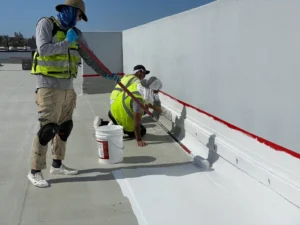
The most expensive part of replacing a roof is labor. According to Allied Roofing Solutions, labor makes up 50% to 70% of the total cost of replacing a roof. According to Modernize, labor averages $2.50 to $6.00 per square foot and represents the largest line item in most residential roofing proposals. For a standard 2,000-square-foot asphalt shingle replacement in the Watkinsville area, labor typically represents $5,000 to $9,000 of the total project cost depending on roof complexity, pitch, the number of penetrations requiring individual flashing work, and local contractor market conditions. Labor costs cannot be reduced by cutting installation time without also reducing the quality of the detail work at flashings, valleys, and starter courses where most future leaks originate.
Beyond standard labor, the most expensive unforeseen cost category is deck repair discovered during tear-off. When old shingles are removed and the deck is inspected, water-damaged or rotted plywood or OSB sheathing panels must be replaced before any new materials can be installed. According to RoofingCalculator.com, replacing or repairing roof decking costs between $2.20 and $3.00 per square foot. A roof with a history of leaks or deteriorated flashings may have multiple damaged panels. For homeowners in Oconee County and Towns County budgeting for a roof replacement, including a 10% to 15% contingency in the project budget for potential deck repair is the financially sound approach that eliminates budget surprises when the crew finds damage after tear-off begins.
What Time of Year Is the Cheapest to Replace a Roof?
The cheapest time of year to replace a roof is late fall through early winter, from November through February. According to Angi, scheduling a shingle roof installation during the contractor’s off-season, often late fall or winter, could save 5% to 15% of the project cost. Roofing contractors in Watkinsville and Hiawassee are at full capacity from spring through early fall when storm repair demand, active construction activity, and the post-storm insurance claim cycle keep crews booked and pricing at the top of the annual range. Winter scheduling produces better contractor availability, faster project timelines, and more competitive bids from qualified local contractors who have schedule capacity to fill.
Georgia’s mild winters create few practical barriers to off-season roofing. Architectural asphalt shingles require a minimum temperature of approximately 40 degrees Fahrenheit for the adhesive sealant strips to bond properly, and Georgia temperatures rarely remain below that threshold long enough to prevent installation during winter months. A licensed contractor will monitor the forecast and schedule work on days that meet the temperature and weather conditions the manufacturer specifies for a valid warranty installation. For homeowners with a planned replacement on the budget schedule, committing to a fall or winter installation window is one of the most straightforward ways to reduce total project cost without any trade-off in material quality or workmanship.
What Is the Average Lifespan of a Roof?
The average lifespan of a roof depends primarily on the material. According to Modernize, asphalt shingles last 20 to 30 years, while metal roofing lasts 40 to 70 years, and tile or slate lasts 50 to 100 or more years. For standard three-tab asphalt shingles in Georgia’s climate, real-world service life typically runs 15 to 20 years due to the combination of high UV intensity through the long warm season, high humidity promoting algae and moss growth, and frequent thunderstorm activity. Architectural shingles, which are thicker and more durable than three-tab, typically deliver 22 to 28 years of real-world service in Georgia’s conditions. According to RoofClaim, shingle roofs last around 20 years, and once a roof is more than 15 years old with any storm damage, a professional inspection is strongly advised.
The material that lasts the longest in residential roofing is slate, with documented service lives exceeding 100 years in protected installations. Metal roofing, specifically standing seam steel or aluminum, is the most practical long-life option for Georgia homeowners, with realistic service lives of 40 to 60 years. Concrete and clay tile roofs last 50 to 100 years when the structure can support their weight and flashing is maintained correctly. For most Watkinsville and Hiawassee homeowners choosing between asphalt shingles and metal roofing, the comparison is approximately 20 to 25 years of service versus 40 to 60 years, with metal costing roughly 1.5 to 2.5 times more upfront but requiring no replacement within a typical long-term ownership period.
How to Tell If a Roofer Is Lying
You can tell a roofer is lying when their written proposal does not itemize the specific components of the installation, when they cannot provide a current Georgia contractor’s license number and current certificates of both general liability and workers’ compensation insurance, and when their price is 25% or more below every other qualified proposal without a clear explanation of what is different about their scope or materials. According to Consumer Reports, roof replacement costs can vary widely even when the exact same shingles will be installed, and you should ask for a breakdown of all costs involved, including the shingles, the labor for removing old material and installing new, and a contingency budget for sheathing replacement. A proposal that does not provide this breakdown is hiding something or has not thought the job through carefully enough to be trusted with it.
Additional lies that appear specifically in the roofing cost context include a contractor who tells you the old flashing at the chimney or skylights is fine to reuse when it is older than ten years or visibly corroded, a contractor who does not mention pulling a permit for a full replacement, and a contractor who drops their price by thousands of dollars the moment you push back, which according to Rescue My Roof indicates the original quote was inflated. According to RoofCrafters, cheap roofing work is sometimes the most expensive kind: a contractor who saves you $2,000 upfront and then delivers an installation that needs rework in six years costs far more than a contractor who charged the going market rate and delivered a 25-year installation. A trustworthy contractor answers specific technical questions directly and without defensiveness and provides local references you can actually call.
At What Age Is a Roof Considered Old?
A standard three-tab asphalt shingle roof is considered old at 15 to 20 years in Georgia’s climate, and an architectural or dimensional asphalt shingle roof is considered old at 20 to 25 years. According to RoofClaim, shingle roofs last around 20 years, and once a roof crosses the 15-year mark with any storm damage, a professional inspection is advisable. According to 44 Roofing, insurance companies typically implement surcharges of 10% to 20% once roofs surpass the 15-year mark, and at the 20-year mark, nearly 70% of carriers switch from full replacement cost coverage to depreciated actual cash value coverage, which means a much larger out-of-pocket expense when a claim is filed. In Georgia specifically, according to ARAC Roof It Forward, many insurance companies will not fully insure a roof that is 15 to 20 years old, especially if it shows signs of wear or has not undergone regular maintenance.
A roof reaches the point where it is considered old not just by calendar age but by the visible signs of age-related failure. These include widespread granule loss that leaves smooth, shiny patches across the roof field, curling or cupping visible across multiple sections, multiple areas of cracked or missing shingles, water stains in the attic at more than one location, and any visible deck deflection or sagging. When three or more of these signs are present together on a roof that is 15 or more years old, the roof has reached end of life and continued repair investment will not recover 20 more years of useful service. A free inspection from a licensed contractor is the most reliable way to confirm actual condition rather than estimating from age alone, and it is the basis for any credible recommendation about whether repair or replacement is the right financial decision for your specific situation.
How to Get a Cheaper Roof Replacement
The most effective ways to get a cheaper roof replacement without sacrificing quality are to schedule in the off-season, get a minimum of three written proposals from licensed local contractors, choose architectural asphalt shingles rather than upgrading to metal or premium designer shingles if budget is the primary constraint, and ask each contractor specifically whether scheduling flexibility in the coming weeks would yield a lower price. According to Angi, scheduling during the off-season from late fall through winter can save 5% to 15% of the project cost. According to Rescue My Roof, using competing proposals as leverage with your preferred contractor can produce a modest price reduction, but a price that drops thousands of dollars immediately upon request is a red flag indicating the original quote was inflated, not that you negotiated successfully.
Additional legitimate cost-reduction approaches include verifying whether your existing roof has two or fewer layers of shingles, which may allow an overlay installation that skips the tear-off cost. However, according to Allied Roofing Solutions, if your existing roof needs to be torn off first, you can expect an additional $1.50 to $5.50 per square foot depending on the material and number of layers. An overlay saves this cost upfront but prevents deck inspection, hides potential deck damage, adds weight to the roof structure, and creates a more expensive tear-off at the next replacement because two layers must be removed. The one cost reduction that never makes sense is reducing the scope of the underlayment, flashing replacement, or starter shingle specification, because these are the components whose quality most directly determines how long a roof stays leak-free after installation.
What Is the Best Roof for Your Money?
The best roof for your money depends on your ownership timeline and the climate exposure of your home. For homeowners with an ownership timeline of 15 years or less, standard architectural asphalt shingles are the best value: they provide 20 to 25 years of reliable service in Georgia’s climate, are widely available, and represent the lowest upfront cost among durable options. According to FoxHaven Roofing, basic asphalt shingles cost $4.50 to $6.50 per square foot installed in 2026, making them the most cost-efficient entry point for a complete, warranted roof system. For homeowners planning to stay in the home for 25 or more years, standing seam metal roofing delivers better total cost of ownership: it lasts 40 to 60 years, carries stronger wind and hail resistance than asphalt, and qualifies for insurance premium discounts that partially offset the higher upfront cost.
According to Angi, replacing a shingle roof comes with a return on investment of between 60% and 70%, especially when the existing roof has visible damage, staining, or wear. According to List With Clever, sellers typically recoup just over half the cost of a new roof at resale, making it a modest but positive return in most Georgia markets. For homeowners in the Watkinsville area selling within five years, a new architectural shingle roof is the correct investment because it eliminates the barrier to buyer financing and insurance that an aging roof creates, without the larger upfront commitment of a metal installation. For long-term Hiawassee homeowners, especially those with mountain properties exposed to higher wind and weather severity, metal roofing is the better total-value decision over a 30-year horizon despite costing more on installation day.
Will Getting a New Roof Lower Your Insurance?
Yes, getting a new roof will often lower your homeowners insurance premium, particularly in Georgia where roof age is one of the primary underwriting factors carriers use. According to 44 Roofing, insurance companies view aging roofs as significant liability risks, implementing steep financial penalties and higher premiums as roofs age, with significant jumps at years 10, 15, and 20. Replacing an aging roof with a new installation resets the clock on this premium escalation and in many cases immediately restores full replacement cost value coverage from depreciated actual cash value coverage, which is a meaningful financial improvement in what the policy actually pays when a storm occurs. According to the Metal Roofing Alliance, a metal roof can lower homeowners insurance premiums by up to 35% through impact resistance ratings and the dramatically reduced claim frequency associated with metal compared to asphalt over the same period.
The specific step to take before signing a roofing contract is to call your insurance carrier and ask two questions: what discount they apply for a new roof installation at your address, and whether specifying Class 4 impact-resistant shingles qualifies for a larger discount. In Georgia’s hail-active Piedmont corridor around Watkinsville and in the storm-exposed mountain communities near Hiawassee, Class 4 impact-resistant shingles can unlock insurance savings that partially offset the slightly higher product cost. Getting the specific discount amount in writing from your carrier before choosing between standard and impact-resistant shingles turns that product selection decision into a clear numbers calculation rather than a judgment call about incremental cost versus uncertain future benefit.
What Not to Say to a Roof Insurance Adjuster
When an insurance adjuster arrives to inspect storm damage on your Watkinsville or Hiawassee home, specific statements can reduce or eliminate your claim. Do not say the roof was already starting to have problems before the storm, because pre-existing condition language gives the carrier grounds to deny the storm-caused portion. Do not agree on the spot to a repair scope that limits coverage to patching when the damage extent may qualify for full replacement under your policy. Do not tell the adjuster you have not maintained the roof, that you knew about a problem and did not address it, or that there have been recurring leaks over the past several years, because deferred maintenance is one of the most commonly cited grounds for claim reduction in Georgia homeowner policies. Most Georgia policies, according to Essential Guide to Roof Insurance Coverage, cover only damage that is sudden and accidental, not damage resulting from neglect, wear and tear, aging, or rot.
The preparation that gives a legitimate storm damage claim its strongest outcome is having your licensed local roofing contractor provide a written inspection report documenting storm-caused damage specifically, photographs with date and time metadata taken within 48 hours of the event, and National Weather Service records confirming the storm’s timing and intensity at your property address. Having your contractor present during or immediately following the adjuster’s inspection, to point out damage the adjuster may miss or document incompletely, is a practical step that many experienced contractors in the Watkinsville and Hiawassee areas offer as part of their storm response service. The legitimate portion of any well-documented claim has its best chance of full payment when the contractor and the adjuster are working from the same factual foundation and the homeowner has not made statements that give the carrier grounds to question the timing or cause of the damage.
Will Roofing Costs Go Down in 2026?
Roofing costs will not meaningfully go down in 2026. According to Equity Roofing, roof prices rarely go down, and according to Southern Home Improvement, installed prices remain elevated because labor capacity and contractor-side pricing remain under pressure even when material categories show stabilization. According to Modernize, the 2026 average cost to replace a roof in the United States ranges from $7,500 to $18,000, with most homeowners spending between $9,000 and $13,000 on a standard asphalt shingle roof. According to Allied Roofing Solutions, labor makes up 50% to 60% of total roof replacement cost, and labor rates for skilled trades continue to rise as roofing remains a labor-constrained industry. According to Ridge Top Exteriors, materials account for 40% to 55% of total project cost, a category that is stable in 2026 at levels significantly higher than pre-2020 baselines.
The practical guidance for homeowners in Watkinsville and Hiawassee is that delaying a needed replacement to wait for prices to fall means waiting for something that the current market does not support while the existing roof continues to age and potentially causes interior water damage that adds to the total cost of the eventual project. The one genuine cost-saving opportunity available in 2026 is off-season scheduling from November through February, when contractor availability is higher and pricing is at its annual low point. A homeowner who commits to a December installation rather than waiting until May for the same job is the one genuinely accessing a pricing advantage in the current market environment.
How to Pay for a Roof When You Can’t Afford It
When you cannot afford a full roof replacement upfront, there are six legitimate paths to explore before deferring the project and risking interior water damage that compounds the total cost. First, ask your roofing contractor about financing options: according to RoofCrafters, many roofing companies offer payment plans, and some work with third-party lenders to provide home improvement financing with competitive rates that can spread a $12,000 roof over 36 to 60 monthly payments. Second, file a homeowners insurance claim if the damage includes any storm-caused component, since insurance coverage for wind and hail events can eliminate or dramatically reduce out-of-pocket expense for homeowners whose policies include full replacement cost value coverage. Third, investigate state and county housing assistance programs: according to RoofCrafters, many states and counties offer home improvement grants for seniors, veterans, or low-income households through local housing authorities and state government programs.
Fourth, consider a partial repair rather than immediate full replacement if only a limited portion of the roof is actively failing, buying time to save for the full project. According to Angi, you could save an average of $9,400 by opting for targeted repair over full replacement when repair is an appropriate response to localized damage, and you may see about the same long-term value from the repair when the surrounding roof is still in sound condition. Fifth, explore a home equity loan or home equity line of credit, which typically carries lower interest rates than unsecured personal financing and may be the most cost-effective borrowing option for homeowners with available equity. Sixth, compare the cost of delay against the cost of acting: one season of uncorrected roof leaks can cause mold growth, insulation damage, wood rot, and interior water damage that adds $5,000 to $25,000 in secondary costs to the eventual project total, making early financing the financially correct choice even when it feels like the more expensive one.
What Are Signs a Roof Needs Replacing?
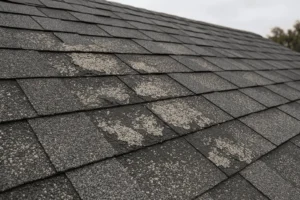
The clear signs that a roof needs replacing rather than repairing are widespread granule loss visible in the gutters and as smooth, discolored patches across the field of the roof, curling or cupping present in large sections rather than isolated spots, multiple areas of cracked or missing shingles from storm events, water stains in the attic at more than one location indicating systemic leak points, visible sagging or deflection in the deck between rafters, daylight visible through the roof deck when viewed from the attic in darkness, and any moss or lichen growth that has lifted granules and rooted into the shingle surface across multiple sections. According to Allied Roofing Solutions and Consumer Reports, when an asphalt shingle roof is 20 years old with any of these symptoms, a full replacement is the correct action rather than continued patching investment.
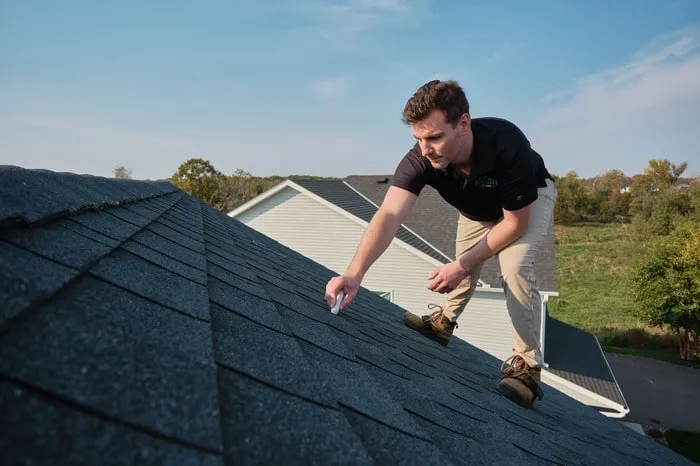
In Georgia’s specific climate around Watkinsville and Hiawassee, two signs are particularly diagnostic of end-of-life status. The first is brittle shingles that crack when flexed during an inspection, which indicates the asphalt has fully oxidized and lost its flexibility, and no repair or coating can restore a shingle to functional condition once it reaches this state. The second is any roof that has had three or more repair visits for different leak locations in a five-year period, which is a reliable indicator that the waterproof system has failed at multiple points and that the investment in continued repair work is not recovering a roof that will protect the home for another decade. A free inspection from a licensed local contractor, rather than a self-assessment from the ground, is the only way to determine definitively whether a specific roof is repair-eligible or at replacement-required status.
Is a 20-Year-Old Roof Too Old?
Whether a 20-year-old roof is too old depends on the material and its maintenance history. A 20-year-old three-tab asphalt shingle roof in Georgia is at end of life by any reasonable standard: Consumer Reports advises replacing an out-of-warranty roof that is more than 20 years old even without obvious signs of damage, because the underlying structure of the shingles has degraded to the point where the next significant storm event will cause damage that exceeds what the insurance carrier will pay on an ACV policy. A 20-year-old architectural shingle roof in Georgia is approaching end of life but may have three to seven more productive years if it was well-installed on a properly ventilated deck and has received periodic maintenance. A 20-year-old metal roof is not old at all and should have 20 to 40 years of remaining service life.
From an insurance standpoint, according to White Oak Insurance Services, many Georgia carriers now limit asphalt shingle coverage to replacement cost value for only the first 10 years, converting to actual cash value coverage at 10 years and applying age-based limits much more aggressively than the traditional 20-year threshold. According to Capital City Roofing, Georgia Senate Bill 35 enacted in January 2026 now requires insurance carriers to provide homeowners with 60 days’ notice before non-renewal, which gives Georgia homeowners more time to respond to age-triggered underwriting decisions than they had under prior law. A 20-year-old asphalt shingle roof that is in insurable condition in Watkinsville is a roof that should be inspected immediately, documented thoroughly, and either proactively replaced or placed on an active monitoring schedule with the insurance carrier’s acknowledgment that the current condition meets their coverage standards.
What Type of Roof Lasts the Longest?
The roof material that lasts the longest is slate, with properly installed natural slate roofs documented at service lives of 100 years or more in European applications and 75 to 150 years cited by various roofing authorities in North American conditions. After slate, concrete and clay tile roofing delivers 50 to 100 years of service when the structure can support the weight and flashing is maintained. According to Modernize, metal roofing lasts 40 to 70 years, making standing seam metal roofing the most practical long-life option for most homeowners because it is available at a fraction of the cost of tile or slate and can be installed on any structurally sound residential deck without reinforcement. After metal, wood shakes deliver 20 to 30 years when properly maintained and treated, and architectural asphalt shingles deliver 20 to 30 years in favorable climates and 18 to 25 years in Georgia’s more demanding conditions.
For homeowners in Watkinsville and Hiawassee asking which roof type lasts the longest as a practical purchase decision, the realistic comparison is between architectural asphalt shingles at 20 to 25 years of expected service and metal roofing at 40 to 60 years. Slate and tile are worth considering for homes that are architecturally suited to them and where the structure can support the weight, but they carry installed costs of $20,000 to $50,000 or more for typical Georgia residential applications, and finding qualified installers in the North Georgia region requires more effort than finding asphalt or metal specialists. The answer to which material lasts the longest is always slate, but the answer to which long-life material makes the most sense for most Georgia homeowners is standing seam metal roofing when the budget allows, and premium architectural asphalt shingles when it does not.
What Not to Tell Your Contractor
There are several things you should never say to a roofing contractor before or during a project because they work against your interests. Do not say your budget is unlimited or that you want the best of everything without asking what specific upgrades cost and what they actually provide, because this removes your ability to evaluate whether upgrade recommendations are in your interest or the contractor’s margin interest. Do not say you are in a hurry or that you need the work done this week, because urgency is the most effective tool unethical contractors use to prevent competitive bidding. Do not tell the contractor you have already committed to using them before a written proposal is in hand, because the commitment removes any remaining motivation to provide their most competitive pricing or most thorough scope.
Specific to insurance claims, do not tell the contractor they can handle your insurance claim process and you will sign whatever documents they present without reading them, because assignment of benefits agreements can transfer your rights under the insurance policy to the contractor in ways that limit your control over the repair scope and the settlement process. Do not volunteer negative information about the roof’s history, including how long you knew about a leak before addressing it, how many repairs have been done in recent years, or what prior contractors may have done incorrectly, because this information can be used against you in the claims process even though your intent was simply to be helpful. Provide factual answers to direct questions the contractor asks but do not volunteer details about the roof’s history that are not directly relevant to the scope of the proposed project.
Can a Roofer Sue Me If He Falls Off My Roof?
Whether a roofer can sue you if he falls off your roof depends primarily on whether the contractor carries workers’ compensation insurance and whether the homeowner’s own actions contributed to the accident. According to Westfall Roofing, if a contractor is unlicensed and uninsured and a worker falls and is injured on your property, that worker can sue you for medical bills and lost wages since it happened on your property. According to Martini Roofing, without workers’ compensation insurance on the contractor’s policy, the liability can fall on the homeowner. According to Schwartzapfel Lawyers, in most cases where a licensed, insured roofing company is hired and the homeowner has not directed the work or created the unsafe condition that caused the fall, the homeowner is not liable because the contractor’s workers’ compensation coverage handles injury claims and forfeits the worker’s right to sue the employer.
The practical protection for Watkinsville and Hiawassee homeowners is straightforward: always verify that any contractor working on your property carries active general liability insurance and workers’ compensation coverage before work begins, and request paper certificates that you verify with the insurance company directly rather than accepting verbal assurances. According to Crenshaw Lumber, citing contractor Exovations from Georgia, homeowners should ask for the name and number of the contractor’s insurance agent, then follow up with a call to verify coverage is current and extends to subcontractors on the job. A licensed, insured contractor whose crew follows OSHA fall protection requirements on your property creates a situation where your exposure as a homeowner is minimal. A contractor who cannot produce current insurance certificates is creating exposure for you that is not justified by whatever their quote saves you compared to a properly insured alternative.
What to Ask When Hiring a Roofer
When hiring a roofer, the most important questions to ask before signing any contract are: Can you provide your Georgia contractor’s license number and current certificates of general liability and workers’ compensation insurance? Will you pull the required permit before work begins? What specific shingle product, grade, and manufacturer are you proposing and why? What underlayment are you specifying and will ice and water shield be installed at the eaves and valleys? How will you handle flashing at all penetrations and wall transitions, and will old flashing be replaced or reused? What is your per-sheet deck repair pricing if damage is found after tear-off? What warranty do you provide on your workmanship and how long does it last? What does your end-of-project cleanup process include and do you use a magnetic nail sweep in the yard and driveway?
According to Consumer Reports, you should request bids from at least three licensed professionals and ask for a breakdown of all costs, including a specific number for shingles, a specific number for tear-off and installation labor, and a contingency budget for sheathing replacement. A contractor who cannot provide a written, itemized proposal that answers these categories is not ready to be trusted with a significant roofing project on your home. Checking the contractor’s rating with the Georgia Secretary of State’s business license database, the Better Business Bureau, and Google reviews with specific attention to reviews that mention how the contractor responded to problems, gives you the most complete picture of whether you are hiring a company that stands behind its work after the crew leaves.
Can You Sell a House With a 20-Year-Old Roof?
Yes, you can sell a house with a 20-year-old roof in most Georgia markets, but the roof’s age and condition will affect both the transaction process and the final sale price. According to Rennison Roofing, a home sale with a roof that needs replacing does not have to be a deal breaker, but any roof issues should be addressed before closing on a new home. According to List With Clever, if the home inspector flags the roof, the buyer’s agent may negotiate a price reduction or a closing cost credit rather than requiring full replacement before closing. In this scenario, the cost to you as a seller is typically between 50% and 100% of the replacement cost as a price concession, compared to the 60% to 70% return on investment Angi attributes to a proactively installed new roof.
The more significant issue with selling a home with a 20-year-old roof is lender and insurance eligibility. According to Rennison Roofing, a home that fails a roof inspection ordered by the insurance company or lender creates serious obstacles to closing because all lenders require buyers to obtain homeowners insurance that is effective at closing. According to Georgia-specific guidance from ARAC Roof It Forward, many insurance companies operating in Georgia will not fully insure a roof that is 15 to 20 years old, especially if it shows signs of wear. A buyer who cannot secure homeowners insurance cannot close a financed purchase, which eliminates most buyers in the market. For sellers in Watkinsville and Hiawassee, consulting with your real estate agent and a licensed local roofer before listing the property gives you the information you need to decide whether proactive replacement, negotiated credit, or as-is pricing is the most financially sound path for your specific situation.
What Makes a Roof Uninsurable?
A roof becomes uninsurable, or faces limited and more expensive coverage, when its age, condition, material type, or claims history reaches thresholds that insurance carriers treat as unacceptably high risk. According to RoofCrafters, the primary factors that deem a roof uninsurable are age and deterioration, active leaks or a history of leaks, poor or insufficient insulation, and the use of high-risk materials such as wood shake. According to 303Roofer, many insurance companies start limiting or denying coverage on asphalt shingle roofs around 15 to 20 years old depending on condition and policy rules, with no single universal age cutoff but a clear pattern of carriers tightening standards as roofs age. According to White Oak Insurance Services, which tracks Georgia-specific carrier behavior, some of the largest insurers in the United States now limit coverage to roofs under 10 or even 5 years old for new policy issuance.
The specific conditions that insurance companies in Georgia identify as red flags for uninsurability include missing or damaged shingles across multiple sections, visible sagging or deck deflection, moss or algae growth that the carrier’s aerial imagery system flags as a structural concern, limbs overhanging the roof surface, and a claims history with multiple prior roof-related payouts. According to Capital City Roofing, Georgia Senate Bill 35 enacted in January 2026 now requires carriers to provide 60 days’ notice of non-renewal rather than the shorter notice periods previously allowed, giving Georgia homeowners in Watkinsville and Hiawassee more time to respond to age-triggered policy cancellations. The most effective protection against uninsurability is a documented inspection report from a licensed contractor showing the roof is in sound condition, which can challenge automated aerial-imagery-based non-renewal decisions that misidentify algae staining or tree shadows as structural damage.
Can a Roof Really Last 50 Years?
Whether a roof can really last 50 years depends entirely on the material. Metal roofing can genuinely last 50 years or more: standing seam steel and aluminum roofs are regularly documented at 40 to 60 years of service, and some copper and zinc roofing systems exceed 100 years. Slate and quality tile roofs routinely reach 50 to 100 years with proper maintenance. For asphalt shingles, which carry 50-year warranty labels on premium product lines, the real-world service expectation is significantly shorter. According to Owens Corning vs. GAF comparison data from Metro City Roofing, most asphalt shingles regardless of brand do not last to manufacturer specifications, much as most cars do not achieve the gas mileage listed on the window sticker. The roof ventilation, installation quality, climate exposure, and maintenance history all have more influence on actual shingle lifespan than the warranty period printed on the product packaging.
According to RoofMaxx, the best-marketed shingles last between 25 to 50 years in ideal conditions, but some roofs do not last more than 7 to 10 years when installation quality, ventilation, or climate conditions are poor. In Georgia’s climate, a 50-year shingle installed with proper deck preparation, correct underlayment, adequate attic ventilation, and regular maintenance might realistically deliver 28 to 35 years of service before showing significant end-of-life symptoms. That is meaningfully longer than a standard 30-year shingle but is still not 50 calendar years of service in a Southern climate. The honest answer for homeowners in Watkinsville and Hiawassee is that buying 50-year shingles is worth the modest upcharge over 30-year shingles for the added thickness and impact resistance, but that planning for a replacement timeline of 25 to 35 years rather than 50 is the financially sound approach to long-term home ownership.
Does a 25-Year-Old Roof Need to Be Replaced?
A 25-year-old asphalt shingle roof in Georgia almost certainly needs to be replaced. Three-tab shingles have reached or exceeded typical end-of-life status at 25 years in Georgia’s climate, and even well-maintained architectural shingles installed 25 years ago have typically lost most of their granular protection and the elasticity of the underlying asphalt. According to Consumer Reports, even without obvious signs of damage, replacing an out-of-warranty roof that is more than 20 years old is wise. A 25-year-old roof in Oconee County or Towns County has weathered 25 Georgia summers of UV radiation, 25 seasons of spring thunderstorms with wind and hail, and 25 years of high-humidity algae and moisture exposure. These conditions together create a roof system that is unlikely to survive the next significant storm event without causing interior damage.
From an insurance standpoint, a 25-year-old asphalt shingle roof in Georgia is already well past the point at which most carriers have switched to actual cash value coverage, meaning the insurance payout after a storm event would be substantially less than the full replacement cost. The combination of a roof at end of life, reduced insurance coverage, and the potential for interior damage from the next major storm creates a compelling financial case for proactive replacement rather than waiting for a storm to force the issue on an emergency timeline. A professional inspection will confirm whether the specific installation has any remaining service life or is already showing end-of-life symptoms that indicate replacement is the right decision regardless of what the calendar says.
What Is the Best Brand Name for Shingles?
The three best-regarded shingle brands in 2026 are GAF, Owens Corning, and CertainTeed, each of which consistently delivers quality across their product lines and offers meaningful warranty coverage when installed by certified contractors. According to multiple roofing industry sources including DaBella and Hulsey Roofing, GAF is the largest roofing manufacturer in North America and offers the widest selection across price points, with the Timberline HDZ as their most popular architectural shingle, typically running $4.50 to $6.50 per square foot installed. GAF’s Golden Pledge Warranty provides 50 years of coverage for material defects and up to 25 years for workmanship when installed by a GAF Master Elite certified contractor. Owens Corning is known for its Duration series featuring SureNail technology for enhanced wind resistance, with typical installed costs of $4.75 to $6.75 per square foot. CertainTeed is positioned as a premium option with the widest selection of designer shingles and colors, starting around $5.00 to $7.00 per square foot installed for Landmark-series shingles.
For homeowners in Watkinsville and Hiawassee, the choice between GAF, Owens Corning, and CertainTeed matters less than the choice of installation quality and warranty tier. All three brands produce durable, code-compliant architectural shingles when properly installed by a licensed contractor who follows manufacturer specifications. The meaningful differentiation is in the warranty tier accessible through the contractor’s certification level: a GAF Master Elite contractor, an Owens Corning Platinum Preferred contractor, or a CertainTeed SELECT ShingleMaster can each offer significantly better warranty coverage than a standard installer working with the same brand. When comparing proposals that specify different brands, ask each contractor what their certification level with that manufacturer is and what warranty tier that certification unlocks, because a GAF Golden Pledge from a Master Elite contractor is a very different product than a standard GAF installation from a non-certified shop even though both may specify the same Timberline shingle.
How Often Should You Reroof Your House?
How often you need to reroof your house depends on the material. An asphalt shingle roof should be replaced every 20 to 25 years in Georgia’s climate. A metal roof should be replaced every 40 to 60 years. A clay or concrete tile roof should be replaced every 50 to 100 years. Most homeowners who own their properties for 30 or more years will go through one full asphalt shingle replacement cycle, potentially two if they stay for 40-plus years. According to Rennison Roofing, a home’s roof needs to be replaced about every 20 to 25 years depending on roofing materials and quality of installation, and while minor repairs may be needed before that time, replacing a roof is inevitable for any homeowner planning to stay in the home for more than 15 years.
The practical answer to how often you should reroof is: when the roof shows end-of-life symptoms that indicate it cannot reliably protect the home through another five years of Georgia weather, regardless of how many years have elapsed since the last installation. A well-installed architectural shingle roof in Watkinsville that has been maintained properly and never had a major hail event might go 27 or 28 years before needing replacement. A shingle roof on a home with poor attic ventilation, heavy tree coverage, and multiple hail impacts may need replacement at 17 or 18 years. The calendar is a useful rough guide, but a professional inspection by a licensed local contractor is the only reliable tool for determining where a specific roof is in its service life and how many useful years it has remaining before replacement becomes necessary to prevent interior damage.
How Long Do 50-Year Shingles Really Last?
Fifty-year shingles in real-world Georgia conditions typically last 28 to 38 years when properly installed on an adequately ventilated deck, maintained regularly, and not subjected to major hail events that damage the fiberglass mat beneath the surface granules. The 50-year label on premium shingles is a warranty period, not a performance guarantee for all conditions, and it comes with significant pro-rating terms that reduce what the manufacturer will pay as the shingle ages. According to RoofCrafters, reviewing the warranty on a lifetime or 50-year shingle reveals that if you get 20 years of service and then have a warranty claim, the manufacturer will owe approximately 60% of 30 remaining years of materials, covering only the materials themselves and none of the labor, accessories, or flashing required to make the actual repair. This is a fraction of total replacement cost.
The factors that most determine real-world 50-year shingle longevity are attic ventilation, installation quality, pitch, sun exposure, tree coverage, and storm frequency. A 50-year shingle on a well-ventilated roof at a 6:12 pitch installed by a certified contractor in a clear-sky rural setting will perform closer to the 35-year end of the realistic range. The same shingle installed on a poorly ventilated roof at a low pitch by a non-certified installer under heavy tree coverage in a hail-active corridor will perform closer to the 20-year end. For Watkinsville and Hiawassee homeowners choosing between 30-year and 50-year shingle products, the premium shingles typically cost 10% to 20% more and deliver meaningfully better thickness, impact resistance, and wind performance, making the upgrade worthwhile if budget allows. But planning the financial lifecycle of the roof around 30 years rather than 50 remains the realistic and prudent approach for Georgia’s climate.
2026 Roof Replacement Cost Comparison by Material
| Material | Installed Cost (2,000 sq ft roof) | Lifespan in GA Climate | Best For |
|---|---|---|---|
| 3-Tab Asphalt Shingles | $7,300 – $10,600 | 15 – 20 years | Short-term budgets; not recommended for new installs |
| Architectural Asphalt Shingles | $9,000 – $15,000 | 20 – 28 years | Best value for most Georgia homeowners |
| Class 4 Impact-Resistant Shingles | $10,500 – $17,000 | 22 – 30 years | Hail-active areas; qualifies for insurance discounts |
| Standing Seam Metal | $16,000 – $36,000 | 40 – 60 years | Long-term owners; storm-exposed properties |
| Concrete Tile | $18,000 – $30,000 | 40 – 75 years | Mediterranean/Spanish architectural styles with reinforced structure |
| Clay Tile | $20,000 – $40,000 | 50 – 100 years | Premium longevity; requires structural assessment |
| Natural Slate | $30,000 – $75,000+ | 75 – 150 years | Highest longevity; premium historic and custom homes |
Sources: Modernize, FoxHaven Roofing, Allied Roofing Solutions, Ridge Top Exteriors, RoofCrafters, Amstill Roofing, RoofReplacementCost.ai, Priority Roofs
Frequently Asked Questions
How much does a roof replacement cost in Watkinsville, GA in 2026?
A standard asphalt shingle roof replacement in Watkinsville typically falls in the range of $9,000 to $18,000 for most homes based on 2026 national and regional pricing data from Modernize and Allied Roofing Solutions. Simple gable roofs on smaller homes can come in below that range, while larger homes with complex hip roofs, multiple dormers, steep pitches, and extensive flashing work will run toward the upper portion or above it. Getting three written proposals from licensed Oconee County roofing contractors for your specific home is the only way to establish an accurate cost range. Each proposal should itemize materials, labor, tear-off, deck repair pricing methodology, permit fee, and warranty terms separately so you can compare equivalent scopes rather than guessing why one number is higher or lower than another.
Does roof pitch affect the cost of replacement in Georgia?
Yes, roof pitch is one of the significant cost variables in any Georgia roof replacement. According to FoxHaven Roofing, steep roofs require safety equipment and slower installation, adding 20% to 40% to labor expenses. A walkable low-pitch roof in the 4:12 to 5:12 range is the most labor-efficient configuration. A steep roof at 9:12 or above requires harnesses, additional safety setup, and slower material handling, all of which translate to higher labor hours and higher total project cost for the same square footage. In the North Georgia mountains around Hiawassee, where many homes have steeper pitches designed for snow shedding, this variable can meaningfully separate one proposal from another on identical homes. Any roofing proposal for a steep-pitch home that does not acknowledge the pitch as a cost driver should be examined carefully for scope gaps.
What financing options are available for roof replacement in Oconee County?
Oconee County homeowners have several financing paths for roof replacement: contractor-offered payment plans that spread the cost over 12 to 60 months, home equity loans or home equity lines of credit available through local banks and credit unions at rates typically lower than personal loans, personal home improvement loans available through national lenders including those partnered with roofing contractors, and homeowners insurance claims for storm-damaged roofs that can eliminate or dramatically reduce out-of-pocket cost when coverage applies. For income-qualified homeowners including seniors and veterans, Georgia’s Department of Community Affairs and county-level housing authorities administer home repair grant and loan programs that may apply to roof replacement. The first step for any homeowner facing a needed replacement who is concerned about affordability is to contact a licensed local contractor for a free inspection that accurately defines the scope, because the exact cost is the foundation for every financing decision that follows.
Is it worth replacing the roof before selling a house in Hiawassee, GA?
Whether to replace the roof before selling a home in Hiawassee depends on the roof’s age, condition, and the expected buyer pool for your specific property. According to Angi, a new shingle roof carries a return on investment of 60% to 70%, meaning you recover most but not all of the replacement cost in the sale price improvement. If the roof is actively failing, leaking, or in a condition that would prevent buyers from securing homeowners insurance, proactive replacement is likely the right financial decision because it eliminates the deal-killing obstacle and puts you in a position to price the home on its full merits. If the roof is aging but functional and in insurable condition, a negotiated price reduction or closing cost credit may be more efficient than a full proactive replacement. Working with a licensed local roofing contractor for an accurate condition assessment and a licensed real estate agent for the market-specific pricing analysis gives you the information you need to make the correct decision for your specific Hiawassee property and situation.
How can I tell if my roof replacement proposal is a fair price in Georgia?
A fair roof replacement proposal in Georgia in 2026 for a standard 2,000-square-foot home with architectural asphalt shingles falls in the $9,000 to $16,000 range for most configurations, with steep pitches, complex designs, and premium materials pushing higher. According to Consumer Reports, the cost of the shingles themselves should be similar no matter who installs them, so significant price differences between proposals usually come from labor, underlayment specification, flashing scope, and warranty tier. A proposal that is dramatically lower than others is most often explained by a narrower scope, lower-grade materials, non-certified installation, or inadequate insurance. A proposal that is dramatically higher should be explained clearly in the written scope and tied to specific product upgrades, warranty enhancements, or complexity factors that the other proposals do not address. Three itemized proposals from licensed, insured, locally established contractors is the baseline comparison that gives you the most reliable signal about whether any individual number is fair.
What is the ROI of a new roof in Watkinsville, GA?
The return on investment for a new roof in Watkinsville and the surrounding Oconee County area runs 60% to 70% at resale according to Angi’s national data, meaning a $12,000 roof replacement increases home sale value by approximately $7,200 to $8,400. This ROI improves in markets where the aging roof creates buyer financing or insurance obstacles, because removing that obstacle is worth more than the raw dollar improvement in list price. The ROI also improves when the new installation includes a transferable warranty, which according to Angi can add value for future buyers. Beyond the resale ROI, the financial case for timely roof replacement in Georgia includes the avoided cost of interior water damage from a failing roof, which can run $5,000 to $25,000 or more depending on how long the failure goes unaddressed, and the insurance premium reduction that a new roof triggers, which produces ongoing annual savings rather than a one-time resale benefit.
Final Thoughts
The cost of a roof replacement in Watkinsville and Hiawassee is not a fixed number but a function of your specific home’s size, pitch, complexity, the material you choose, the contractor’s certification level, and the timing of the project. Understanding each of these variables, knowing what is and is not negotiable, and approaching the process with three written proposals from licensed, insured local contractors gives you the tools to make the right decision for your specific situation and budget. A roof replacement is one of the largest investments a homeowner makes, and the quality of the installation, not the price of the proposal, is what determines how many years that investment protects everything underneath it.
If your roof is approaching end of life or has sustained storm damage in Watkinsville, Hiawassee, or the surrounding North Georgia communities, the team at Ridgeline Roofing and Exteriors provides free inspections with no-obligation written proposals that itemize every line of the scope clearly so you can make an informed decision.
Learn more about our roof replacement services in Watkinsville or visit our Watkinsville roofing services page to schedule your free inspection today.