Skip to content
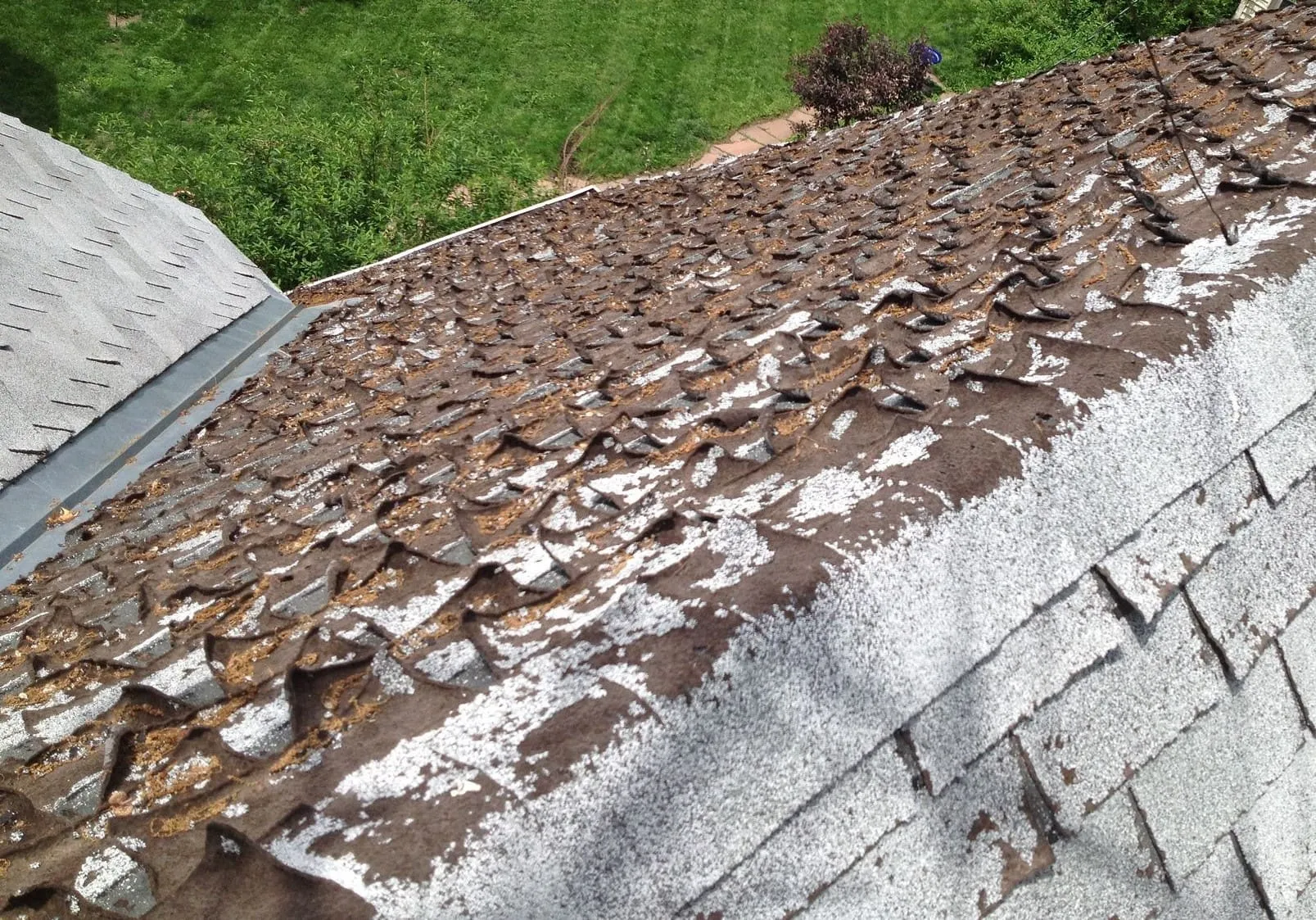
Shingles curl because the asphalt layers contract and pull away from the fiberglass base mat as the material ages, dries out, or is exposed to excessive heat from a poorly ventilated attic. Poor attic ventilation is the single most common cause of premature shingle curling, and it is fixable. This article explains every cause of shingle curling, what the different types look like, how to fix curling shingles yourself for small areas, and when curling shingles mean your roof needs professional attention.
What Causes Shingles to Curl?
Shingles curl because the asphalt binding material in the shingle dries out, shrinks, or is distorted by heat or moisture, pulling the shingle away from its flat profile. Asphalt shingles have four layers. According to the National Roofing Certification and Inspection Association (NRCIA), as the roof ages, the two asphalt layers begin to contract around the fiberglass base mat. Since fiberglass does not shrink, the contracting asphalt layers pull the edges and tabs away from the layer beneath, creating the visible curl.
There are several specific conditions that accelerate this process, and they differ depending on whether you are seeing curling on a new roof or an older one. Here is what drives each cause:
Poor Attic Ventilation: The Leading Cause of Premature Curling
Poor attic ventilation is the leading cause of premature shingle curling. When your attic does not have proper airflow, heat and moisture build up inside the attic space and essentially bake the shingles from beneath. According to the Asphalt Roofing Manufacturers Association (ARMA), attic temperatures in buildings with poor ventilation can reach 140 degrees Fahrenheit on a 90-degree day. Kenneth Daniel Roofing’s analysis of premature curling cases puts attic temperatures during peak summer heat at 150 degrees Fahrenheit or higher without proper airflow.
That trapped heat accelerates the breakdown of the asphalt binders in the shingle, making them lose flexibility and begin to cup or claw long before their expected service life ends. Research published in Roofing Contractor magazine found that poor or absent attic ventilation causes an average 24 percent reduction in shingle service life based on data compiled from working roofing contractors in the field. Joseph Lstiburek of Building Science Corporation puts the conservative figure at a 10 percent reduction, with field professionals consistently reporting the real-world number is higher.
In Watkinsville and Oconee County, where Georgia summers push outdoor temperatures well above 90 degrees and humidity compounds the heat stress on roofing materials, attic ventilation is not optional. It is the foundation of a roof that reaches its full lifespan. The Colorado Roofing Association confirms that inadequate ventilation can also void the warranty on shingles, as most major manufacturers include specific ventilation requirements in their warranty terms.
Age and Natural Weathering
Age and natural weathering are the second major cause of shingle curling. The NRCIA notes that it is rare to find curling in shingles younger than 12 years of age under normal conditions. When a roof reaches the second half of its service life, curling becomes an expected sign that the shingle has done most of its useful work. The asphalt has lost much of its original flexibility, granule coverage has thinned, and the repeated thermal expansion and contraction cycles over a decade or more have stressed the material past the point where it can recover.
According to the National Association of Home Builders, most asphalt shingles are rated for 20 to 30 years. A roof showing widespread curling at 18 to 22 years of age is behaving exactly as expected. That does not mean you wait for a leak. It means you begin planning a replacement before curling transitions from an aesthetic issue into a structural failure that allows water in.
Improper Installation
Improper installation causes shingles to curl on newer roofs that should not be showing any signs of wear. The most common installation mistakes that lead to premature curling include using too few nails per shingle, placing nails too high or too low on the nailing zone, and installing shingles over a wet or damaged deck. Kenneth Daniel Roofing’s installation analysis identifies incorrect nail placement as a driver of early curling, since the shingle is not held flat against the deck from the correct positions and begins to lift as the adhesive strip fails to bond fully.
Installing a new layer of shingles over an old layer, known as a roof-over, is another installation-related cause of curling. According to the NRCIA, laying new shingles over an old layer traps heat and moisture between the two layers, causing the top layer to curl significantly faster than a single-layer installation would. Many roofing professionals across Oconee County will confirm that roof-overs frequently show premature curling within five to ten years.
Moisture Trapped Below the Shingles
Moisture trapped below the shingles causes cupping, where the center of the shingle sinks and the edges curl upward. This happens when water vapor condenses on the underside of the shingles or when the underlayment or decking absorbs moisture after a leak that was not quickly addressed. Once moisture gets into the decking, the wood swells and shifts, which physically distorts the shingles above it. In severe cases, rotted decking can no longer hold the nails that hold the shingles flat, leading to progressive lifting across a section of the roof.
Homes in Hiawassee and the Towns County area face particular moisture challenges because of the humidity that comes with the mountain weather patterns near Lake Chatuge. Heavy spring rains and the combination of warm days and cooler nights create condensation conditions that put extra stress on attic moisture management throughout the year.
Manufacturing Defects
Manufacturing defects are a less common but real cause of shingle curling, particularly when curling appears on a roof that is less than five years old and the installation was done correctly. One documented defect pattern, cited by Whittle’s Roofing, involves batches of shingles with an imbalanced proportion of the tar binder, which causes rapid granule loss and premature aging of the asphalt layer. Shingle manufacturers accept warranty claims for defective products, which is why it is important to register your shingle warranty after installation and keep documentation of the product type, batch, and installation date.
What Does Curling Shingles Mean?
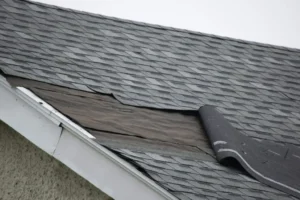
Curling shingles mean that the shingle is failing to maintain its flat profile, which breaks the watertight seal between shingles and creates gaps where wind-driven rain can enter. According to the NRCIA, once a shingle curls, it becomes highly susceptible to wind uplift. The lifted edge acts as a catch for wind, which can tear off entire tabs during storm events. When rain is driven under the curled shingles by wind, it bypasses the shingle layer and relies entirely on the underlayment to stop it, which was never designed to be the primary waterproofing layer in a storm.
Curling shingles on more than 10 to 15 percent of a roof surface indicate that the roof has entered what the NRCIA calls its “terminal phase,” where a professional inspection should determine whether targeted repairs can extend life by a few more years or whether replacement is the more practical path. Shingle roof repair in Watkinsville starts with exactly that kind of assessment, so homeowners know what they are dealing with before committing to either approach.
What Are the Different Types of Shingle Curling?
The different types of shingle curling are cupping, clawing, and lifting. Each looks different and points to a different underlying cause.
Cupping
Cupping is when the edges of the shingle turn upward while the center sinks, creating a concave or bowl-shaped profile. This is most often a sign of moisture trapped under the shingle or on the underside of the deck, causing the bottom surface to expand while the top surface dries out and pulls inward.
Clawing
Clawing is when the center of the shingle lifts or bulges upward while the edges remain relatively flat, or when the tabs curl downward and inward. Clawing is typically a sign of the aging process, where the top asphalt layer is shrinking faster than the bottom layer and pulling the shingle into a distorted shape. Kenneth Daniel Roofing describes this as the dominant form of curling near the 20-year mark of a shingle’s life.
Lifting
Lifting occurs when entire sections or edges of shingles pull away from the roof deck. This is most common after wind events, after improper installation, or when the thermal adhesive strip on newer shingles has not fully bonded. Brand-new shingles may not lay completely flat immediately after installation because the adhesive strip requires sunlight and warmth to activate. This is normal. Roofco’s installation guidance notes that shingles installed before a cool season may take until the following summer to fully seal, which is a normal part of the product rather than a defect.
How to Fix Curling Shingles Yourself
You can fix curling shingles yourself when only a few individual shingles are affected, the roof is not too steep to work on safely, and you have the right materials. This is a repair that works for isolated curling on a newer roof where the cause is a specific shingle failure rather than a whole-roof issue. If more than a handful of shingles are affected, or if curling is spread across multiple sections, call a licensed roofer instead of attempting widespread DIY repairs.
Here is what you need: roofing cement or roofing sealant, a caulking gun, a putty knife, roofing nails, a hammer, and a heavy object like a brick. Following guidance from This Old House and Werner Roofing:
Start in warm weather, not cold. Asphalt shingles become brittle in temperatures below 40 to 50 degrees Fahrenheit. Trying to press them flat in cold conditions risks cracking them rather than resealing them. Pick a warm, dry day when temperatures are above 60 degrees. On new shingles that have not bonded yet on the north side of the home, simply waiting for warmer weather may allow the adhesive to seal on its own.
Gently lift the curled portion. Use a putty knife to carefully lift the edge without cracking the shingle. Do not force a brittle shingle if it resists. If it snaps instead of flexing, the shingle needs replacement, not repair.
Apply roofing cement underneath. Using the caulking gun, apply a generous bead of roofing cement to the underside of the curled section. Be careful not to apply cement to any exposed areas visible from the ground, where it can collect dirt and look unsightly.
Press the shingle flat and weight it. Press the curled edge firmly down onto the deck. Place a heavy brick or flat board on top of the repaired area and leave it in place for at least 24 hours. This holds the shingle flat while the cement cures.
Check and seal the surrounding area. Once the repair has cured, inspect the edges for any remaining gaps and add a small bead of sealant along the edge if needed.
This repair is genuinely effective for isolated curling on a roof that still has good service life remaining. It is not a fix for widespread curling, for shingles that snap during the repair, or for curling caused by a ventilation problem that has not been corrected. If the underlying cause is not addressed, new curling will appear nearby regardless of how well the individual shingles are repaired.
Can I Fix Shingles Myself When They Are Widespread?
No, you should not fix shingles yourself when the curling is widespread across the roof. Widespread curling is a sign of a roof-wide condition, whether aging, systemic ventilation failure, or installation error. Replacing individual shingles in a pattern of widespread failure will not stop other shingles from curling soon after, and it becomes an expensive series of temporary fixes for a problem that requires either a ventilation correction or a full replacement.
Additionally, faulty DIY repairs on a roof that is still under warranty can void the manufacturer’s coverage, making it impossible to get the shingles replaced under the warranty if the failure is widespread and the manufacturer attributes it to improper repair work. A licensed roofer’s written assessment protects you in either direction. Roof repair in Watkinsville includes exactly that kind of professional assessment, with documentation that supports both a warranty claim and an insurance claim if either applies.
Will Insurance Pay for Lifted Shingles?
Yes, insurance will pay for lifted shingles when the lifting or curling was caused by a covered weather event such as a windstorm, hail, or a severe storm. Insurance will not pay for lifted shingles caused by age, improper maintenance, or installation errors. According to RST Roofing’s analysis, if the shingles were bent or lifted by a wind event or hail, the homeowner can file a claim for the repair or replacement. If the cause is deferred maintenance or the roof simply reaching the end of its lifespan, the insurer will typically deny the claim.
The key is documentation. Take photos of the damage immediately after a storm before any temporary repairs are made. The photos should show the affected area, the surrounding shingle condition, and any visible debris or impact marks that support a storm-related cause. A licensed roofer’s inspection report that ties the damage to the storm event significantly strengthens a claim.
Be careful about attempting repairs before the adjuster visits. RST Roofing notes that if you file a claim and then make repairs yourself that further alter the damage or create new penetrations, the insurer may argue the homeowner’s actions contributed to the problem and reduce the payout. A licensed contractor can apply temporary protection like a tarp without compromising the claim. Roof replacement in Watkinsville includes documentation support for insurance claims as part of the inspection process.
Do Curling Shingles Need to Be Replaced?
Curling shingles need to be replaced when the curling affects a large portion of the roof, when the shingles are brittle and cannot be pressed flat without cracking, or when the roof has already reached the end of its expected lifespan. According to the NRCIA, if curling is visible on more than 10 to 15 percent of the roof surface, replacement is the practical path because targeted repairs will not prevent the surrounding shingles from following the same pattern.
Curling shingles on a relatively new roof, fewer than 12 years old, with only a handful of affected shingles do not necessarily need to be replaced. In that case, repairing the individual shingles and correcting the underlying cause (ventilation, a localized moisture issue, or a defective batch) can restore the roof to full function and prevent further progression.
Will Shingle Flare-Ups Go Away on Their Own?
Shingle flare-ups on brand-new roofs may go away on their own if the cause is an unbonded adhesive strip that has not yet had enough sun exposure to seal. According to Roofco’s installation guidance, shingles installed late in the year on the north side of a home where sun exposure is reduced can take until the following summer to fully bond and lay flat. If new shingles installed in fall still have not bonded after a full warm season, that is when you contact the contractor about a workmanship issue.
Curling on older shingles does not go away on its own. Once the asphalt has contracted and lost its flexibility, it will not recover. The curl will remain and often worsen over time as the roof continues to age and thermal cycles continue to stress the material.
Curling Shingles: Causes, Types, and Solutions at a Glance
| Cause | Type of Curl | Best Solution | DIY or Professional? |
|---|---|---|---|
| Poor attic ventilation | Cupping; widespread curling | Correct ventilation + replace shingles if needed | Professional |
| Age and natural weathering (15–25 years) | Clawing on edges and tabs | Full roof replacement | Professional |
| Improper installation (wrong nailing, roof-over) | Lifting and cupping on new roof | Contractor warranty claim; re-installation | Professional |
| Moisture trapped in deck or underlayment | Cupping; deck swelling | Address moisture source; replace damaged sections | Professional |
| Manufacturing defect | Rapid widespread curling on newer roof | Manufacturer warranty claim | Professional (for documentation) |
| New shingles not bonded yet | Slight lifting on north-facing sections | Wait for warm weather; adhesive seals naturally | DIY (monitor only) |
| Isolated small-area aging (few shingles) | Curling on 1–3 shingles | Roofing cement and weight method | DIY for minor cases |
Sources: National Roofing Certification and Inspection Association (NRCIA) curling shingles guide; Asphalt Roofing Manufacturers Association (ARMA) attic ventilation report; Roofing Contractor magazine ventilation and shingle life survey (24% service life reduction); Building Science Corporation research (Joseph Lstiburek); Kenneth Daniel Roofing curling causes analysis; This Old House shingle repair guide.
Why Are My Shingles Not Laying Flat?
Your shingles are not laying flat because of one or more of the following reasons: the thermal adhesive has not bonded yet on a new roof, attic heat is preventing full adhesion from below, the shingles are curling from age or moisture, improper installation has left the shingles without the support they need, or the deck below has shifted or swollen. On a new roof, shingles naturally take days to weeks to fully bond. On an older roof, shingles that no longer lay flat almost always indicate a problem that requires attention.
Granule loss in the gutters is a reliable early warning that shingles are deteriorating and will begin to curl soon. According to Whittle’s Roofing, granule loss accelerates the UV damage to the asphalt layers by removing the protective coating that was slowing that process. Once the granules are gone from a significant portion of the surface, the timeline to curling and the need for replacement shortens considerably. Homes in Oconee County near Chicopee Woods or along the wooded roads north of Watkinsville tend to accumulate debris on the roof that accelerates this process if gutters are not kept clean.
Frequently Asked Questions
Do Curling Shingles Need to Be Replaced in Watkinsville?
Curling shingles in Watkinsville need to be replaced when the curling is widespread, the roof is approaching or past 20 years old, or the shingles are brittle enough to crack when pressed. If only a few shingles are curling on a roof with good remaining life, a repair with roofing cement may extend the roof for several more years. The best way to get a definitive answer for your specific roof is a free inspection from a licensed contractor. Watkinsville’s humid summers and tree coverage make attic ventilation a frequent contributing factor to premature curling, so any inspection should include an attic check alongside the exterior shingle assessment.
How to Keep Shingles Straight and Prevent Premature Curling?
To keep shingles straight and prevent premature curling, maintain proper attic ventilation with a balanced system of soffit intake vents and ridge or exhaust vents, keep gutters clean to prevent water backup and debris accumulation on the roof surface, schedule a professional inspection every one to two years to catch early signs of adhesive failure or granule loss, and use architectural shingles rather than 3-tab on any replacement since architectural products are more resistant to curling due to their laminated construction. The NRCA confirms that proper attic ventilation can extend roof life by up to 25 percent.
Will Flex Seal Work on Curling Shingles?
Flex Seal can provide temporary protection on a curled shingle edge as an emergency measure, but it does not fix the underlying cause and will not bond the shingle back to the roof deck the way roofing cement does. Flex Seal is a spray sealant designed to stop active water intrusion temporarily. It cannot press the shingle flat or provide the mechanical adhesion that roofing cement gives when applied under the shingle and weighted down. For a proper repair, roofing cement applied directly under the curled edge with 24 hours of weighted pressure is the correct method. Flex Seal is best reserved for an emergency stopgap on an active leak while a professional repair is scheduled.
Can a Roofer Do My Roof When It’s 45 Degrees Outside?
Yes, a roofer can install or repair a roof when it is 45 degrees outside, but it requires careful handling of shingles, which become stiff and brittle in cold temperatures. Most shingle manufacturers recommend installation temperatures above 40 to 45 degrees Fahrenheit for proper sealing and adhesive activation. In the Watkinsville area, fall and winter days frequently stay above this threshold, making cold-weather roofing feasible throughout most of the year. The main concern at low temperatures is shingle cracking during handling and the adhesive strip taking longer to bond after installation. A qualified roofer will adjust their installation method accordingly and should be transparent about any limitations at the time they provide your estimate.
How to Fix Wavy Shingles on a New Roof in Hiawassee?
Wavy shingles on a new roof in Hiawassee are most commonly caused by the thermal adhesive not having sealed yet. Give the roof a full warm season, particularly spring through summer, before assuming there is a problem. If shingles are still wavy after a full warm season, contact the contractor who installed the roof to evaluate whether the decking had moisture at the time of installation, whether the nailing pattern was correct, or whether a manufacturing defect is involved. All three of these causes are covered by either a workmanship warranty or a manufacturer warranty on a new roof. Document the wavy areas with photos and dates so your warranty claim has a clear record of when the problem appeared.
What Do Curled Shingles Look Like from the Ground?
Curled shingles look uneven from the ground. Instead of the flat, layered pattern of a healthy roof, curled shingles appear to have raised edges, tabs that turn upward or fold over, or sections that cast visible shadows because the surface is no longer flush. Using binoculars from the yard is the safest and most practical way for a homeowner to inspect for curling without getting on the roof. Look along the shingle edges rather than the flat surface, since curling shows most clearly at the tab edges and corners. Any shingle that appears to have a raised or warped profile where it should lie flat is worth having a roofer evaluate.
How Long Do Shingles Take to Flatten After Installation?
New shingles take a few days to a few weeks to fully flatten and seal after installation, depending on sun exposure, temperature, and which side of the roof the shingles are on. Shingles on south-facing slopes in direct sun bond faster because the thermal adhesive activates quickly. Shingles on north-facing slopes in shaded areas may take until the next full summer to bond if installed in fall. This is normal behavior documented by shingle manufacturers and not a defect. If shingles installed in spring or summer on a fully sun-exposed slope have not bonded within two to three weeks in warm weather, contact your roofer to evaluate whether a different problem is causing the issue.
Seeing Curling on Your Roof? Get a Real Answer Before It Gets Worse.
Curling shingles are a warning sign, not a reason to panic. But they do require attention before they become the cause of a leak, a wind loss, or a much larger repair. Whether your roof needs a few repairs, a ventilation correction, or a full replacement, the right answer starts with a proper inspection.
The team at Ridgeline Roofing and Exteriors serves homeowners across Watkinsville, Hiawassee, and the surrounding Oconee and Towns County communities. Free inspections, honest assessments, and documentation support for insurance claims are all part of the process.
Visit the Watkinsville roofing services page and schedule your free inspection today. Stop guessing about what is happening on your roof and get a straight answer from a licensed local professional.