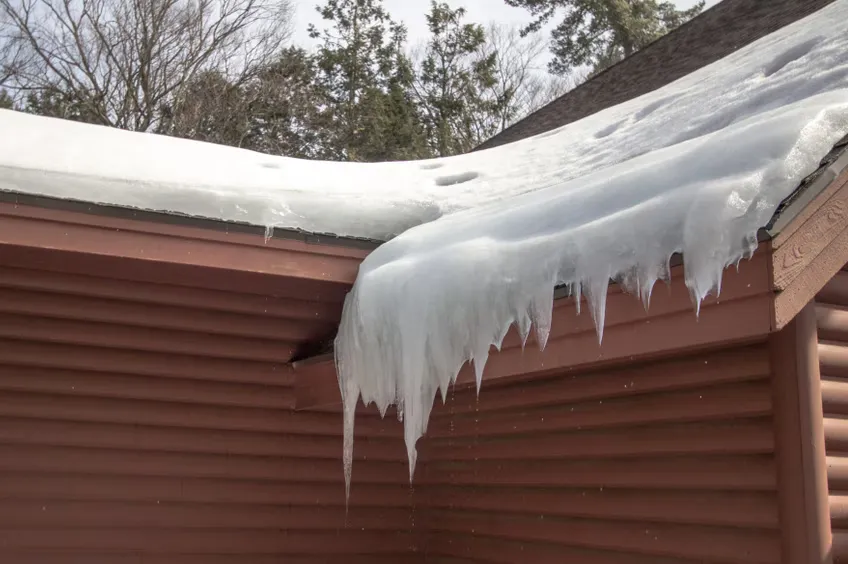
An ice dam is a ridge of ice that forms along the edge of a sloped roof, blocking melting snow from draining off the surface. As that backed-up water has nowhere to go, it works its way underneath shingles, through the roof deck, and into the attic, walls, and ceilings of the home below. Ice dams are caused by uneven roof temperatures: the upper portion of the roof warms above freezing because heat escapes from the living space below, melting snow on the upper roof, while the lower eave area stays below freezing because it sits above unheated overhang space. The meltwater runs down to the cold eave, refreezes, and builds the dam. For homeowners in Hiawassee and the North Georgia mountains, where cold snaps and winter precipitation events are a seasonal reality, understanding how ice dams form and what they do to a roof is the starting point for protecting both the roof and the interior of the home. For homeowners in Watkinsville and lower-elevation Oconee County, unusual ice events like the January 2026 North Georgia ice storm that brought significant ice accumulation as far south as the Atlanta metro are a reminder that Georgia winters can create ice dam conditions in homes that have never experienced them before.
What Is an Ice Dam and How Does It Form?
An ice dam is a ridge of ice that forms at the edge of a roof and prevents melting snow from draining off the surface, according to the University of Minnesota Extension. For an ice dam to form, three conditions must exist simultaneously: snow on the roof, a portion of the roof surface above 32 degrees Fahrenheit, and a portion of the roof surface below 32 degrees Fahrenheit at the eave. According to the University of Massachusetts Building and Construction Technology program, ice dams can form when as little as one to two inches of snow accumulates on a roof when the roof is poorly insulated and air-sealed and the snowfall is followed by several days of sub-freezing temperatures.
The mechanism is straightforward. Heat escaping from the living space warms the upper portion of the roof deck above freezing. Snow on that warm upper section melts. The meltwater flows downslope under the snow blanket toward the eave, which sits above an unheated overhang and stays below freezing. When the water reaches the cold eave, it refreezes and begins building the dam. As more snow melts and flows down, the dam grows. Eventually the pool of liquid water behind the dam finds cracks, gaps, and open shingle laps and penetrates the roof system. According to Building Science Corporation, the worst ice dams occur when deep snow accompanies cold weather, because each inch of snow adds approximately R-0.5 to R-1 of insulation value on the roof surface, trapping more heat from below and accelerating the melt cycle even in very cold outdoor temperatures.
What Damage Does an Ice Dam Cause to a Roof?
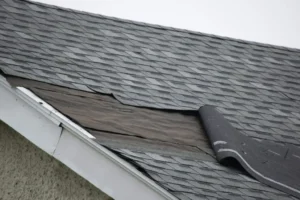
Ice dams cause five distinct categories of damage to a home, progressing from the roof surface inward. The first is shingle damage: as water backs up behind the dam, it seeps under shingles and saturates the underlayment and deck below. This water freeze-thaw cycles with each temperature swing, physically prying shingles up from the deck and breaking the adhesive sealant strips that hold shingle tabs in their waterproof position. According to Rainbow International Restoration, the trapped water behind an ice dam can seep under roofing materials, causing leaks that compromise the integrity of the roof structure.
The second category is gutter and fascia damage. The weight of an ice dam can be substantial. According to Think Insure, on average ice dams are four to six inches thick and can weigh several thousand pounds when fully developed. This weight pulls gutters away from the fascia board, bends gutter hangers, and in severe cases tears gutters completely off the roof edge. The third category is interior water damage: stained ceilings, wet insulation, peeling paint, warped drywall, and damaged flooring. According to SERVPRO, ice dam damage can lead to stained and sagging ceilings, warped floors, and damaged contents when water enters the living space. The fourth category is mold and mildew growth from persistent moisture in wood framing, insulation, and drywall. The fifth, and most serious, is structural deterioration when water saturates wood rafters and decking for extended periods, causing rot that compromises the roof’s load-bearing capacity. According to Wallace Law, untreated ice dam water damage can result in buckled floors, collapsed ceilings, and weakened walls when left unaddressed through multiple seasons.
Do Georgia Homes Get Ice Dams?
Yes, Georgia homes can and do get ice dams, particularly in the North Georgia mountain communities where Hiawassee and Towns County are located. According to PENCO Restoration, Georgia’s higher-elevation mountain homes experience the same temperature cycling conditions that create ice dams in northern states: warm-enough daytime temperatures to melt rooftop snow, followed by sub-freezing overnight temperatures that refreeze the meltwater at the eave. According to Fraser Roofing, even mild winters in Georgia and South Carolina can produce cold snaps that create ice dam conditions, and when they do the homes are often less prepared than northern homes because they were not built expecting the problem.
The January 2026 winter storm that struck North Georgia, which prompted Georgia Governor Kemp to declare a State of Emergency and produced significant ice accumulation across northeast Georgia and the mountains, is a direct example of the ice dam conditions that Hiawassee and Towns County homeowners face. Northeast Georgia, including Rabun County and the Towns County communities around Hiawassee, experienced some of the highest ice accumulations in the state during that event according to CBS Atlanta and GEMA. For lower-elevation communities like Watkinsville, ice dam events are less frequent but not impossible: the same January 2026 system extended Winter Storm Watch conditions to communities well south of the mountains. Any home that receives snow accumulation followed by overnight freezing is at risk for ice dam formation when the roof lacks adequate insulation and attic air sealing, regardless of geography.
How Do You Know If You Have an Ice Dam?
You know you have an ice dam when you see large icicles hanging from the roof edge or gutters, particularly when the icicles have wide bases suggesting a thick ice ridge behind them rather than simply dripping meltwater. According to Rainbow International Restoration, one of the earliest signs of ice dam formation is large icicles hanging from the roof edge, particularly if they extend beyond the gutter. Brown or yellowed icicles are a specific warning sign, indicating that the icicle water has traveled through shingles and picked up organic material on its way through, which means water is already penetrating the roof system below the ice dam. According to PENCO Restoration, ice dams can exist without visible icicles, so suspecting an ice dam and inspecting the attic for moisture is warranted whenever snow accumulation is followed by freezing temperatures.
Interior signs that an ice dam has already caused water entry are water stains appearing on ceilings or walls near the roofline, peeling paint or bubbling on ceilings that were previously dry, and a musty or damp smell in upper-floor rooms or the attic after a freeze-thaw cycle. According to the University of Minnesota Extension, water that enters through an ice dam can flow through the attic and stain ceiling finish materials, and because water follows the path of least resistance it may appear on a ceiling or wall several feet away from the actual roof entry point. For homeowners in Hiawassee who have experienced a winter event with snow accumulation followed by extended freezing, checking the attic with a flashlight for any new water stains, damp insulation, or moisture on rafters within 48 hours of the event is the most reliable early detection approach.
What Causes an Ice Dam?
Ice dams are caused by heat escaping from the conditioned living space into the attic and warming the roof deck above freezing while the eave area remains below freezing. According to Building Science Corporation, the three most common mechanisms by which interior heat reaches the roof deck and drives ice dam formation are conduction through inadequate insulation, air leakage through gaps around ceiling penetrations, and heat from inadequately insulated or leaky ductwork located in the attic space. Inadequate insulation allows heat to flow by conduction directly through the attic floor and into the roof deck. Air leakage, which Building Science Corporation describes as often the major mode of heat transfer, moves warm interior air through gaps around recessed light fixtures, plumbing stacks, attic hatches, chimney bypasses, and electrical penetrations into the attic where it warms the underside of the sheathing.
Gutters contribute to ice dam formation in a secondary way: when meltwater reaches the gutter and the gutter is cold enough, the water freezes in the gutter before it can drain, building a solid ice plug that causes water to back up further under the shingles. According to DECRA, gutters also contribute to ice dams when meltwater freezes in a cold gutter and prevents additional meltwater from draining off the roof. According to the Asphalt Roofing Manufacturers Association, keeping gutters clear of debris so meltwater can flow freely is one of the recommended steps for reducing ice dam potential. For homeowners in the North Georgia mountains, where gutters can fill with leaf debris from the surrounding hardwood forests in autumn, fall gutter cleaning before the first cold snap is a practical and important preventive step.
What Are the Warning Signs of an Ice Dam?
The warning signs of an ice dam are large or unusually thick icicles along the roof edge and gutters, visible ridges of ice building up at the eave line, patches of ice visible on the lower section of the roof while the upper section appears snow-free or actively melting, and interior symptoms including water stains on ceilings near exterior walls, peeling paint on upper-floor ceilings, and unusual dampness or a musty smell in the attic. According to the Georgia Restaurant Association, if you notice large icicles hanging from the roofline your building may already be at risk of ice dam damage, because icicles are a visible indicator that meltwater is refreezing at the eave rather than draining normally.
The interior warning signs are often the first to be noticed because homeowners see their ceilings before they inspect their roofs. A water stain that appears on a ceiling during or shortly after a winter freeze-thaw event, when the roof has not experienced any storm wind or rain, is a strong indicator of ice dam water entry. The distinction matters for insurance purposes: ceiling stains appearing after a wind and rain storm suggest a leak at a damaged shingle or flashing, while stains appearing after a cold spell with snow followed by warming suggest an ice dam. Documenting the sequence of weather events and the timing of when the stain appeared is important supporting information for any insurance claim. For homeowners in the Hiawassee area who are not sure whether a ceiling stain was caused by an ice dam or another roof condition, a licensed roofing contractor inspection is the most reliable way to identify the source.
How Does an Ice Dam Damage Insulation and the Attic?
An ice dam damages attic insulation by saturating it with water, which destroys both its thermal resistance and its structural integrity. Fiberglass batt insulation that has been thoroughly soaked loses most of its R-value while wet, compresses and mats down when it dries, and does not recover its original thickness or insulating capacity even after drying. Wet insulation that remains damp for extended periods becomes a substrate for mold growth on the paper facing and on the wood framing it contacts. According to SERVPRO, professionals indicate the R-value of attic insulation should be at least R-30, with R-38 being ideal, and maintaining that value requires keeping the insulation completely dry.
The attic structural members themselves are at risk when ice dam water enters repeatedly over one or more winters. Wood rafters and sheathing panels that are repeatedly wetted and dried develop surface mold initially, followed by progressive wood rot as the moisture cycles degrade the wood fiber. According to Building Science Corporation, air leakage that brings warm moist air from the house into a cold attic causes condensation on the underside of the roof sheathing, and when combined with ice dam water entry from above, the two moisture sources can cause serious wetting and decay of the sheathing and roof structure as well as leakage into the living space below. For homeowners in the North Georgia mountains who have experienced winter ice events and noticed a musty smell in the attic, having a licensed contractor inspect the attic for mold and decay before the next winter season is the prudent step to catch structural deterioration early.
How Do You Prevent an Ice Dam?
You prevent ice dams by addressing the root cause: the heat loss from the living space that creates the temperature differential on the roof surface. According to the University of Minnesota Extension, the two foundational prevention measures are making the ceiling air-tight so no warm moist air can flow from the house into the attic space, and then increasing the ceiling or roof insulation to cut down on heat loss by conduction. According to Building Science Corporation and the University of Massachusetts, the combination of sufficient insulation above the exterior wall, air sealing at every ceiling penetration, and balanced attic ventilation that keeps the entire roof surface uniformly cold is what prevents ice dam formation in properly built roofs.
The specific actions that prevent ice dams are: sealing all ceiling penetrations including recessed light fixtures, plumbing stacks, attic hatches, chimney bypasses, exhaust vent openings, and electrical conduit entries; adding insulation to bring the attic floor to at least R-38 in the mountains and R-30 elsewhere in Georgia; ensuring soffit intake vents and a continuous ridge vent are both clear and functioning so cold outside air circulates under the entire roof deck keeping it uniformly cold; installing ice and water shield underlayment at the eave during any roof replacement or new installation; and keeping gutters clear so meltwater can drain freely when it does occur. According to the Asphalt Roofing Manufacturers Association, per the International Building Code and the International Residential Code, in areas with a history of ice forming along the eaves an ice barrier underlayment shall be installed, extending a minimum of 24 inches inside the interior wall line of the building. For mountain homes in Hiawassee, this code requirement is directly applicable and should be specified during any roofing project.
What Is Ice and Water Shield and Do I Need It?
Ice and water shield is a self-adhering rubberized asphalt underlayment that bonds directly to the roof deck and seals around every nail, creating a fully waterproof barrier that prevents water backed up behind an ice dam from penetrating the deck. Standard felt or synthetic underlayment is water-resistant but not waterproof, and when water pools behind an ice dam it can work under standard underlayment and reach the deck. Ice and water shield eliminates this vulnerability in the most critical zone: the lower few feet of the roof above the eave where ice dam water accumulates. According to the Asphalt Roofing Manufacturers Association, ARMA recommends ice dam protection underlayment that complies with ASTM D1970 extending a minimum of 24 inches inside the interior wall line of the building in areas with a history of ice dam formation.
For homeowners in Towns County and the North Georgia mountains, ice and water shield at the eave is not optional protection. It is the code-required and performance-appropriate specification for any roof installation or replacement in a climate where ice dam conditions occur. According to the Decatur Patch’s guide for Georgia homeowners, when new roofing is on your project list you can avoid damage from ice dams by asking your roofer to install waterproof shingle underlayment at the edge of the roof beside the gutters and in areas where two surfaces of the roof are joined together, as this material will stop water from leaking into your home if an ice dam causes water to back up. For homeowners in Hiawassee replacing a roof that does not currently have ice and water shield installed, adding it at the eave as part of the replacement is the most cost-effective opportunity to install this protection, since the roof deck is already exposed and the incremental cost of the additional underlayment material is modest relative to the water damage it prevents.
Can You Remove an Ice Dam Safely?
Yes, you can remove an ice dam safely, but the method matters greatly. The safest approach for removing snow that could contribute to ice dam growth is using a roof rake from the ground, pulling snow off the lower three to six feet of the roof edge before it has a chance to melt and refreeze. According to the University of Minnesota Extension, a roof rake and push broom can be used to remove snow but may damage roofing materials, and care must be taken not to damage the roof surface. According to GEMA, the January 2026 North Georgia ice storm guidance reminded homeowners that ice removal from roofs requires professional assessment and safe tools.
For ice dams that have already formed, the safest professional removal method is steam. According to Wikipedia’s ice dam article, removal of ice buildup on a roof can be completed by trained professionals using special steam equipment to ensure quick and safe removal without causing damage to the roof. Mechanical removal with a hammer, chisel, or other impact tools is likely to damage the integrity of the roof and should never be done. Salt or chemical ice melt placed in pantyhose tubes laid over the dam is a temporary emergency measure that creates a channel for water to drain but does not remove the dam and must be repeated. Chipping at the ice with sharp tools from a ladder is one of the highest-injury-risk homeowner activities during winter, combining fall risk with the risk of shingle damage that creates new leak points. For homeowners in Hiawassee dealing with an active ice dam event, calling a licensed roofing contractor for professional assessment and removal rather than attempting DIY removal is the safety-appropriate and damage-minimizing choice.
Does Homeowners Insurance Cover Ice Dam Damage?
Yes, standard homeowners insurance generally covers damage caused by ice dams under the “weight of ice, snow, or sleet” peril. According to Policygenius, a standard HO-3 homeowners insurance policy doesn’t outright mention ice dam damage is covered, but insurers generally consider it a covered “weight of ice and snow” peril, meaning if an ice dam causes your roof to collapse or water to damage your home’s structure, insurance may help cover the cost of repairs. According to Progressive, the dwelling coverage of a homeowners policy may cover the cost to repair ice dam damage including the roof, walls, and other structural damage up to coverage limits, and damaged personal property may also be covered. According to AAA Northeast, standard homeowners insurance will generally cover water damage or any roof damage that occurs as a result of ice dams, though you may need to pay a deductible.
The important limits to ice dam insurance coverage are: most policies do not cover the removal of the ice dam itself, only the damage it causes; damage resulting from neglect or deferred maintenance may be excluded; and repairs to certain exterior structures including patios, fences, pools, and decks may be excluded even when the main home structure is covered. According to Progressive, damage that occurs over time from a lack of maintenance before or after the ice dam damage may not be covered. For homeowners in North Georgia who experience ice dam damage, filing promptly after the event, documenting all damage thoroughly with photographs before any cleanup or temporary repairs, and having a licensed roofing contractor provide a written assessment that identifies the damage as ice-dam-caused rather than pre-existing or maintenance-related gives the legitimate claim its best chance of full coverage under the applicable policy.
How Much Does Ice Dam Damage Repair Cost?
Ice dam damage repair costs range widely depending on how far the water penetrated and how long it went unaddressed. For minor damage involving removal of the ice dam and repair of a few shingles, the total runs approximately $500 to $1,500. For moderate damage involving gutter replacement, shingle repair, and some interior drywall or ceiling remediation, the range is $1,500 to $5,000. For severe cases involving deck rot, structural repairs, mold remediation, flooring replacement, and potentially a full roof replacement, costs can exceed $10,000 to $20,000 or more. According to Policygenius, the average cost of ice dam removal itself is $1,200, with a range of $400 to $4,000 depending on the size of the dam and the roof type.
The relationship between how quickly ice dam damage is addressed and its total cost is one of the strongest in all of roofing. A homeowner who notices a ceiling stain during a North Georgia ice event, immediately covers the affected interior area to prevent further spreading, contacts a roofing contractor for assessment and emergency stabilization, and files an insurance claim promptly will almost certainly spend far less than the homeowner who notices the same stain, ignores it, and discovers three months later that the attic insulation is saturated and the sheathing is beginning to rot. According to Wallace Law, preventative home maintenance can save homeowners thousands of dollars in repairs, and immediate response to any signs of ice dam water entry is the single most effective cost-control measure available once a dam has formed.
How Do You Fix Ice Dam Damage to a Roof?
Fixing ice dam damage to a roof involves several sequential steps. The first step is removing the ice dam itself through professional steam removal or by waiting for it to melt naturally once temperatures rise above freezing. The second step is inspecting the shingles for lifted, cracked, or separated tabs caused by the ice freeze-thaw cycling, and replacing any shingles that can no longer provide a waterproof seal. The third step is inspecting and replacing the underlayment at the eave if water has penetrated beneath it, adding ice and water shield to this zone during the repair as the code-required upgrade for a climate where ice dams occur. The fourth step is inspecting the deck for soft spots, delamination, or rot, and replacing damaged deck sections before any new shingles are installed. The fifth step is inspecting and repairing gutters that were pulled away or bent by the weight of the dam.
The interior repairs are handled after the roof is restored: drying out the attic insulation or replacing saturated insulation that cannot recover its R-value, treating any mold on wood framing and sheathing, repairing or replacing ceiling drywall that shows staining or sagging, and repainting water-damaged surfaces. According to Reimer Roofing, in severe cases where there is major water damage inside the home, costs include mold remediation services, carpet and furniture replacement, and roof replacement in addition to the interior repairs. For homeowners in Hiawassee dealing with ice dam damage, having both a licensed roofing contractor and if necessary a water damage restoration company assess the full scope of damage before any repair work begins is the most reliable way to ensure nothing is missed that becomes a larger problem later in the season.
What Are the Long-Term Prevention Solutions for Ice Dams?
The long-term prevention solutions for ice dams are the permanent fixes that address the root cause of uneven roof surface temperature rather than the temporary measures that deal with snow and ice after they accumulate. According to the University of Minnesota Extension, the first priority is making the ceiling air-tight so no warm moist air can flow from the house into the attic space, which involves sealing all ceiling penetrations including light fixtures, plumbing stacks, attic hatches, and exhaust duct penetrations with fire-rated sealant. According to Building Science Corporation, air leakage from the house into the attic is often the major mode of heat transfer leading to ice dam formation, making air sealing a higher priority than adding insulation when both are needed.
After air sealing, the next long-term solution is increasing attic insulation to reduce heat loss by conduction. According to SERVPRO, the R-value of attic insulation should be at least R-30, with R-38 ideal in colder mountain climates. The third long-term solution is ensuring balanced attic ventilation with clear soffit intake vents and an unobstructed continuous ridge vent, so cold outside air circulates under the full length of the roof deck keeping it uniformly close to outdoor temperature. These three measures together, air sealing, insulation upgrade, and balanced ventilation, eliminate the temperature differential that creates ice dams in the first place. For homeowners in the North Georgia mountains planning a roof replacement, discussing all three of these measures with the roofing contractor before the project begins ensures the new roof is installed over an attic system that addresses ice dam risk from the foundation up.
Ice Dam Risk and Prevention Quick Reference
| Factor | Detail | Source |
|---|---|---|
| Minimum snow for ice dam risk | As little as 1–2 inches of snow on a poorly insulated roof | UMass Building and Construction Technology |
| Temperature conditions required | Upper roof above 32°F; lower eave below 32°F | University of Minnesota Extension |
| Average ice dam weight | Several thousand pounds for a fully developed dam | Think Insure |
| Average ice dam removal cost | $1,200 average; $400–$4,000 range | Policygenius / HomeAdvisor |
| Minor damage repair cost | $500–$1,500 for removal and shingle repair | Tiger Adjusters |
| Recommended attic insulation R-value | Minimum R-30; R-38 ideal for mountain climates | SERVPRO |
| Required ice barrier underlayment (IRC/IBC) | Self-adhering membrane extending 24 inches inside interior wall line in ice-dam-prone areas | Asphalt Roofing Manufacturers Association (ARMA) |
| Insurance coverage | Covered under “weight of ice, snow, or sleet” peril in most standard HO-3 policies; removal itself usually not covered | Progressive, Policygenius, AAA Northeast |
| Safest removal method | Professional steam equipment; roof rake for snow before dam forms; never use chisel or hammer | Wikipedia / Ice Dam; GEMA |
| Georgia relevance | Applicable to all North Georgia mountain communities; ice dam conditions occurred statewide in January 2026 | PENCO Restoration; GEMA; CBS Atlanta |
Sources: University of Minnesota Extension, UMass Building and Construction Technology, Building Science Corporation, Asphalt Roofing Manufacturers Association, SERVPRO, Policygenius, Progressive, AAA Northeast, Think Insure, Tiger Adjusters, PENCO Restoration, GEMA/HS, CBS Atlanta
Frequently Asked Questions
Do homes in Hiawassee, GA need ice and water shield underlayment?
Yes, homes in Hiawassee and throughout Towns County should have ice and water shield underlayment installed at the eave as part of any roof installation or replacement. Hiawassee sits at roughly 1,980 feet elevation in the North Georgia mountains, and the higher elevation produces colder temperatures and more frequent snow and ice events than lower-elevation Georgia communities. According to the Asphalt Roofing Manufacturers Association, the International Residential Code requires an ice barrier underlayment in areas with a history of ice forming along the eaves, and the mountain climate around Hiawassee meets that standard. Ice and water shield is a self-adhering rubberized membrane that seals around every nail and creates a fully waterproof barrier that prevents water backed up behind an ice dam from penetrating the roof deck. The January 2026 North Georgia ice storm confirmed that this region receives the type of winter events where ice and water shield is not a premium upgrade but a code-required and performance-appropriate installation standard for any quality roofing project.
Can Watkinsville, GA homes get ice dam damage?
Yes, Watkinsville homes can get ice dam damage during significant winter events, though the risk is lower and less frequent than in the North Georgia mountains. Watkinsville sits at approximately 760 feet elevation in Oconee County, where snowfall is infrequent and typically light. However, the January 2026 ice storm that struck North Georgia extended its Winter Storm Watch conditions to communities well south of the mountains, and Oconee County residents experienced freezing rain and ice accumulation during that event. Any Watkinsville home that receives snow or ice accumulation followed by overnight sub-freezing temperatures is at risk for ice dam formation when the attic lacks adequate insulation or has significant air leakage at ceiling penetrations. According to PENCO Restoration, in places like Georgia where snow is a rare event, properties are often less protected against freeze issues like ice dams, making it even more important for Georgia homeowners to know how to spot an ice dam and what steps to take when damage does occur.
How do I check for ice dam damage after a North Georgia winter storm?
After a significant winter storm in the North Georgia mountains, check for ice dam damage in this sequence. From outside and from the ground, look for thick icicle ridges hanging from the eave or gutters, particularly ones with wide bases suggesting ice buildup behind them rather than simple drips. Note any visible brown or yellow icicles, which indicate water has traveled through shingles. In the attic within 48 hours of the storm, check with a flashlight for any new water stains on rafters or sheathing, damp or discolored insulation, and any shiny moisture on wood surfaces. In the living space, check ceilings on the top floor, particularly along exterior walls, for any new discoloration, bulging, or damp spots. According to the University of Minnesota Extension, water that enters through ice dams stains ceiling finish materials and can appear several feet away from the actual entry point because water travels along framing members before dripping through. If you find any of these signs, contact a licensed roofing contractor promptly before the next freeze-thaw cycle compounds the damage already present.
How is ice dam damage different from regular roof leaks?
Ice dam damage is distinguishable from regular roof leaks by its timing, its location pattern, and its cause. Regular storm roof leaks appear during or immediately after a rain event with wind. Ice dam leaks appear during warm-up periods after snow accumulation, when temperatures rise above freezing and meltwater starts moving behind an existing dam. The damage pattern from ice dams is typically located near exterior walls and along the lower portion of the roof rather than at the ridge, valleys, or penetrations where most storm-related leaks originate. According to University of Minnesota Extension, ice dam water entering the roof typically appears at the attic level along the ceiling at points where the exterior wall meets the roof structure, often staining ceiling areas near windows or at the perimeter of the house. Documenting this pattern clearly with photographs and noting the weather conditions before the stain appeared supports an insurance claim and helps the roofing contractor accurately identify the source of the problem during inspection.
What is the best time of year to address ice dam prevention in Georgia?
The best time to address ice dam prevention measures in Georgia is late summer through early fall, from August through October, before the first cold snap arrives. Air sealing and insulation upgrades in the attic are performed from inside the attic and are most comfortable in late summer before the attic becomes cold. Gutter cleaning to remove fall leaf debris should be completed by late October or early November before the first frost. Any roof replacement or repair project that includes ice and water shield installation should be scheduled for fall as well, when contractor availability is good and temperatures still permit proper shingle installation. For homes in the Hiawassee area where the higher elevation means earlier and more frequent cold events, completing all prevention measures by early October rather than waiting for mid-fall is the safest timeline. Homeowners who wait to address insulation and air sealing until after the first winter ice event discover the limitation of post-storm prevention: the most cost-effective moment to prevent ice dam damage has already passed.
Will a new roof stop ice dams from forming?
A new roof alone will not stop ice dams from forming if the attic insulation and air sealing deficiencies that cause the uneven roof temperature are not addressed at the same time. Ice dams are caused by heat escaping from the living space, not by the condition of the shingles. A new roof with ice and water shield at the eave will prevent water backed up behind an ice dam from penetrating the deck and causing interior damage, but the ice dam will still form on the surface of the new roof if the attic below is still poorly insulated and air-sealed. According to Building Science Corporation, the combination of sufficient insulation above the exterior wall and air sealing at all ceiling penetrations is what prevents ice dam formation, and the ridge vent and soffit intake ventilation system ensures the entire roof deck stays uniformly cold. When homeowners in Hiawassee plan a roof replacement, discussing attic insulation, air sealing, and ventilation upgrades with the roofing contractor as part of the same project scope is the most effective way to address ice dam risk comprehensively rather than just installing new shingles over the same conditions that allowed ice dams to form on the previous roof.
Final Thoughts
Ice dams are preventable. Every ice dam that forms on a home is a signal that heat is escaping from the living space in a way that the attic insulation and air sealing are not containing. The damage they cause, from lifted shingles and saturated insulation to stained ceilings and rotted decking, is entirely avoidable with the right combination of attic air sealing, insulation upgrades, balanced ventilation, ice and water shield underlayment at the eave, and clean gutters before each winter season. For homeowners in Hiawassee and the North Georgia mountains where winter ice events are a seasonal expectation, these are not optional upgrades but the foundation of a roof system that performs through every winter. For homeowners in Watkinsville and lower-elevation communities where winter events are less frequent, the January 2026 ice storm is a reminder that unusual weather happens, and a roof that handles it well is one that was prepared before it arrived.
If your North Georgia home has experienced a winter ice event and you want a professional assessment of whether ice dam damage has affected your roof, attic insulation, or interior structure, the team at Ridgeline Roofing and Exteriors provides free inspections that cover all of these areas. We serve Hiawassee, Watkinsville, and the surrounding communities in Towns County and Oconee County and give you clear, honest guidance on what your roof needs to be protected through every season.
Schedule your free inspection through our roof repair services page or learn more about a full roof replacement that includes the ice and water shield and ventilation upgrades that protect North Georgia mountain homes year-round.