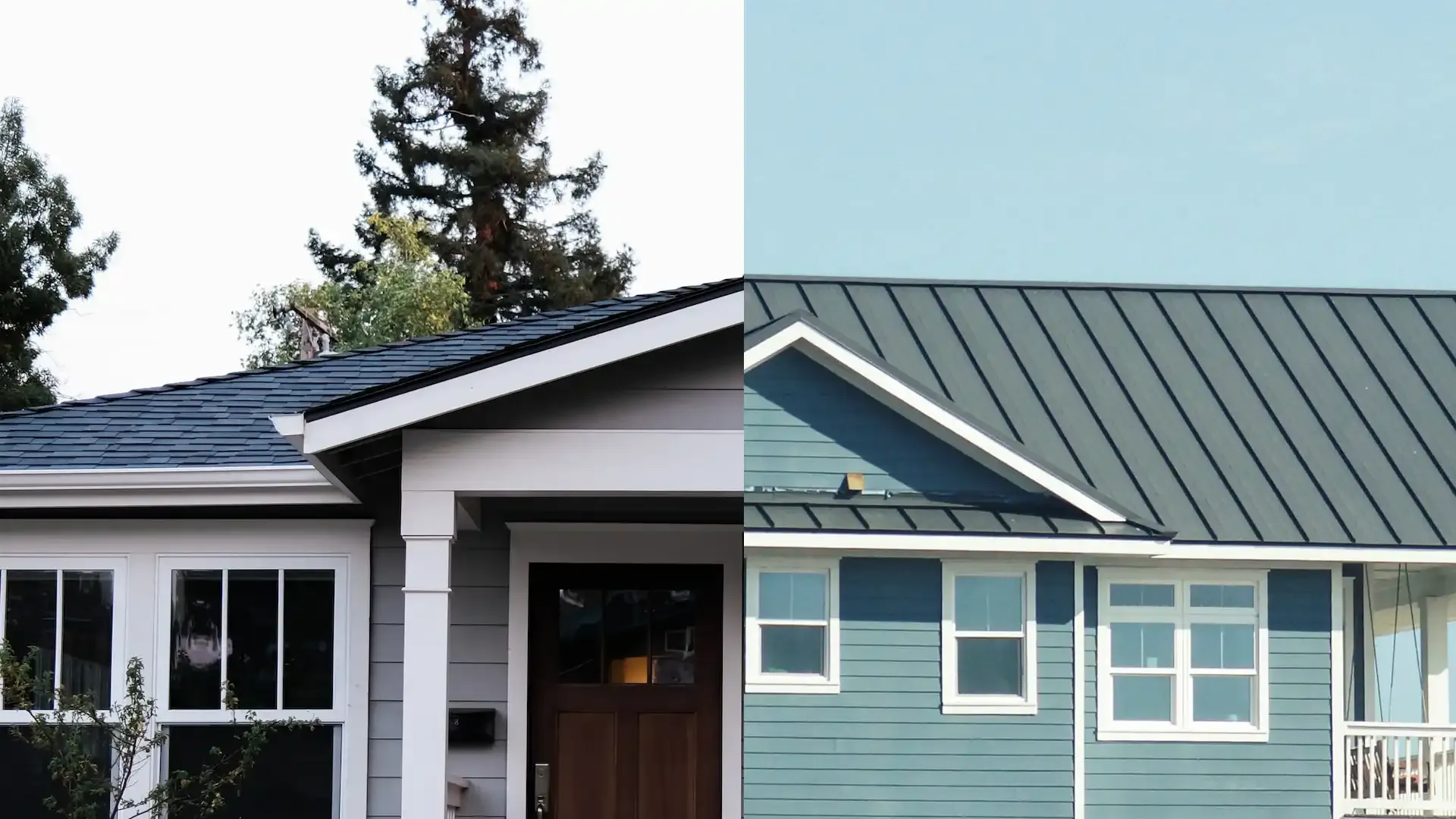
Metal roofs are better than shingles for long-term durability, wind resistance, energy savings, and lifespan. Asphalt shingles are better for upfront cost, easy repairs, and short-term budgets. The right choice depends on how long you plan to stay in your home, your budget, and the climate where you live. Homeowners in Watkinsville and Hiawassee, Georgia face hot, humid summers, active storm seasons, and occasional mountain ice events, all of which make roofing material selection especially important. This guide answers every question from the Google “People Also Ask” box on this topic so you can make a confident decision for your home.
Is It Better to Have a Metal Roof or Shingles?
It is better to have a metal roof than shingles if you plan to stay in your home for 20 or more years, value low maintenance, and want better protection during storms. It is better to have shingles if your budget is tight, you plan to sell the home within 10 years, or you need the cheapest possible upfront cost. Neither choice is wrong for every homeowner. The right answer depends on your specific situation.
Metal roofing lasts 40 to 70 years and requires very little maintenance over that span, according to State Farm’s roofing analysis. Asphalt shingles last 15 to 30 years and need more frequent inspection, repair, and eventual replacement. According to FoxHaven Roofing’s 2025 cost comparison, metal roofs cost 2 to 3 times more upfront than asphalt shingles, but that gap narrows significantly when you factor in that shingles may need to be replaced two or three times over the life of a single metal roof.
For homeowners in the Watkinsville area of Oconee County, summer thunderstorms, wind events, and Georgia’s heat and humidity all argue in favor of a more durable material. For homeowners near Hiawassee in Towns County, the mountain climate adds temperature swings and ice considerations that further strengthen the case for metal. But every project is different, and a free inspection from a local licensed contractor is the clearest way to understand what makes sense for your specific home.
The Watkinsville metal roofing page covers options, styles, and what a metal installation looks like for homes in this area.
How Much Does It Cost to Put a Metal Roof on a 3,000-Square-Foot House?
A metal roof on a 3,000-square-foot house costs between $18,000 and $60,000 depending on the metal type, roof complexity, and local labor rates. Steel and aluminum standing seam systems fall on the lower end of that range. Copper and zinc panels sit at the top. According to NerdWallet’s roofing cost research, metal roofing materials and installation typically run $4 to $30 per square foot, and labor accounts for roughly 60% of the total cost.
For homes in Oconee County around Watkinsville, the 2025 Georgia average for homes in Michigan and Georgia is approximately $10,600 for a metal roof on a standard-sized home, according to ez Home Search’s roofing ROI analysis, though larger 3,000-square-foot homes will see higher totals. Homes in the Hiawassee area with steeper mountain-style pitches typically fall at the higher end of labor estimates due to the extra safety equipment and time that steep pitches require.
To get a number specific to your 3,000-square-foot home, a written estimate from a licensed local contractor is the only reliable path. Metal panel type, roof pitch, number of penetrations (chimneys, skylights, vents), and whether tear-off is needed all move the final number significantly.
What Is the Biggest Problem with Metal Roofs?
The biggest problem with metal roofs is the higher upfront cost. Metal roofing costs 2 to 3 times more than asphalt shingles at installation, which puts it out of reach for many homeowners who are working with a tight budget. That initial investment gap is real, even if it narrows or reverses over a 30- to 40-year period.
Beyond cost, there are a few other problems worth knowing about before choosing metal:
- Noise: Without proper insulation underneath, metal roofs can be louder during heavy rain or hail compared to asphalt shingles, which absorb more sound. Modern installation techniques and solid sheathing minimize this, but it is a real consideration.
- Denting: Softer metals like aluminum can dent from large hail or falling branches. Heavier-gauge steel panels are much more dent-resistant and are the better choice for Georgia’s active storm season.
- Expansion and contraction: Metal expands and contracts with temperature changes. Over time, this can loosen fasteners if the roof was not installed with proper allowances for thermal movement. Exposed fastener systems are more vulnerable to this than standing seam systems with concealed fasteners.
- Repair matching: If a section of metal roofing is damaged years after installation, finding an exact color-match panel can be difficult as finishes fade over time.
- HOA restrictions: Some homeowner associations prohibit metal roofing or limit color and style choices. This is worth checking before committing.
None of these problems is a dealbreaker for most homeowners. A well-installed metal roof by a qualified contractor eliminates most of these concerns. The noise and expansion issues are largely a product of poor installation, not the material itself.
Does Homeowners Insurance Go Down with a Metal Roof?
Yes, homeowners insurance often goes down with a metal roof. According to the Metal Roofing Alliance, homeowners who install metal roofs may see their insurance premiums drop by up to 35%. Insurance companies offer these discounts because metal is non-combustible, highly wind-resistant, and far more durable against hail and storm damage, all of which reduce the likelihood of costly claims.
According to Tadlock Roofing’s insurance analysis, many carriers offer discounts ranging from 5% to 35% annually for homes with metal roofs, depending on your location, insurer, and the specific metal roofing system installed. In Georgia, where storm season brings wind, hail, and lightning risks every summer, insurers have strong financial reasons to reward homeowners who install more resilient materials.
The discount is not universal. Not every insurance company offers it, and some may partially offset savings by noting that metal is more expensive to replace if catastrophic damage does occur. The net result is still positive for most homeowners. Over a 40-year metal roof lifespan, even a modest annual premium reduction compounds into meaningful savings. Always call your insurer before installation to ask specifically about their metal roofing discount policy.
When Should You Not Use a Metal Roof?
You should not use a metal roof when you have a very tight upfront budget, when you plan to sell the home within five years, when your HOA prohibits it, or when the roof pitch is too low for the specific metal system you are considering.
If you are on a tight budget, asphalt shingles deliver solid protection at a fraction of the upfront cost of metal. A quality architectural shingle roof in Watkinsville or Hiawassee can serve a home well for 20 to 25 years and is far easier to repair or partially replace when individual sections are damaged.
If you plan to sell within a few years, the return on investment for metal roofing may not fully materialize before the sale. According to the 2024 Cost vs. Value Report published by the Journal of Light Construction, a standing seam metal roof replacement has a national ROI of 48.1% at resale, while asphalt shingle replacement returns approximately 60.7%. For a short-term hold, shingles may net more money back at sale than the higher-cost metal investment.
Finally, very low-slope or flat roofs require specific metal roofing systems designed for those conditions. Not every panel profile works on every pitch. A licensed contractor can tell you which systems are appropriate for your specific roof geometry.
What Is the Best Roof to Put on a House?
The best roof to put on a house is the one that matches your climate, budget, and long-term plans. For most Georgia homeowners in Watkinsville and the surrounding Oconee County area, the best choice is either architectural asphalt shingles or standing seam metal, depending on how long they plan to stay in the home and what their budget allows.
Architectural asphalt shingles are the best roof for homeowners who want solid protection, a reasonable upfront cost, and a proven product that any licensed contractor can install and repair. They last 20 to 30 years in Georgia’s climate, come in a wide range of colors, and are the most commonly installed residential roofing material in the country, used in roughly 80% of all roofing projects according to RubyHome’s 2025 Roofing Statistics report.
Metal roofing is the best roof for homeowners who want the lowest possible long-term maintenance burden, the highest wind and storm resistance, and a roof they may never have to replace again. For homes near Hiawassee in Towns County, where mountain storms, high winds, and temperature extremes are more intense than in lower-elevation parts of Georgia, metal roofing offers clear practical advantages beyond just cost calculations.
The answer that fits most Watkinsville homeowners: if you plan to be in the home for 15 years or fewer, architectural shingles are the smart choice. If you are putting down roots and plan to stay 20 or more years, metal is worth the higher upfront investment.
You can explore both options side by side through the roofing material choices page to understand what is available before requesting a quote.
What Time of Year Is the Cheapest to Replace a Roof?
The cheapest time of year to replace a roof is late winter, specifically January through early March. Roofing contractors are least busy during these months, especially in Georgia where temperatures are mild enough to keep work moving but storm season has not started. Less demand often translates to faster scheduling and occasionally more pricing flexibility on labor.
Late fall, from October through November, is another good window. The summer and early fall storm rush has passed, temperatures are comfortable for crews to work efficiently, and contractors are trying to fill their schedules before the slower winter months. Both of these windows apply whether you are installing asphalt shingles or metal roofing.
The most expensive and hardest time to schedule is right after a major storm event. After a large hail or wind storm rolls through Oconee County or Towns County near Hiawassee, every licensed contractor in the area gets booked weeks out almost immediately. If your roof has damage but is not actively leaking, waiting a few months after a major storm to schedule your project can result in shorter wait times and more competitive pricing.
Do Metal Roofs Raise Home Value?
Yes, metal roofs raise home value. According to Angi’s home value research, a metal roof increases home value by approximately 60% to 70% of the installation cost. On an average metal roof installation cost of around $11,600 for a standard home, that translates to roughly $7,000 to $8,100 added to your home’s market value.
Homeowners across multiple studies have seen metal roofing raise resale appeal significantly, particularly in markets where buyers prioritize durability, low maintenance, and storm resistance. According to Moose Roofing’s resale analysis, metal roofs can increase a home’s resale value by 6% to 10%, making them one of the strongest long-term exterior investments available. Buyers who understand metal roofing recognize it as a sign of a well-maintained home that will not need major work for decades.
It is worth noting that the ROI percentage at resale is slightly lower for metal than for asphalt shingles. The 2024 Cost vs. Value Report found a 48.1% ROI for metal roof replacement at resale versus approximately 60.7% for asphalt shingles. This does not mean metal is a bad investment. It means you spend more upfront on metal, recover less of the premium at sale, but benefit from decades of lower maintenance costs, energy savings, and insurance discounts in the meantime.
For homes near Watkinsville where buyers increasingly value storm-resilient properties, and for mountain-area homes near Hiawassee where a roof’s performance in extreme weather is a genuine selling point, metal roofing can be a compelling argument in a listing.
Are Metal Roofs Noisy During Rain?
Metal roofs are noisier during rain than asphalt shingles if they are installed without proper insulation or solid decking underneath. With proper installation over solid wood sheathing and with adequate attic insulation, the difference in rain noise between metal and shingles is minimal, according to State Farm’s metal roof analysis. Most homeowners who have lived under a properly installed metal roof report that rain noise is not a significant issue.
The noise concern mostly applies to metal roofs installed over open framing without solid decking, or over thin insulation. These older installation methods are less common for residential work today. Standing seam metal roofs installed over solid sheathing, which is standard practice for residential homes in Watkinsville and the Hiawassee area, do not produce the drum-like rain noise that many people associate with metal roofs.
If noise is a concern for your home, ask your contractor specifically about the underlayment and decking specification they plan to use under the metal panels. The right specification eliminates virtually all of the rain noise concern while also improving the thermal performance of the roof system.
Can a Tornado Take Off a Metal Roof?
Yes, a strong enough tornado can take off a metal roof, just as it can destroy any building material. However, a properly installed metal roof handles extreme winds far better than asphalt shingles. Standard metal roofing systems are designed to withstand wind speeds up to 140 mph, according to the Metal Roofing Alliance, and some engineered systems are rated to 180 mph or higher. Asphalt shingles, by contrast, typically have a rated wind resistance of 60 to 90 mph, and once winds exceed 90 mph, standard shingles begin to lift and fail, according to DECRA Metal Roofing’s tornado resistance analysis.
The Enhanced Fujita (EF) tornado scale puts an EF-1 tornado at 73 to 112 mph winds, and an EF-2 at 113 to 157 mph. A properly installed metal roof can handle EF-1 tornado winds with minimal damage and has a much better chance of surviving EF-2 winds than asphalt shingles. EF-3, EF-4, and EF-5 tornadoes generate winds of 136 mph to over 200 mph that can destroy almost any residential structure regardless of roofing material.
Georgia’s storm season, including the active tornado threat in north Georgia near the Hiawassee area each spring, makes wind resistance a very practical consideration. Metal roofing’s superior wind resistance rating is one of the strongest practical arguments for choosing it over shingles in storm-prone areas.
What Do Insurance Companies Say About Metal Roofs?
Insurance companies generally view metal roofs favorably because they are non-combustible, highly wind-resistant, and durable against hail and storm damage. According to the Metal Roofing Alliance, many insurance providers offer premium discounts of up to 35% for homeowners who install metal roofs because the material reduces the insurer’s risk of paying out storm-related claims.
Metal roofs carry a Class A fire resistance rating, the highest available. They resist hail damage far better than asphalt shingles, especially when rated Class 4 for impact resistance, which is the highest UL 2218 impact rating available. These qualities make them an attractive risk profile for insurance underwriters.
The one caveat is that because metal roofing costs more to replace than asphalt shingles, some insurers account for the higher replacement cost in their policies. This rarely eliminates the premium discount, but it is worth reviewing your policy terms carefully after a metal roof installation. Contact your carrier before the project starts, confirm any available discounts, and ask about any changes to your replacement cost coverage that the material change may trigger.
Will Walking on a Metal Roof Damage It?
Walking on a metal roof can damage it if done incorrectly. Soft metals like aluminum dent more easily under foot traffic. Hard steel panels are more durable, but even steel can be dented or scratched if you step in the wrong place or use improper footwear. Most metal roof manufacturers recommend walking only on the ribs or raised seams of the panels, never in the flat field areas between them, and only when necessary.
If you need to access your roof for inspection, gutter cleaning, or other maintenance, the safest approach is to have a professional roofer or inspector handle it. They know exactly where to step and how to distribute weight without damaging panels or voiding any material warranties. Ridgeline Roofing and Exteriors offers Drone Zone AI Roofing Inspections that let you assess your roof’s condition without anyone ever walking on the surface, which is ideal for metal roofs where foot traffic carries damage risk.
How Much Does a Metal Roof Cost for a 2,000-Square-Foot Home?
A metal roof for a 2,000-square-foot home costs between $10,800 and $40,000 in Georgia, depending on the metal type, panel style, and labor involved. According to multiple 2025 Georgia roofing cost guides, steel and aluminum standing seam systems fall in the $15,000 to $25,000 range for a typical 2,000-square-foot home. Premium options like copper or zinc can push well beyond that.
By comparison, asphalt shingle roofing on the same 2,000-square-foot home runs $8,000 to $20,000 for architectural shingles, with the midpoint around $12,000 according to RST Roofing & Renovations’ 2025 Georgia data. That means a metal roof typically costs two to three times as much upfront for the same footprint.
The life cycle math changes the comparison significantly. According to McElroy Metal’s life cycle cost analysis, homeowners who plan to stay in their homes for 30 to 40 years can actually save $25,000 to $30,000 by choosing metal over shingles, once you factor in the cost of replacing shingles two or three times over that same period. For long-term homeowners in Watkinsville or Hiawassee, that calculation makes metal a financially compelling choice despite the higher upfront price.
What Not to Say to a Roof Insurance Adjuster?
You should never tell a roof insurance adjuster that you are not sure when the damage happened, that the damage has been there for a while, that the roof is old and you knew it needed replacing, or that you agree with any on-the-spot denial without having a contractor’s independent assessment in hand. Each of these statements can be used to classify damage as age-related or pre-existing rather than storm-caused, which gives the carrier grounds to reduce or deny your claim.
Keep your statements factual and brief. State the date of the storm event, that you observed damage afterward, and that you are filing a claim. Let the adjuster inspect the roof without being led by your own commentary. Before the adjuster arrives, photograph all visible damage from the ground with timestamps, and consider having a licensed contractor provide a written damage assessment independently so you have a professional opinion ready before the insurance evaluation begins.
If your claim is denied or underpaid, you have the right to dispute it. A contractor’s written report is strong documentation to present during that dispute. Homeowners in Oconee County and Towns County who suspect storm damage to either a metal or shingle roof should get that professional inspection done before the insurance process starts.
How Can I Get My Roof Replaced for Free?
You can potentially get your roof replaced for free if a storm caused the damage and your homeowner’s insurance covers the full replacement cost. This is the most common path to a fully covered roof replacement. If hail, wind, a tornado, or another sudden storm event caused the damage, your policy’s dwelling coverage typically pays for a full replacement minus your deductible.
Other ways some homeowners reduce or eliminate out-of-pocket costs include manufacturer warranty claims if a defective product caused premature failure, contractor workmanship warranties if the damage traces to an installation error, and government disaster assistance programs if the area was declared a federal disaster zone following a major storm.
There is no legitimate way to get a roof replaced for free without one of these qualifying circumstances. Be skeptical of any contractor who claims they can “work with your insurance” to get you a free roof. This is a common setup for insurance fraud, which can result in policy cancellation, denied future claims, and legal liability for the homeowner. Work only with licensed, reputable contractors who provide transparent written estimates and do not make promises about what your insurance will cover.
If your budget is the issue rather than insurance, residential roof financing options through Ridgeline Roofing and Exteriors can help spread the cost of either a metal or shingle replacement into manageable payments.
Why Do Houses Not Use Metal Roofs More Often?
Houses do not use metal roofs more often primarily because of the higher upfront cost. Metal roofing costs 2 to 3 times more than asphalt shingles at installation, and for many homeowners replacing a failing roof on a tight budget, shingles are simply the only option they can afford right now. This is the single biggest barrier keeping metal roof adoption lower than its long-term performance would otherwise justify.
Other reasons include aesthetic preference (some buyers find traditional shingle look more familiar), HOA restrictions that limit material choices in certain subdivisions, the lack of local metal roofing expertise in some smaller markets, and simply a lack of awareness about the long-term cost advantages of metal over repeated shingle replacements.
That said, metal roofing is growing steadily. According to McElroy Metal’s market research, metal roofing now holds about 12% of the home remodel roofing market, up from much lower levels a decade ago. Homeowners who are tired of replacing shingles every 15 to 20 years are increasingly choosing metal for the last roof they ever want to install.
What Is the Cheapest Roof to Put on a House?
The cheapest roof to put on a house is a 3-tab asphalt shingle roof. In Georgia, a 3-tab shingle installation on a standard home starts as low as $5,000 to $8,000 depending on roof size and complexity, making it the most budget-friendly option available. Three-tab shingles cost less per square foot than architectural shingles, metal, tile, or slate.
The tradeoff is lifespan. Three-tab shingles last only 15 to 20 years in Georgia’s climate, shorter than the 20 to 30-year lifespan of architectural shingles and far shorter than the 40 to 70-year lifespan of metal. For homeowners who need to minimize cost right now, 3-tab shingles get the job done. For homeowners who can stretch their budget slightly, architectural shingles deliver meaningfully better durability for a modest additional cost.
The cheapest upfront roof is not always the cheapest roof over time. Replacing a 3-tab shingle roof twice over the same period that a metal roof would still be going strong can easily cost more in total, even accounting for the higher initial price of metal.
For homeowners in Watkinsville who want to explore all their shingle options before committing, the Watkinsville asphalt roofing page covers available products and what they cost in this area.
Can I Replace My Shingle Roof with a Metal Roof?
Yes, you can replace your shingle roof with a metal roof. This is one of the most common roofing upgrades homeowners make, and it is straightforward for a licensed contractor experienced in both materials. The process typically requires a full tear-off of your existing shingles down to the roof deck, inspection and repair of the deck where needed, and then installation of the new metal panels on top of a fresh underlayment system.
In some cases, a metal roof can be installed directly over existing shingles, skipping the tear-off step. This is called a re-roof or overlay. Georgia building code limits total roof layers to two, so this option is only available if your home currently has just one layer of shingles and the deck underneath is in solid condition. Most contractors recommend against overlaying because it hides the deck from inspection and any hidden damage cannot be addressed without tearing off both layers eventually.
Switching from shingles to metal does not require structural upgrades in most cases. Metal roofing actually weighs significantly less than asphalt shingles. According to DECRA Metal Roofing’s material comparison, metal panels weigh up to 1.6 pounds per square foot versus asphalt shingles at up to 5 pounds per square foot. This means metal is easier on your roof structure, not harder.
The roof replacement team in Watkinsville handles both material types and can walk you through exactly what a shingle-to-metal conversion involves for your specific home.
What Not to Do When Installing a Metal Roof?
There are several things you should never do when installing a metal roof. Getting these wrong turns a durable material into an early failure, which is why proper installation by a qualified contractor matters far more for metal than it does for shingles.
The biggest mistakes to avoid during metal roof installation include:
- Using improper fasteners: The wrong fastener type, size, or spacing is the most common cause of wind failure and leak development in metal roofs. Fasteners must match the panel type exactly and be spaced per manufacturer specs.
- Not allowing for thermal expansion: Metal expands and contracts with temperature. Panels must be installed with proper clearances and using floating clip systems on standing seam roofs so they can move without buckling or loosening.
- Mixing incompatible metals: Different metals in contact with each other cause galvanic corrosion. Aluminum and steel, for example, should not be installed in direct contact without a protective barrier between them.
- Improper flashing around penetrations: Chimneys, vents, skylights, and valleys are where metal roof leaks happen. Sloppy flashing work around these areas is the number one source of metal roof water intrusion.
- Walking on the flat panel face: As noted earlier, foot traffic in the wrong location can dent panels and compromise the roof’s appearance and potentially its weather seal.
- Skipping the underlayment: Metal roofing still requires a quality underlayment beneath the panels. Skipping it eliminates a critical secondary moisture barrier.
Hiring a contractor certified in metal roofing installation is the best protection against all of these errors. Ridgeline Roofing and Exteriors is a GAF Master Elite certified contractor, one of the top certification levels available in the residential roofing industry.
Why Not Put a Metal Roof Over Shingles?
You should not put a metal roof over shingles in most cases because it hides the condition of the roof deck underneath. If there is rot, water damage, or soft spots in the decking, installing metal over existing shingles traps that damage underneath where it continues to worsen. When the deck eventually fails, both the shingles below and the metal panels above must be removed, which costs far more than if the deck had been repaired before the metal went on.
There is also a code limitation. Georgia building code, like most state codes, caps total roofing layers at two. If your home already has one layer of shingles, you can legally install metal on top. If it has two layers, everything must come off first. Most professional contractors recommend a full tear-off regardless of how many layers exist, because it gives them a clear view of the deck’s condition before committing the client to a long-term material like metal on top of an unknown substrate.
The one case where a metal-over-shingle installation makes sense is when the existing single shingle layer is in good condition, the deck beneath is solid and verified by inspection, and the homeowner fully understands the tradeoff of skipping the tear-off step. A reputable contractor will be honest with you about whether this option is truly viable for your specific roof or not.
Do Shingles Last Longer Than Metal Roofs?
No, shingles do not last longer than metal roofs. Metal roofs last significantly longer than shingles. Asphalt shingles last 15 to 30 years depending on the type, while metal roofs last 40 to 70 years and some premium metal systems last even longer, according to State Farm’s roofing analysis. That is roughly two to three times the lifespan of asphalt shingles under comparable conditions.
In Georgia’s warm, humid climate, the lifespan gap may be even wider in practical terms. J&M Roofing’s research notes that asphalt shingles in warmer southern climates average around 14 years of effective service life due to heat, UV exposure, and humidity accelerating granule loss. Metal, by contrast, performs well in heat because it reflects solar radiation rather than absorbing it, making it a more durable long-term choice in Georgia’s climate specifically.
The combination of longer lifespan and lower maintenance means a well-installed metal roof near Hiawassee or Watkinsville should be the last roof a homeowner ever needs to install, assuming they stay in the home long enough to benefit from it.
How Much Would Shingles on a Roof Cost on a 1,200-Square-Foot Home?
Shingles on a 1,200-square-foot home cost between $4,800 and $12,000 in Georgia depending on the shingle type, roof pitch, and labor involved. Three-tab asphalt shingles on the lower end of that range run $4,800 to $7,000 for a simple single-story home. Architectural shingles on the same home run $6,500 to $12,000 depending on the specific product and any deck repairs needed.
Per-square-foot pricing for asphalt shingles in Georgia runs $1.50 to $6.00 for materials alone, according to NerdWallet’s roofing cost analysis, with labor adding substantially to that total since labor accounts for roughly 60% of a roof installation’s overall cost. Smaller homes have lower material costs but do not always have proportionally lower labor costs because setup, tear-off, and disposal are not fully scalable to home size.
For a 1,200-square-foot cottage or smaller home in Oconee County near Watkinsville, or a mountain cabin in the Hiawassee area, getting a written quote from a licensed local contractor is the fastest way to get a precise number. Roof pitch, complexity, and access all affect the final price more than square footage alone.
What Type of Roof Increases Home Value?
The type of roof that increases home value the most depends on your market, but both new asphalt shingles and new metal roofing add measurable value compared to an old, worn, or damaged roof. A new roof of any quality material removes one of buyers’ biggest concerns and signals a well-maintained home.
In terms of raw ROI percentage at resale, asphalt shingles currently outperform metal roofing according to the 2024 Cost vs. Value Report, returning approximately 60.7% of installation cost compared to 48.1% for metal. However, in absolute dollars, metal adds more to home value because it starts from a higher installation cost base. Installing a metal roof at $40,000 and recovering 60% to 70% of that at resale through increased market value nets a larger dollar gain than a shingle roof at $12,000 returning 60% at resale.
The roof type that increases home value most in the Watkinsville real estate market or the Hiawassee mountain cabin market specifically depends on local buyer preferences and competing home prices. A licensed real estate agent with knowledge of your specific neighborhood is the best source for guidance on which material investment will resonate most with buyers in your price range. From a pure protection and durability standpoint, metal roofing adds the strongest long-term case for value by eliminating buyer concerns about near-term roof replacement.
Homeowners ready to explore what a new roof installation involves for their specific property can start with the Watkinsville roof installation page for a clear overview of the process.
Metal Roof vs. Shingles: Side-by-Side Comparison
| Factor | Metal Roofing | Asphalt Shingles |
|---|---|---|
| Upfront Cost (2,000 sq ft) | $10,800 – $40,000 | $8,000 – $20,000 |
| Lifespan | 40 – 70 years | 15 – 30 years |
| Wind Resistance | Up to 140 – 180 mph | 60 – 90 mph (standard) |
| Energy Savings | Up to 25% reduction in cooling costs | Minimal (absorbs heat) |
| Maintenance | Very low; periodic inspection only | Moderate; repairs every 5 – 10 years |
| Insurance Discount | Up to 35% premium reduction | Minimal to none |
| Resale ROI | 48.1% (Cost vs. Value 2024) | 60.7% (Cost vs. Value 2024) |
| Repair Ease | Requires specialist; harder to color match | Easy; any licensed contractor |
| Noise During Rain | Minimal with proper insulation/decking | Very quiet |
| Fire Resistance | Class A (non-combustible) | Class A available; depends on product |
| Best For | Long-term homeowners; storm-prone areas | Budget-conscious; short-term holds |
Sources: Metal Roofing Alliance, FoxHaven Roofing 2025 Cost Comparison, NerdWallet 2025 Roofing Cost Analysis, State Farm Metal Roof Pros and Cons, Journal of Light Construction 2024 Cost vs. Value Report, RubyHome 2025 Roofing Statistics, Tadlock Roofing Insurance Analysis.
Frequently Asked Questions: Metal Roof vs. Shingles in Watkinsville and Hiawassee, GA
Is a metal roof worth it in Georgia’s climate?
Yes, a metal roof is worth it in Georgia’s climate for homeowners who plan to stay in their home 20 or more years. Georgia’s hot, humid summers accelerate asphalt shingle degradation, while metal roofing reflects heat and resists the algae and UV exposure that shorten shingle life. The active storm season in Oconee County around Watkinsville and the mountain weather near Hiawassee add wind and hail risk that metal handles significantly better than standard shingles. According to State Farm’s metal roof analysis, metal roofing can reduce cooling costs by up to 40% in warm climates, which is a meaningful annual saving in Georgia’s long, hot summers.
How long do metal roofs last compared to shingles in Watkinsville, GA?
Metal roofs last 40 to 70 years in Watkinsville, GA, compared to 15 to 25 years for asphalt shingles in Georgia’s warm, humid climate. Asphalt shingles in southern states average around 14 years of effective life, according to J&M Roofing’s regional lifespan research, because heat and humidity accelerate granule loss and algae growth. Metal is unaffected by those same factors and performs consistently across Georgia’s climate range from the Oconee County flatlands to the higher-elevation terrain around Hiawassee.
Will a metal roof reduce my homeowner’s insurance in Georgia?
Yes, a metal roof can reduce your homeowner’s insurance in Georgia. Many Georgia insurers offer discounts of 5% to 35% for homes with metal roofs because metal’s Class A fire rating, high wind resistance (up to 140 mph), and superior hail durability reduce the insurer’s risk significantly, according to Metal Roofing Alliance data. Contact your insurance carrier before installation to confirm the specific discount your policy qualifies for, as rates vary by insurer and by the specific metal system installed.
Can asphalt shingles handle the storms near Hiawassee, GA?
Asphalt shingles can handle normal storm conditions near Hiawassee, GA, but they are more vulnerable than metal roofing to the wind speeds, hail, and temperature extremes that the north Georgia mountain area experiences. Standard shingles are rated for winds up to 60 to 90 mph, and the Hiawassee area sees severe thunderstorms that can produce gusts well beyond that threshold. High-grade architectural shingles with Class 4 impact ratings offer meaningfully better protection for mountain-area homes than standard 3-tab products. Metal remains the strongest choice for homeowners in Towns County who want maximum storm resilience.
Is standing seam or exposed fastener metal roofing better for Georgia homes?
Standing seam metal roofing is better for most Georgia homes because its concealed fastener system eliminates the most common source of metal roof leaks and better accommodates thermal expansion and contraction through Georgia’s hot summers and cool winters. Exposed fastener systems cost less upfront but require periodic fastener inspection and re-sealing as rubber washers degrade over time. For homes near Watkinsville and in the mountain climate near Hiawassee where both heat and occasional cold stress the roofing system, standing seam’s concealed fastener design provides more reliable long-term performance.
What metal roofing styles are available for homes in Watkinsville, GA?
Metal roofing styles available for homes in Watkinsville, GA include standing seam panels, exposed fastener corrugated panels, stone-coated steel shingles that mimic the look of asphalt, and metal tiles designed to resemble slate or wood shake. Metal options come in steel, aluminum, and premium metals like copper or zinc. Steel is the most common and cost-effective choice for Oconee County homes, with aluminum a good alternative for coastal-adjacent areas where salt air corrosion is a concern. Ridgeline Roofing and Exteriors can walk you through available styles and what each looks like installed on homes in the area.
How do I choose between metal roofing and shingles for my home near Hiawassee?
The best way to choose between metal roofing and shingles for a home near Hiawassee is to answer three questions: How long do you plan to stay in the home? What is your upfront budget? And how important is storm performance to you? If you plan to stay 20 or more years and can afford the higher upfront cost, metal is the stronger long-term choice for the mountain climate around Towns County. If you need to minimize cost right now or plan to sell within 10 years, quality architectural shingles deliver solid protection at a lower entry price. A free inspection and honest estimate from the Ridgeline team helps you make this decision with real numbers specific to your home rather than general averages.
Final Thoughts
Metal roofs and asphalt shingles are both proven roofing materials. The decision between them is not about which one is good and which is bad. It is about which one is right for your home, your timeline, and your budget. Metal roofing wins on lifespan, storm performance, energy savings, insurance discounts, and long-term cost for homeowners who stay put. Asphalt shingles win on upfront cost, repair ease, and short-term resale ROI for homeowners who need to manage their spending right now or plan to sell soon.
For homeowners in the Watkinsville area and those living in the mountain communities near Hiawassee, Georgia’s storm season, heat, and humidity all make roofing material choice more consequential than in milder climates. Whether you choose metal or shingles, the most important factor after material selection is the quality of installation. A great material installed poorly fails early. A standard material installed correctly lasts its full rated life. Working with a licensed, certified local contractor is the one decision that matters more than any other.
Get a Straight Answer for Your Roof
Ridgeline Roofing and Exteriors is a GAF Master Elite certified contractor serving Watkinsville, Hiawassee, and communities throughout Oconee and Towns County, GA. The team installs both metal roofing and asphalt shingles and will give you an honest assessment of which option fits your home, your budget, and your long-term plans, with no pressure.
Call 770-706-ROOF (7663) or schedule your free inspection online. When you are ready to compare real numbers for your specific home, the Watkinsville metal roofing page and the asphalt roofing page are both good starting points before your first conversation with the team.