 Skip to content
The best roof materials for hot and humid climates are metal roofing, clay or concrete tile, and impact-resistant architectural shingles. These materials resist heat buildup, shed heavy rain quickly, hold up against moisture and mold, and last far longer than standard products in Georgia’s punishing summer conditions. Whether you own a home in Watkinsville, GA or in the mountains around Hiawassee, GA, heat and humidity work together to destroy roofs faster than in cooler, drier parts of the country. This article covers every major roofing material choice for hot, humid climates, answers the most common questions homeowners ask, and gives you the facts you need to make a smart decision before spending a dollar on a new roof.
What Is the Best Roof for a Hot Humid Climate?
The best roof for a hot humid climate is a standing seam metal roof. It reflects solar heat, resists moisture and mold, requires very little maintenance, and can last 40 to 70 years in Georgia’s climate with proper installation. No other common residential roofing product combines those qualities at that lifespan.
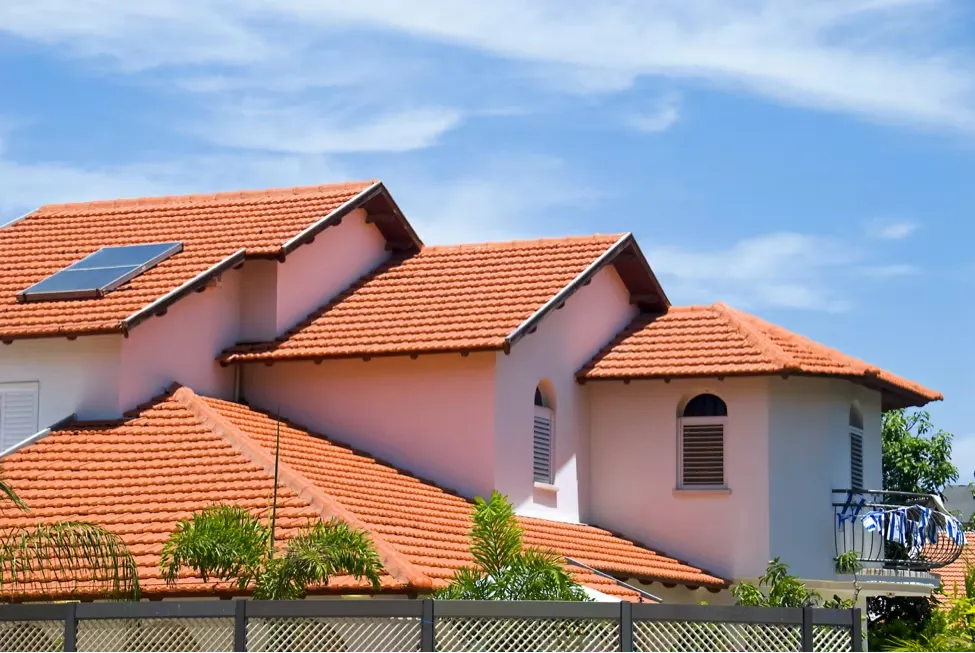
Clay tile is the second-best option, especially for homeowners who want a classic look. Clay has been used in hot, wet climates for centuries because its barrel-shaped design allows air to circulate under the tile, which helps dry out moisture and keeps the home cooler. Clay tile can last over 100 years with proper care.
Impact-resistant architectural asphalt shingles are the most affordable option that still performs well in hot, humid conditions. Modern shingles have reflective granules and improved waterproofing layers compared to products from 15 or 20 years ago. For homeowners in Watkinsville and the surrounding areas of Oconee County who need a cost-effective upgrade, today’s architectural shingles are significantly better than the three-tab products most older homes currently carry.
What Is the Best Roofing Material for Hot Areas?
The best roofing material for hot areas is metal roofing with a factory-applied reflective coating. According to the U.S. Department of Energy, cool roofs, which include properly coated metal roofs, can stay more than 50 degrees Fahrenheit cooler than a conventional dark roof on a summer afternoon. That temperature difference directly reduces heat transfer into the home and lowers air conditioning costs.
The U.S. EPA confirms that cool roofs can reduce air conditioning energy use by up to 15 percent in a single-story building. The Lawrence Berkeley National Laboratory Heat Island Group has projected that widespread adoption of cool roofing could reduce national cooling costs by approximately $1 billion annually. For a homeowner in Watkinsville or Hiawassee who runs their air conditioning from April through October, that kind of efficiency adds up fast.
After metal, clay tile and concrete tile are the next best options for hot areas. Both materials have high thermal mass, meaning they absorb heat slowly and release it slowly, which buffers temperature swings inside the home. Concrete tile in particular is highly versatile and can be designed to mimic more expensive materials while still delivering strong heat performance.
What Shingles Withstand 150 MPH Winds?
Shingles rated to withstand 150 mph winds are Class 4 impact-resistant architectural shingles that carry a UL 2218 certification and are tested to meet wind uplift requirements at that speed. Not all shingles reach this threshold. Standard three-tab shingles are typically rated for winds between 60 and 70 mph. Premium architectural shingles start around 110 to 130 mph. Only the top-tier Class 4 products, built with reinforced fiberglass mats and high-density asphalt layers, reach 150 mph wind ratings.
In Georgia, summer storms can produce wind gusts well above 70 mph, especially during severe thunderstorm and tornado events. Homes in the Watkinsville area and along the ridge lines near Hiawassee, GA can see strong winds during storm cells that move through the region. Choosing a shingle with a higher wind rating is a practical investment, not just a premium product feature.
Standing seam metal roofing also performs extremely well in high-wind events. Because the panels interlock and fasteners are concealed, there are no exposed points for wind to grab. Metal roofing installed with proper concealed fastener systems can hold up in severe wind events that would lift or crack standard shingles.
What Is the Most Fireproof Roofing Material?
The most fireproof roofing materials are metal, clay tile, concrete tile, and slate. All four carry a Class A fire rating, which is the highest level assigned by Underwriters Laboratories (UL). Class A materials resist severe fire exposure without igniting or spreading flames.
Standard asphalt shingles can also achieve a Class A rating when installed with a fire-resistant underlayment, but they do not match the inherent non-combustibility of metal or tile on their own. Wood shakes, by contrast, are naturally combustible and are not recommended in areas with any significant wildfire or structure fire risk.
For homeowners in the Hiawassee and Towns County area, where homes sit near wooded terrain in the north Georgia mountains, fire resistance is a real consideration. Flying embers from a neighboring wildfire or structure fire can land on a roof. A Class A non-combustible surface gives the home a much better chance of surviving that exposure than a wood or lower-rated product.
Which Roof Is Better, EPDM or TPO?
For hot and humid climates, TPO is generally better than EPDM. TPO is a white or light-colored thermoplastic membrane that reflects solar heat rather than absorbing it. In hot Georgia summers, a white TPO roof stays dramatically cooler than a traditional black EPDM membrane.
EPDM is a black rubber membrane that excels in cold climates where absorbing heat from the sun provides an advantage. In Georgia’s heat, that heat absorption works against you. EPDM on a low-slope section in Watkinsville or Hiawassee will transfer that solar heat directly into the structure below.
That said, EPDM remains a durable and proven system for low-slope applications. It is easier to seam and repair than TPO in some conditions, and a quality EPDM installation with a light-colored coating can perform adequately in hot climates. But if you are choosing between the two from scratch in Georgia, TPO is the better starting point for energy efficiency and heat management.
Homeowners with low-slope sections, flat garage roofs, or commercial buildings in the Watkinsville area can explore low-slope material options through commercial roofing services in Watkinsville.
What Time of Year Is the Cheapest to Replace a Roof?
The cheapest time of year to replace a roof is late fall, typically October through early December. Contractor demand drops after the busy summer storm season, and scheduling flexibility tends to be better. In Georgia, this off-season window also falls after the peak of hurricane-related storm activity, which makes it a practical time to plan a project without emergency pricing pressures.
Spring, especially late March through May, is the busiest season for roofing in Georgia because storm activity increases and many homeowners begin projects at the same time. Scheduling during that window often means longer waits and less contractor availability per project. Planning ahead and booking a fall or early winter replacement can help you get better scheduling and more attention on your specific project.
Should I Get Class 3 or Class 4 Shingles?
You should get Class 4 shingles if you live in a storm-prone area of Georgia, and for most homeowners in Oconee County and Towns County, Class 4 is the smarter long-term investment. Here is why.
According to GAF, a leading shingle manufacturer, Class 4 shingles can qualify for insurance premium discounts of 10 to 25 percent. Some insurance carriers go higher. Data from roofing industry sources indicates discounts of up to 35 percent are available from certain insurers for homes with certified Class 4 installations. Over a 20-year roof lifespan, those annual savings can total $5,000 to $10,000 depending on your policy and insurer.
The difference in test standards is clear. Class 3 shingles must survive impact from a 1.75-inch steel ball without cracking. Class 4 shingles must survive a 2-inch steel ball under the same UL 2218 testing protocol. In a state that sees regular severe thunderstorm activity with hail, that extra margin of protection matters. According to industry data, in 2024 alone, damaging hail affected more than 500,000 homes across the country, with a combined reconstruction cost of $160 billion.
Class 3 shingles are a solid choice if your budget is tighter and your insurer does not differentiate between classes for discount purposes. They still outperform standard shingles in both durability and weather resistance. But when both classes are available at similar prices with meaningful insurance savings on the table, Class 4 wins for most Georgia homeowners.
Exploring the full range of roofing material options can help you see which shingle classes and products are available for your specific home design and budget.
What Color Roof Increases Home Value?
Neutral and light-colored roofs tend to increase home value more than dark roofs in hot climates like Georgia. Light gray, light tan, and weathered wood tones are the strongest performers in real estate appraisals across the Southeast. They reflect more heat, appeal to the widest range of buyers, and tend to show less weathering and staining over time compared to black or very dark products.
In hot climates, lighter roof colors also provide a functional energy benefit that buyers recognize. According to the U.S. Department of Energy, reflective roofing surfaces with high solar reflectance can stay more than 50 degrees Fahrenheit cooler than dark roofs on a summer afternoon. That cooling benefit translates directly into lower utility bills, which is a selling point many Georgia buyers actively look for.
The best advice for color selection is to match the roof tone to the home’s exterior siding and trim while favoring lighter shades. A well-matched neutral roof adds curb appeal, improves energy performance, and gives the home broad market appeal if it is ever sold.
What Kind of Roof Will Last the Longest?
The roof that will last the longest is a copper or slate roof. Copper roofing can last well over 100 years. Slate roofing also exceeds 100 years when properly installed. Both are extremely heavy and expensive, but their lifespan is unmatched by any other residential product.
For most homeowners in Watkinsville and Hiawassee, the practical answer is standing seam metal roofing. A properly installed metal roof lasts 40 to 70 years in Georgia’s climate, according to industry data. That means a homeowner who installs metal roofing in their 40s may never need another roof replacement. Clay tile follows at 50 to 100-plus years. Architectural asphalt shingles typically last 25 to 30 years in Georgia’s heat and humidity.
Wood shakes have a lifespan of 20 to 40 years in dry climates, but in Georgia’s humid conditions they can degrade much faster due to moisture absorption, mold growth, and wood rot. Wood shakes are not recommended for hot, humid climates like northeast Georgia.
Is There Any Product That Is 80 Years Lasting for Roofs?
Yes, there are roofing products with expected lifespans of 80 years or more. Clay tile, slate, copper, and some high-quality standing seam metal systems all fall in this category when properly installed and maintained on the correct pitch and structure.
Clay tile is one of the most commonly cited 80-plus-year products. According to clay tile manufacturers and roofing industry data, properly installed clay tile has a documented lifespan exceeding 100 years in many hot-climate installations. The material itself does not degrade from UV exposure the way asphalt does, and it does not rust or corrode in humid conditions the way metal can if the coating is compromised.
Copper roofing is arguably the longest-lasting residential roofing material in the world. Structures in Europe still carry original copper roofing installed several hundred years ago. In residential applications in Georgia, copper is rare due to its high cost, but for homeowners who want a true multi-generational roof, it delivers that performance.
What Is the Cheapest Long-Lasting Roofing Material?
The cheapest long-lasting roofing material is metal roofing, specifically galvalume or steel standing seam panels. While metal costs more upfront than standard asphalt shingles, its lifespan of 40 to 70 years means the cost-per-year of ownership is actually lower than replacing asphalt shingles two or three times over the same period.
Concrete tile is another affordable long-lasting option. It mimics the look of clay tile or slate at a lower material cost and performs well in hot, humid climates. Concrete tile is heavier than asphalt shingles and may require structural evaluation before installation, but for homes with adequate structural support, it provides excellent value per year of service.
Impact-resistant architectural shingles round out the affordable long-lasting category. At 25 to 30 years in Georgia conditions with proper ventilation and installation, they represent the entry-level choice for homeowners who want better performance than standard shingles without the cost of metal or tile. Homeowners in Watkinsville who are considering a new installation can see what a full replacement involves by reviewing roof installation services.
What Is the Best Brand Name for Shingles?
The best-known and most widely respected shingle brands in the roofing industry are GAF, CertainTeed, and Owens Corning. All three manufacture Class 3 and Class 4 impact-resistant architectural shingles, offer strong warranty programs, and have deep distribution networks across Georgia.
GAF is one of the largest roofing manufacturers in North America and holds a strong reputation among professional roofing contractors. Their Master Elite contractor program sets a high bar for installation quality, and contractors who hold that certification are able to offer extended warranty coverage that is not available through standard installations. Ridgeline Roofing and Exteriors holds GAF certifications, which means homeowners in Watkinsville and Hiawassee can access those extended warranty options through a local contractor.
What Is the Best Roof for Your Money?
The best roof for your money in Georgia’s climate is a standing seam metal roof when you factor in the full cost of ownership over 30 to 50 years. The upfront cost is higher than asphalt shingles, but the lifespan, energy savings, low maintenance requirements, and strong resale value make metal the most cost-efficient choice over time.
If the upfront investment in metal is outside the budget, the next best value is Class 4 architectural shingles. The combination of impact resistance, insurance discounts of 10 to 25 percent, and a 25-to-30-year lifespan makes Class 4 shingles a strong value for homeowners who need a cost-effective solution without compromising on protection.
Both options outperform the cheapest three-tab shingles by a wide margin. Three-tab products cost less at installation but typically last only 15 to 20 years in Georgia conditions, and they offer no impact resistance or insurance benefits. The replacement cycle eats up the upfront savings quickly.
Homeowners in Watkinsville who are ready to explore a full replacement can review roof replacement options and get a professional assessment of which materials make the most sense for their specific home.
Can a Roofer Do My Roof When It’s 45 Degrees Out?
Yes, a roofer can work on your roof when it is 45 degrees outside, and in many parts of Georgia, including the Watkinsville area, mild winters make winter roofing a practical option. However, there are a few important temperature considerations depending on the material being installed.
Asphalt shingles should not be installed when temperatures are below 40 degrees Fahrenheit. The shingles become brittle and harder to handle, and the self-sealing adhesive strips on the back of the shingles do not activate properly in cold temperatures. Manufacturers typically require that shingles be hand-sealed in cold weather installations, which adds labor time. At 45 degrees, installation is possible but requires extra care and proper technique.
Metal roofing, clay tile, and concrete tile can generally be installed at lower temperatures without the same adhesive concerns. In Watkinsville and Hiawassee, winter temperatures rarely stay below 40 for extended periods, so fall and early winter installations are practical and can actually work out well for scheduling and contractor availability.
Why Do Insurance Companies Not Like Metal Roofs?
Insurance companies do not dislike metal roofs. In fact, most major insurers view metal roofing favorably because of its durability, fire resistance, and long lifespan. The misconception comes from a few specific concerns that some insurers flag in certain situations.
Older screw-down metal roofing systems with exposed fasteners can develop leaks over time as the fasteners loosen from the expansion and contraction of the metal. Some insurers in certain regions have been cautious about older metal panel systems for this reason. Standing seam metal roofing with concealed fasteners does not carry the same concern and is generally viewed as a premium, low-risk roofing material by insurers.
Metal roofs are also more susceptible to denting from large hail in some cases, which can affect replacement claims. However, Class 4 impact-resistant metal roofing products have been engineered to address this issue. For homeowners in Georgia’s storm corridor, choosing a metal product with a certified hail resistance rating is the smart way to avoid any insurer concerns about hail damage.
Overall, a properly installed standing seam metal roof with a strong warranty is one of the best roofing investments an insurance company sees. Homeowners with metal roofs often pay lower premiums and file fewer claims over the life of the roof compared to homes with standard asphalt shingles. Homeowners interested in exploring metal options for Watkinsville can learn more through metal roofing in Watkinsville.
What Roofing Lasts 100 Years or More?
Roofing that lasts 100 years or more includes copper, slate, and clay tile. All three are proven multi-generational materials with documented installation histories that span centuries in some cases.
Copper is the most durable roofing material available for residential use. It does not corrode, does not require painting or coating, and develops a natural patina over time that actually protects the metal surface. The cost is significantly higher than any other residential material, but the lifespan justifies the investment for homeowners who plan to stay in their home long-term or want to pass on a property in excellent condition.
Slate is a natural metamorphic rock that has been used for roofing for hundreds of years in Europe and North America. It is heavy, requires a structurally adequate roof deck, and costs more to install than most materials, but a quality slate installation in a well-maintained home can genuinely outlast the people who commissioned it.
Clay tile in Georgia’s climate can also reach or exceed 100 years with proper installation, regular inspection, and good attic ventilation. Homes in the older neighborhoods of Watkinsville and surrounding Oconee County that were built with clay tile roofs decades ago still have those roofs performing today.
Roofing Materials for Hot and Humid Climates: A Side-by-Side Comparison
| Material | Lifespan | Heat Performance | Moisture Resistance | Relative Cost |
|---|---|---|---|---|
| Standing Seam Metal | 40 to 70 years | Excellent (reflective coating) | Excellent | Higher upfront, lowest cost/year |
| Clay Tile | 50 to 100+ years | Excellent (airflow design) | Excellent | High |
| Concrete Tile | 40 to 50 years | Good | Very Good | Moderate to High |
| Class 4 Architectural Shingles | 25 to 35 years | Good (reflective granules available) | Good | Moderate |
| Standard Asphalt Shingles | 15 to 20 years | Poor | Fair | Low upfront, highest cost/year |
| TPO Membrane (low-slope) | 15 to 30 years | Excellent (white surface) | Excellent | Moderate |
| Wood Shake | 10 to 20 years (humid climate) | Poor | Poor | Moderate (high maintenance) |
Sources: U.S. Department of Energy Cool Roof guidelines; National Roofing Contractors Association (NRCA) material lifespan data; Asphalt Roofing Manufacturers Association (ARMA); GAF product specifications; industry cost aggregates from roofing contractor reports.
When Should You Not Put a Roof On?
You should not put a roof on during active rain, lightning, or severe storm conditions. Worker safety is the primary reason. You also should not install asphalt shingles when temperatures are below 40 degrees Fahrenheit, because the shingles will not seal properly and can become brittle and crack during handling.
High winds are another reason to pause a roofing project. Installing shingles in wind above 25 to 30 mph creates alignment problems and increases the risk of shingles blowing off before they seal to the deck. In Georgia, afternoon thunderstorms during summer can develop quickly, which is why experienced local contractors track forecasts carefully and plan daily work accordingly.
Homeowners planning a new roof in Watkinsville or Hiawassee should work with a contractor who schedules around the forecast, particularly for spring and summer installations when afternoon storms are common in the north Georgia foothills and mountains.
Frequently Asked Questions
What is the best roof for a home in Watkinsville, GA?
The best roof for a home in Watkinsville, GA is a standing seam metal roof or Class 4 impact-resistant architectural shingles. Both options handle Georgia’s heat, humidity, and storm activity far better than standard asphalt shingles. Metal is the longer-lasting investment. Class 4 architectural shingles are the most affordable high-performance option. Oconee County’s climate, with regular summer storms and sustained heat and humidity from spring through fall, makes impact resistance and moisture management the two most important factors in choosing a material.
What is the best roofing material for the Georgia mountains near Hiawassee?
The best roofing material for the Georgia mountains near Hiawassee, GA is standing seam metal roofing. The north Georgia mountains in Towns County receive higher rainfall than the rest of the state, and homes in the area also face occasional snow and ice in colder winters. Metal roofing handles all of those conditions well. It sheds snow and ice cleanly, drains heavy rain without backing up, resists mold and algae growth, and holds up against the high-wind events that move through ridge-line properties in the mountains. Clay tile is also excellent in that climate but heavier and more expensive. Metal is the practical choice for most Hiawassee homeowners.
How to tell if a roofer is lying?
A roofer may not be telling you the truth if they push for immediate cash payment before starting work, refuse to provide a written contract or permit, claim your entire roof needs replacement after only a visual inspection without documentation, or appear right after a storm offering dramatically low prices to start right away. In Watkinsville and across Georgia, licensed and reputable roofing contractors will always provide a written estimate, pull permits where required, and allow you time to review the scope of work before signing. Always ask for a contractor’s license number, proof of insurance, and references from local jobs before agreeing to any project.
Is Florida banning asphalt shingles, and does that affect Georgia?
Florida has not implemented a statewide ban on asphalt shingles as of 2026, though certain coastal counties and local building codes in Florida have strengthened wind resistance and impact rating requirements that effectively exclude lower-rated shingles. Georgia has not enacted similar restrictions statewide, but local building codes in some counties can require minimum wind ratings for roofing materials in new construction. In Oconee County and Towns County, homeowners replacing or installing a new roof should verify local code requirements with their contractor before selecting a material, as these can vary by jurisdiction and change over time.
What asphalt shingles perform best in Georgia’s heat and humidity?
The best-performing asphalt shingles in Georgia’s heat and humidity are Class 4 impact-resistant architectural shingles from manufacturers like GAF, CertainTeed, and Owens Corning. These products use a fiberglass mat core, high-density asphalt, and reflective granule coatings that reduce heat absorption compared to older shingle designs. When installed with a quality underlayment and proper attic ventilation, Class 4 architectural shingles from these brands can last 25 to 35 years in Georgia conditions. Homeowners in Watkinsville looking at asphalt options can learn more through asphalt roofing services in Watkinsville.
What is the 25 percent rule in roofing and does it apply in Georgia?
The 25 percent rule in roofing means that if more than 25 percent of a roof is repaired or replaced within a 12-month period, many local building codes require bringing the entire roof up to current code standards. This can mean new underlayment, updated ventilation requirements, and in some cases a full replacement with permitted inspection. In Georgia, application of this rule varies by county and municipality. Homeowners in the Watkinsville area should confirm with their contractor whether a planned repair will trigger permit requirements under local Oconee County building codes before work begins. A licensed contractor familiar with the area, like Ridgeline Roofing and Exteriors, can advise on current local code requirements. For larger repair scopes, roof repair services in Watkinsville cover both minor and significant repair needs.
What roofing material works best for new construction in Georgia?
For new construction in Georgia, the best roofing material is standing seam metal or Class 4 impact-resistant architectural shingles, depending on budget and architectural style. New construction gives homeowners the advantage of choosing the right structural setup from the start, including proper decking, ventilation, and pitch design to maximize the chosen material’s performance. Metal works especially well on contemporary and craftsman-style new builds. Class 4 shingles work beautifully on traditional colonial, bungalow, and farmhouse designs common throughout Oconee County and the surrounding area. Homeowners planning a new build in the region can explore options through new residential construction services.
Final Thoughts
Georgia’s heat and humidity are not easy on roofs. Standard materials that perform adequately in cooler, drier climates fail faster here. Mold, UV degradation, moisture cycling, and storm activity all combine to shorten the life of roofing that was not chosen and installed with the local climate in mind. The good news is that the right materials, metal roofing, clay tile, concrete tile, and Class 4 impact-resistant shingles, are widely available and well-suited to the conditions in Watkinsville, Hiawassee, and the surrounding communities of northeast Georgia.
The decision you make when replacing or installing a roof affects your home’s energy bills, insurance premiums, resale value, and the amount of maintenance you face for the next 25 to 50 years. That makes it one of the most financially significant decisions a homeowner makes. Getting a professional assessment from a licensed local contractor is the right first step, and it costs you nothing to get started.
Ready to find out which roof material is right for your Georgia home? Ridgeline Roofing and Exteriors serves homeowners in Watkinsville, Hiawassee, and throughout northeast Georgia. The team offers free roof inspections, honest material recommendations matched to your climate and budget, and professional installation backed by manufacturer warranties. Call 770-706-ROOF or schedule online today. Whether your home is in the Watkinsville area or up in the mountains near Hiawassee, the right roof is out there, and the right contractor makes all the difference. Visit Ridgeline’s Watkinsville roofing services to get started with a free inspection.
