 Skip to content
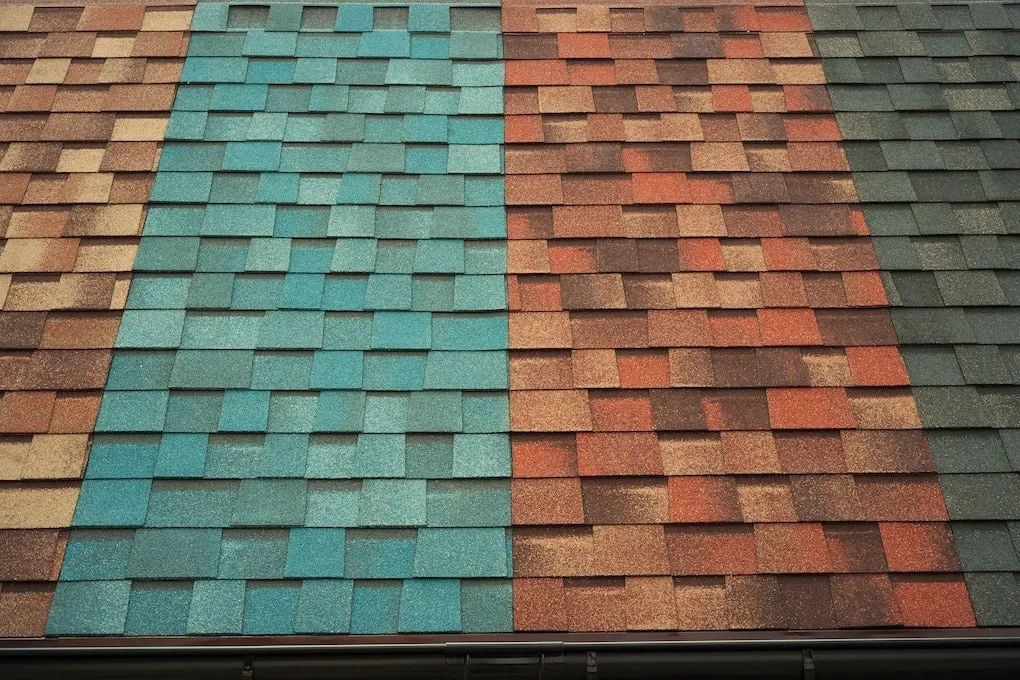
Choosing the right shingle color for a home means matching the roof tone to the home’s exterior elements, climate, architectural style, and long-term resale goals. The roof accounts for up to 40 percent of a home’s visible exterior, making it one of the most visible decisions a homeowner makes during a replacement project. Get it right and the home looks intentional, coordinated, and sharp from the street. Get it wrong and even a brand-new roof can make the house look off. Homeowners in Watkinsville, GA and around the Hiawassee, GA area have additional considerations around Georgia’s heat, seasonal landscape, and the architectural styles common to northeast Georgia neighborhoods. This article covers every major question about shingle color selection, from what is popular right now to what lasts longest, what boosts resale value, and what your siding and neighborhood should tell you before you commit.
What Color Shingles Should I Put on My House?
The shingle color you should put on your house depends on three factors: your siding color and exterior materials, your home’s architectural style, and the climate where you live. Start with the siding. Your shingles need to either complement or contrast it in a deliberate way, not clash with it accidentally.
Brick homes with red or tan tones look best paired with warm browns, charcoal gray, or slate gray shingles. White or light gray siding gives you the widest flexibility and works with nearly everything from dark charcoal to weathered wood. Neutral beige or cream siding pairs well with driftwood, tan, or brown tones. Stone exteriors, which are common on craftsman and mountain-style homes in the Hiawassee, GA area, look strong with slate gray, charcoal, or dark brown shingles that mirror the natural stone tones in the facade.
In Georgia’s warm climate, lighter shingle colors offer a practical energy benefit alongside their aesthetic value. According to the U.S. Department of Energy, light-colored roofs can reduce roof surface temperatures by 50 to 60 degrees Fahrenheit compared to dark roofs under the same sun exposure. For homeowners in Watkinsville and the surrounding Oconee County area, where air conditioning runs from April through October, that temperature reduction has a measurable impact on utility costs. Lighter grays, weathered wood tones, and tan products carry this efficiency advantage while still maintaining broad aesthetic appeal.
Should Your Roof Be Lighter or Darker Than Your House?
Your roof should generally be darker than your house siding to create visual grounding and depth. A darker roof anchors the home visually and gives the exterior a layered, intentional appearance. Homes with very dark siding can reverse this by going lighter on the roof to create contrast, but the default rule that works for most residential styles is darker roof, lighter walls.
The practical reason behind this convention is contrast. When the roof and siding are too close in value, whether both are very light or both are very dark, the home looks flat and one-dimensional from the street. A color difference between roof and siding creates a natural highlight-and-shadow effect that makes the architectural details, like trim, windows, and gables, stand out. Many of the older homes in the Watkinsville historic district and craftsman-style properties near Hiawassee follow this principle naturally: warm-toned siding with a noticeably deeper brown, charcoal, or slate roof overhead.
What Is the Most Popular Roof Color Right Now?
The most popular roof color right now is charcoal gray, with weathered wood and slate gray following close behind. GAF, one of the largest shingle manufacturers in North America with approximately 40 percent of the U.S. residential roofing market, named charcoal, weathered wood, pewter gray, and barkwood as their nationally dominant colors in their 2025 shingle color trend analysis. These four tones remain top sellers because they work across the widest range of home styles, siding colors, and neighborhood contexts.
According to IKO, a major shingle manufacturer, a survey of real estate professionals found that 91 percent agreed a color-coordinated exterior between the home and its roof increases the perceived value of a property. Charcoal accomplishes this for the most home types because of its neutral versatility. It reads as modern on a contemporary home, traditional on a colonial, and natural on a craftsman. Very few exterior schemes clash with charcoal.
For homeowners in northeast Georgia specifically, charcoal and weathered wood are both strong choices. The forested landscapes around Watkinsville and Hiawassee make earthy, dark tones look particularly natural against the surrounding environment rather than stark or out of place.
Is Class 3 or Class 4 Shingles Better?
Class 4 shingles are better than Class 3 shingles in terms of impact resistance, insurance discount eligibility, and long-term performance in storm-prone areas. Class 4 is the highest impact rating under the UL 2218 test standard, meaning these shingles withstand the impact of a 2-inch steel ball dropped from a set height without cracking. Class 3 shingles withstand a 1.75-inch ball. In Georgia, where severe thunderstorm and hail activity is regular, especially in the spring and early summer, that extra impact margin matters.
According to GAF manufacturer data, Class 4 shingles can qualify homeowners for insurance premium discounts of 10 to 25 percent depending on the carrier. Some insurers offer even more in hail-prone regions. On a standard homeowners insurance policy, those annual savings over the life of the roof can total thousands of dollars, partially or fully offsetting the modest upfront price difference between Class 3 and Class 4 products.
Class 3 shingles remain a solid choice when budget is the primary concern and the local climate sees only moderate storm activity. But for most homeowners in Oconee County and the surrounding area, the combination of improved weather performance and measurable insurance savings makes Class 4 the smarter long-term investment.
The full range of impact-resistant shingle options, including both Class 3 and Class 4 products, is available through Ridgeline’s roofing material choices page, where homeowners can compare product lines and discuss which grade makes sense for their specific location and budget.
What Color Roof Has the Best Resale Value?
The roof colors with the best resale value are charcoal gray, weathered wood, driftwood, and slate gray. These neutral tones have consistently appealed to the broadest range of buyers over time and are the colors that real estate professionals most frequently associate with coordinated, well-maintained exteriors.
According to a survey by shingle manufacturer IKO, 87 percent of real estate professionals agreed that a color-coordinated roof and home exterior increases a home’s value. GAF’s product research reports that upgrading to their Timberline HDZ architectural shingles, available in classic neutral tones, can increase a home’s value by an average of 10 percent compared to older or lower-grade roofing.
The key principle for resale is broad appeal. A neutral, timeless roof color attracts the widest pool of buyers. Bold or trendy colors like deep red, blue-gray blends, or hunter green can look striking on the right home and are gaining popularity in 2025, but they also narrow the pool of buyers who immediately connect with the home’s exterior. If resale is a priority within the next five to ten years, charcoal or weathered wood are safer investments than a bold color choice, even if the bold color looks great on your specific home right now.
What Is the 25 Percent Rule in Roofing?
The 25 percent rule in roofing states that if more than 25 percent of a roof’s surface is repaired or replaced within a 12-month period, many local building codes require that the entire roof be brought up to current code standards. This matters for color selection because when a homeowner is forced into a full replacement by this rule, it removes the option of simply patching sections and creates the opportunity to choose a new shingle color for the whole roof.
For homeowners in Watkinsville, GA who are weighing repair versus full replacement after storm damage or significant wear, the 25 percent threshold is worth discussing with a contractor before deciding on a course of action. If the repair scope is borderline, a full replacement may make more financial sense, and it opens up the choice of a new color that can update the home’s entire exterior appearance at the same time. Homeowners in Oconee County should confirm local code requirements with their contractor before any work begins.
What Color Shingles Last the Longest?
No specific shingle color lasts longer than another. The lifespan of asphalt shingles is determined by the material quality, the installation, attic ventilation, and weather exposure, not by color. A charcoal shingle and a weathered wood shingle from the same product line will perform identically in terms of lifespan under the same conditions.
That said, darker shingles in hot climates like Georgia experience more thermal stress because they absorb more solar radiation. Higher sustained surface temperatures accelerate the breakdown of the asphalt binder over time, which can contribute to earlier granule loss and brittleness compared to a lighter shingle made from the same materials. In practical terms, this effect is modest compared to the influence of ventilation and product quality, but it is a real factor in Georgia’s sustained summer heat. Lighter shingles in the gray and tan families carry a slight thermal advantage in Georgia’s climate that can contribute to marginally longer performance at the surface level.
The most important longevity factor is always attic ventilation. A poorly ventilated attic bakes shingles from below regardless of color. Proper ridge and soffit ventilation, combined with a quality architectural shingle product, is what actually delivers a 25 to 30-year roof in Georgia’s conditions.
Does Roof Color Affect Home Insurance?
Yes, roof color can affect home insurance indirectly through the shingle product’s impact resistance classification. Insurance companies do not typically offer discounts based on color alone, but the product class associated with certain shingle lines can make a meaningful difference in annual premiums.
Class 4 impact-resistant shingles, which are available in all major color families including charcoal, weathered wood, and slate gray, qualify for insurance premium discounts of 10 to 25 percent or more depending on the carrier and location. The color is irrelevant to the insurer. The certified impact resistance classification of the specific product is what determines discount eligibility.
Separately, cool roof products with high solar reflectance, which tend to be lighter colors, can reduce HVAC energy use according to U.S. Department of Energy research. Lower energy consumption does not directly reduce insurance premiums, but it does reduce the home’s overall operating cost, which is a real financial factor in long-term ownership.
Homeowners in Watkinsville replacing a roof and interested in maximizing insurance discount eligibility should confirm with their insurance agent which shingle products qualify for discounts before finalizing their material choice. A contractor holding GAF Master Elite certification can install products that qualify for extended warranties and, in combination with Class 4 classification, provide the strongest combined value for both warranty and insurance purposes. More about certified installation options is available through roof installation services in Watkinsville.
What Color Roof Fades the Least?
The roof colors that fade the least are mid-tone grays and charcoal blends. These colors have the smallest visible change over time because the granule blends used to create mid-tone gray and charcoal shingles are designed with UV-stable mineral colorants, and any fading that occurs shifts the color only slightly within the same tonal family rather than producing a dramatic bleached or washed-out appearance.
Very dark colors like black show fading most noticeably because any lightening is visible against the original deep tone. Very light colors like cream or pale gray can develop an uneven or streaked appearance over time, particularly in humid climates like Georgia’s where algae growth accelerates. Charcoal gray, weathered wood, and slate gray all occupy a middle range where any fading blends into the existing tone rather than standing out.
Algae resistance is a closely related concern in Georgia’s humid climate. Most major shingle manufacturers, including GAF, Owens Corning, and CertainTeed, offer algae-resistant products with copper-embedded granules or proprietary algae-prevention technology. GAF’s StainGuard Plus offers a 25-year algae protection warranty. Owens Corning’s StreakGuard provides 10 years. These treatments keep shingles looking cleaner and closer to their original color much longer than standard products, which is particularly important in the Watkinsville area and around Hiawassee where tree coverage and humidity create ideal conditions for algae growth.
How to Pick Shingles: A Step-by-Step Approach
Picking shingles is a process with several distinct steps, and working through them in order prevents the most common mistakes homeowners make when choosing a roofing product.
Step 1: Identify Your Fixed Exterior Elements
Your siding color, brick or stone type, trim color, and door color are fixed, at least for the purpose of this decision. The shingles need to coordinate with what already exists. Write down the primary tones in your home’s exterior: warm or cool, light or dark, earthy or neutral. This establishes the color family your shingles should come from.
Step 2: Choose Your Approach — Complement or Contrast
Decide whether you want the roof to blend in with the home’s exterior for a cohesive look, or stand out as a feature. GAF’s senior product manager advises homeowners to decide this first: “Do you want your roof to be the standout feature or do you want it to be a tying-in feature in your curb appeal?” Both are valid, but they lead to different color choices. A blending roof in a warm brown tone ties together a brick home naturally. A contrasting dark charcoal roof against white siding creates a bold, clean architectural statement.
Step 3: Consider the Georgia Climate
In Georgia’s hot, humid climate, lighter shingles carry a real energy efficiency advantage. The U.S. DOE confirms that light-colored roofs can stay 50 to 60 degrees cooler than dark roofs on a summer afternoon. If energy efficiency is a priority, this tips the scale toward lighter grays and tans over dark charcoal or near-black products. If you do want a dark shingle, choosing one with reflective granule technology available from major manufacturers mitigates some of the heat absorption penalty.
Step 4: Check HOA and Local Guidelines
Many neighborhoods in Oconee County and planned communities near Watkinsville have HOA guidelines or community standards that limit approved shingle colors. Some Georgia municipalities also have design standards for historic districts. Confirm that your preferred color is permitted before finalizing the selection.
Step 5: Use a Color Visualizer
All major shingle manufacturers offer free online tools that allow homeowners to upload a photo of their home and preview different shingle colors in place. GAF’s VirtualRemodeler, Owens Corning’s Design EyeQ, and CertainTeed’s ColorView are the three most widely used. These tools are genuinely useful for confirming a choice before committing, particularly when deciding between two similar tones that look nearly identical in a small sample but read differently at full roof scale.
Step 6: View Physical Samples in Actual Light
Color samples viewed under showroom fluorescent lighting look different from shingles installed in full Georgia sunlight. Always ask your contractor for a physical sample to hold against your home’s exterior in daylight before finalizing. The direction your home faces also matters: south-facing roofs under direct sun look different from north-facing roofs in shade. Viewing the sample in both conditions gives the most accurate read of how the installed product will actually look.
What Are the Top 3 Most Popular Shingle Colors?
The top 3 most popular shingle colors are charcoal gray, weathered wood, and slate gray. These three have been the dominant choices across most U.S. residential markets for the past decade and continue to lead in 2025. GAF’s 2025 trend report confirms charcoal, weathered wood, pewter gray, and barkwood as the top nationally selling color families due to their versatility across home styles, exterior palettes, and regional aesthetics.
Charcoal gray holds the top position because of its versatility. It works on brick, siding, and stone. It suits traditional, craftsman, colonial, and contemporary styles equally. It reads as modern without being trendy. Weathered wood is the natural choice for homes surrounded by trees or with wooden or stone accents, which describes many properties around Hiawassee, GA and in the rural areas of Oconee County. Slate gray is the most formal of the three, suiting colonial and Victorian-era homes with its clean, classic appearance.
What Shingles Do Most Roofers Use?
Most roofers use GAF, Owens Corning, and CertainTeed products, with GAF holding the largest market share. According to industry market data, GAF holds approximately 40 percent of the North American residential roofing market, and their Timberline HDZ is widely cited as the number-one selling architectural shingle in North America. Owens Corning’s Duration series and CertainTeed’s Landmark series are the other two most commonly installed products across the industry.
In the Southeast, including Georgia, GAF has a particularly strong presence. Contractors who hold GAF Master Elite certification, the top level in GAF’s contractor program, can offer extended warranty coverage including the Golden Pledge program, which provides 50 years of non-prorated material warranty plus 25 years of workmanship coverage. This level of warranty is not available through standard contractor installations and represents a meaningful upgrade in protection for homeowners who plan to stay in their home long-term.
All three manufacturers offer their flagship products across the full range of popular colors, including charcoal, weathered wood, slate gray, and barkwood. The color selection does not meaningfully differ between brands at the architectural shingle tier, though CertainTeed offers the widest color catalog overall with more than 40 color options compared to GAF’s 20-plus and Owens Corning’s 30-plus TruDefinition options.
Do Class 4 Shingles Save on Insurance?
Yes, Class 4 shingles save on insurance premiums in most cases. Class 4 is the highest impact resistance rating available for asphalt shingles under the UL 2218 standard, and most major insurance carriers recognize this rating with premium discounts. According to GAF’s published data, Class 4 shingles can qualify for insurance discounts of 10 to 25 percent depending on the carrier and location. Some insurers in particularly storm-prone regions offer discounts as high as 35 percent for certified Class 4 installations.
On a typical homeowners insurance policy in Georgia running $2,000 to $3,000 per year, a 15 percent discount saves $300 to $450 annually. Over a 25-year roof lifespan, that totals $7,500 to $11,250 in insurance savings, often exceeding the price difference between standard and Class 4 shingles many times over. Before choosing a product, confirm the specific discount available through your insurance carrier, as discount amounts vary by policy and company.
Do Insurance Companies Prefer Metal Roofs?
Insurance companies generally view metal roofs favorably because metal is more durable, fire-resistant, and less susceptible to storm damage than asphalt shingles. According to State Farm, metal roofs can provide a 10 to 25 percent reduction in energy costs, and their Class A fire rating and long lifespan reduce the risk of major claims that asphalt shingle roofs are more susceptible to after 15 to 20 years of aging.
Some insurance companies offer lower premiums for metal roofs directly, particularly standing seam systems with concealed fasteners, because they are less likely to experience the granule loss, shingle blow-off, and leak failures that generate the most common claims on asphalt roofs. A metal roof installed on a Georgia home near Hiawassee, where mountain storms produce strong wind gusts, is a more secure structure from an insurance risk perspective than an older asphalt shingle roof.
Metal roofing is available in a wide range of colors, including all the popular charcoal, weathered wood, and earth tone options that homeowners choose for asphalt shingles. The color selection for metal roofing is applied through factory-baked paint coatings that resist fading better than asphalt granule colorants over the long term. Homeowners interested in comparing metal and shingle options for their specific home can explore both product lines through metal roofing services in Watkinsville.
What Are the Top 3 Roofing Shingles?
The top 3 roofing shingles consistently recommended by professional contractors are the GAF Timberline HDZ, the Owens Corning Duration, and the CertainTeed Landmark. All three are architectural shingles in the mid-to-premium tier, offering dimensional appearance, strong warranties, and reliable performance in Georgia’s climate.
The GAF Timberline HDZ uses LayerLock technology to create a reinforced seam bond and carries an industry-first unlimited wind warranty when installed with qualifying GAF accessories by a Master Elite contractor. The Owens Corning Duration uses SureNail technology, a woven nailing strip that improves fastener holding strength and wind resistance. The CertainTeed Landmark has a strong reputation for color consistency, which matters when homeowners need to replace individual sections or add on to a home without creating a visible color mismatch between new and original shingles.
All three products are available in the full range of popular neutral colors, carry lifetime material warranties when installed by certified contractors, and perform reliably in Georgia’s hot and humid climate with proper ventilation. The decision between them ultimately comes down to contractor certification, specific warranty terms, and product availability in your market. Homeowners in Watkinsville can get a product-specific recommendation from Ridgeline based on their home’s specific design, pitch, and long-term goals.
Shingle Color by Home Style and Siding: A Quick Reference Guide
| Home Style / Siding Type | Best Shingle Colors | Colors to Avoid |
|---|---|---|
| Red or tan brick | Charcoal gray, slate gray, warm brown, cedar brown | Blue tones, bright red, orange |
| White or light gray siding | Charcoal, dark brown, slate, weathered wood, hunter green | Very light cream (too little contrast) |
| Beige or cream siding | Driftwood, sandstone, weathered wood, dark brown | Cool blue-gray (color clash) |
| Gray or blue-gray siding | Charcoal, slate gray, dark blue-gray, black | Warm browns (undertone conflict) |
| Stone or mixed exterior | Slate gray, charcoal, dark brown, weathered wood | Colors that duplicate stone tones (too flat) |
| Wood shake or cedar | Weathered wood, dark brown, hunter green, slate gray | Bright or saturated colors |
| Contemporary / modern | Charcoal, matte black, cool gray, light birchwood | Warm browns (reads as dated) |
| Colonial / traditional | Slate gray, dark brown, charcoal, weathered wood | Bold trendy colors |
Sources: IKO shingle color selection guidelines; GAF 2025 regional shingle color trend data; Owens Corning TruDefinition color coordination recommendations; industry color visualizer best practices.
What Is the Best Time of Year to Replace Shingles?
The best time of year to replace shingles is late fall, from October through December in Georgia. Demand for roofing contractors drops after the summer storm season, scheduling is more flexible, and homeowners who plan ahead can often secure better attention and project timeline than during the spring and summer rush.
Spring is the busiest time in Georgia because storm activity picks up and homeowners start projects simultaneously. Booking a spring replacement often means competing with storm damage claims for contractor availability. Fall installations miss that competition and position the home with a fresh roof heading into the winter wet season. For homeowners who have been considering a color change or upgrade along with a replacement, fall planning also gives more time to use color visualizer tools, view physical samples in different lighting, and consult with the contractor about product availability before scheduling the actual job.
Shingle installations in Georgia can proceed through early winter as long as temperatures remain above 40 degrees Fahrenheit. Below that threshold, asphalt shingles become brittle and the adhesive seal strips do not activate properly, requiring hand-sealing that adds labor time. For most of the Watkinsville area, this temperature rarely becomes a serious installation concern until January, leaving a comfortable fall installation window.
Homeowners in Watkinsville ready to schedule a replacement can review full roof replacement services and discuss timing, color options, and product selection with the team.
Frequently Asked Questions
What is the most popular shingle color in Watkinsville, GA and northeast Georgia?
The most popular shingle colors in Watkinsville, GA and throughout northeast Georgia are charcoal gray, weathered wood, and barkwood. These tones coordinate naturally with the wooded landscapes, brick exteriors, and craftsman-style homes common throughout Oconee County. Charcoal gray is the most universally versatile choice and the top-selling color nationally according to GAF’s 2025 shingle color trend data. Weathered wood is particularly fitting for homes near Watkinsville and Hiawassee that are surrounded by natural wooded settings, as it echoes the earthy tones of the surrounding landscape without looking forced or trendy.
How do I pick shingles that will look good near Hiawassee, GA?
To pick shingles that look good near Hiawassee, GA, consider the mountain setting, the architectural styles common to Towns County, and the natural materials typically used on homes in that area. Homes near Hiawassee often feature stone or wood accents, craftsman or cabin-style designs, and are surrounded by tree coverage and mountain terrain. Dark slate gray, charcoal, deep brown, and weathered wood all complement this environment well. Lighter tones like birchwood or pewter gray also work on mountain farmhouse and contemporary builds. Avoid bold or saturated colors like patriot red or bright blue in this setting, as they can look out of place against the natural landscape. If your home has a mountain-facing orientation near Lake Chatuge or the Blue Ridge terrain around Hiawassee, also factor in how much direct sun the roof receives, since sun-facing slopes in darker colors absorb significantly more heat even in a cooler mountain microclimate.
What shingle color should I choose for a brick home in Oconee County?
For a brick home in Oconee County, the best shingle color choices are charcoal gray, slate gray, warm cedar brown, or a weathered wood blend. Red brick works particularly well with charcoal gray because the contrast between the warm brick and the cool gray roof creates a classic, timeless exterior. Tan or buff-toned brick pairs naturally with warm brown or weathered wood shingles. Gray brick, which is less common but present in some newer homes in the area, matches well with slate gray or dark charcoal. The key is choosing a tone that creates visible contrast with the brick without clashing with its underlying warm or cool undertone. Bringing a physical shingle sample to hold against the brick in natural daylight before finalizing the choice is the most reliable way to confirm the combination works in Georgia’s specific outdoor light quality.
How to tell if a roofer is lying about shingle color options or product availability?
A roofer may not be telling you the truth about shingle color options if they claim that only one or two colors are available in your area, push you toward a specific color without explaining why it suits your home, or cannot show you physical samples or manufacturer product sheets that confirm the colors they are offering. All three major manufacturers, GAF, Owens Corning, and CertainTeed, offer 20 to 40-plus color options in their flagship architectural shingle lines. A contractor who says your only options are three basic colors is either working with a limited supplier relationship or steering you toward what they have in stock. A reputable contractor will offer you the full product line and walk you through color selection based on your home’s specific exterior, not just what is convenient to order. Always ask to see the manufacturer’s full color chart and request physical samples before committing to a product and color.
Does shingle color affect my energy bills in Georgia?
Yes, shingle color affects energy bills in Georgia. Darker shingles absorb more solar radiation, which raises the roof surface temperature and increases heat transfer into the attic and living space. The U.S. Department of Energy confirms that conventional dark roofs can reach surface temperatures of 150 degrees Fahrenheit or more in summer heat, while lighter reflective roofs stay significantly cooler. In Georgia’s climate, where air conditioning runs for six or more months per year, this temperature difference has a real impact on cooling costs. Choosing a lighter gray or tan shingle, or selecting a dark shingle with reflective granule technology available from GAF, Owens Corning, and CertainTeed in their cool roof product lines, can reduce the energy penalty of a darker color. Proper attic ventilation remains the single most important factor for minimizing heat buildup regardless of shingle color, and any roof replacement in the Watkinsville or Hiawassee area should include a ventilation evaluation. Asphalt roofing services in Watkinsville cover both product selection and ventilation assessment as part of the installation process.
Is there any shingle color I should avoid for resale value?
Yes, there are shingle color choices that can reduce resale appeal even on a well-maintained new roof. Highly saturated or unusual colors, such as bright red, deep blue, or stark white shingles, limit buyer appeal because they restrict future exterior color palette choices for whoever buys the home. Buyers who love a red roof are rare. Buyers who are comfortable with charcoal gray are the majority. Very bold or trendy color selections that look striking today may also feel dated in five to seven years, which is a real consideration for homeowners in markets like Watkinsville where the housing stock includes a range of traditional and transitional styles. The safest choices for long-term resale are the neutral classics: charcoal, weathered wood, driftwood, slate gray, and barkwood. These colors have demonstrated consistent buyer appeal for over a decade and are not tied to a specific design trend cycle.
Final Thoughts
Shingle color is the most visible decision you make during a roof replacement. It is also one of the most permanent, since you will live with it for 25 to 30 years. Getting it right means working through the decision systematically: start with the fixed elements of your home’s exterior, match the tone to the architectural style and climate, prioritize broad appeal if resale is on the horizon, and use every tool available, physical samples, color visualizers, and a contractor’s eye, before committing.
For Georgia homeowners, the energy efficiency angle adds a practical dimension that homeowners in cooler climates do not face. Lighter and mid-tone shingles simply perform better in sustained summer heat, and modern algae-resistant products mean you can enjoy lighter tones without worrying about the black streaking that humid conditions produce on untreated surfaces. The right color is the one that looks intentional, coordinates with your home, suits Georgia’s climate, and holds its appeal for decades. That combination points toward the neutral classics for most homes, with charcoal gray and weathered wood leading the way.
Ready to choose the right shingle color for your Georgia home? Ridgeline Roofing and Exteriors serves homeowners in Watkinsville, Hiawassee, and throughout northeast Georgia. The team provides product samples, color consultation, free inspections, and GAF-certified installation backed by manufacturer warranties. Call 770-706-ROOF or schedule online today. The right color starts with the right contractor, and the right contractor makes the whole decision easier. Visit Ridgeline’s Watkinsville roofing services to get started with your free estimate.
