 Skip to content
Understanding How Proper Roof Ventilation Protects Oconee County Homes
Homeowners throughout Echo Brook Park, Eastville, Washington Farms, and Ashland in the 30677 zip code often overlook one of their roof’s most critical components: the ventilation system. Ridge vents, soffit vents, and exhaust fans work together to create proper airflow that protects roofing materials and prevents moisture buildup. Properties along Hog Mountain Road, Mars Hill Road, and near Oconee Veterans Park face Georgia’s hot, humid climate that makes roof ventilation essential for preventing premature shingle failure and ice-and-water shield deterioration.
Our roofing crews have inspected hundreds of homes in Farmington, Elder, Bishop, and North High Shoals along High Shoals Road in the 30621 and 30645 zip codes, finding that inadequate ventilation leads to curling shingles, granule loss, and rotted decking. According to the National Roofing Contractors Association, poor ventilation can reduce asphalt shingle lifespan by up to 30 percent. Neighborhoods near the Historic Elder Mill Covered Bridge, Lane Creek Golf Course, and Providence Golf Club experience particularly high humidity levels that require balanced intake and exhaust ventilation to protect dimensional shingles and architectural shingles from heat damage.
The Science Behind Effective Roof Ventilation Systems
Natural Airflow Principles in Georgia’s Climate
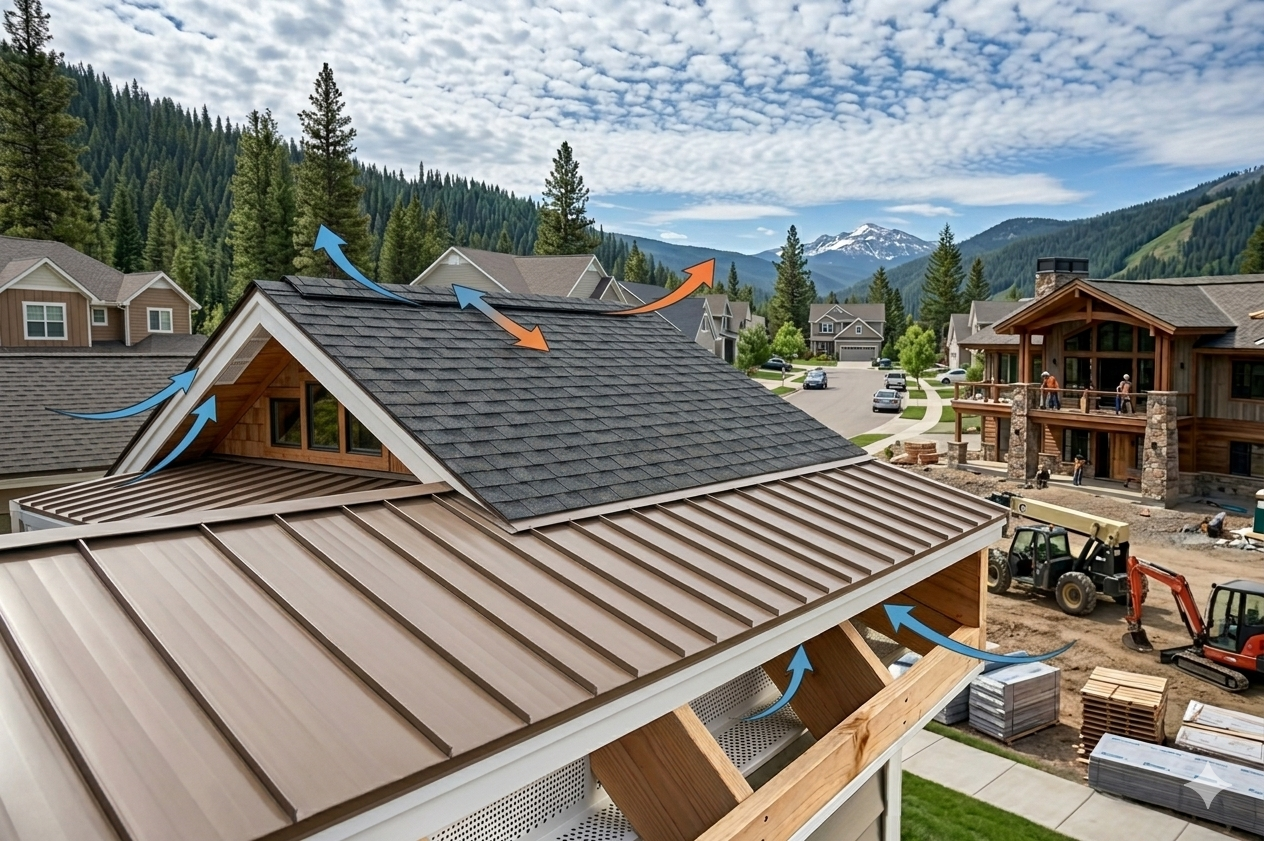
Proper roof ventilation relies on the stack effect, where cooler air enters through soffit vents while warmer air exits through ridge vents or roof vents near the peak. Properties in Poplar Springs, Covena, Heritage Park, and Woodlands along Elder Mill Road and Experiment Station Road benefit from this natural convection process that prevents heat buildup in attic spaces. Continuous ridge vents paired with adequate soffit ventilation create the airflow needed to protect OSB sheathing and plywood decking from moisture damage. Based on findings from the Asphalt Roofing Manufacturers Association, balanced ventilation systems can reduce attic temperatures by 20 to 30 degrees during Georgia’s summer months.
Intake and Exhaust Balance Requirements
Effective ventilation requires equal amounts of intake and exhaust airflow, typically calculated at one square foot of ventilation for every 300 square feet of attic space. Homes in Little Creek, Scull Shoals, Wrayswood, and Iron Horse near Lane Creek Road and McNutt Creek Road need properly sized soffit panels and fascia boards to accommodate adequate intake vents. Ridge cap shingles must be installed over continuous ridge vents to ensure proper exhaust while maintaining weather protection. The Insurance Institute data shows that homes with balanced ventilation systems experience 25 percent fewer moisture-related roof deck problems compared to poorly ventilated structures.
Ventilation Impact on Roofing Materials
Inadequate ventilation accelerates the breakdown of starter strips, synthetic underlayment, and modified bitumen membranes through excessive heat exposure. Properties throughout Maxeys, Stephens, and Apalachee along Greensboro Highway and Macon Highway require ventilation systems that prevent temperature fluctuations that cause nail pops and lifted shingles. Standing seam metal panels and TPO membrane systems also benefit from proper ventilation that prevents thermal expansion and contraction cycles. According to Verisk Aerial Imagery Analytics, 38 percent of homes nationwide have moderate to poor roof conditions, with inadequate ventilation being a contributing factor in many cases.
Preventing Moisture Problems Through Strategic Ventilation
Controlling Humidity and Condensation
Georgia’s humid climate creates conditions where warm, moist air can condense on cool roof decking surfaces without proper ventilation. Homes in Bostwick, McNutt Creek, and Rocky Branch near Salem Baptist Church and Antioch Christian Church experience particular challenges with moisture intrusion that leads to algae staining and moss growth on three-tab shingles. Pipe boots, chimney flashing, and skylight flashing areas become especially vulnerable to moisture problems when ventilation fails to remove humid air. Professional roofing services include ventilation assessments that identify problem areas where condensation threatens roof valleys and step flashing integrity.
Preventing Ice Damming in Winter Conditions
While Georgia rarely experiences severe winter weather, occasional freezes can create ice damming problems on homes with poor ventilation throughout Simonton Bridge, Colham Ferry, and Barber Creek areas. Inadequate ventilation allows heat buildup that melts snow or ice on the roof surface, creating runoff that refreezes at eaves and drip edge locations. EPDM rubber membranes and counter flashing systems provide protection, but proper ventilation prevents the temperature differentials that cause ice formation. The Verisk Roofing Realities Trend Report indicates that roof-related claims account for 25 percent of residential insurance value, with many stemming from preventable ventilation issues.
Protecting Structural Components
Moisture problems from poor ventilation affect more than just roofing materials, threatening roof pitch integrity and dormer construction throughout neighborhoods like Gratis, Campton, and Nolan Manor near Malcom Bridge Road and Hillsboro Road. Rotted fascia boards and damaged soffit panels compromise the entire roofing system’s ability to shed water effectively. Our Watkinsville roofing contractors regularly find that ventilation problems accelerate deterioration of roof gables, rakes, and eave structures that require costly repairs. Understanding roofing challenges homeowners face helps property owners recognize early signs of ventilation-related damage before major structural problems develop.
Energy Efficiency Benefits of Proper Roof Ventilation
Reducing Cooling Costs in Summer
Proper ventilation significantly reduces attic temperatures, which directly impacts cooling costs for homes throughout the 30677 zip code including Echo Brook Park, Eastville, and Northwest Woods. Ridge vents and roof vents work with soffit vents to remove superheated air that would otherwise increase air conditioning loads. Properties near Oconee County High School, Malcom Bridge Elementary, and North Oconee High benefit from ventilation systems that can reduce cooling costs by 10 to 15 percent during Georgia’s hot summers. According to the American Institute of Architects, construction spending has grown 6 percent nationally, with energy-efficient improvements like proper ventilation driving much of this investment.
Improving Indoor Air Quality
Ventilation systems prevent moisture accumulation that leads to mold and mildew problems affecting indoor air quality in homes along US 441, SR 15, and SR 53 corridors. Neighborhoods like Birchmore, Birchmore Hills, and Lake Wellbrook near Presbyterian Village require balanced airflow to prevent humidity levels that compromise living spaces below. Continuous soffit vents paired with exhaust ventilation create the air circulation needed to maintain healthy indoor environments. The Georgia roofing market, valued at $2.3 billion according to IBISWorld data, increasingly focuses on ventilation solutions that improve both roof performance and indoor air quality for homeowners.
Extending HVAC System Lifespan
Proper roof ventilation reduces the workload on heating and cooling systems by maintaining stable attic temperatures throughout homes in Welbrook Farms, Founders Grove, and Settlers Ridge near Mars Hill Road. Balanced ventilation prevents heat buildup that forces air conditioning systems to work harder, reducing equipment stress and extending operational life. Professional installation of ridge cap shingles over continuous vents ensures optimal airflow without compromising weather protection. Ridgeline Roofing and Exteriors has served Oconee County homeowners for over two decades, helping property owners understand how ventilation improvements reduce long-term energy costs while protecting roofing investments.
Common Ventilation Problems in Oconee County Homes
Blocked or Inadequate Soffit Vents
Many older homes in Danson Woods, Deerbrook, and Deerwood Estates lack sufficient soffit ventilation or have blocked intake vents that prevent proper airflow. Insulation pushed against soffit panels, debris accumulation, and damaged soffit vents create restrictions that compromise the entire ventilation system. Properties along J T Elder Road, Farmington Road, and New High Shoals Road often require soffit vent upgrades to meet current ventilation standards. Angi reports that average roof repair costs in Atlanta reach $657, with ventilation improvements being among the most cost-effective investments for preventing larger problems.
Insufficient Ridge Ventilation
Homes throughout River Farms, Riverhaven Estates, and Paradise Falls may have adequate intake ventilation but lack proper exhaust systems at roof ridges and hips. Traditional roof vents provide limited airflow compared to continuous ridge vent systems that create uniform exhaust along the entire roof peak. Properties near Westminster Christian Academy, Athens Academy, and Prince Avenue Christian School benefit from ridge vent upgrades that improve overall system performance. According to RubyHome data, 80 percent of roofing demand comes from re-roofing projects, with ventilation improvements being common upgrade requests during replacement projects.
Mixing Ventilation Types
Some properties in Elder Heights, Elder Ridge, and Salem neighborhoods have multiple exhaust vent types that create turbulence and reduce system efficiency. Mixing ridge vents with traditional roof vents or power exhaust fans can disrupt natural airflow patterns and reduce overall ventilation effectiveness. Homes along Union Church Road, Simonton Bridge Road, and Price Mill Road require ventilation system evaluations to identify conflicting vent types. How Georgia weather impacts roofs becomes more significant when ventilation systems fail to provide adequate protection against humidity and temperature extremes.
Professional Ventilation Assessment and Installation
Calculating Ventilation Requirements
Proper ventilation design requires careful calculation of attic square footage and vent placement throughout homes in Fieldstone, Fernwood, and Essex near Bishop Baptist Church and Baird’s Baptist Church areas. Professional assessments consider roof pitch, dormer configurations, and existing vent locations to determine optimal intake and exhaust requirements. Code requirements specify minimum ventilation ratios, but Georgia’s climate often benefits from enhanced ventilation that exceeds basic standards. The Asphalt Roofing Manufacturers Association notes that proper ventilation can extend shingle life by preventing the heat buildup that accelerates granule loss and cracking.
Installation Techniques and Best Practices
Professional ventilation installation involves precise cutting and sealing to maintain weather protection while maximizing airflow throughout neighborhoods like Woodridge North, Flinchum, and Phoenix. Ridge vent installation requires removing ridge cap shingles, cutting continuous slots, and installing vent materials before replacing ridge caps with proper overlaps. Soffit vent installation must account for rafter spacing and insulation clearances to ensure unobstructed airflow. According to the Cost vs Value Report, roofing improvements typically provide 60 to 70 percent return on investment, with ventilation upgrades being among the most valuable improvements for long-term roof protection.
Integration with Existing Roofing Systems
Ventilation improvements must integrate seamlessly with existing roofing materials and flashing systems in homes throughout Windy Creek, Daniell’s Plantation, and Parkside developments. Retrofit ventilation projects require careful attention to maintaining waterproof seals around new vent penetrations and ensuring compatibility with dimensional shingles or architectural shingles. Professional installation includes proper flashing around vent locations and sealing techniques that prevent moisture intrusion. Common roofing problems in older homes across Eastville and Ashland often include ventilation deficiencies that require professional assessment and upgrade recommendations.
Seasonal Ventilation Maintenance for Georgia Climate
Spring and Summer Preparation
Georgia’s hot, humid summers demand peak ventilation performance to protect homes throughout Tramlin Acres, Lake Forest, and Bent Tree areas along Moores Ford Road and Ruth Jackson Road. Spring maintenance includes cleaning debris from soffit vents, inspecting ridge vents for damage, and ensuring exhaust vents operate freely. Professional inspections identify problems with starter strips, underlayment, and flashing that could compromise ventilation effectiveness during peak summer heat. The Bureau of Labor Statistics reports median roofer wages of $50,970 annually, reflecting the specialized knowledge required for proper ventilation system maintenance and repair.
Fall Storm Season Considerations
Hurricane remnant storms and severe weather can damage ventilation components throughout Coldwater Creek, Canyon Creek, and Cedar Hills neighborhoods near Bishop Farms Parkway and Colham Ferry Road. Fall inspections focus on ridge cap integrity, soffit panel security, and vent screening that prevents debris accumulation. Storm damage to ventilation systems requires prompt repair to maintain protection during winter months when temperature differentials create condensation risks. Verisk data shows that over 50 percent of residential claims involve wind and hail damage, with ventilation components being particularly vulnerable to storm-related problems.
Winter Performance Monitoring
While Georgia winters are mild, temperature fluctuations can reveal ventilation problems in homes throughout Crystal Hills, Cumberland, and Daniel Plantation areas. Ice formation at eaves or unusual snow melting patterns indicate ventilation imbalances that require professional attention. Winter months provide opportunities to assess ventilation performance when temperature differentials make airflow patterns more visible. Homeowners near Hog Mountain Road should know about roof ventilation impacts on material longevity, particularly during seasonal temperature changes that stress roofing components.
Upgrading Ventilation During Roof Replacement Projects
Planning Ventilation Improvements
Roof replacement projects provide ideal opportunities to upgrade ventilation systems throughout neighborhoods like Gratis, Campton, and Little Creek near High Shoals Elementary and Malcom Bridge Middle School. New installations can incorporate continuous ridge vents, enhanced soffit ventilation, and properly sized exhaust systems that maximize airflow efficiency. Planning considers future needs, climate changes, and energy efficiency goals that extend beyond basic code requirements. RubyHome reports that 5 million roofs are installed annually nationwide, with ventilation upgrades being standard components of modern roofing systems.
Material Selection for Longevity
Modern ventilation materials offer improved durability and weather resistance for homes along Rocky Branch Road, Virgil Langford Road, and throughout the 30638 zip code areas. High-quality ridge vents, corrosion-resistant soffit vents, and weather-sealed roof penetrations provide decades of reliable service in Georgia’s challenging climate. Professional selection considers compatibility with specific shingle types, architectural requirements, and local weather patterns. According to IBISWorld data, Georgia’s roofing industry employs 7,055 workers across 3,244 businesses, reflecting the specialized expertise available for ventilation system design and installation.
Cost-Benefit Analysis of Ventilation Upgrades
Ventilation improvements represent relatively small investments compared to total roof replacement costs but provide significant long-term benefits for properties throughout Scull Shoals, Wrayswood, and Iron Horse areas near Oconee Veterans Park and Herman C. Michael Park. Enhanced ventilation systems reduce future repair costs, extend material life, and improve energy efficiency that provides ongoing savings. Professional assessments help homeowners understand ventilation return on investment and prioritize improvements that offer maximum protection. Roofing costs vary across Oconee County communities based on factors including ventilation requirements, with proper planning ensuring optimal value for ventilation investments.
Protecting Your Oconee County Home Investment Through Proper Ventilation
Effective roof ventilation represents one of the most important but often overlooked aspects of home protection throughout Echo Brook Park, Eastville, Washington Farms, and Ashland areas in the 30677 zip code. Proper ventilation systems prevent moisture problems, reduce energy costs, and extend roofing material life while protecting structural components from heat and humidity damage. Properties along Hog Mountain Road, Mars Hill Road, and near landmark locations like the Historic Elder Mill Covered Bridge and Lane Creek Golf Course benefit from professional ventilation assessments that identify improvement opportunities and prevent costly problems before they develop.
Our comprehensive ventilation services help homeowners in Farmington, Elder, Bishop, and throughout the 30621 and 30645 zip codes maximize their roofing investments through proper airflow design and installation. From ridge vents and soffit ventilation to complete system upgrades during roof replacement projects, professional ventilation solutions provide lasting protection against Georgia’s challenging climate conditions. Understanding ventilation requirements and maintenance needs empowers property owners to make informed decisions that protect their homes and families for decades to come.
