Understanding Ice Dam Formation in North Georgia’s Climate Conditions
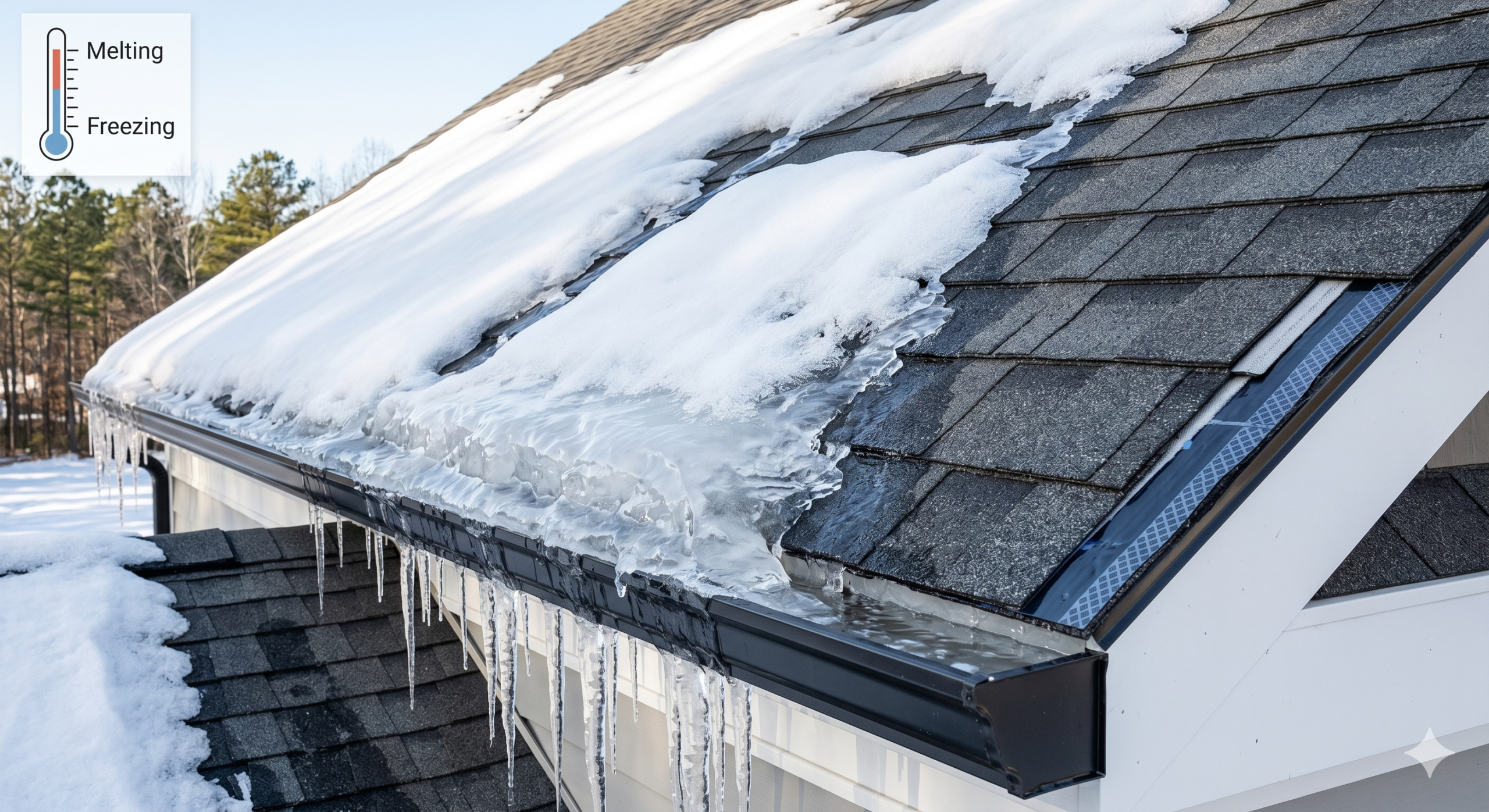
Homeowners in Echo Brook Park, Eastville, Washington Farms, and Ashland along Hog Mountain Road in the 30677 zip code often wonder if ice damming poses risks to their roofs during Georgia’s occasional winter weather. While North Georgia doesn’t experience the severe ice dam problems common in northern climates, properties near Oconee Veterans Park and throughout neighborhoods like Farmington and Elder still face potential issues when specific weather conditions align. Ice dams form when snow melts on warm roof sections and refreezes at cooler eaves, creating barriers that trap water behind them and potentially force moisture under shingles, synthetic underlayment, and ice-and-water shield membranes.
Properties throughout Bishop, North High Shoals, Poplar Springs, and Covena in the 30621 zip code experience varying ice dam risks based on roof design, insulation quality, and local microclimates near landmarks like the Historic Elder Mill Covered Bridge. The Asphalt Roofing Manufacturers Association reports that 80 percent of roofs use asphalt shingles, making proper installation of starter strips, ridge cap shingles, and adequate roof ventilation through ridge vents and soffit vents critical for preventing ice-related moisture problems. Homes near Mars Hill Road, Elder Mill Road, and High Shoals Road face particular challenges when winter storms bring snow followed by rapid temperature fluctuations that create ideal ice dam conditions.
How Temperature Cycles Create Ice Dam Conditions in Oconee County
Winter Weather Patterns Along Major Transportation Corridors
Neighborhoods along US 441, Greensboro Highway, and Experiment Station Road in communities like Heritage Park, Woodlands, and Woodridge North experience winter weather patterns that occasionally create ice dam conditions. According to ThinkHazard data from the World Bank, Georgia faces high extreme weather classifications with expected events occurring at least once in the next five years. Temperature swings from freezing overnight to warming during sunny winter days cause snow on roof surfaces to melt and refreeze at roof edges where gutters and downspouts connect to fascia boards and soffit panels.
Properties near Lane Creek, Little Creek, and Scull Shoals along Lane Creek Road and McNutt Creek Road face additional moisture challenges due to proximity to water features that increase local humidity levels. When warm attic air heats roof decking and OSB sheathing from below, snow melts and flows toward eaves where temperatures remain below freezing, forming ice barriers that backup water behind step flashing, counter flashing, and chimney flashing systems. Homes in Nolan Manor, Apalachee, and Bostwick require proper attic insulation and ventilation to minimize heat transfer through plywood decking that contributes to uneven snow melting patterns.
Roof Design Factors That Increase Ice Dam Susceptibility
Architectural features common in subdivisions like Maxeys, Stephens, and areas near Westminster Christian Academy along New High Shoals Road create conditions that increase ice dam formation potential during winter weather events. Verisk data shows that 20 percent of homes feature hip-style roofs, which typically shed snow and ice more effectively than complex rooflines with multiple roof valleys, dormers, and varying roof pitch angles. Properties with south-facing roof slopes that receive direct sunlight followed by north-facing sections that remain shaded experience differential melting that contributes to ice accumulation at roof transitions.
Complex rooflines in neighborhoods throughout the 30638 zip code near Farmington and along Hillsboro Road create multiple opportunities for ice dam formation where warm and cold roof sections meet. Inadequate sealing around pipe boots, skylight flashing, and roof vents allows warm air to escape into attic spaces, heating roof surfaces above and creating the temperature differential necessary for ice dam development. Understanding roofing challenges homeowners face in areas like Salem and near Salem Baptist Church helps property owners recognize risk factors specific to their roof design and orientation.
Preventing Ice Dam Formation Through Proper Roof Ventilation
Attic Ventilation Systems for Georgia Climate Conditions
Homes in Echo Brook Park, Washington Farms, and near Malcom Bridge Elementary require balanced ventilation systems that prevent the warm attic conditions that contribute to ice dam formation during occasional North Georgia winter storms. Proper installation of ridge vents running along roof peaks combined with adequate soffit vents at eaves creates air circulation that maintains consistent roof surface temperatures and prevents snow from melting unevenly. Properties along Malcom Bridge Road and near Oconee County High School benefit from professional ventilation assessments that ensure adequate airflow through attic spaces beneath dimensional shingles and architectural shingles.
Ventilation requirements vary based on attic size, roof slope, and local climate conditions affecting neighborhoods from Bishop Baptist Church through areas near Antioch Christian Church and along Bishop Farms Parkway. Our Watkinsville roofing contractors evaluate existing vent placement and calculate proper intake-to-exhaust ratios that prevent warm air accumulation under roof decking during winter months. Adequate ventilation also extends beyond ice dam prevention to include year-round benefits like reducing summer cooling costs and preventing moisture buildup that leads to rotted decking and compromised synthetic underlayment performance.
Insulation Standards That Minimize Heat Transfer
Properties throughout Eastville, Ashland, and neighborhoods near Providence Golf Club require proper attic insulation to prevent heat transfer through roof systems that creates conditions conducive to ice dam formation. Insufficient or improperly installed insulation allows heated interior air to warm roof surfaces above, causing snow to melt during winter weather events and refreeze at cooler roof edges where gutters attach to fascia boards. Professional insulation assessment ensures adequate R-values for North Georgia climate conditions while identifying gaps around penetrations, light fixtures, and HVAC equipment that contribute to heat loss.
Homes along J T Elder Road, Farmington Road, and near Lane Creek Golf Course benefit from comprehensive air sealing that prevents warm air infiltration into attic spaces during winter months. The Georgia regional price parity index of 94.5 compared to national averages makes investing in proper insulation and air sealing cost-effective for preventing both ice dam formation and year-round energy loss. Proper insulation installation works in conjunction with adequate roof ventilation to maintain consistent temperatures across roof surfaces covered by 3-tab shingles or metal panels.
Identifying Early Signs of Ice Dam Damage on North Georgia Roofs
Interior Warning Signs Homeowners Should Monitor
Residents in Poplar Springs, Covena, and areas near High Shoals Elementary along Hopping Road should watch for interior signs that indicate ice dam formation has compromised roof systems during winter weather events. Water stains on ceilings near exterior walls often signal that ice barriers have forced moisture under shingles and past ice-and-water shield membranes, allowing water infiltration through roof decking into interior spaces. Properties experiencing ice dam damage may also show signs of peeling paint, wallpaper bubbling, or visible moisture around windows and doors near roof lines.
Ice dams that persist long enough to cause interior damage often indicate underlying ventilation or insulation problems that affect neighborhoods from the 30645 zip code through areas near North High Shoals Town Hall along Hillsboro Road. Analyzing how Georgia weather impacts roofs helps homeowners understand the connection between ice dam formation and other moisture-related problems like moss growth, algae staining, and granule loss on asphalt shingles. Professional inspection can identify whether interior moisture results from ice dam infiltration or other roof system failures affecting flashing systems and underlayment performance.
Exterior Roof Damage Assessment Techniques
Homeowners near Heritage Park, Woodlands, and along Experiment Station Road should conduct visual roof inspections after winter weather events to identify exterior signs of ice dam formation and resulting damage. Icicles forming along roof edges don’t always indicate problems, but large ice formations combined with visible water backup behind gutters suggest ice dam conditions that could compromise drip edge installation and step flashing performance. Missing shingles, lifted shingles, or visible nail pops along roof edges often result from ice dam pressure and expansion during freeze-thaw cycles.
Properties in Butler’s Crossing area and near Presbyterian Village require careful evaluation of gutter systems and downspouts for ice damage that affects water drainage and increases future ice dam formation risk. According to Angi data, Atlanta area roof repair costs average $657, with typical ranges from $320 to $1,009 depending on damage extent and materials involved. Professional assessment identifies whether ice dam damage affects only surface shingles or extends deeper into roof decking, underlayment systems, and structural components that require more extensive repair approaches.
Material Selection Strategies for Ice Dam Resistance
Shingle Types That Perform Better in Ice Conditions
Neighborhoods throughout Nolan, Apalachee, and near University of North Georgia Oconee Campus along Bishop Parkway benefit from understanding how different roofing materials respond to ice dam conditions during North Georgia’s occasional winter storms. Architectural shingles typically outperform 3-tab shingles in ice dam situations due to their increased thickness and improved wind uplift resistance that helps prevent moisture infiltration when ice creates pressure against roof edges. According to RubyHome data citing industry sources, architectural shingles account for 33 percent of roofing projects while three-tab shingles represent 42 percent, indicating significant variation in material selection across different price points.
Metal roofing systems, including standing seam panels, offer superior ice dam resistance compared to asphalt shingle installations due to smooth surfaces that shed snow and ice more effectively and reduced vulnerability to moisture penetration. Properties near Rocky Branch Elementary and along Hog Mountain Road considering metal roofing benefit from understanding that Angi reports metal roof repairs cost an average of $1,700 in the Atlanta area, compared to $975 for asphalt shingle repairs. The enhanced durability of metal systems often justifies higher initial costs through reduced maintenance requirements and better performance during ice dam events.
Underlayment and Flashing Upgrades for Winter Protection
Homes in Little Creek, Scull Shoals, and areas near Oconee Forest Disc Golf Course require proper underlayment selection that provides enhanced moisture protection during potential ice dam conditions. Ice-and-water shield membrane installation along roof edges, in roof valleys, and around penetrations creates waterproof barriers that prevent moisture infiltration even when ice dams force water backup under shingles and standard synthetic underlayment. Professional installation ensures ice-and-water shield extends sufficiently beyond heated building areas to protect against water infiltration during the most severe ice dam conditions.
Flashing system upgrades significantly improve ice dam resistance for properties along Union Church Road, Simonton Bridge Road, and throughout neighborhoods near churches like Manna Church and The Braswell Church. Step flashing installation at wall intersections, counter flashing around chimney penetrations, and properly sealed pipe boots create moisture barriers that function even when ice creates unusual water flow patterns across roof surfaces. Understanding common roofing problems in older homes across Eastville and other established neighborhoods helps identify properties that may need flashing upgrades to handle ice dam conditions effectively.
Emergency Response When Ice Dams Form on Your Roof
Safe Ice Removal Techniques for Homeowners
Property owners in Echo Brook Park, Washington Farms, and near Oconee County Elementary along Hog Mountain Road should understand safe approaches for addressing ice dam formation when winter storms create dangerous roof conditions. Never attempt to chip ice directly from roof edges using hammers, axes, or sharp tools that can damage shingles, gutters, and flashing systems while creating personal safety hazards on slippery surfaces. Instead, homeowners can carefully remove snow from roof edges using roof rakes with extended handles that allow ground-level operation, reducing the snow load that contributes to ice dam formation.
Calcium chloride ice melt placed in nylon stockings and positioned across ice dams can create drainage channels that relieve water pressure behind ice barriers without damaging roofing materials. Avoid using rock salt or sodium chloride products that can corrode metal components like gutters, downspouts, and flashing systems while potentially staining or damaging shingles and siding materials. Professional ice removal services understand proper techniques that protect roof systems while effectively addressing ice dam formation affecting properties from Farmington through Elder and along Mars Hill Road corridors.
When to Contact Professional Roofing Services
Homeowners near Salem Baptist Church, in Bishop, and throughout the 30621 zip code should contact professional roofing services when ice dams cause visible interior leaking, create safety hazards from falling ice, or persist despite homeowner mitigation efforts. Ridgeline Roofing and Exteriors provides emergency ice dam removal and roof protection services for properties throughout Oconee County, including rapid response for situations where ice formation threatens interior damage or structural integrity. Professional assessment during ice dam events identifies underlying causes like inadequate ventilation or insulation that contribute to recurring problems.
Emergency roofing services become essential when ice dams combine with other winter storm damage affecting neighborhoods near Oconee Veterans Park, Herman C. Michael Park, and residential areas along Price Mill Road and Moores Ford Road. According to Verisk data, over 50 percent of residential claims result from wind and hail damage, with non-catastrophic weather events accounting for 25 percent of roof-related claims in 2024. Professional emergency response includes temporary protection measures that prevent additional damage while developing comprehensive repair plans that address both immediate ice dam issues and long-term prevention strategies.
Long-Term Solutions for Ice Dam Prevention in Oconee County
Roof Design Modifications That Reduce Ice Dam Risk
Properties in Woodridge North, Lane Creek, and near Monroe Golf & Country Club benefit from understanding roof design modifications that minimize ice dam formation risk during future winter weather events. Simplified rooflines with fewer roof valleys, dormers, and complex intersections reduce opportunities for ice accumulation while improving overall roof performance and longevity. Homes undergoing roof replacement or major renovations can incorporate design changes that promote better snow shedding and reduce temperature differentials across roof surfaces.
Gutter and downspout system improvements significantly impact ice dam prevention for neighborhoods throughout Maxeys, Stephens, and areas near Star Grove Farm and Fishing Creek Farms along rural road networks. Larger gutter capacities and additional downspouts improve water drainage during rapid snow melts, reducing ice formation at roof edges where water backup typically begins ice dam development. Learning what homeowners near Hog Mountain Road should know about roof replacement timing helps property owners plan design improvements that incorporate ice dam prevention strategies during natural roof replacement cycles.
Technology Solutions for Roof Temperature Management
Advanced solutions for ice dam prevention include heating cables and roof edge warming systems that maintain consistent temperatures along critical roof areas where ice typically forms. Properties near Presbyterian Homes, along Virgil Langford Road, and in neighborhoods experiencing recurring ice dam issues can benefit from professionally installed heating systems that activate automatically during winter weather conditions. These systems work most effectively when combined with proper insulation and ventilation rather than as standalone solutions for poorly performing roof systems.
Smart home technology integration allows homeowners throughout Covena, near Thankful Baptist Church, and along Colham Ferry Road to monitor attic temperatures and activate ice dam prevention systems remotely during winter storm events. Professional installation ensures heating systems integrate safely with existing electrical systems while providing effective ice dam prevention without creating fire hazards or excessive energy consumption. Understanding roofing costs vary across Oconee County communities helps homeowners budget for both immediate ice dam prevention measures and long-term roof system improvements that provide comprehensive winter weather protection.
Professional Assessment and Maintenance for North Georgia Homes
Regular professional roof inspections help homeowners throughout Echo Brook Park, Eastville, Ashland, and neighborhoods near Malcom Bridge Middle School identify and address conditions that contribute to ice dam formation before winter weather creates problems. According to Verisk aerial imagery analytics, 38 percent of homes show moderate to poor roof condition, with these properties experiencing 60 percent higher loss costs during weather events. Professional assessment evaluates insulation levels, ventilation adequacy, and flashing integrity while identifying maintenance needs that improve ice dam resistance and overall roof performance throughout North Georgia’s variable climate conditions.
Comprehensive maintenance programs for properties along Daniells Bridge Road, near Dove Creek Elementary, and throughout communities like Phoenix and Windy Creek include fall preparation services that optimize roof systems for winter weather protection. Professional maintenance addresses granule loss, curling shingles, and compromised caulking around penetrations while ensuring gutters and downspouts function properly during rapid snow melts that can contribute to ice dam formation. Scheduled inspections and maintenance help property owners from the Historic Elder Mill Covered Bridge through Barber Creek and McNutt Creek areas maintain roof systems that provide reliable protection against ice dams and other winter weather challenges affecting North Georgia homes.