Georgia Climate Challenges for Roofing Materials in Watkinsville
Homeowners throughout Echo Brook Park, Eastville, Washington Farms, and Ashland in the 30677 zip code face unique roofing challenges due to Georgia’s demanding climate conditions. The combination of intense summer heat, high humidity, severe storms, and occasional winter freezes creates a testing environment for asphalt shingles, metal panels, and synthetic underlayment systems. Properties along Hog Mountain Road, Mars Hill Road, and High Shoals Road experience temperature swings that cause expansion and contraction cycles in roofing materials, leading to premature granule loss and cracked shingles.
According to Verisk’s Roofing Realities Trend Report, over 50 percent of residential claims are driven by wind and hail damage, with Georgia’s climate contributing significantly to these statistics. Communities near the Historic Elder Mill Covered Bridge, Oconee Veterans Park, and Lane Creek Golf Course in Farmington, Elder, and Bishop areas within the 30621 zip code regularly experience weather events that test roof performance. The humid subtropical climate affects everything from ridge cap shingles to soffit vents, making material selection critical for long-term roof durability and homeowner satisfaction.
Heat and UV Impact on Common Roofing Materials
Asphalt Shingle Performance Under Georgia Sun
Properties throughout Poplar Springs, Covena, Heritage Park, and Woodlands along Elder Mill Road and Greensboro Highway experience some of the most intense UV exposure in the 30677 and 30638 zip codes. Dimensional shingles and 3-tab shingles suffer accelerated aging when exposed to Georgia’s summer temperatures that regularly exceed 95 degrees Fahrenheit. The synthetic underlayment beneath these shingles provides crucial protection, but excessive heat can cause the asphalt to become brittle and lose essential oils that maintain flexibility.
Architectural shingles installed on homes near Salem Baptist Church, Antioch Christian Church, and Bishop Baptist Church show varying performance based on their composition and color selection. According to the Asphalt Roofing Manufacturers Association, darker shingles absorb more heat, reaching surface temperatures of 160 degrees or higher during peak summer months. This thermal stress accelerates granule loss and can cause curling shingles around roof edges, particularly on south-facing slopes of homes in Woodridge North, Lane Creek, and Little Creek neighborhoods.
Metal Roofing Response to Georgia Heat
Standing seam metal roofs and metal panels on properties near Oconee County High School, Malcom Bridge Elementary, and North Oconee High demonstrate superior heat resistance compared to traditional roofing materials. Homes throughout Scull Shoals, Wrayswood, and Iron Horse subdivisions along Experiment Station Road and Malcom Bridge Road benefit from metal roofing’s reflective properties. The material’s ability to reflect solar energy rather than absorb it results in significantly cooler attic temperatures and reduced cooling costs during Georgia’s extended summer season.
However, metal roofing systems require proper installation of thermal barriers and adequate roof ventilation to prevent condensation issues during humidity spikes. Ridge vents and soffit vents become essential components for homes in the 30645 zip code around High Shoals Road, where morning dew and afternoon thunderstorms create rapid temperature and humidity changes that can challenge even high-performance metal roofing systems.
Humidity Effects on Roofing System Components
Moisture Intrusion Through Roof Assembly
Georgia’s year-round humidity levels create persistent challenges for roof decking, OSB sheathing, and plywood decking throughout communities near the Apalachee River and McNutt Creek. Homes in Maxeys, Stephens, and Apalachee areas experience humidity levels that often exceed 80 percent during summer months, creating conditions where moisture can penetrate through compromised starter strips or damaged pipe boots. The ice-and-water shield installation becomes critical in preventing moisture intrusion around roof penetrations and valley areas where water tends to concentrate.
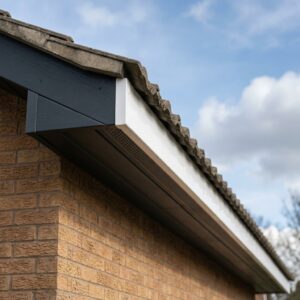
Properties along Lane Creek Road, McNutt Creek Road, and Rocky Branch Road in Bishop, North High Shoals, and Bostwick require enhanced ventilation strategies to combat humidity effects. According to Verisk Aerial Imagery Analytics, 38 percent of homes show moderate to poor roof condition, with many issues stemming from inadequate moisture management. Soffit panels and fascia boards on homes near Westminster Christian Academy and University of North Georgia Oconee Campus show accelerated deterioration when proper ventilation systems aren’t maintained.
Algae and Moss Growth Prevention
The combination of heat and humidity creates ideal conditions for algae staining and moss growth on roofs throughout Echo Brook Park, Eastville, Washington Farms, and Ashland neighborhoods. Shaded areas of roofs, particularly those facing north or protected by large trees near Oconee Forest Disc Golf Course and Providence Golf Club, develop dark streaking caused by blue-green algae. This biological growth retains moisture against shingle surfaces, accelerating the breakdown of granules and potentially shortening roof lifespan in communities along US 441 and SR 15.
Homes near Butler’s Crossing Shopping Center and along the Epps Bridge Parkway corridor in the 30677 zip code often require specialized cleaning or algae-resistant shingles to maintain roof performance. Roofing challenges homeowners face in Farmington, Elder, Bishop, and surrounding areas include managing these biological growths while preserving the integrity of architectural shingles and dimensional shingles that protect their homes.
Storm Damage Patterns Across Georgia
Wind Uplift and Shingle Performance
Severe thunderstorms moving across Oconee County create wind uplift conditions that test the adhesive properties of asphalt shingles and the structural integrity of roof decking. Properties in Heritage Park, Woodlands, Woodridge North, and Lane Creek experience wind gusts that can exceed 70 mph during severe weather events. The National Roofing Contractors Association reports that proper installation of starter strips and ridge cap shingles becomes critical in preventing wind uplift damage that leads to lifted shingles and missing shingles during storms.
Homes along High Shoals Road, Hillsboro Road, and Hopping Road in the 30621 and 30645 zip codes show distinct damage patterns based on roof pitch and exposure to prevailing winds. How Georgia weather impacts roofs becomes evident when examining nail pops and cracked shingles on properties near High Shoals Elementary and Malcom Bridge Middle School, where open terrain provides little wind protection.
Hail Damage Assessment and Material Resilience
According to the Insurance Institute data, Georgia experiences significant hail events that cause billions in roof damage annually. Communities throughout Poplar Springs, Covena, Little Creek, and Scull Shoals along Mars Hill Road and J T Elder Road regularly face hail storms that test the impact resistance of different roofing materials. Traditional 3-tab shingles show greater susceptibility to hail damage compared to impact-resistant architectural shingles designed to withstand severe weather conditions.
The Verisk Roofing Realities Trend Report indicates that roof-related claims account for 25 percent of residential claim value, with hail damage representing a significant portion of these losses. Properties near Salem Baptist Church, Antioch Christian Church, and Manna Church in Bishop, Elder, and surrounding areas demonstrate varying degrees of hail resistance based on material selection and installation quality. Step flashing, counter flashing, and chimney flashing components often require replacement following severe hail events that compromise roof system integrity.
Temperature Fluctuation Effects on Roof Systems
Expansion and Contraction Cycles
Georgia’s temperature variations between winter lows in the 20s and summer highs exceeding 95 degrees create significant expansion and contraction cycles in roofing materials. Homes throughout Echo Brook Park, Eastville, Washington Farms, and Ashland experience thermal movement that affects drip edge, roof vents, and ridge vents installed along roof perimeters. The constant movement can loosen fasteners, create gaps in flashing systems, and lead to moisture intrusion around penetrations where pipe boots and skylight flashing provide weather protection.
Metal roofing systems on properties near Oconee Veterans Park, Herman C. Michael Park, and Mathews Park require expansion joints and proper fastening techniques to accommodate thermal movement without creating stress concentrations. According to roofing industry data, proper installation accounts for up to 70 percent of long-term roof performance, making contractor selection critical for homes in Farmington, Elder, Bishop, and North High Shoals areas within the 30621 and 30638 zip codes.
Winter Freeze Impact on Roofing Components
Although Georgia winters are relatively mild, occasional freeze events create unique challenges for roofing systems throughout Oconee County communities. Properties along Greensboro Highway, Macon Highway, and Daniells Bridge Road experience temperature drops that can cause ice formation in gutters and along roof edges where inadequate insulation allows heat loss. This ice formation can lead to ice damming conditions that force water under shingles and synthetic underlayment, potentially causing rotted decking and structural damage.
Homes near Lane Creek Golf Course, Monroe Golf & Country Club, and Providence Golf Club require proper attic insulation and ventilation to prevent the heat loss that contributes to ice dam formation. Common roofing problems in older homes across Eastville and surrounding neighborhoods often stem from inadequate thermal barriers that allow conditioned air to escape through roof assemblies, creating conditions conducive to freeze-thaw damage cycles.
Material Longevity in Georgia Climate Conditions
Asphalt Shingle Lifespan Expectations
The Verisk Roofing Realities Trend Report shows that average roof lifespan in hail-prone states like Georgia averages just 15 years, significantly less than the 22-year average in western states with more stable weather patterns. Homeowners throughout Woodlands, Woodridge North, Lane Creek, and Heritage Park can expect dimensional shingles and architectural shingles to show signs of aging within 12-18 years when exposed to Georgia’s challenging climate conditions. Granule loss, curling shingles, and cracked shingles become increasingly common as roofs approach the middle of their expected service life.
Properties along Experiment Station Road, Malcom Bridge Road, and Elder Mill Road in the 30677 zip code require regular inspection of starter strips, ridge cap shingles, and roof valleys where water concentration and thermal stress accelerate wear patterns. Homeowners near Hog Mountain Road should know about roof lifespan expectations and the factors that influence material performance in Georgia’s demanding climate environment.
Premium Material Performance Advantages
Impact-resistant shingles and premium architectural shingles demonstrate superior performance in communities near Presbyterian Village, Butler’s Crossing, and the Oconee Connector Retail District where investment in higher-grade materials provides enhanced durability. These premium materials incorporate advanced granule technology and improved asphalt formulations that resist UV degradation and maintain flexibility through temperature cycles. The initial cost premium typically pays for itself through extended service life and reduced maintenance requirements over the roof’s lifespan.
According to IBISWorld data, Georgia’s roofing market represents a $2.3 billion industry, with premium materials gaining market share as homeowners recognize the value of enhanced weather resistance. Standing seam metal roofing and TPO membrane systems on properties throughout Poplar Springs, Covena, Bishop, and North High Shoals provide 40-80 year service life expectations compared to traditional asphalt systems that may require replacement every 15-20 years in Georgia’s climate.
Ventilation Requirements for Georgia Roofs
Attic Ventilation System Design
Proper ventilation becomes critical for homes throughout Little Creek, Scull Shoals, Wrayswood, and Iron Horse subdivisions where Georgia’s heat and humidity create challenging attic conditions. The combination of ridge vents, soffit vents, and roof vents must work together to create continuous airflow that removes heat and moisture from roof assemblies. Inadequate ventilation can cause OSB sheathing and plywood decking to deteriorate prematurely, while also contributing to ice damming during occasional freeze events.
Properties near Oconee County Elementary, Oconee County Primary, and Rocky Branch Elementary along Hog Mountain Road require ventilation systems designed to handle Georgia’s extended cooling season and high humidity levels. The American Institute of Architects reports 6 percent growth in construction spending, with enhanced ventilation systems becoming standard features in new construction and roof replacement projects throughout the 30677 and 30621 zip codes.
Moisture Management Strategies
Effective moisture management requires integration of ice-and-water shield, synthetic underlayment, and proper flashing details around roof penetrations and valleys. Homes throughout Maxeys, Stephens, Apalachee, and Bostwick areas experience morning dew formation that can create condensation issues without adequate ventilation. Soffit panels and fascia boards must include ventilation openings sized appropriately for Georgia’s climate demands while maintaining weather protection during severe storms.
The National Roofing Contractors Association emphasizes that moisture intrusion causes more roof damage than visible storm events, making proper vapor barrier installation and ventilation design critical for long-term roof performance. Professional roofing services throughout Elder, Bishop, Farmington, and surrounding communities focus on comprehensive moisture management strategies that address Georgia’s unique climate challenges.
Cost-Effective Material Selection for Local Conditions
Value Engineering for Georgia Climate
Homeowners throughout Echo Brook Park, Eastville, Washington Farms, and Ashland must balance initial material costs with long-term performance expectations when selecting roofing systems for Georgia’s demanding climate. According to Angi data, average roof repair costs in Atlanta reach $657, with high-end repairs reaching $5,700 for extensive damage caused by climate-related deterioration. Investing in quality synthetic underlayment, impact-resistant shingles, and proper flashing systems typically provides better value than selecting minimum-grade materials that require frequent repairs.
The Cost vs Value Report indicates that typical roof replacement ROI ranges from 60-70 percent, with asphalt roof ROI reaching 68.2 percent when materials are selected appropriately for local climate conditions. Properties along High Shoals Road, Mars Hill Road, and Elder Mill Road in the 30621 and 30645 zip codes benefit from material selections that prioritize durability over initial cost savings, particularly given Georgia’s challenging weather patterns and extended service demands.
Regional Material Availability and Performance
Georgia’s building supply network provides access to regionally-appropriate roofing materials designed specifically for southeastern climate conditions. Architectural shingles available through local suppliers incorporate algae-resistant granules and enhanced UV protection formulated for Georgia’s intense summer sun and high humidity levels. Roofing costs vary across Oconee County communities based on material selection, installation complexity, and local supply chain factors that influence project pricing.
Metal roofing options specifically designed for southeastern climates include enhanced corrosion resistance and thermal barrier coatings that improve performance in humid conditions. Properties near Westminster Christian Academy, University of North Georgia Oconee Campus, and throughout Heritage Park, Woodlands, and Woodridge North benefit from these regionally-appropriate material specifications that address local climate challenges while providing competitive pricing through established supply relationships.
Long-Term Performance Expectations
Understanding material performance expectations helps homeowners throughout Farmington, Elder, Bishop, and North High Shoals make informed decisions about roofing investments that protect their properties through Georgia’s demanding climate cycles. Ridgeline Roofing and Exteriors has observed that properly selected and installed roofing systems consistently outperform manufacturer warranties when designed specifically for Oconee County’s climate conditions. Communities along Greensboro Highway, Macon Highway, and throughout the 30677, 30621, 30638, and 30645 zip codes benefit from contractor expertise that matches material capabilities with local performance requirements.
The combination of quality materials, proper installation techniques, and regular maintenance creates roofing systems that provide reliable weather protection throughout Georgia’s challenging climate conditions. Properties near Salem Baptist Church, Antioch Christian Church, Bishop Baptist Church, and throughout Poplar Springs, Covena, Little Creek, and Scull Shoals represent successful installations where appropriate material selection and Watkinsville roofing services combine to deliver exceptional long-term performance. Homeowners investing in climate-appropriate roofing solutions protect their properties while minimizing lifecycle costs through reduced maintenance and extended service life expectations.