Skip to content
Understanding How Georgia Heat Damages Roofs in Oconee County
Georgia’s intense summer heat places tremendous stress on residential roofs throughout Oconee County, causing significant damage to homes in Echo Brook Park, Eastville, Washington Farms, and Ashland along Hog Mountain Road in the 30677 zip code. The extreme temperatures, often exceeding 95 degrees for weeks at a time, cause asphalt shingles to expand and contract repeatedly, leading to granule loss and cracked shingles that compromise the roof’s protective barrier. Properties near the Historic Elder Mill Covered Bridge and throughout Farmington experience these thermal cycles daily during Georgia’s long summer season, with synthetic underlayment and ice-and-water shield materials also suffering from prolonged heat exposure.
Homeowners in Bishop, North High Shoals, Bostwick, and Poplar Springs along High Shoals Road in the 30621 zip code often underestimate the cumulative damage that Georgia heat inflicts on their roofing systems. According to the National Roofing Contractors Association, asphalt shingles can reach surface temperatures of 150 to 190 degrees on hot days, causing dimensional shingles to become brittle and prone to wind uplift. The combination of high temperatures and Georgia’s notorious humidity creates perfect conditions for algae staining and moss growth on roof surfaces, particularly on homes near Lane Creek Golf Course and Providence Golf Club where moisture levels remain elevated. Ridge cap shingles and starter strips are especially vulnerable to heat damage, as these components face direct sun exposure throughout the day without adequate ventilation.
Thermal Expansion and Contraction Effects on Roofing Materials
How Heat Cycles Damage Asphalt Shingles
The daily thermal expansion and contraction cycles in neighborhoods like Covena, Heritage Park, and Woodlands near Mars Hill Road in the 30638 zip code cause asphalt shingles to flex repeatedly, eventually leading to material fatigue and structural failure. During peak summer temperatures, architectural shingles expand as the asphalt becomes more pliable, then contract rapidly when afternoon thunderstorms or evening temperatures provide relief. This constant movement creates stress points where step flashing meets the roof surface, causing lifted shingles and compromising the roof’s weatherproofing. Properties in Nolan Manor and Little Creek along Elder Mill Road experience this phenomenon intensely due to their exposure to afternoon sun patterns common in this part of Oconee County.
Metal Roofing and Heat-Related Issues
Metal panels and standing seam roofing systems on homes near Oconee Veterans Park, Salem Baptist Church, and Antioch Christian Church in Scull Shoals face unique challenges from Georgia’s extreme heat. While metal roofing generally handles thermal stress better than asphalt materials, the expansion and contraction can cause fasteners to loosen over time, leading to potential moisture intrusion around penetrations. Copper and aluminum roofing materials expand at different rates, creating stress where dissimilar metals connect, particularly noticeable on historic homes near Bishop Baptist Church and properties along Greensboro Highway in the 30645 zip code.
Underlayment and Decking Thermal Stress
Roof decking and OSB sheathing underneath the visible roofing materials suffer significant heat-related damage in homes throughout Wrayswood, Iron Horse, and Apalachee near the Apalachee River. According to the Asphalt Roofing Manufacturers Association, attic temperatures can reach 150 degrees or higher during Georgia summers, causing plywood decking to expand and potentially create nail pops that compromise shingle attachment. Synthetic underlayment performs better than traditional felt paper under extreme heat conditions, but properties in Maxeys and Stephens along Lane Creek Road still experience material degradation when ventilation systems fail to manage heat buildup effectively.
UV Radiation Damage to Roofing Systems
Granule Loss and Shingle Deterioration
Ultraviolet radiation from Georgia’s intense summer sun causes severe granule loss on asphalt shingles throughout Oconee County, particularly affecting homes in Echo Brook Park, Washington Farms, and Eastville near Butler’s Crossing Shopping Center. The protective granules that give shingles their color and UV resistance gradually wear away under constant sun exposure, leaving the underlying asphalt mat vulnerable to further heat damage and moisture intrusion. According to Verisk Roofing Realities Trend Report data, roofs in moderate to poor condition experience 60 percent higher loss costs, making proactive maintenance crucial for properties along US 441 and Experiment Station Road in the 30677 zip code.
Algae and Moss Growth in High Heat
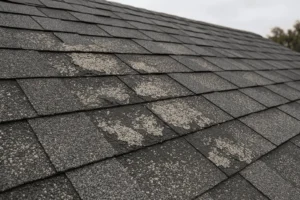
The combination of UV damage and Georgia’s high humidity creates ideal conditions for algae staining and moss growth on roofs near McNutt Creek, Rocky Branch, and Barber Creek. Damaged or missing granules provide perfect attachment points for organic growth, which retains moisture against the roof surface and accelerates deterioration of architectural shingles and ridge vents. Properties near Westminster Christian Academy and North Oconee High School often show signs of this biological growth on north-facing roof slopes where UV exposure is less intense but moisture levels remain high throughout the summer months.
Ventilation Problems Caused by Extreme Heat
Inadequate Attic Ventilation Issues
Poor attic ventilation compounds heat-related roof damage in homes throughout Farmington, Elder, and Bishop along Malcom Bridge Road, where temperatures in unventilated attic spaces can exceed 160 degrees during summer afternoons. Ridge vents and soffit vents that become blocked or inadequate for the home’s square footage allow heat to build up, causing roof decking to deteriorate and creating conditions for ice damming during occasional winter freezes. The Insurance Institute data shows that proper ventilation can reduce attic temperatures by 30 to 40 degrees, significantly extending the lifespan of roofing materials and preventing costly repairs on homes near Oconee County High School and along Hog Mountain Road.
Exhaust Fan and Vent Performance in Heat
Roof vents and pipe boots on homes in North High Shoals, Poplar Springs, and Covena near High Shoals Road often fail under extreme heat conditions, as rubber seals become brittle and crack, allowing moisture intrusion during Georgia’s frequent summer storms. Bathroom and kitchen exhaust systems that vent through the roof create additional penetration points where counter flashing and chimney flashing must withstand both thermal stress and moisture exposure. Properties near Malcom Bridge Elementary and Rocky Branch Elementary frequently experience vent-related leaks during the peak summer months when materials are most vulnerable to heat damage.
Storm Damage Amplified by Heat-Weakened Roofs
Hail Impact on Heat-Damaged Shingles
Heat-weakened asphalt shingles sustain significantly more damage during Georgia’s severe thunderstorms and hail events, particularly affecting homes in Heritage Park, Woodlands, and Woodridge North near Lane Creek and the surrounding wooded areas. According to the Verisk Roofing Realities Trend Report, over 50 percent of residential claims are driven by wind and hail damage, with heat-damaged shingles showing increased vulnerability to impact damage from even small hailstones. Properties along Mars Hill Road and Experiment Station Road that have experienced prolonged UV exposure and thermal cycling often require complete roof replacement after moderate hail events that would only cause minor damage to newer roofing systems.
Wind Uplift on Thermally Compromised Materials
Georgia’s summer thunderstorms create powerful wind uplift forces that easily defeat heat-damaged starter strips and ridge cap shingles on homes throughout Scull Shoals, Wrayswood, and Iron Horse near the county’s rural areas. Curling shingles and lifted edges, common results of thermal stress, provide wind with easy access points to penetrate under the roofing system and cause extensive damage. Based on findings from the National Roofing Contractors Association, dimensional shingles that have lost their granular coating are 70 percent more likely to experience wind uplift damage during severe weather events common along the Apalachee River corridor and properties served by Bishop Baptist Church.
Long-Term Structural Impacts of Heat Damage
Roof Decking and Framing Issues
Prolonged exposure to extreme attic temperatures causes roof decking and structural framing to expand and contract, leading to sagging roof deck conditions and compromised structural integrity in older homes throughout Echo Brook Park, Eastville, and Washington Farms. OSB sheathing and plywood decking that experiences repeated thermal stress can develop permanent deformation, creating low spots where water collects and accelerates rotted decking problems. According to IBISWorld data, Georgia’s roofing market represents 2.3 percent of the state’s GDP, reflecting the significant economic impact of heat-related roof damage on homeowners near Oconee Veterans Park and properties along Greensboro Highway in the 30677 zip code.
Fascia and Soffit Heat Damage
Fascia boards and soffit panels on homes in Ashland, Farmington, and Elder experience paint failure, warping, and rot when exposed to reflected heat from damaged or inadequate roofing materials. The combination of direct sun exposure and heat radiating from the roof surface can cause wood fascia to split and aluminum soffit panels to buckle, compromising the roof’s edge protection and creating entry points for moisture and pests. Properties near Salem Baptist Church and along Elder Mill Road often require fascia and soffit replacement alongside roofing repairs due to this heat-related deterioration that affects the entire roofing system’s performance.
Preventive Measures and Heat-Resistant Solutions
Cool Roofing Technology and Materials
Advanced roofing materials designed to reflect heat and UV radiation offer significant protection for homes in Bishop, North High Shoals, and Bostwick, where summer temperatures consistently exceed regional averages. Cool-roof technology in architectural shingles and metal roofing systems can reduce surface temperatures by 50 to 60 degrees compared to traditional materials, according to recent industry research. Properties near Westminster Christian Academy and along Hillsboro Road that have upgraded to heat-resistant roofing materials show dramatically reduced thermal stress damage and longer material lifespans, particularly when combined with proper synthetic underlayment and adequate attic ventilation systems.
Proper Installation and Maintenance Strategies
Correct installation of ice-and-water shield, drip edge, and step flashing becomes crucial for preventing heat-related damage in Oconee County’s extreme climate conditions. Regular maintenance that includes cleaning debris from soffit vents and ridge vents helps maintain proper airflow and reduces attic temperatures that contribute to roofing material degradation. Professional roof repair services that address minor issues like loose starter strips and damaged pipe boots prevent small problems from escalating into major structural damage during Georgia’s intense summer heat periods.
Insurance and Cost Considerations for Heat Damage
Coverage Limitations and Documentation
Insurance coverage for heat-related roof damage varies significantly, with many policies excluding gradual deterioration from thermal stress while covering sudden damage from storms or hail events. Homeowners in Poplar Springs, Covena, and Heritage Park should document roof conditions regularly and understand that common roof repair issues related to heat damage may require out-of-pocket expenses. According to Angi data, average roof repair costs in the Atlanta area range from $320 to $1009, with heat-related shingle damage typically falling within this range when addressed promptly before secondary damage occurs to roof decking or structural components.
Repair Costs and Replacement Economics
The Cost vs Value Report indicates that typical roof replacement provides 60 to 70 percent return on investment, making proactive replacement of heat-damaged roofing systems economically sensible for properties near Lane Creek Golf Course and Providence Golf Club. Metal roof repairs average $1700 according to regional cost data, while asphalt shingle repairs typically cost around $975 for moderate heat damage affecting multiple shingles and flashing components. Understanding signs you need roof repair helps homeowners in Woodlands, Woodridge North, and Lane Creek make informed decisions about addressing heat damage before it requires complete roof replacement.
Professional Assessment and Repair Solutions
Heat Damage Inspection Techniques
Professional roof inspections that identify heat-related damage require specialized knowledge of how thermal stress affects different roofing materials and components in Georgia’s climate. Trained inspectors examine granule loss patterns, check for curling shingles and lifted edges, and assess the condition of roof valleys where heat damage often concentrates due to metal flashing expansion. Properties in Maxeys, Stephens, and Apalachee benefit from annual inspections that catch storm damage roof repairs in Apalachee early, before heat-weakened materials fail during severe weather events common in this region of Oconee County.
Repair and Replacement Strategies
Effective heat damage repairs address both immediate visible problems and underlying issues that contribute to thermal stress, such as inadequate ventilation or failed counter flashing around penetrations. Ridgeline Roofing and Exteriors has served Oconee County homeowners in Bishop, North High Shoals, and Bostwick for over two decades, developing specialized techniques for repairing heat-damaged roofs while improving their resistance to future thermal stress. Professional repairs that include upgraded synthetic underlayment, improved ridge vents, and heat-resistant architectural shingles provide long-term protection against Georgia’s extreme summer temperatures.
Protecting Oconee County Homes from Heat-Related Roof Damage
Georgia’s extreme heat presents ongoing challenges for homeowners throughout Oconee County, from Echo Brook Park and Eastville to rural properties near the Apalachee River and Oconee River watersheds. Understanding how thermal stress affects roofing materials helps property owners in Scull Shoals, Wrayswood, Iron Horse, and Nolan Manor make informed decisions about maintenance and replacement timing. Professional evaluation of heat damage, combined with proactive repairs and heat-resistant materials, protects homes along US 441, Hog Mountain Road, and Mars Hill Road from costly structural damage and ensures reliable roof performance through Georgia’s challenging climate conditions.
Our Watkinsville roofing contractors serve properties throughout the 30677, 30621, 30638, and 30645 zip codes, providing specialized expertise in heat damage assessment and repair for homes near Westminster Christian Academy, Oconee County High School, and throughout the rural areas surrounding Elder Mill Road and Greensboro Highway. Regular professional maintenance that addresses roof leak causes in homes near the Oconee river and prevents emergency roof repair situations in Bishop helps homeowners protect their investment while maintaining comfortable, energy-efficient homes despite Georgia’s intense summer heat and humidity challenges.