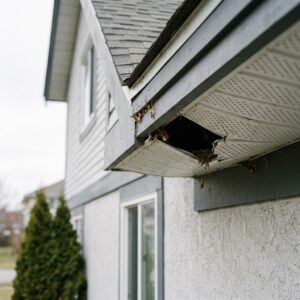
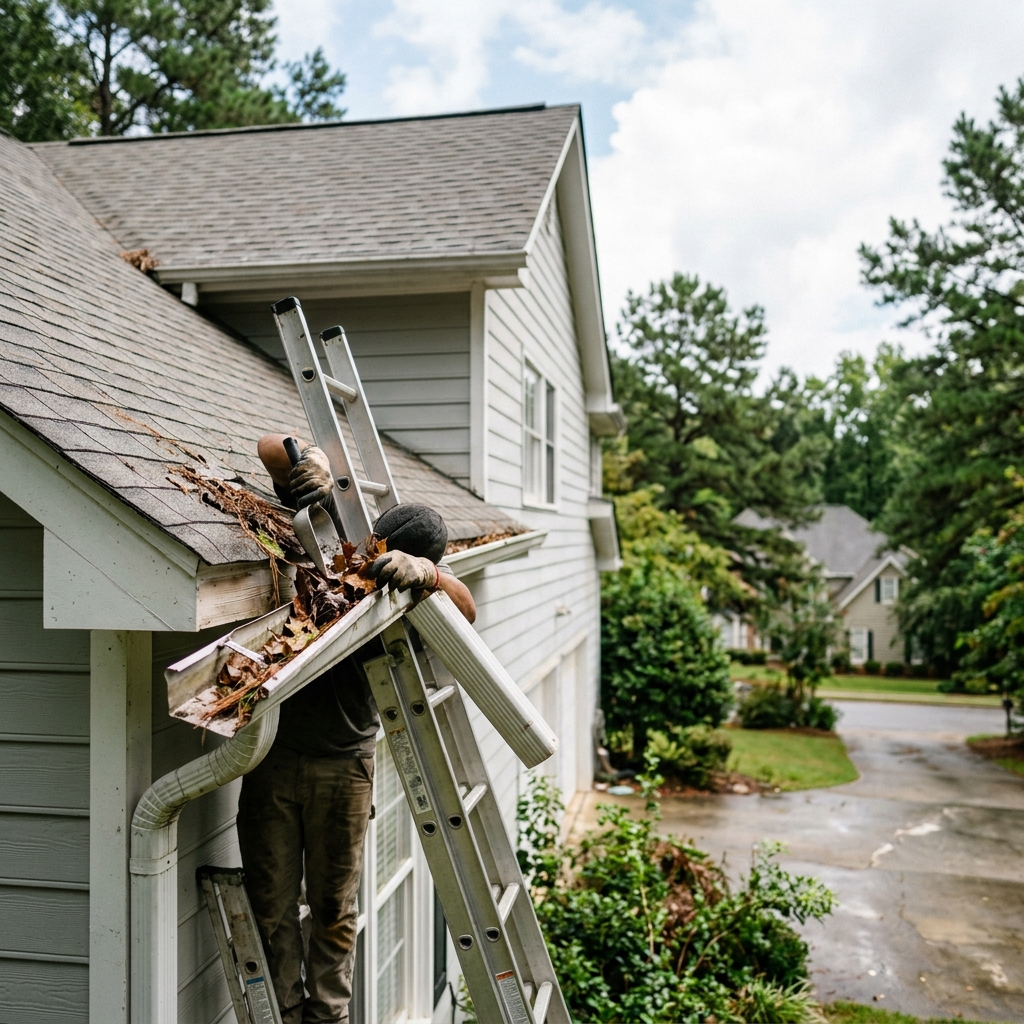
Georgia storms are among the most powerful and unpredictable weather events in the Southeast, and understanding how Georgia storms damage gutters and downspouts is essential for every homeowner in the region. From the sudden thunderstorms that roll through Athens and Watkinsville each spring to the tropical systems that push inland from the Gulf, Georgia’s storm activity puts relentless stress on residential gutter systems year after year. Gutters and downspouts are engineered to move water away from your home’s foundation, fascia, soffits, and landscaping — but when a severe storm hits, these components absorb punishment from high winds, large debris, heavy rainfall, and hail simultaneously. The result is often bent, clogged, separated, or completely detached gutter sections that leave your home exposed to water intrusion, erosion, and structural damage. Knowing what to look for after a storm — and acting quickly — is what separates minor maintenance from costly repairs down the road.
Why Georgia’s Climate Is Especially Hard on Gutter Systems
Georgia’s climate creates a uniquely hostile environment for gutters and downspouts. Unlike northern states where freeze-thaw cycles are the dominant threat, Georgia homeowners face a combination of high humidity, intense summer heat, heavy seasonal rainfall, and sudden severe storms. The state averages over 50 inches of rainfall annually in many areas, with Northeast Georgia communities like Watkinsville, Bishop, and Farmington regularly experiencing localized downpours that dump inches of rain in a matter of hours. This volume of water overwhelms systems that are even slightly clogged or misaligned, accelerating wear and creating conditions for long-term damage.
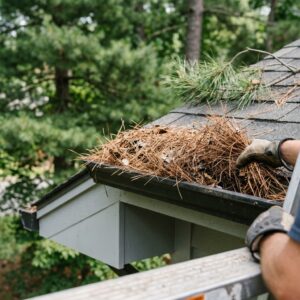
Beyond the rain itself, Georgia’s dense tree coverage plays a significant role. Areas like Wrayswood and the communities near the Oconee River are blanketed by hardwoods and pines that shed leaves, seed pods, twigs, and branches throughout the year — not just in fall. Debris accumulates quickly inside gutters, creating blockages that force water to pool, overflow, or back up under roofing materials. When a storm arrives on top of an already-compromised gutter system, the consequences escalate rapidly. Understanding the seasonal patterns of storm activity in Georgia helps homeowners stay ahead of gutter damage rather than react to it after the fact.
High Winds: The Leading Cause of Gutter Separation and Detachment
Strong wind is one of the most immediate threats to residential gutter systems during a Georgia storm. When gusts exceed 40 to 60 miles per hour — a common occurrence during severe thunderstorm warnings across Oconee County and surrounding areas — the lateral force against attached gutter sections can pull hangers loose, bend aluminum channels, and fully detach sections from the fascia board. This is especially problematic when gutters were installed with too few hangers, when the fascia itself has begun to rot, or when hangers were secured into deteriorating wood rather than solid structural material.
Wind-driven damage often goes unnoticed at first glance. Homeowners may see that gutters appear intact from the ground, but upon closer inspection — or after the next heavy rain — discover that sections have pulled away from the roofline, leaving gaps where water runs directly down the side of the home. These gaps allow water to saturate the fascia and soffit, accelerating wood rot and creating entry points for pests and moisture. If your home has experienced high winds recently, it’s worth a careful visual inspection or a professional assessment to check hanger integrity and gutter attachment along the entire roofline. You can also learn more about how wind damage affects your roof and shingles to understand the full scope of what a single storm can do to your home’s exterior system.
Heavy Rainfall and the Problem of Overloaded Gutter Capacity
Georgia storms frequently deliver rainfall at rates that exceed what standard 5-inch gutters are designed to handle. During intense convective storms — the kind that build rapidly during summer afternoons — rainfall rates can reach 2 to 4 inches per hour or more. When gutters are even partially blocked by debris, this sudden surge of water has nowhere to go but over the edge or behind the gutter channel itself. Water cascading behind gutters saturates the fascia, finds its way into the soffit, and can eventually reach the interior wall structure of your home.
Downspouts are equally vulnerable to overload during heavy rain events. A single clogged downspout can cause water to back up through the entire connected gutter run, adding significant weight and hydraulic pressure to hangers and joints. Over time — and sometimes in a single severe storm — this pressure causes joints to separate, seams to split, and gutter channels to sag or pull away from the fascia. Homeowners who have experienced shingle damage after heavy rainfall should also inspect their gutters carefully, as the same storms that damage roofing materials frequently compromise the drainage systems below.
Hail Damage to Gutters: More Than Just Cosmetic
Hail is a common occurrence during Georgia’s spring and early summer storm season, and its effects on gutters and downspouts are often underestimated. Homeowners and insurance adjusters tend to focus heavily on shingle damage during post-storm inspections, but hail strikes on gutters can be just as structurally significant. Aluminum gutters — the most common material used in residential installations — dent easily under hail impact, particularly when hailstones reach 1 inch in diameter or larger. These dents are not merely cosmetic issues.
Dented gutter channels disrupt the designed slope of the system, creating low spots where water collects and stagnates rather than flowing toward downspouts. Standing water in gutters accelerates corrosion, promotes mold and algae growth, adds weight that strains hangers, and becomes a breeding ground for mosquitoes. Downspouts that take direct hail hits can develop internal blockages from collapsed or deformed metal. Understanding how hail damage affects asphalt shingle roofs is important, but don’t overlook the gutter system in your post-storm evaluation — hail damage to drainage components is frequently covered by homeowner’s insurance and should be documented promptly.
Signs of Hail Damage on Gutters and Downspouts
- Visible dents or dimples along the front face and bottom channel of gutters
- Dented downspout sections that restrict water flow or show obvious deformation
- Chipped or missing paint on painted metal gutters, exposing bare metal to rust
- Granule accumulation in gutters from shingle surfaces struck by hail
- Separated or cracked gutter joints where hail impact forced connections apart
Falling Debris and Tree Limb Impact on Gutter Systems
Northeast Georgia’s heavy tree coverage means that falling limbs and debris during storms pose a serious and recurring threat to gutter systems. A single large branch dropped from a mature oak or pine can crush, tear, or completely remove sections of guttering along its path. Even smaller debris — clusters of twigs, pine cones, and leaves driven by high winds — compacts inside gutters and downspouts to create blockages dense enough to redirect water flow entirely. This type of impact damage is often the most visually dramatic and the easiest to identify after a storm passes.
What homeowners sometimes miss is the secondary damage that follows a debris impact. When a heavy branch strikes gutters, the force frequently transfers to the fascia board behind the gutter channel, cracking or splitting the wood even if the gutter itself appears intact. Compromised fascia is a direct pathway for water intrusion into the roof deck and attic space. If you’ve noticed storm-related damage to trees overhanging your roofline, it’s wise to address gutter and fascia condition at the same time. For related concerns, see what to expect when repairing shingle roofs after tree damage — the structural overlap between tree debris and gutter damage is significant.
How Storm-Damaged Gutters Lead to Broader Home Damage
The function of gutters and downspouts extends well beyond simply catching rain. These systems are the frontline defense against foundation erosion, basement water intrusion, landscaping damage, and exterior wall deterioration. When storm damage compromises their ability to channel water effectively, the consequences ripple outward across the entire home envelope. Water that overflows or bypasses damaged gutters pools at the foundation, where it slowly infiltrates soil and can lead to settling, cracking, and serious structural issues over time.
Interior damage is another major concern. Water that backs up behind gutters or flows down exterior walls can find its way into wall cavities, where it fosters mold growth, deteriorates insulation, and compromises structural framing. Homeowners who discover interior water stains near windows or at the base of exterior walls after a storm should consider gutter condition as a potential source alongside the roofing system. It’s also worth noting that proper roof ventilation and drainage work as an integrated system — a topic covered in depth in this guide on how roof ventilation protects homes in Oconee County.
Common Downstream Effects of Damaged Gutters
- Foundation erosion and soil saturation around the perimeter of the home
- Fascia and soffit rot from water running behind detached gutter sections
- Basement or crawl space moisture intrusion caused by misdirected water flow
- Landscape damage including erosion channels, plant loss, and soil compaction
- Exterior wall staining and paint failure from uncontrolled water runoff
- Mold and mildew development in attic or wall cavities adjacent to water entry points
What to Inspect After a Georgia Storm
Following any significant storm — whether a summer thunderstorm, a tropical weather event, or a high-wind system — a methodical inspection of your gutters and downspouts is a smart first step. From the ground, look for obvious sagging, visible separation from the fascia, crushed or dented sections, and any gutter channels that have pulled away from their hangers. Look along the entire roofline and pay particular attention to corners, downspout connections, and any areas near overhanging trees. After the next significant rainfall, watch for overflow points and water cascading down the exterior walls rather than exiting through downspout extensions.
For a more complete assessment, a professional roof and exterior inspection is the most reliable way to identify hidden damage that isn’t visible from the ground. Modern inspection technology — like the Drone Zone AI aerial assessments offered by Ridgeline Roofing & Exteriors — allows trained crews to safely document damage across the full roofline, gutters, and exterior in high resolution, without putting anyone on a ladder unnecessarily. This is especially valuable after storms involving hail or high winds, where damage patterns across the roofline often correspond directly with gutter impact locations. You can also review how to check for roof damage after a storm for a homeowner-friendly walkthrough of what to look for.
Protecting Your Gutters Before the Next Georgia Storm
Preventive maintenance is the most cost-effective approach to minimizing storm damage to gutters and downspouts. Cleaning gutters at least twice per year — ideally in late spring and again in late fall — removes the debris buildup that turns a moderate rainstorm into an overflow event. Installing gutter guards can reduce the frequency of cleanings and prevent the heaviest debris accumulation, though they are not a substitute for regular inspection. Ensuring that downspouts discharge at least four to six feet from the foundation, and that extensions are clear and properly directed, reduces the risk of foundation saturation after heavy storms.
Hanger spacing is another factor worth evaluating proactively. Industry best practices call for hangers every 24 to 36 inches along gutter runs, but many older installations have wider spacing that becomes vulnerable under storm loads. If your gutters are more than 15 to 20 years old or were installed by a previous owner without documentation of quality materials, a professional evaluation can identify weak points before a storm exploits them. Homeowners planning broader exterior improvements may also find value in reviewing roofing upgrades that add value to homes in Bishop — gutter upgrades are often part of a comprehensive exterior improvement plan that pays dividends at resale.
Schedule a Post-Storm Inspection with Ridgeline Roofing & Exteriors
If your home has been through a recent Georgia storm and you have concerns about your gutters, downspouts, roof, or exterior, Ridgeline Roofing & Exteriors is ready to help. Serving Watkinsville, Athens, Hiawassee, Bishop, Farmington, and surrounding communities throughout Northeast and North Georgia, Ridgeline brings over 20 years of experience and crews averaging 25+ years of hands-on expertise to every inspection and repair. As a GAF Master Elite Certified Contractor with Drone Zone AI inspection capabilities, the team delivers fast, precise damage assessments that give homeowners a clear picture of what a storm has done — and what it will take to make it right.
Don’t wait for a second storm to reveal what the first one started. Call Ridgeline Roofing & Exteriors at 770-706-7663 or visit ridgelineroofingcompany.com to schedule your free inspection and protect your home from the next round of Georgia weather.