Pine needles clog gutters faster than almost any other type of organic debris — and if you have pine trees on or near your property, you’ve likely dealt with the frustration firsthand. Unlike large leaves that sit on top of gutters and can be easily spotted, pine needles slide through gutter openings, pack tightly together, and form dense mats that completely block water flow. Once water can no longer drain properly, it backs up against your roofline, seeps under shingles, and pools against your foundation — creating conditions that lead to wood rot, fascia damage, interior leaks, and landscape erosion. Homes in Georgia and throughout the Southeast are especially vulnerable because of the abundance of loblolly, longleaf, and Virginia pine trees common to the region. Understanding exactly how pine needles clog gutters and what steps you can take to fix and prevent the problem is one of the smartest maintenance decisions you can make as a homeowner. This guide walks you through everything you need to know.
Why Pine Needles Are More Problematic Than Other Debris
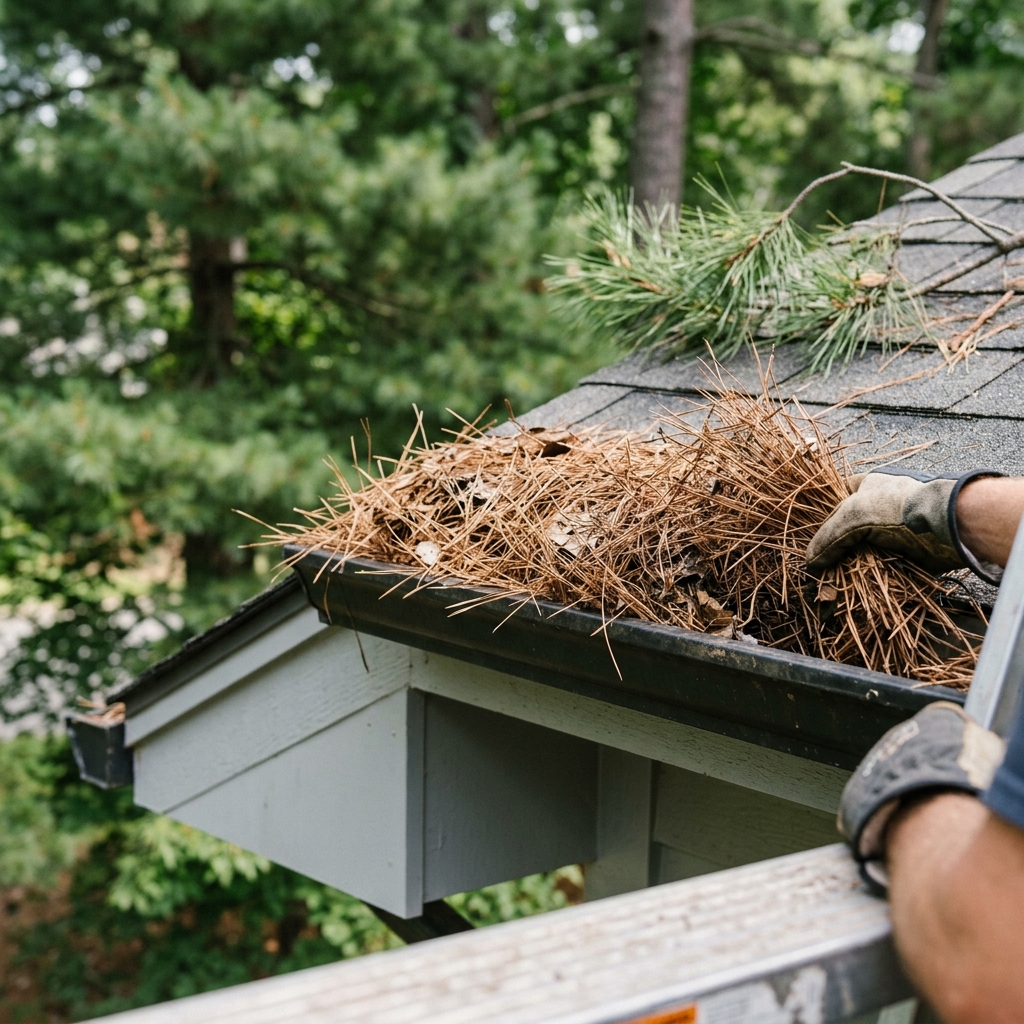
Most homeowners assume that leaves are the biggest threat to their gutters, but pine needles present a unique challenge that makes them significantly harder to manage. Their thin, elongated shape allows them to slip easily past gutter guards designed to block wider debris. Once inside the gutter channel, they interlock and compress like a woven mat, creating a barrier that water cannot penetrate. Over time, this mat becomes thicker, holds moisture, and begins to decompose — which adds weight to the gutter system and accelerates the breakdown of the gutter material itself.
Pine needles also fall year-round, not just in autumn. While deciduous trees drop their leaves in a relatively predictable seasonal window, pine trees shed needles continuously throughout all four seasons. This means that even if you clean your gutters in the fall, pine needle buildup can return within weeks. In Georgia’s warm, humid climate, decomposing pine needles also create an ideal environment for mold, algae, and moss growth, which can spread from your gutters onto your roof decking and shingles if left unaddressed. If you’ve noticed granule loss on your asphalt shingles, prolonged moisture exposure from clogged gutters may be a contributing factor worth investigating.
How Pine Needles Clog Gutters Step by Step
Stage One: Initial Accumulation
The process begins when needles fall from overhanging pine trees onto your roof. Rain and wind push them toward the roofline, where they collect in valleys, along ridges, and at the edge where the roof meets the gutters. At first, small clusters of needles enter the gutter channel and appear harmless. During this early stage, water can still flow around them and drain through the downspouts without major issues.
Stage Two: Compaction and Blockage Formation
As accumulation continues, the needles compress together under the weight of more falling debris and rainfall. The interlocking structure of pine needles means they bind tightly to one another, forming a semi-solid plug that begins restricting water flow. Partial blockages force water to slow down and pool in sections of the gutter. This standing water adds weight, begins to overflow the gutter edge, and starts dripping directly against your home’s fascia boards and foundation rather than being channeled away through the downspout system.
Stage Three: Full Blockage and Overflow
Left unaddressed, the compacted needle mat grows dense enough to completely block water movement. At this point, rainfall has nowhere to go but over the gutter lip or backward under the first course of shingles at the eave. Water intrusion at the eave is a serious concern because it can saturate the roof decking, damage the underlayment, and eventually penetrate into the attic or living spaces below. If you’re dealing with unexplained roof leaks, clogged gutters loaded with pine needles may be the source even when there’s no visible shingle damage.
Stage Four: Structural Damage to Gutters and Fascia
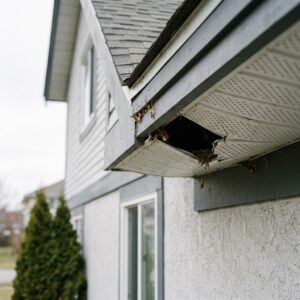
When gutters remain clogged for extended periods, the trapped moisture and added weight take a physical toll on the system itself. Gutters can pull away from the fascia, sag in the middle, or develop cracks and rust spots where standing water sits. Fascia boards — the wooden boards to which gutters are attached — are particularly vulnerable to rot and decay when consistently exposed to moisture. Replacing rotted fascia and damaged gutters is significantly more expensive than routine cleaning, which is why catching the problem early matters so much.
Warning Signs Your Gutters Are Clogged With Pine Needles
Identifying a clogged gutter before serious damage occurs gives you the best chance of resolving the problem with minimal cost and effort. Watch for these common warning signs:
- Water overflowing the gutter edge during rain — If water cascades over the sides rather than flowing through downspouts, the channel is blocked.
- Visible pine needle clumps at gutter edges — Compacted needle mats visible from the ground or from a ladder are a direct sign of blockage.
- Staining or erosion along your foundation — Water dumping in one location instead of draining away creates soil erosion and discoloration near your home’s base.
- Sagging or pulling gutters — The weight of wet, compacted pine needles causes gutters to separate from the fascia or bow downward at the center.
- Dampness or stains on interior ceilings or walls near eaves — Water backing up under shingles at the roofline can work its way inside your home.
- Pest activity near gutters — Decomposing pine needles in gutters create nesting material and standing water that attract mosquitoes, birds, and rodents.
What To Do About Pine Needle Gutter Clogs
Regular Manual Cleaning
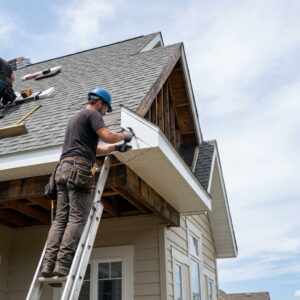
The most straightforward solution is routine gutter cleaning — ideally performed two to four times per year for homes surrounded by pine trees. Because pine needles shed year-round, a single annual cleaning is rarely sufficient. Manual cleaning involves removing compacted needle mats by hand or with a gutter scoop, flushing the channel with a garden hose, and confirming that downspouts are clear and flowing freely. Always prioritize safety when working at height — use a stable ladder, wear gloves, and consider hiring a professional if your roofline is steep or multi-story.
Gutter Guards: Do They Work Against Pine Needles?
Gutter guards are marketed as a low-maintenance solution to debris buildup, but their effectiveness against pine needles is limited and depends heavily on the guard type. Standard screen or mesh guards often allow pine needles to slide through the openings or accumulate on top and eventually sag inward. Micro-mesh guards with very fine openings do a better job of blocking needles but are not foolproof and still require periodic cleaning. Solid gutter covers with surface-tension technology may keep needles out of the channel but can allow water to overshoot the gutter in heavy downpours — a problem that’s particularly common in Georgia’s intense summer storms. No gutter guard completely eliminates maintenance, but a high-quality micro-mesh system can extend the interval between cleanings significantly.
Downspout Maintenance
Even when the main gutter channel appears clear, pine needles frequently travel down the gutter slope and pack into the downspout opening or elbow. Blocked downspouts cause the same overflow problems as a blocked channel but are harder to spot because the issue is hidden inside the pipe. Flushing downspouts with a high-pressure hose from the top is the most effective method for clearing pine needle buildup. If water doesn’t flow freely through the downspout after flushing, a plumber’s snake or downspout cleaning tool may be needed to break up the clog. Proper gutter drainage is closely connected to overall roof performance — poor drainage accelerates the very problems detailed in our guide on extending the life of your asphalt roof.
Tree Trimming and Canopy Management
One of the most effective long-term strategies for reducing pine needle buildup is managing the trees themselves. Trimming branches that hang directly over your roofline reduces the volume of needles that land on your roof and eventually find their way into your gutters. Keeping branches at least six to ten feet away from the roofline also reduces shade, which helps your roof dry faster after rain and prevents the moisture retention that encourages mold and algae growth. Tree trimming is also an important consideration for protecting against physical roof damage — overhanging limbs create additional risk during wind events. You can read more about how tree coverage affects asphalt roofs to understand the full picture.
Professional Gutter Inspection and Repair
If your gutters have been neglected for multiple seasons and pine needle buildup has led to sagging, pulling away from the fascia, or cracking, cleaning alone won’t solve the problem. A professional inspection can assess whether your gutters need to be re-secured, re-sloped, repaired, or replaced entirely. Gutters that slope incorrectly allow water and debris to pool rather than drain, which accelerates future clogging. During a professional inspection, a roofing contractor will also check the condition of the fascia boards beneath the gutters, the drip edge at the eave, and the first courses of shingles — all areas commonly affected by chronic gutter overflow. Understanding the role of components like drip edge in protecting your eave from water intrusion helps you see why gutter health and roof health are inseparable.
Preventing Future Pine Needle Clogs
Prevention is always more cost-effective than repair. To keep pine needle clogs from returning, consider combining several approaches rather than relying on a single solution:
- Schedule quarterly gutter cleaning if your property has multiple pine trees or heavy canopy coverage nearby.
- Install high-quality micro-mesh gutter guards to reduce how frequently full cleanings are needed.
- Trim overhanging pine branches annually or after major storm events.
- Inspect gutters and downspouts after heavy rain events or windstorms when debris volumes spike.
- Check gutter pitch and attachment points every year to ensure proper slope and secure fastening.
- Pair gutter maintenance with roof maintenance — clear pine needles from roof valleys and ridges before they wash into gutters during rain.
Good gutter hygiene also protects your attic and insulation. Moisture that enters your home through overflowing gutters or backed-up eaves affects your attic environment, which has downstream effects on energy efficiency and roof longevity. For a broader perspective on how your roof system components work together, our article on how attic insulation and roofing work together in Georgia provides useful context.
When To Call a Professional Roofing Contractor
While homeowners can handle routine gutter cleaning themselves, there are situations where calling a professional is the right call. If your gutters show signs of structural damage, if water has already begun intruding into your home, or if accessing your gutters safely requires working on a steep or elevated roofline, a professional contractor has the tools, training, and safety equipment to do the job correctly. A thorough inspection will also reveal whether clogged gutters have already caused damage to your roof’s lower edge — catching issues like rotted decking or compromised underlayment before they become major interior leaks.
If you’re in the Watkinsville, Athens, Bishop, or surrounding Northeast Georgia area, Ridgeline Roofing & Exteriors provides professional roof and exterior inspections, gutter assessments, and comprehensive roofing services backed by over 20 years of experience. As a GAF Master Elite Certified contractor serving homeowners throughout Oconee County and beyond, Ridgeline combines advanced Drone Zone AI inspection technology with hands-on craftsmanship to give you a complete picture of your roof’s condition. To schedule your inspection or speak with a roofing specialist, call 770-706-7663 or visit the website to request a free estimate. Don’t let pine needles turn a simple maintenance issue into a costly roof repair — staying ahead of gutter clogs is one of the simplest ways to protect your home’s long-term value.