Skip to content
Shingle Damage Creates Water Entry Points Throughout Oconee County Homes
Homeowners in Echo Brook Park, Eastville, Washington Farms, and Ashland neighborhoods throughout the 30677 zip code often discover water stains on their ceilings weeks after experiencing granule loss or curling shingles on their rooftops. Properties near Oconee County High School along Hog Mountain Road and throughout Farmington in the 30638 area face constant exposure to Georgia’s humid climate, which accelerates the deterioration of asphalt shingles and compromises the underlying synthetic underlayment. The progression from minor shingle damage to active roof leaks follows predictable patterns that affect dimensional shingles, architectural shingles, and standard 3-tab shingles across communities like Elder, Bishop, and North High Shoals along High Shoals Road.
According to Verisk’s Roofing Realities Trend Report, roof-related claims account for 25 percent of all residential claim value nationwide, with over 50 percent of these claims driven by wind and hail damage that creates the initial shingle compromises leading to water intrusion. Neighborhoods near the Historic Elder Mill Covered Bridge, Providence Golf Club, and Lane Creek Golf Course experience frequent moisture exposure that exploits damaged ridge cap shingles, lifted starter strips, and compromised step flashing around dormers and roof valleys. When ice-and-water shield protection fails beneath damaged shingles in areas like Poplar Springs, Covena, and Heritage Park near Mars Hill Road in the 30621 zip code, water penetrates the roof decking and begins the cascade of problems that homeowners notice as ceiling stains, wall discoloration, and musty odors in their living spaces.
How Weather Compromises Shingle Integrity Before Leaks Develop
Georgia Heat Cycles Weaken Shingle Materials
Summer temperatures exceeding 95 degrees create thermal expansion and contraction cycles that stress asphalt shingles throughout communities like Woodlands, Woodridge North, and Lane Creek near Experiment Station Road. Properties in Little Creek, Scull Shoals, and along Elder Mill Road in the 30677 area experience repeated heating and cooling that causes nail pops, where roofing nails work loose from the OSB sheathing beneath dimensional shingles. The Asphalt Roofing Manufacturers Association reports that these thermal cycles contribute significantly to premature aging of architectural shingles, particularly on south-facing roof slopes that receive direct sunlight throughout the day. Homes near Salem Baptist Church, Antioch Christian Church, and Bishop Baptist Church often show advanced granule loss on these exposed sections within 10-12 years of installation.
Storm Damage Creates Initial Water Entry Points
Severe thunderstorms moving through the Greensboro Highway corridor and US 441 commercial areas frequently produce wind speeds exceeding 60 mph, causing wind uplift that loosens the adhesive strips securing architectural shingles to underlying courses. Properties in Nolan Manor, Apalachee, and Bostwick neighborhoods near Malcom Bridge Road experience hail events that crack shingles and damage the protective granule surface, exposing the asphalt substrate to UV degradation. According to the National Roofing Contractors Association, hail impacts create micro-fractures in shingles that may not cause immediate leaks but compromise the material’s ability to shed water effectively. Damaged pipe boots around plumbing penetrations and cracked counter flashing around chimney bases become primary water entry points during subsequent rain events.
Humidity Accelerates Shingle Deterioration
Georgia’s year-round humidity levels create ideal conditions for algae staining and moss growth on north-facing roof sections throughout subdivisions near Westminster Christian Academy along New High Shoals Road. Homes in the 30645 zip code around High Shoals Elementary School experience moisture retention that softens asphalt shingles and allows wind to more easily lift individual shingle tabs. The combination of high humidity and temperature fluctuations accelerates the breakdown of synthetic underlayment beneath compromised shingles, particularly in areas with poor attic ventilation where soffit vents and ridge vents don’t provide adequate air circulation. Properties near Oconee Veterans Park and Herman C. Michael Park show accelerated deterioration patterns where moisture becomes trapped beneath lifted or damaged shingles.
The Progressive Path From Shingle Damage to Active Leaks
Stage One – Surface Damage Without Immediate Water Penetration
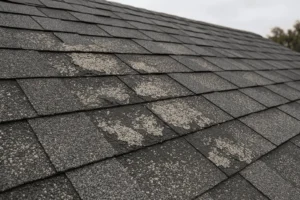
Initial shingle damage typically begins with granule loss along the edges of architectural shingles on properties throughout Echo Brook Park, Eastville, and Washington Farms near Butler’s Crossing Shopping Center. Wind-driven debris from storms moving through the Apalachee River valley causes surface scratches and gouges that expose the asphalt backing material on dimensional shingles. Homeowners in Ashland, Farmington, and Elder neighborhoods along Hog Mountain Road often overlook these early signs because the underlying synthetic underlayment continues to provide temporary water protection. However, UV exposure through damaged granule surfaces begins breaking down the asphalt compounds, making shingles increasingly brittle and susceptible to cracking during thermal expansion cycles.
Stage Two – Underlayment Compromise and Intermittent Leaks
As damaged shingles continue deteriorating on homes near North High Shoals, Poplar Springs, and Covena in the 30621 zip code, the protective ice-and-water shield beneath begins failing at critical areas like roof valleys and eave lines. Properties along Mars Hill Road and High Shoals Road experience water penetration during heavy rain events, though leaks may not be immediately apparent to homeowners. According to IBISWorld data, Georgia’s roofing industry addresses approximately $2.3 billion in annual damage, much of which stems from this intermediate stage where compromised underlayment allows water to reach the roof decking sporadically. Moisture begins affecting the OSB sheathing and plywood decking, creating conditions for wood rot that weakens the structural integrity of the roof system.
Stage Three – Structural Water Damage and Consistent Leaks
Once water penetrates the roof decking on properties throughout Heritage Park, Woodlands, and Woodridge North near Lane Creek Golf Course, homeowners typically notice ceiling stains, wall discoloration, and water dripping during rain events. The progression from surface shingle damage to structural water intrusion affects homes in Little Creek, Scull Shoals, and along Elder Mill Road where damaged step flashing around dormers and compromised drip edge systems allow water to flow behind exterior walls. Verisk Aerial Imagery Analytics indicates that 38 percent of homes nationwide have moderate to poor roof conditions, with properties in humid climates like Oconee County showing accelerated deterioration patterns. Saturated insulation loses its thermal effectiveness, and moisture creates ideal conditions for mold growth within wall cavities and attic spaces.
Common Shingle Failure Points That Lead to Water Intrusion
Ridge Cap and Hip Shingle Vulnerabilities
Ridge cap shingles along the peaks of roofs throughout Nolan Manor, Apalachee, and Bostwick neighborhoods experience the most severe weather exposure, making them prone to wind uplift and moisture penetration. Properties near Malcom Bridge Elementary and North Oconee High School often show ridge cap failures where high winds create suction that lifts these critical protective elements. The National Roofing Contractors Association reports that ridge areas account for a disproportionate number of leak sources because they represent the junction of multiple roof planes where water naturally concentrates. When ridge cap shingles become loose or damaged, water flows directly into the roof structure rather than being directed toward gutters and downspouts.
Valley Flashing and Shingle Interface Problems
Roof valleys where two roof planes intersect create high-volume water flow areas that stress both metal flashing and the adjacent architectural shingles on homes throughout the 30677 zip code near Presbyterian Village and along Experiment Station Road. Properties in Bishop, North High Shoals, and areas served by High Shoals Elementary School experience valley failures when step flashing becomes loose or when shingles don’t properly overlap the flashing materials. According to roofing industry data, valley leaks often begin as minor seepage that goes unnoticed until significant water damage occurs to the underlying roof decking and structural framing. Homes near the Historic Elder Mill Covered Bridge and throughout Elder Heights show typical valley failure patterns where debris accumulation and ice formation during winter freezes compromise the flashing systems.
Penetration Points and Flashing Failures
Plumbing vents, exhaust fans, and other roof penetrations create potential water entry points on properties throughout Poplar Springs, Covena, and Heritage Park when pipe boots deteriorate or counter flashing separates from chimney structures. Homes near Salem Baptist Church, Antioch Christian Church, and Bishop Baptist Church commonly experience penetration leaks where rubber or metal flashing materials fail after 15-20 years of weather exposure. The progression typically begins with minor separation between flashing and the surrounding shingles, allowing water to seep beneath the protective barriers. Skylight flashing represents another common failure point where the interface between glass units and surrounding dimensional shingles creates opportunities for water intrusion during driving rain events.
Environmental Factors That Accelerate Shingle-Related Leaks
Tree Coverage and Debris Accumulation
Properties throughout Woodlands, Woodridge North, and Lane Creek neighborhoods with significant tree coverage experience accelerated shingle deterioration from falling branches, accumulated organic debris, and reduced sunlight that promotes moss growth. Homes near Lane Creek Golf Course and Providence Golf Club often show damage patterns where overhanging branches scrape against architectural shingles during wind events, gradually wearing away the protective granule surface. According to the Insurance Institute for Business and Home Safety, debris accumulation in roof valleys and along eave lines creates moisture retention that accelerates the breakdown of both shingles and underlying synthetic underlayment. The combination of organic acids from decomposing leaves and extended moisture exposure creates ideal conditions for premature shingle failure.
Directional Weather Exposure Patterns
South and west-facing roof sections on homes throughout Little Creek, Scull Shoals, and areas along Elder Mill Road in the 30677 zip code experience the most intense UV exposure and thermal stress, leading to accelerated granule loss and asphalt deterioration. Properties near Oconee Veterans Park and Herman C. Michael Park show distinct wear patterns where afternoon sun exposure creates temperature differentials that stress the adhesive strips securing dimensional shingles. Wind-driven rain from storms moving up the Apalachee River valley typically approaches from the southwest, creating directional stress on shingles and flashing systems. Homes in Nolan Manor, Apalachee, and Bostwick areas experience weather patterns that concentrate moisture against specific roof sections, accelerating the progression from surface damage to water penetration.
Seasonal Temperature Variations
Winter freeze-thaw cycles affect properties throughout the 30621 and 30638 zip codes where ice formation lifts shingle edges and allows water penetration beneath protective barriers. According to ThinkHazard climate data from the World Bank, Georgia faces high extreme heat classifications with expected events occurring at least once in the next five years, creating thermal stress that compounds existing shingle damage. Homes near Westminster Christian Academy along New High Shoals Road and throughout Bishop and North High Shoals experience temperature swings that cause dimensional shingles to expand and contract, working fasteners loose from the underlying roof decking. The combination of summer heat exceeding 100 degrees and occasional winter temperatures below freezing creates conditions that accelerate the progression from minor shingle damage to significant water intrusion problems.
Professional Assessment Identifies Damage Before Major Leaks Develop
Visual Inspection Techniques for Early Detection
Professional roof assessments throughout Echo Brook Park, Eastville, and Washington Farms involve systematic evaluation of architectural shingles, ridge cap condition, and flashing integrity using specialized equipment and safety procedures. Roof repair services in the 30677 area include detailed inspection of granule loss patterns, nail pop identification, and assessment of synthetic underlayment condition where accessible. Experienced contractors identify subtle signs like slight shingle curling, minor separation at flashing interfaces, and early stages of algae staining that indicate developing problems. Properties near Butler’s Crossing and along Hog Mountain Road benefit from professional evaluation that can detect damage progression before water penetration reaches the roof decking and structural components.
Technology-Assisted Damage Documentation
Modern assessment techniques used throughout Ashland, Farmington, and Elder neighborhoods include drone photography, thermal imaging, and moisture detection equipment that identifies problem areas not visible from ground level. Contractors serving properties near Oconee County High School and along Mars Hill Road use infrared cameras to detect moisture intrusion beneath apparently intact dimensional shingles. Understanding signs your shingle roof needs repair helps homeowners in Heritage Park, Woodlands, and Woodridge North recognize when professional assessment becomes necessary. Digital documentation provides homeowners with clear evidence of damage progression and helps prioritize repair work based on the severity of water intrusion risks.
Comprehensive Evaluation Beyond Surface Damage
Professional inspections on properties throughout Poplar Springs, Covena, and areas near Lane Creek Golf Course include evaluation of attic spaces, soffit vents, ridge vents, and fascia boards to assess the complete roof system health. Ridgeline Roofing and Exteriors conducts thorough assessments that examine the relationship between surface shingle damage and underlying structural components throughout the 30621 and 30645 zip codes. Contractors identify patterns like sagging roof deck areas, compromised ice-and-water shield protection, and inadequate ventilation that contribute to accelerated shingle deterioration. Properties near Little Creek, Scull Shoals, and along Elder Mill Road benefit from comprehensive evaluation that addresses both immediate repair needs and long-term roof system performance.
Repair Strategies That Stop Water Intrusion
Targeted Shingle Replacement and Flashing Repair
Effective repair approaches for properties throughout Nolan Manor, Apalachee, and Bostwick focus on addressing both damaged architectural shingles and the underlying protective systems that prevent water penetration. Professional contractors replace compromised dimensional shingles while simultaneously evaluating and repairing step flashing, counter flashing, and pipe boot installations that may have contributed to water intrusion. According to Angi cost data for the Atlanta market, typical roof repairs average $657, with comprehensive shingle and flashing repairs ranging from $320 to $1,009 depending on the extent of damage. Projects near Malcom Bridge Elementary and throughout neighborhoods served by North Oconee High School often require coordinated replacement of surface materials and protective barriers to ensure long-term water resistance.
Preventive Treatments and System Upgrades
Modern repair techniques used on homes throughout Bishop, North High Shoals, and areas along High Shoals Road include application of advanced synthetic underlayment and upgraded ice-and-water shield protection that exceeds original installation standards. Contractors addressing shingle roof damage after georgia heat waves throughout the 30621 zip code often recommend ventilation improvements that reduce thermal stress on replacement shingles. Properties near Salem Baptist Church, Antioch Christian Church, and Bishop Baptist Church benefit from preventive treatments that address moss growth, algae staining, and debris accumulation patterns that contribute to premature shingle failure. Ridge vent installation and soffit vent upgrades create air circulation that extends the lifespan of architectural shingles and reduces moisture-related damage.
Comprehensive Water Management Solutions
Effective leak prevention on properties throughout Heritage Park, Woodlands, and Woodridge North requires attention to complete water management systems including gutters, downspouts, and drainage patterns around foundation areas. Professional repair projects near Lane Creek Golf Course and Providence Golf Club address both immediate shingle damage and underlying issues like inadequate drip edge installation or compromised fascia boards that contribute to water intrusion. Contractors evaluating wind damage to shingle roofs in farmington and throughout Oconee County often identify multiple contributing factors that require coordinated repair approaches. The combination of quality materials, proper installation techniques, and attention to detail ensures that repaired sections perform effectively throughout Georgia’s challenging weather conditions.
Long-Term Protection Through Proper Maintenance
Regular Inspection and Cleaning Protocols
Homeowners throughout Little Creek, Scull Shoals, and areas along Elder Mill Road in the 30677 zip code can extend shingle life and prevent leak development through consistent maintenance practices that address debris accumulation and early damage signs. Seasonal cleaning of gutters, removal of organic debris from roof valleys, and trimming of overhanging branches reduces stress on dimensional shingles and flashing systems. Professional maintenance services identify developing problems like loose ridge cap shingles, minor granule loss, and beginning separation at penetration points before these issues progress to water intrusion. Properties near the Historic Elder Mill Covered Bridge and throughout Elder Heights benefit from maintenance protocols that address both immediate concerns and long-term roof system health.
Proactive Replacement of Vulnerable Components
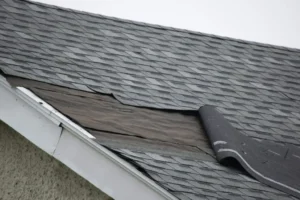
Strategic replacement of high-wear components like pipe boots, step flashing, and ridge cap shingles extends overall roof life on properties throughout Echo Brook Park, Eastville, and Washington Farms near Butler’s Crossing. Understanding missing shingles and what they mean for your roof helps homeowners recognize when individual component replacement prevents larger system failures. According to the Cost vs Value Report, roof maintenance and strategic repairs provide 60-70 percent return on investment through extended system life and prevented water damage. Homeowners near Oconee Veterans Park and Herman C. Michael Park who address minor issues promptly avoid the cascading damage that occurs when small problems progress to structural water intrusion.
System Upgrades That Improve Weather Resistance
Modern upgrade options available to homeowners throughout Ashland, Farmington, and Elder neighborhoods include impact-resistant shingles, enhanced underlayment systems, and improved ventilation that addresses Georgia’s challenging climate conditions. Properties along Hog Mountain Road and near Oconee County High School benefit from upgrade projects that incorporate lessons learned from recent storm damage and changing weather patterns. Watkinsville roofing contractors recommend system improvements based on individual property exposure, existing damage patterns, and homeowner budget considerations. Investment in quality materials and professional installation creates roof systems that resist the environmental factors leading to shingle damage and water intrusion throughout Oconee County’s diverse neighborhoods.
Professional Solutions Protect Oconee County Properties
The relationship between shingle damage and roof leaks affects thousands of properties throughout Poplar Springs, Covena, Heritage Park, and areas near Westminster Christian Academy, where Georgia’s climate creates ongoing challenges for architectural shingles and protective underlayment systems. According to Verisk data, homes with moderate to poor roof conditions experience 60 percent higher loss costs, making proactive attention to shingle damage a critical investment for homeowners throughout the 30621, 30638, and 30645 zip codes. Professional contractors understand the progression from surface granule loss to structural water damage and provide targeted solutions that address both immediate concerns and long-term roof system performance. Considering shingle roof repair costs in the context of prevented water damage demonstrates the value of addressing problems before they progress to major structural issues.
Homeowners throughout Woodlands, Woodridge North, Lane Creek, and properties near Lane Creek Golf Course and Providence Golf Club benefit from working with experienced contractors who understand local weather patterns, common failure modes, and effective repair techniques for Georgia’s challenging environment. The combination of quality materials, proper installation methods, and ongoing maintenance creates roof systems that resist the environmental factors leading to water intrusion throughout communities along Mars Hill Road, High Shoals Road, and Elder Mill Road. Professional assessment and timely repair of shingle damage prevents the costly consequences of water penetration while protecting both property value and family safety throughout Nolan Manor, Apalachee, Bostwick, and all areas served by local schools, churches, and community facilities in Oconee County.