Choosing the right siding color for your home is one of the most impactful exterior decisions you will make as a homeowner. The color you select affects curb appeal, perceived home value, neighborhood harmony, and even how your home handles heat and light. To choose the right siding color, start by evaluating your home’s fixed elements — roof color, stone or brick accents, window trim, and landscaping — then factor in your neighborhood’s aesthetic, the architectural style of your home, and the climate in your region. From there, test your top choices against natural light at different times of day before committing. This guide walks you through every consideration you need to make a confident, lasting decision, whether you’re replacing worn siding, updating your home’s look, or building new construction in Georgia’s varied landscape. The right color does far more than look good — it ties your entire exterior together and protects your investment for years to come.
Why Siding Color Matters More Than You Think
Most homeowners underestimate how significantly siding color shapes the way a home reads from the street. A well-chosen color makes architectural details pop, complements surrounding trees and landscaping, and communicates a sense of care and quality. The wrong color, on the other hand, can make a home feel dated, clash with permanent features, or stand out in ways that hurt rather than help resale value. According to real estate research, exterior color choices — including siding — directly influence buyer perception and first impressions. For homeowners in communities like Watkinsville, Athens, Bishop, and surrounding Northeast Georgia neighborhoods, where traditional architectural styles and natural surroundings are common, the choice carries even more weight.
Beyond aesthetics, siding color plays a practical role. Lighter colors reflect more heat, which can be advantageous in Georgia’s hot, humid summers. Darker colors absorb heat but can offer a bold, grounded look that works beautifully with certain home styles and wooded settings. Understanding both dimensions — visual and functional — helps you arrive at a choice that works year-round, not just at first glance.
Start With Your Home’s Fixed Elements
Before you explore color swatches, take inventory of the elements on your home that aren’t changing. These fixed features form the foundation of your exterior color palette and must coordinate with whatever siding color you choose.
Roof Color
Your roof is one of the most visible components of your home’s exterior. If you have a warm-toned roof — think brown, tan, or terracotta-inflected shingles — you’ll want siding that complements those undertones. Cooler-toned roofs in gray or charcoal pair well with blues, greens, whites, and cool neutrals. Mismatching your siding undertones with your roof creates visual friction that no trim color can fix. If you’re also planning a roofing upgrade, this is a great opportunity to coordinate both decisions from the start. Our guide on how to choose the right shingle color for a home can help you think through both choices together.
Brick, Stone, and Masonry Accents
If your home has a brick chimney, stone foundation, or masonry accents, those tones are non-negotiable anchors for your siding color. Pull the dominant and secondary tones from the masonry and use them to guide your siding and trim selections. A common mistake is choosing a siding color in isolation, then realizing it clashes with existing stonework.
Windows, Doors, and Trim
White and off-white trim work with nearly every siding color and remain the most popular choice nationally. However, dark trim in charcoal, black, or deep forest green has surged in popularity for homes with craftsman, farmhouse, or contemporary styling. Your front door is a focal point — use it as an accent opportunity that complements, rather than matches, the siding.
Consider Your Home’s Architectural Style
Architectural style sets expectations for color. Traditional colonial and cape cod homes often look most polished in classic whites, creamy neutrals, soft blues, and muted greens with crisp white trim. Craftsman bungalows call for earthy tones — sage green, warm brown, mustard yellow, or deep red — that emphasize handcrafted character. Farmhouse styles shine in white, warm gray, or black-and-white combinations. Contemporary and modern homes support bold, high-contrast palettes including deep charcoal, slate, or even navy with minimalist trim. Understanding your home’s architectural language before choosing a color ensures that your selection feels intentional rather than arbitrary.
In Georgia’s rural and semi-rural communities, log cabin construction and timber frame homes present their own aesthetic language. If your home features natural wood elements or is a custom build with rustic character, earthy siding tones — forest green, barn red, weathered gray — tend to integrate beautifully with wooded surroundings and natural materials.
Evaluate Your Neighborhood and HOA Guidelines
Your color choice doesn’t exist in a vacuum. Drive through your neighborhood and observe the dominant color palette on surrounding homes. You don’t need to match your neighbors exactly, but dramatic departures can create visual discord that affects both community harmony and resale appeal. In many planned communities and HOA-governed neighborhoods, approved color palettes are already defined. Check with your homeowners association before purchasing materials, as violations can result in required repaints at your expense. Homes in established Georgia communities like North High Shoals, Country Club Estates, and Washington Farms often have specific guidelines worth reviewing before you commit.
Factor in Georgia’s Climate and Sun Exposure
Color choice has real-world implications for how your home manages heat. In Georgia’s hot and humid climate, lighter siding colors — whites, light grays, soft yellows — reflect solar radiation and can contribute to slightly lower exterior surface temperatures. This is particularly relevant for south- and west-facing walls that receive intense afternoon sun during the summer months. Darker colors, while bold and visually appealing, absorb more heat and may accelerate weathering on certain siding materials over time.
Additionally, consider how your chosen color will look against Georgia’s lush greenery in summer versus the bare, gray winter landscape. A color that harmonizes beautifully with full foliage may feel stark or heavy during leafless months. Testing your choices across seasons — even by looking at your home in photos taken at different times of year — helps you account for this shift.
How to Test Siding Colors Before You Commit
One of the most common and costly mistakes homeowners make is choosing a siding color from a small sample card viewed indoors under artificial lighting. Color behaves dramatically differently in natural light, and it shifts throughout the day as sun angle and intensity change. Here’s how to test your selections properly before committing to a full installation:
- Order large physical samples and attach them directly to your home’s exterior in the area where siding will be installed.
- Observe the samples at multiple times of day — morning, midday, and evening — as well as on both sunny and overcast days.
- Step back to the street and evaluate the samples from the perspective of a passerby, not just up close.
- Use digital visualization tools offered by major siding manufacturers, which let you upload a photo of your home and experiment with color overlays.
- Compare against your roof and trim simultaneously rather than evaluating the siding color in isolation.
Taking this extra step prevents expensive regrets and ensures that the color you choose looks as good in real life as it did in the showroom.
Popular Siding Color Trends and Timeless Classics
Trending Now
Today’s exterior design trends favor muted, sophisticated tones over bright, saturated colors. Warm gray and greige combinations are widely popular, offering a neutral foundation that works across multiple architectural styles. Deep navy and slate blue have seen significant growth, particularly for craftsman and coastal-influenced homes. Black and charcoal exteriors are bold but increasingly mainstream, especially paired with natural wood accents. Sage and olive greens are surging in popularity for homes in wooded or rural settings, where they feel connected to the surrounding landscape.
Timeless Choices That Hold Value
Classic white and off-white siding remains the most universally safe choice for resale value and curb appeal. Soft gray tones are similarly versatile and have replaced beige as the go-to neutral for many buyers. Warm beige and tan still perform well in traditional neighborhoods and pair easily with brick and stone accents common in Georgia homes. These colors don’t generate the same excitement as bolder choices, but they rarely alienate buyers and age gracefully over time.
Coordinating Siding Color With Trim and Accent Colors
A complete exterior color scheme typically consists of three components: the siding (body) color, the trim color, and one or two accent colors used on the front door, shutters, or decorative details. The most effective combinations use contrast purposefully. A mid-tone siding color paired with white trim and a bold front door accent creates a layered, polished look. A darker siding body with slightly lighter trim maintains depth without losing definition. Avoid choosing trim and siding colors so close in value that they visually merge — the result is a flat, undefined exterior that lacks dimension and curb appeal.
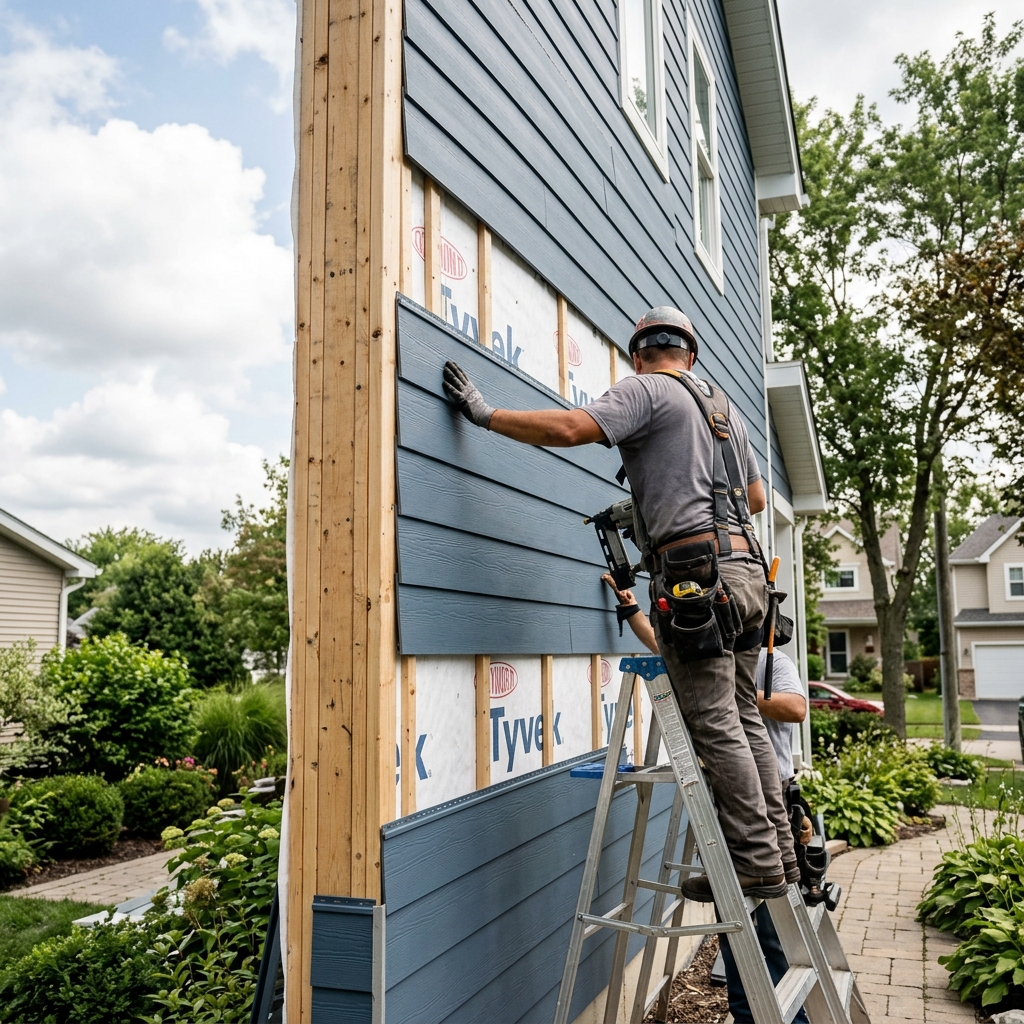
If you’re investing in exterior upgrades like new siding, this is also a great moment to evaluate your home’s full envelope. Coordinating your siding project with roofing updates, new windows, or improved gutters can dramatically elevate your home’s exterior and protect your investment. Homeowners in Bishop and surrounding communities can explore how roofing upgrades add value to homes when paired with comprehensive exterior improvements.
Siding Material Affects How Color Looks and Lasts
Different siding materials hold and display color differently. Vinyl siding is available in a wide color range and holds color well, though very dark shades can fade over time with prolonged sun exposure. Fiber cement siding, like HardiePlank, accepts paint beautifully and can be factory-primed in a wide range of colors with excellent long-term stability. Wood siding takes stain and paint well but requires more maintenance to preserve color integrity in humid climates like Georgia’s. Steel and aluminum siding offer durable factory finishes but may have a more limited initial color palette. Understanding how your material choice interacts with color longevity helps you select a combination that looks great not just on installation day but five and ten years down the road.
Making Your Final Decision
When you’re ready to make your final siding color selection, bring together everything you’ve gathered: your fixed element inventory, architectural style notes, neighborhood observations, climate considerations, and tested samples. If two colors are still competing, consider which one has the longer visual lifespan — which will you still love in ten years? Which ages more gracefully? Which supports the broadest range of seasonal landscapes and future updates to landscaping or trim? These questions often tip the balance toward the choice that will serve you best over the long term.
Exterior color decisions are most satisfying when they’re made thoughtfully, with input from people who understand both the design and the practical dimensions of the materials involved. If you’re planning a full exterior update — new siding, updated trim, or coordinated roofing — working with an experienced local contractor makes the process smoother and the outcome more cohesive. Ridgeline Roofing & Exteriors has helped homeowners across Watkinsville, Athens, Bishop, and Northeast Georgia plan and execute exterior projects that look great and hold up against Georgia’s demanding climate. With 20+ years of experience and a team of seasoned installers, Ridgeline brings the kind of craftsmanship and material knowledge that turns a good color choice into a great finished exterior.
Ready to start planning your exterior upgrade? Call Ridgeline Roofing & Exteriors at 770-706-7663 to schedule a free estimate and connect with a team that knows how to make every element of your home’s exterior work together beautifully.