Skip to content
Understanding Roof Leak Patterns in Oconee River Communities
Homes situated near the Oconee River in communities like Apalachee, Scull Shoals, and along McNutt Creek Road in the 30677 zip code face unique roofing challenges that often lead to persistent leak problems. The elevated humidity levels and frequent moisture exposure create conditions where asphalt shingles deteriorate faster, underlayment fails prematurely, and flashing systems around chimneys and roof penetrations become compromised. Properties in Woodlands, Heritage Park, and along Lane Creek Road experience similar moisture-related issues that accelerate granule loss on dimensional shingles and cause ice-and-water shield barriers to lose their effectiveness over time.
According to the Verisk Roofing Realities Trend Report, roof-related claims now account for 25 percent of all residential claim value nationwide, with many of these issues stemming from moisture intrusion problems that start small and compound over months or years. Homeowners throughout Bishop, North High Shoals, and Bostwick along High Shoals Road in the 30621 zip code often discover that what appears to be a minor leak actually involves multiple roof system failures, including compromised step flashing, deteriorated pipe boots, and water damage to OSB sheathing that requires extensive repairs to prevent structural problems.
High Humidity Impact on Roofing Materials
Accelerated Shingle Deterioration Near Water Sources
The consistently high humidity levels around the Oconee River and Apalachee River create an environment where architectural shingles and 3-tab shingles break down much faster than in drier climates. Properties in Elder, Farmington, and along Elder Mill Road near the Historic Elder Mill Covered Bridge in the 30638 zip code show clear patterns of premature aging, with curling shingles and missing shingles becoming evident years before expected replacement schedules. The Asphalt Roofing Manufacturers Association reports that 80 percent of roofs use asphalt shingles, making this humidity-related deterioration a widespread concern for homeowners in Poplar Springs, Covena, and throughout the Greensboro Highway corridor.
Moisture infiltration affects not just the visible shingle layer but penetrates through to the synthetic underlayment and roof decking beneath, causing nail pops and lifted shingles that create entry points for water during Georgia’s frequent thunderstorms. Homes in Washington Farms, Echo Brook Park, and Eastville along Hog Mountain Road experience this cascading effect, where initial granule loss leads to exposed asphalt that absorbs more moisture and accelerates the breakdown of the entire roofing system.
Underlayment and Moisture Barrier Failures
Traditional felt underlayment performs poorly in the high-humidity environment near the Oconee River, with properties in Little Creek, Nolan Manor, and along Mars Hill Road in the 30677 zip code showing frequent underlayment failures that allow moisture to reach the plywood decking below. Based on findings from Verisk Aerial Imagery Analytics, 38 percent of homes nationwide have moderate to poor roof condition, with moisture-related underlayment problems being a primary contributing factor in river-adjacent communities like those served by Malcom Bridge Elementary and Oconee County High School.
Ice-and-water shield applications that work effectively in drier climates often fail prematurely when exposed to the constant humidity cycles experienced in neighborhoods like Ashland, Northwest Woods, and Birchmore Hills along Experiment Station Road. The adhesive properties of these moisture barriers degrade faster, creating gaps where water can penetrate during the heavy rainfall events common in Oconee County, leading to rotted decking and compromised structural integrity.
Flashing System Vulnerabilities in River Proximity
Chimney and Penetration Flashing Issues
Homes near the Oconee River in communities like Woodridge North, Phoenix, and along Daniells Bridge Road face particular challenges with chimney flashing and skylight flashing systems that must contend with elevated moisture levels year-round. The constant expansion and contraction caused by humidity changes cause step flashing and counter flashing to separate from masonry surfaces, creating pathways for water infiltration that often go undetected until significant interior damage occurs. Properties served by Salem Baptist Church, Antioch Christian Church, and Bishop Baptist Church in the 30621 zip code frequently require roof repair services focused specifically on flashing system restoration.
According to data from the National Roofing Contractors Association, flashing failures account for a significant portion of leak-related insurance claims, with pipe boots and roof vent flashing being particularly vulnerable in high-humidity environments like those found in Bent Tree, Canyon Creek, and Cedar Hills developments near Lane Creek Golf Course. The rubber components in these flashing systems deteriorate faster when exposed to constant moisture, leading to cracked seals around plumbing penetrations and HVAC equipment.
Valley and Intersection Complications
Complex roof designs common in neighborhoods like Crystal Hills, Cumberland, and Daniel Plantation along Malcom Bridge Road create multiple roof valleys and hip intersections where water concentrates during storms, making these areas particularly susceptible to leak development when combined with river-proximity moisture challenges. Valley flashing systems that rely on metal channels and sealed joints face accelerated corrosion in the humid environment, while ridge cap shingles at roof peaks experience faster deterioration due to increased moisture exposure from rising humid air.
Homes with dormers and complex rooflines in Gratis, Campton, and Iron Horse communities near Presbyterian Village require specialized attention to dormer flashing and rake edge details that often fail when subjected to the moisture cycles typical of Oconee River proximity locations. These architectural features create numerous penetration points where water can enter if flashing systems aren’t properly maintained and sealed against humidity-driven expansion and contraction.
Seasonal Weather Pattern Effects
Spring Storm Damage Accumulation
The combination of severe spring thunderstorms and elevated baseline humidity creates a perfect storm for roof damage in communities like Wrayswood, Lane Creek, and Maxeys along McNutt Creek Road and Rocky Branch Road in the 30677 zip code. According to the Verisk Roofing Realities Trend Report, over 50 percent of residential claims are driven by wind and hail damage, with non-catastrophic wind and hail roof claims increasing from 17 percent in 2022 to 25 percent in 2024. Properties near Oconee Veterans Park, Herman C. Michael Park, and along the US 441 corridor show patterns of accumulated damage where minor storm impacts compound with moisture-related deterioration.
Wind uplift damage to starter strips and ridge vents creates entry points for moisture that becomes particularly problematic in the humid environment around Apalachee and Bostwick, where elevated moisture levels prevent roofing materials from properly drying between weather events. Homes served by Westminster Christian Academy and North Oconee High School experience this layered damage effect, where spring storm impacts create vulnerabilities that summer humidity exploits, leading to progressive deterioration of roof systems.
Summer Humidity and Heat Cycling
Georgia’s intense summer heat combined with high humidity creates extreme thermal cycling that affects roofing materials differently in river-adjacent locations compared to properties further from water sources. The ThinkHazard World Bank data classifies Georgia as having high extreme heat hazard classification, with extreme heat events expected at least once in the next five years. Homes in Stephens, Colham Ferry, and Barber Creek areas along Simonton Bridge Road and Price Mill Road experience more severe thermal expansion and contraction due to the moderating effect of nearby water bodies that create temperature differentials.
Soffit vents and ridge vents that provide crucial attic ventilation become less effective in high-humidity environments, leading to moisture buildup in attic spaces that accelerates deterioration of roof decking and creates conditions favorable to algae staining and moss growth on shingle surfaces. Properties throughout the 30645 zip code near High Shoals Elementary and along Union Church Road show clear patterns of ventilation-related moisture problems that compound the challenges of maintaining healthy roof systems.
Drainage and Gutter System Challenges
Overwhelmed Water Management Systems
Properties near the Oconee River in neighborhoods like McNutt Creek, Rocky Branch, and Simonton Bridge face unique challenges with water management systems that must handle both direct precipitation and elevated ambient moisture levels. Homes along Moores Ford Road, Ruth Jackson Road, and Bishop Farms Parkway in the 30621 zip code often experience gutter overflow during moderate rainfall events because their drainage systems become overwhelmed by the combination of roof runoff and saturated air conditions that reduce evaporation rates.
Fascia boards and soffit panels in these moisture-rich environments show accelerated deterioration, particularly where gutter systems attach to roof edges and create potential water retention areas. The constant exposure to humid air means that even minor gaps in gutter sealing can lead to significant moisture infiltration behind siding and into wall systems, creating secondary damage that extends beyond the roof system itself.
Inadequate Slope and Drainage Design
Many homes in river-proximity locations like those served by Colham Ferry Elementary and Rocky Branch Elementary along Hog Mountain Road were built with drainage systems designed for average rainfall conditions, not the enhanced moisture loads created by river proximity and elevated humidity levels. Properties with low roof pitch or complex rooflines in neighborhoods near Providence Golf Club and Monroe Golf & Country Club struggle with water evacuation, leading to ponding water that accelerates deterioration of modified bitumen and TPO membrane systems on lower-slope roof areas.
Our Watkinsville roofing contractors frequently encounter situations where standard drip edge and gutter sizing proves inadequate for homes in Dove Creek, High Shoals, and along Hopping Road, requiring upgraded water management solutions that account for the enhanced moisture loads typical of Oconee River proximity locations.
Identifying Early Warning Signs
Interior Moisture Indicators
Homeowners in river-adjacent communities like those near Salem Kennel Inc, Star Grove Farm, and Fishing Creek Farms should watch for specific interior signs that indicate developing roof leak problems before they become major structural issues. Water stains on ceilings near bathrooms and kitchens often indicate compromised pipe boot sealing, while stains along exterior walls suggest problems with step flashing or counter flashing around roof-to-wall intersections common in homes throughout the Epps Bridge Parkway corridor and Butler’s Crossing area.
Increased humidity levels inside homes, particularly in upper floors and attic spaces, often signal that moisture barriers and underlayment systems are beginning to fail, allowing exterior humidity to penetrate the building envelope. Properties in areas served by Thankful Baptist Church, The Braswell Church, and Baird’s Baptist Church should pay particular attention to these early warning signs, as the elevated baseline humidity makes it difficult to distinguish between normal seasonal moisture variation and developing roof system problems.
Exterior Visual Clues
Regular exterior inspections reveal important clues about developing leak problems, particularly for homes in high-humidity environments like those found throughout the Oconee Connector Retail District and along the Greensboro Highway commercial corridor. Missing granules on architectural shingles, particularly in valleys and around penetrations, indicate accelerated weathering that often precedes actual leak development. Understanding common roof repair issues helps homeowners in Echo Brook Park and Eastville recognize these warning signs before minor problems become major expenses.
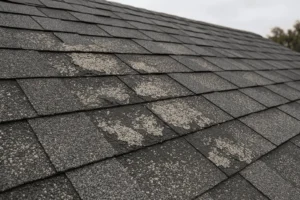
Algae staining and moss growth on north-facing roof slopes, while common in humid climates, can indicate underlying moisture retention problems that suggest compromised shingle integrity or inadequate attic ventilation. Properties near the Oconee Forest Disc Golf Course, Redlands Wildlife Management Area, and throughout the SR 186 corridor show patterns of biological growth that correlate with developing leak problems, particularly when combined with other signs like loose or missing ridge cap shingles.
Professional Inspection and Assessment Protocols
Comprehensive Moisture Evaluation Methods
Professional roof inspections in river-proximity locations require specialized approaches that account for the unique challenges faced by homes near the Oconee River and throughout communities served by Oconee County Primary and Oconee County Elementary schools along Hog Mountain Road. Ridgeline Roofing and Exteriors uses moisture detection equipment to identify areas where water infiltration has begun even before visible signs appear, particularly important for homes in the 30677 and 30638 zip codes where elevated humidity masks early leak indicators.
Thermal imaging technology reveals temperature differentials that indicate moisture presence in roof systems, while core sampling of roof decking helps determine the extent of moisture penetration in areas where visual inspection alone cannot assess damage severity. This comprehensive approach proves essential for properties throughout Daniell’s Plantation, Parkside, and Tramlin Acres, where the constant moisture exposure requires more thorough evaluation methods than standard roof inspections.
Seasonal Timing for Optimal Detection
The timing of professional roof inspections significantly affects the accuracy of leak detection in high-humidity environments like those found near Rose Creek, Barber Creek, and throughout the watersheds that drain into the Oconee River system. Fall inspections, conducted after summer humidity peaks but before winter weather begins, provide optimal conditions for detecting moisture-related damage that may be masked during other seasons when ambient humidity levels make it difficult to distinguish between environmental moisture and actual leak infiltration.
Spring inspections following storm seasons help identify new damage while documenting the cumulative effects of winter moisture exposure on roofing materials and systems. Properties in neighborhoods like Lake Forest, Coldwater Creek, and Windy Creek benefit from this dual-season inspection approach that accounts for both immediate storm damage and the progressive effects of living in a high-moisture environment near water sources.
Prevention and Maintenance Strategies
Enhanced Ventilation Systems
Proper attic ventilation becomes critical for homes near the Oconee River, where elevated humidity levels can create conditions that accelerate roof system deterioration if moisture isn’t properly managed. Properties throughout Elder Heights, Elder Ridge, and along J T Elder Road require enhanced ridge vent and soffit vent systems that move more air volume than standard installations, helping to prevent moisture buildup that can lead to algae staining, moss growth, and premature deterioration of roof decking and structural components.
Powered ventilation systems often prove necessary for homes with complex rooflines or inadequate natural airflow, particularly in neighborhoods like Fieldstone, Fernwood, and Essex where mature tree canopies limit wind-driven ventilation. According to IBISWorld data, Georgia’s roofing market represents 2.3 percent of the state’s GDP, with much of this activity focused on addressing moisture-related problems through improved ventilation and waterproofing systems.
Upgraded Materials and Installation Techniques
Homes in river-proximity locations benefit significantly from upgraded roofing materials designed to perform better in high-moisture environments, including synthetic underlayment that resists moisture absorption and dimensional shingles with enhanced granule adhesion that better withstand humidity-related deterioration. Properties served by Sonlight Baptist Church, Manna Church, and throughout the Farmington Road corridor show measurably better performance when upgraded materials are combined with enhanced installation techniques that account for elevated moisture exposure.
Premium ice-and-water shield applications extended beyond typical coverage areas provide additional moisture protection for homes in areas like Salem, with coverage extending up roof slopes and around all penetrations rather than just in valleys and along eaves. Professional installation techniques that account for humidity-driven expansion and contraction help ensure that flashing systems and sealants maintain their integrity longer, reducing the likelihood of developing the signs you need roof repair that commonly affect homes in moisture-rich environments.
Insurance and Documentation Considerations
Claim Documentation in High-Humidity Environments
Insurance claims related to roof leaks face additional scrutiny in high-humidity environments where carriers must distinguish between gradual moisture damage and acute weather-related failures. Homeowners throughout Alcovy Mountain area properties, near Preston Inert Landfill, and along Elder Cemetery access roads need comprehensive documentation that demonstrates when and how damage occurred, particularly important given that roof claim costs have increased 30 percent since 2022 according to the Verisk Roofing Realities Trend Report.
Professional documentation becomes essential for properties that experience storm damage roof repairs in apalachee and throughout the Oconee River watershed, where the combination of acute storm damage and chronic moisture exposure creates complex damage patterns that require expert assessment to properly document for insurance purposes. Photographic evidence, moisture readings, and detailed damage assessments help establish timelines and causation that support successful claim resolution.
Preventive Maintenance Documentation
Regular maintenance documentation proves valuable for insurance purposes and helps homeowners track the performance of their roof systems in challenging moisture environments. Properties throughout communities served by Athens Academy, Prince Avenue Christian School, and the University of North Georgia Oconee Campus benefit from detailed maintenance logs that document cleaning, repairs, and inspections, particularly important for homes that face the enhanced challenges of river proximity moisture exposure.
Maintenance records help establish that homeowners have acted responsibly to maintain their roof systems, important documentation when dealing with claims adjusters who must evaluate whether damage results from covered perils or gradual deterioration. Understanding emergency roof repair situations in bishop and throughout Oconee County helps homeowners recognize when immediate action is needed to prevent minor problems from becoming major losses that may face insurance coverage challenges.
Long-Term Roof Health Management
Maintaining roof integrity in communities near the Oconee River requires a proactive approach that acknowledges the unique challenges posed by elevated humidity, frequent moisture exposure, and the accelerated deterioration patterns common to properties in Stephens, Maxeys, and throughout the watershed areas served by Mathews Park and Criswell Park. The combination of Georgia’s extreme heat classification and high humidity creates conditions where standard maintenance schedules often prove inadequate, requiring more frequent inspections and preventive care to identify problems before they develop into major leak situations that require extensive repairs or complete roof replacement.
Learning how wind damage affects roofs in maxeys and similar communities helps homeowners understand that the moisture-rich environment near water sources can compound storm damage effects, making minor wind or hail impacts more likely to develop into significant problems. With industry data showing that 29 percent of homes have under four years of roof life remaining and experience 50 percent higher damage rates, properties in high-humidity environments like those found throughout Oconee County’s river communities require especially vigilant monitoring and maintenance to protect both the roof system and the home’s overall structural integrity.