If you live in a homeowners association community in Oconee County, Georgia, choosing new siding is not as simple as picking a color you like. HOA guidelines typically regulate exterior materials, colors, textures, and finishes to maintain a consistent neighborhood aesthetic and protect property values. The good news is that several high-quality siding options are specifically well-suited to meeting HOA requirements while delivering the durability and curb appeal Georgia homeowners expect. Whether your community follows strict architectural review processes or general appearance standards, understanding which siding materials tend to earn approval most easily — and why — gives you a significant advantage before you start planning your exterior project. This guide covers the most HOA-compatible siding options available to Oconee County homeowners, including what to look for in your community’s guidelines and how to choose materials that satisfy both your HOA and your long-term goals.
Why HOA Siding Guidelines Matter in Oconee County
Oconee County has experienced significant residential growth over the past decade, with established communities like Washington Farms, Country Club Estates, and several newer planned developments all operating under active HOA governance. These associations exist to protect neighborhood cohesion, but the practical effect for homeowners is that exterior renovations — including siding replacement or installation — often require formal approval before work begins.
Most Oconee County HOA documents include specific provisions about acceptable siding materials, approved color palettes, texture restrictions, and even the types of finishes that are permitted. Submitting the wrong material choice to an architectural review committee can cause costly delays or outright rejections. Understanding the landscape before you shop for siding saves time, money, and frustration. It also helps you work more effectively with your siding contractor to prepare a submission that meets or exceeds your HOA’s expectations on the first review.
For homeowners also weighing broader home improvement considerations, our guide on roofing upgrades that add value to homes in Bishop offers related perspective on exterior investments that hold up well in the local market.
Fiber Cement Siding: The Gold Standard for HOA Communities
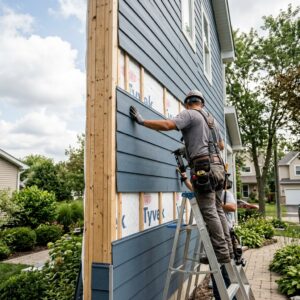
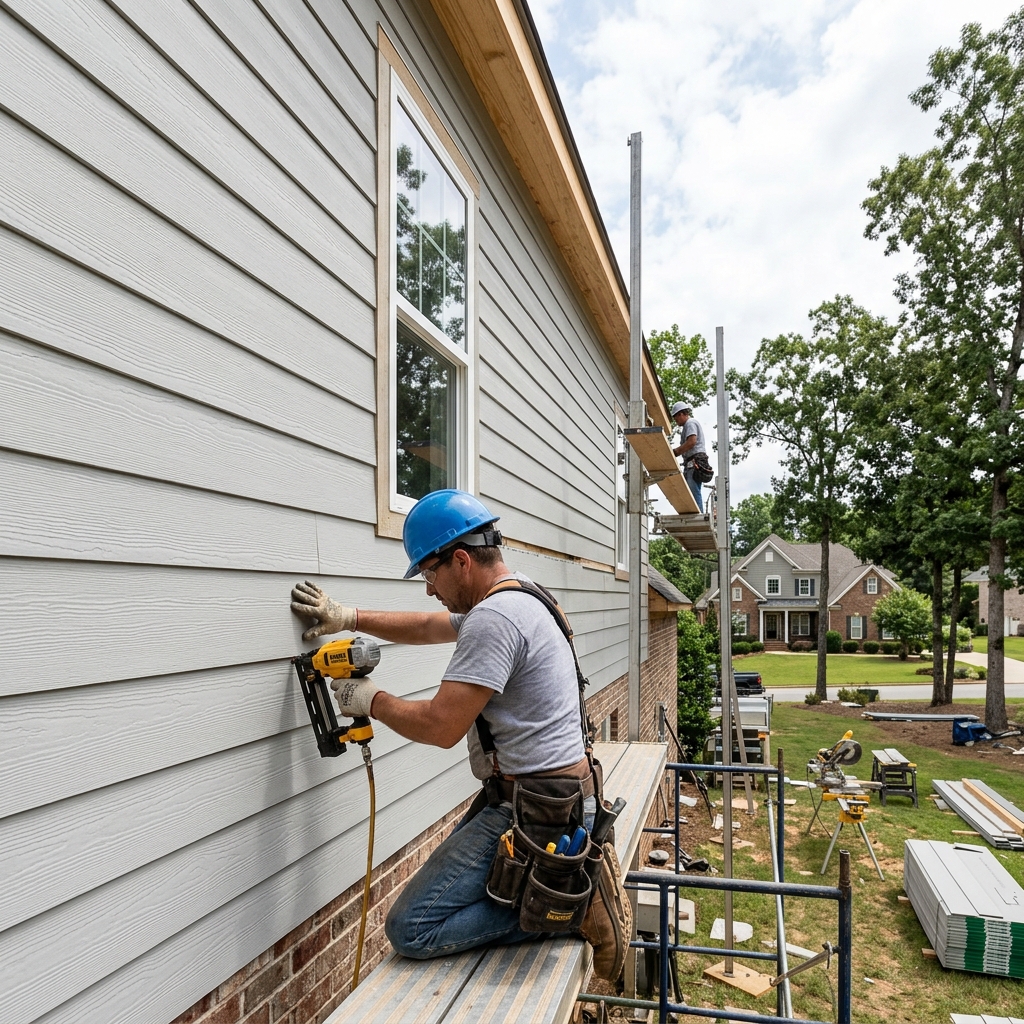
Fiber cement siding — most commonly recognized under brand names like James Hardie — has become the preferred choice in HOA-regulated communities across Oconee County and the broader Northeast Georgia region. It is manufactured from a blend of cement, sand, and cellulose fibers, giving it the appearance of wood without the maintenance vulnerabilities that wood carries in Georgia’s humid climate.
Why HOAs Tend to Approve Fiber Cement
Architectural review committees appreciate fiber cement because it maintains its appearance predictably over time. The material does not warp, rot, or swell in humid conditions, which means the neighborhood’s visual consistency is preserved without requiring frequent board intervention. Many HOA boards in Oconee County have pre-approved fiber cement siding products in their governing documents, making the application process significantly smoother for homeowners who choose it.
Fiber cement is available in lap siding, vertical plank, shingle panel, and smooth or wood-grain textures, allowing homeowners to match existing neighborhood styles precisely. Most Georgia HOA communities that allow wood-look siding will automatically accept fiber cement as a compliant substitute, since it replicates that aesthetic without the fire risk or longevity concerns associated with actual wood.
Performance Advantages in Georgia’s Climate
Beyond HOA compatibility, fiber cement performs exceptionally well in Georgia’s hot, humid summers and occasional ice events in winter. It is resistant to moisture damage, does not attract pests like termites, and holds paint well — typically requiring repainting only every 15 to 20 years under normal conditions. For Oconee County homeowners who want a siding solution that looks great at HOA review and delivers lasting performance, fiber cement consistently ranks at the top.
Engineered Wood Siding: A Natural-Look Option That Satisfies Many HOAs
Engineered wood siding products, such as LP SmartSide, offer the aesthetic warmth of traditional wood siding with significantly improved durability. These products are manufactured using wood strands, adhesives, and resins compressed and treated for weather resistance, and they carry impact ratings that make them suitable for Georgia’s storm season.
Many HOAs that restrict real wood siding — due to fire codes, maintenance requirements, or consistency concerns — will approve engineered wood products because they deliver the same visual character without the drawbacks. Engineered wood siding is particularly popular in neighborhoods with a more traditional or craftsman-style architectural character, which is common throughout Oconee County’s established communities.
One important note: if your HOA requires specific paint colors or pre-approved finishes, confirm that your chosen engineered wood product is available in those specifications before purchasing. Most major engineered wood brands offer factory-primed options that accept a wide range of exterior paint colors, giving you flexibility within HOA-defined parameters.
Vinyl Siding: HOA Approval Depends on the Community
Vinyl siding is one of the most widely installed siding products in the country, and it offers a cost-effective, low-maintenance option for homeowners. However, its approval status in Oconee County HOA communities varies considerably. Some associations in the area permit vinyl siding provided it meets minimum thickness requirements and stays within the approved color range. Others restrict or outright prohibit it, particularly in higher-end neighborhoods where the governing documents require materials with a more premium appearance.
When Vinyl Siding Works for HOA Communities
If your HOA does permit vinyl siding, choosing a product with a higher wall thickness — typically .044 inches or greater — and a realistic wood-grain texture can satisfy appearance standards in many communities. Premium vinyl siding profiles, including beaded seam designs and insulated vinyl options, are increasingly accepted in communities that previously restricted standard-grade vinyl because they more convincingly replicate the look of wood or fiber cement.
Always review your HOA’s current architectural standards before selecting vinyl siding. If the documents are vague or outdated, requesting written clarification from the board before your siding contractor places an order is strongly recommended.
Hardie Board and Prefinished Options for Faster HOA Approval
Many Oconee County HOA communities have added specific approved product lists to their architectural guidelines in recent years. James Hardie’s ColorPlus Technology line — factory-prefinished fiber cement siding in standardized color collections — appears on these approved lists with notable frequency. The advantage for homeowners is straightforward: when a specific product is already pre-approved, the architectural review process becomes shorter and less uncertain.
If your HOA has an approved product list, check it carefully before investing time in evaluating other options. Choosing from the pre-approved list not only speeds up the review process but also reduces the risk of disputes with your HOA board after installation is complete. Your contractor can then focus on installation quality rather than back-and-forth documentation reviews.
For perspective on how HOA rules interact with other exterior projects, our article on how HOA rules affect roof replacement projects explores similar approval dynamics that apply to roofing decisions.
Colors and Finishes: Navigating HOA Aesthetic Standards
Even when a homeowner selects a pre-approved siding material, the color choice can still trigger a review rejection if it falls outside the community’s approved palette. Most Oconee County HOA communities that regulate exterior appearance require siding colors to remain within a range of earth tones, muted neutrals, or historically appropriate hues. Bold, high-contrast, or bright colors are frequently restricted.
Working Within the Approved Color Palette
Before finalizing any siding selection, obtain your HOA’s current approved color palette — ideally as a written document from the architectural review committee rather than relying on informal conversations with neighbors. Compare that palette against the color options available from your siding manufacturer. Many manufacturers provide HOA documentation packages that include color chip samples, technical data sheets, and certification information formatted specifically for architectural review submissions.
If the color you prefer is not on the approved list, you have the option to submit a variance request explaining why your choice is consistent with the community’s aesthetic standards. These requests are sometimes approved, but they take additional time and are not guaranteed to succeed. Choosing from within the established palette is almost always the faster path to project approval.
What to Include in Your HOA Siding Application
Submitting a complete, well-documented application to your HOA’s architectural review committee is one of the most important steps you can take to avoid delays. A strong application typically includes the following:
- Product specification sheet — manufacturer’s technical documentation describing the material, thickness, and performance ratings
- Color chip or sample — physical or digital color sample matching your selection to the approved palette
- Installation scope description — written explanation of which areas of the home will receive new siding
- Contractor credentials — license, insurance certificate, and any relevant certifications held by your siding installer
- Before and after photos or renderings — visual aids showing how the completed project will appear from the street
- Timeline — estimated start and completion dates for the siding project
Providing all of this documentation upfront reduces the likelihood of the committee requesting additional information, which can add weeks to your approval timeline.
Choosing a Siding Contractor Who Understands HOA Requirements
Working with a siding contractor who has direct experience with HOA-regulated projects in Oconee County is a meaningful advantage. Contractors familiar with local community standards can help you select products that are likely to be approved, prepare documentation in a format that architectural review committees expect, and flag potential issues before they become problems during the approval process.
Ridgeline Roofing and Exteriors serves homeowners across Watkinsville, Bishop, Farmington, and surrounding Oconee County communities, offering exterior siding installation alongside their full suite of roofing and construction services. With over 20 years in business and crews averaging 25-plus years of hands-on experience, Ridgeline brings the local knowledge and professional documentation support that HOA projects require. Their team is familiar with the kinds of architectural standards common in Oconee County communities and can help homeowners navigate the review process with confidence.
If you are also in the process of evaluating other exterior upgrades alongside siding, understanding how your roofing system and exterior materials work together can be valuable. Our overview of shingle roof repairs in HOA communities provides additional context on managing exterior renovation projects within association guidelines.
Key Takeaways for Oconee County Homeowners
Navigating HOA siding requirements in Oconee County requires preparation, but the process is manageable when you understand the landscape. Fiber cement siding consistently earns approval across the widest range of community guidelines and performs exceptionally well in Georgia’s climate. Engineered wood products offer a strong alternative for neighborhoods with a natural or traditional aesthetic character. Vinyl siding can be appropriate in some communities but requires careful verification before selection. Pre-approved product lists, when they exist, are always the fastest path to project approval.
Above all, investing time in understanding your specific HOA’s requirements before selecting materials will save you from costly delays, rejected applications, and potential compliance disputes after installation is complete. If you have questions about siding options that meet HOA guidelines in Oconee County, or you would like a professional assessment of your home’s exterior needs, contact Ridgeline Roofing and Exteriors at 770-706-7663 or visit ridgelineroofingcompany.com to schedule your consultation.