Understanding Flat Roof Issues Across Oconee County’s Commercial Properties
Commercial buildings throughout Echo Brook Park, Washington Farms, Ashland, and Eastville in the 30677 zip code face unique flat roofing challenges that property owners along Hog Mountain Road and Mars Hill Road must understand. The humid Georgia climate, combined with temperature fluctuations near the Historic Elder Mill Covered Bridge and throughout neighborhoods like Farmington and Bishop in the 30621 zip code, creates specific problems for TPO membrane systems, EPDM rubber roofing, and modified bitumen installations on commercial structures.
Business owners operating near Oconee Veterans Park, along High Shoals Road, and throughout communities like Poplar Springs, Covena, and North High Shoals have reported increasing issues with ponding water, membrane deterioration, and flashing failures on their flat roof systems. According to Verisk’s Roofing Realities Trend Report, roof-related claims account for 25 percent of residential claim value nationwide, with commercial properties experiencing similar patterns due to inadequate drainage systems, compromised roof decking, and failed pipe boots that allow moisture intrusion into buildings near Lane Creek Golf Course and Providence Golf Club.
Ponding Water Issues on Commercial Flat Roofs
Drainage System Failures in Oconee County Buildings
Properties throughout Woodlands, Woodridge North, and Heritage Park neighborhoods along Elder Mill Road and Experiment Station Road experience significant ponding water problems when roof drains become clogged with debris from surrounding trees. The flat roof systems on buildings near Malcom Bridge Elementary and North Oconee High School in the 30677 zip code often lack proper slope toward drainage points, causing water to accumulate in low areas of TPO membrane and EPDM rubber installations. Business owners in Little Creek, Scull Shoals, and Apalachee have discovered that ponding water accelerates membrane degradation and creates stress points where seams separate, particularly on modified bitumen roofs that weren’t designed to handle Georgia’s heavy rainfall patterns.
Impact of Georgia Weather on Drainage Systems
Commercial buildings along US 441, Greensboro Highway, and Lane Creek Road face drainage challenges exacerbated by Georgia’s climate patterns, which include intense summer storms and hurricane remnants that overwhelm undersized gutters and roof drains. According to the Verisk Roofing Realities Trend Report, over 50 percent of residential claims are driven by wind and hail, with commercial properties near Bostwick, McNutt Creek, and areas around Salem Baptist Church experiencing similar weather-related drainage failures. The combination of clogged scupper drains, inadequate interior drain sizing, and compromised roof slopes allows water to pond on TPO membrane surfaces, eventually causing membrane shrinkage, seam separation, and structural damage to underlying OSB sheathing and plywood decking.
Membrane Deterioration Problems
UV Damage and Heat Stress
Commercial flat roofs throughout Nolan Manor, Apalachee, and communities near Antioch Christian Church along Hillsboro Road suffer accelerated membrane deterioration due to Georgia’s intense UV exposure and high temperatures that regularly exceed 95 degrees during summer months. The Asphalt Roofing Manufacturers Association reports that membrane systems lose flexibility over time, with EPDM rubber and TPO membrane installations on buildings near Westminster Christian Academy and Bishop Baptist Church showing cracking, splitting, and surface chalking after just five to seven years of exposure. Properties in the 30638 zip code around Farmington and Elder experience particularly severe membrane degradation because flat roof surfaces absorb and retain heat, causing thermal cycling that breaks down the molecular structure of synthetic membranes and modified bitumen systems. Understanding signs a commercial roof needs repair in bishop helps property owners in Bostwick, Apalachee, and Little Creek make informed decisions about their roofing systems.
Membrane Shrinkage and Seam Separation
Buildings located in Maxeys, Stephens, and areas near the University of North Georgia Oconee Campus experience membrane shrinkage problems that create gaps at seams, around penetrations, and along parapet walls where counter flashing meets the roof surface. The constant expansion and contraction cycles caused by temperature fluctuations between 30-degree winter nights and 100-degree summer afternoons stress TPO membrane and EPDM rubber installations, particularly on structures near Elder Heights, Elder Ridge, and Phoenix communities along J T Elder Road. According to IBISWorld data, Georgia’s roofing market represents 2.3 billion dollars in annual activity, with a significant portion addressing membrane replacement on commercial buildings where seam failures have allowed water infiltration through compromised synthetic underlayment and into roof decking systems.
Flashing and Penetration Failures
HVAC Equipment and Vent Penetrations
Commercial properties throughout Windy Creek, Daniell’s Plantation, and Parkside neighborhoods near Mars Hill Road and Malcom Bridge Road commonly experience flashing failures around HVAC units, exhaust vents, and electrical penetrations that compromise the integrity of TPO membrane and modified bitumen roof systems. The step flashing and pipe boots used to seal these penetrations deteriorate rapidly in Georgia’s humid climate, particularly on buildings near Tramlin Acres, Lake Forest, and Bent Tree communities in the 30677 zip code where temperature extremes cause metal flashing to expand and contract. Business owners operating near Coldwater Creek, Canyon Creek, and Cedar Hills have discovered that failed chimney flashing and skylight flashing allow moisture intrusion that damages underlying roof decking, creates mold growth, and compromises the structural integrity of commercial buildings.
Parapet Wall and Coping Issues
Flat roof installations on commercial buildings throughout Crystal Hills, Cumberland, and Daniel Plantation communities along High Shoals Road suffer from inadequate counter flashing systems where membrane materials meet vertical parapet walls and equipment curbs. The combination of membrane shrinkage, inadequate adhesion, and failed sealants creates gaps that allow water infiltration, particularly on buildings near Gratis, Campton, and Iron Horse neighborhoods in the 30621 zip code where wind-driven rain penetrates compromised flashing details. According to the National Roofing Contractors Association, proper flashing installation requires multiple layers of protection, including base flashing, counter flashing, and appropriate sealants, but many commercial properties near Rocky Branch, Simonton Bridge, and Colham Ferry have inadequate flashing systems that fail within three to five years of installation.
Insulation and Deck Problems
Moisture Infiltration and Insulation Damage
Commercial buildings throughout Barber Creek, Salem, and Fieldstone communities near Experiment Station Road experience insulation saturation when failed TPO membrane or EPDM rubber systems allow water to penetrate into rigid foam insulation boards and fiberglass batt insulation installed below the roof deck. The humid conditions around Fernwood, Essex, and Flinchum neighborhoods create ideal environments for mold and mildew growth within wet insulation systems, reducing thermal performance and creating health concerns for building occupants near Oconee County High School and Malcom Bridge Middle School. Properties in the 30645 zip code around High Shoals experience particularly severe insulation problems because moisture trapped within insulation systems doesn’t dry properly in Georgia’s humid climate, leading to permanent damage that requires complete insulation replacement along with membrane restoration.
Structural Deck Deterioration
Long-term moisture infiltration through failed membrane systems causes significant structural damage to OSB sheathing and plywood decking on commercial buildings throughout communities near Providence Golf Club, Lane Creek Golf Course, and Monroe Golf & Country Club. The combination of high humidity, temperature fluctuations, and direct water contact causes roof decking to delaminate, warp, and lose structural integrity, particularly on buildings constructed with substandard materials or inadequate ventilation systems near Presbyterian Village and areas around RaceTrac on Hog Mountain Road. According to Verisk Aerial Imagery Analytics, 38 percent of homes have moderate to poor roof conditions, with commercial properties experiencing similar deterioration patterns where compromised roof decking creates sagging areas, nail pops, and complete structural failure that requires extensive reconstruction of the entire roofing assembly including new decking, insulation, and membrane installation.
Drainage and Gutter System Failures
Clogged Internal Drains and Scuppers
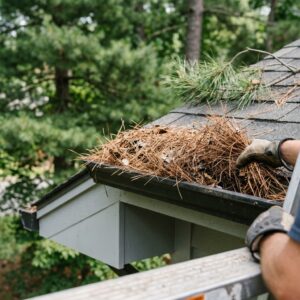
Commercial flat roofs on buildings near Butler’s Crossing, Epps Bridge Parkway, and the Oconee Connector retail district experience frequent drainage problems when internal roof drains become clogged with leaves, debris, and sediment that accumulates during Georgia’s heavy rain events. The modified bitumen and TPO membrane systems installed on structures throughout downtown Watkinsville and along the US 441 commercial corridor require regular maintenance to prevent backup of water that overwhelms drain capacity and creates ponding conditions. Business owners operating near Publix at Butler’s Crossing and properties in the Epps Bridge Parkway Commercial Corridor have reported that inadequate drain sizing, combined with poor roof slope design, creates standing water that accelerates membrane deterioration and increases the risk of structural damage to underlying roof decking and building contents.
Gutter and Downspout Problems
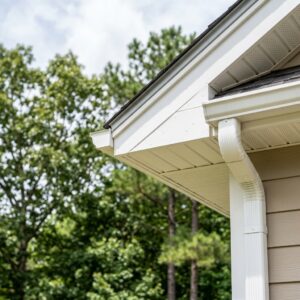
Properties throughout the North High Shoals area, particularly near North High Shoals Town Hall and communities along New High Shoals Road, experience gutter system failures that contribute to flat roof problems by allowing water to back up onto membrane surfaces during heavy rainfall events. The combination of undersized gutters, inadequate downspout capacity, and poor connection details between roof edge and gutter systems creates overflow conditions that stress TPO membrane and EPDM rubber installations near the fascia boards and drip edge components. According to data from the Insurance Institute, properties with compromised drainage systems experience 60 percent higher loss costs, with commercial buildings near Presbyterian Homes and areas around Salem Kennel experiencing particularly severe problems where failed gutter systems allow water infiltration through soffit vents and into building interiors.
Material Quality and Installation Issues
Substandard Membrane Materials
Commercial buildings throughout Fishing Creek Farms, Star Grove Farm, and areas near Elder Cemetery have experienced premature membrane failures due to the installation of substandard TPO membrane and EPDM rubber materials that don’t meet industry standards for thickness, UV resistance, and flexibility in Georgia’s challenging climate conditions. The combination of intense summer heat, high humidity, and temperature fluctuations around Alcovy Mountain and the SR 186 Bridge over Apalachee River stress membrane systems beyond their design capacity when inferior materials are used in initial installation. According to the Asphalt Roofing Manufacturers Association, quality membrane systems should provide 15 to 20 years of service life, but properties near Scull Shoals Experimental Forest and Redlands Wildlife Management Area have experienced failures within five to seven years when contractors used inferior materials or inadequate installation techniques including insufficient adhesive coverage, improper seam welding, and inadequate membrane thickness for Georgia’s climate conditions.
Poor Installation Practices
Commercial roof installations throughout communities near Preston Inert Landfill and areas along McNutt Creek Road suffer from inadequate workmanship that compromises the long-term performance of modified bitumen, TPO membrane, and EPDM rubber systems installed without proper attention to detail. The complex requirements for flat roof installation, including proper substrate preparation, adequate insulation attachment, and precise membrane welding techniques, are often overlooked by inexperienced contractors working on buildings near Virgil Langford Road, Union Church Road, and Price Mill Road in rural areas of Oconee County. Properties throughout communities near Moores Ford Road and Ruth Jackson Road have experienced premature failures where contractors failed to properly install synthetic underlayment, ice-and-water shield, and base flashing systems that provide crucial backup protection when primary membrane systems are compromised by weather, thermal cycling, or normal aging processes.
Preventive Maintenance and Early Detection
Regular Inspection Programs
Commercial property owners throughout Bishop Farms Parkway and areas served by commercial roofing services near Colham Ferry Road and Barber Creek Road benefit from implementing systematic inspection programs that identify membrane problems, drainage issues, and flashing deterioration before minor problems develop into costly structural damage. The comprehensive inspection process should include examination of TPO membrane surfaces for cracks, punctures, and seam separation, evaluation of all penetration points including pipe boots, roof vents, and counter flashing systems, and assessment of drainage components to ensure proper water flow off flat roof surfaces. According to RubyHome industry data, 85 percent of roofing business comes from replacements rather than new construction, emphasizing the importance of preventive maintenance programs that extend membrane system life and prevent premature roof replacement on commercial properties throughout Oconee County’s growing business districts.
Maintenance Best Practices
Effective maintenance programs for commercial flat roofs in areas around Rose Creek, McNutt Creek, and Lane Creek require quarterly cleaning of drainage systems, semi-annual membrane inspections, and immediate attention to minor problems before they compromise building integrity or create liability issues for property owners. The maintenance approach should include removal of debris from roof surfaces and drainage components, inspection of all flashing details around HVAC equipment and penetrations, and documentation of membrane condition to track deterioration patterns over time. Ridgeline Roofing and Exteriors recommends that commercial property owners near Oconee River, Apalachee River, and other water features implement enhanced maintenance schedules because high humidity accelerates membrane degradation and creates ideal conditions for algae growth, moss development, and accelerated deterioration of modified bitumen and synthetic membrane systems installed on buildings throughout Morgan County and Walton County border areas.
Professional Solutions for Oconee County Commercial Properties
Commercial building owners throughout Echo Brook Park, Eastville, Washington Farms, and Ashland neighborhoods near Hog Mountain Road and Mars Hill Road require experienced contractors who understand the specific challenges that Georgia’s climate creates for TPO membrane, EPDM rubber, and modified bitumen roof systems. Our Watkinsville roofing contractors have addressed membrane failures, drainage problems, and structural issues on properties throughout the 30677, 30621, 30638, and 30645 zip codes, providing comprehensive solutions that address underlying problems rather than temporary fixes that fail within months of installation.
Understanding commercial roofing challenges for businesses throughout Farmington, Elder, Bishop, Poplar Springs, and Covena communities helps property owners make informed decisions about membrane replacement, drainage system upgrades, and preventive maintenance programs that protect their investments. The combination of proper material selection, expert installation techniques, and ongoing maintenance ensures that flat roof systems on buildings near Heritage Park, Woodlands, Woodridge North, and Lane Creek provide reliable protection while managing how georgia heat impacts commercial roof systems and implementing commercial roof maintenance tips for properties along us 441 throughout Oconee County’s growing commercial districts.