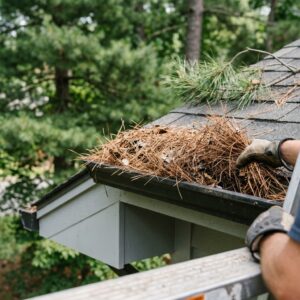
Clogged gutters are a leading cause of foundation damage in Georgia homes, creating a cascade of water-related problems that can cost homeowners thousands of dollars in repairs. When gutters become blocked with leaves, twigs, and debris, they can’t properly channel rainwater away from your home’s foundation. Instead, water overflows and pools around the perimeter of your house, saturating the soil and creating hydrostatic pressure against foundation walls. In Georgia’s clay-heavy soil, this water absorption causes the ground to expand significantly, pushing against foundation walls and creating cracks. During dry periods, the soil contracts, leaving gaps that destabilize the foundation further. This continuous cycle of expansion and contraction, combined with Georgia’s heavy rainfall averaging 50 inches annually, accelerates foundation deterioration. The process typically begins subtly with small cracks in basement walls or uneven floors, but can progress to serious structural issues including bowing walls, significant settling, and even complete foundation failure if left unaddressed.
The Science Behind Water Damage to Foundations
Understanding how water affects your foundation helps explain why clogged gutters pose such a serious threat to Georgia homes. When functioning properly, gutters collect roof runoff and direct it through downspouts to areas safely away from your foundation. A typical 1,000-square-foot roof can shed approximately 600 gallons of water during a one-inch rainfall event. Without proper gutter function, this water cascades directly onto the ground next to your foundation.
Georgia’s predominant clay soil composition makes this problem particularly severe. Clay soil acts like a sponge, expanding up to 10% when saturated with water. This expansion exerts lateral pressure on foundation walls, which can reach thousands of pounds per square foot. Conversely, during Georgia’s hot summers, clay soil shrinks dramatically, creating voids that allow foundations to shift and settle unevenly.
The hydrostatic pressure created by water-saturated soil doesn’t just push horizontally against foundation walls. It also creates upward pressure, known as uplift, which can actually lift portions of your foundation. This complex interplay of forces leads to various types of foundation damage, from hairline cracks to major structural failures.
Common Signs of Foundation Problems from Poor Drainage
Recognizing early warning signs of foundation damage can save Georgia homeowners from costly repairs. The most obvious indicators often appear inside your home first. Diagonal cracks running from door and window corners typically signal foundation movement. These cracks may start small but progressively widen as the foundation continues to shift.
Doors and windows that suddenly stick or won’t close properly indicate your home’s frame is no longer square due to foundation settling. You might notice gaps appearing between walls and ceilings or floors, particularly in corners. Floors may develop a noticeable slope or feel bouncy when walked on.
Outside your home, look for stair-step cracks in brick mortar joints, which follow the mortar lines in a stepping pattern. Horizontal cracks in foundation walls are particularly concerning as they indicate significant lateral pressure from water-saturated soil. You might also notice your chimney leaning or pulling away from the house, or concrete slabs like driveways and sidewalks cracking and shifting.
Water stains on basement walls, persistent musty odors, or visible mold growth all point to moisture infiltration issues often linked to poor gutter performance. Even if you don’t have a basement, crawl space moisture problems manifest as sagging floors, increased humidity inside the home, and higher energy bills due to compromised insulation.
Georgia’s Unique Soil Conditions and Climate Challenges
Georgia’s geological makeup creates perfect conditions for foundation damage when gutters fail to manage water properly. The state’s red clay soil, technically known as ultisol, dominates much of North Georgia, including the Watkinsville, Athens, and surrounding areas. This soil type contains high levels of iron oxide and aluminum, making it extremely reactive to moisture changes.
The state’s climate compounds these soil challenges. Georgia experiences distinct wet and dry cycles throughout the year, with heavy spring rains followed by hot, dry summers. Annual rainfall varies significantly across the state, but most areas receive between 45-55 inches, often in intense storm events that can overwhelm clogged gutter systems. These dramatic moisture fluctuations cause clay soil to repeatedly expand and contract, creating what engineers call “active soil conditions.”
Temperature variations also play a role in foundation damage. Georgia’s freeze-thaw cycles, though less severe than northern states, still contribute to soil movement and foundation stress. When water trapped in soil near foundations freezes, it expands by approximately 9%, adding additional pressure to foundation walls. This frost heaving, combined with clay soil expansion, creates a double threat to structural integrity.
Local topography influences how clogged gutters cause foundation damage in Georgia homes. Properties built on slopes face additional challenges as water naturally flows downhill, potentially concentrating against uphill foundation walls. Even relatively flat lots can develop problematic drainage patterns when gutters fail to direct water away from the structure.
The True Cost of Foundation Repairs vs. Gutter Maintenance
The financial implications of neglecting gutter maintenance become starkly apparent when compared to foundation repair costs. Professional gutter cleaning in Georgia typically ranges from $150-$300 per service, depending on home size and gutter accessibility. Most homes require cleaning twice yearly, making annual gutter maintenance costs between $300-$600.
Contrast this with foundation repair expenses, which can quickly escalate into five-figure territory. Minor crack repairs might cost $500-$1,500, but these are often temporary solutions if the underlying drainage problem persists. Moderate foundation repairs, including wall stabilization or partial underpinning, commonly range from $5,000-$15,000. Severe foundation damage requiring complete foundation replacement or extensive underpinning can exceed $30,000-$50,000.
Beyond direct repair costs, foundation problems trigger a cascade of additional expenses. Damaged foundations often cause secondary issues like cracked drywall, misaligned doors and windows, plumbing leaks from shifted pipes, and damaged flooring. These cosmetic and functional repairs can add thousands more to the total cost. Additionally, foundation problems significantly impact home values, with potential buyers often demanding price reductions far exceeding repair costs or walking away entirely.
Insurance coverage for foundation damage remains limited and complex. Most homeowners’ policies exclude foundation problems caused by poor maintenance or gradual water damage. Even when coverage exists, deductibles are often substantial, and claims can lead to increased premiums or policy non-renewal.
Preventive Measures: Protecting Your Foundation Year-Round
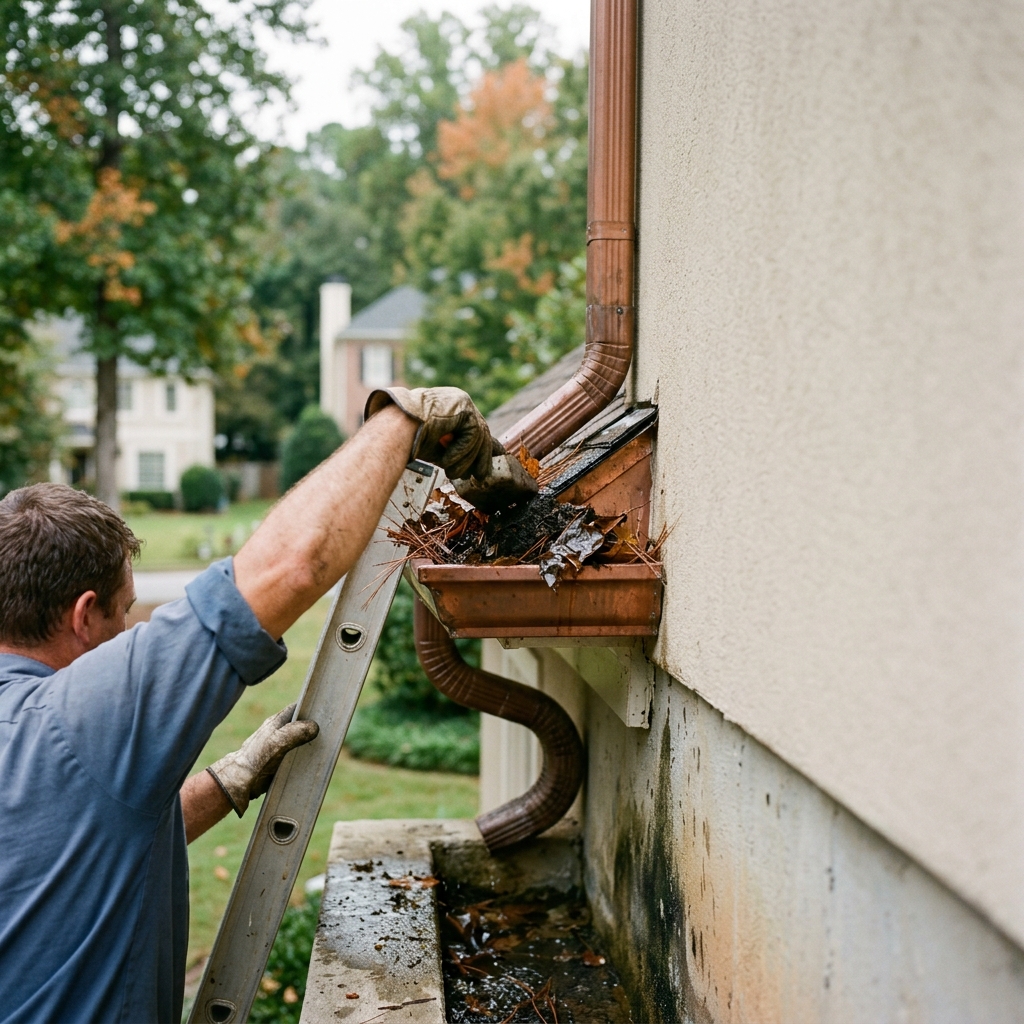
Establishing a comprehensive gutter maintenance routine provides the first line of defense against foundation damage. In Georgia, gutters require cleaning at least twice annually, ideally in late spring after pollen season and again in late fall after leaves drop. Properties with overhanging trees may need quarterly cleaning to prevent blockages.
During cleaning, inspect gutters for proper slope toward downspouts. Gutters should decline approximately 1/4 inch for every 10 feet of length to ensure adequate water flow. Check for loose hangers, separated joints, or rust spots that could lead to failures during heavy rains. Proper roofing components like drip edges also play a crucial role in directing water into gutters effectively.
Downspout extensions deserve special attention in preventing foundation damage. Downspouts should discharge water at least 5-10 feet away from your foundation, preferably onto sloped surfaces that continue directing water away from the structure. Consider installing underground drainage pipes connected to downspouts for a more permanent solution, especially in areas with poor surface drainage.
Grading around your foundation provides another critical protective layer. Soil should slope away from your foundation at a rate of 6 inches over the first 10 feet. This positive grading works in conjunction with your gutter system to keep water moving away from foundation walls. Annual grading touch-ups may be necessary as soil settles over time.
Professional Solutions for Long-Term Foundation Protection
While regular maintenance forms the foundation of protection, several professional upgrades can enhance your gutter system’s effectiveness in preventing foundation damage. Gutter guards or leaf protection systems reduce cleaning frequency and maintain consistent water flow. Various styles exist, from simple mesh screens to sophisticated micro-mesh systems, each with different effectiveness levels and price points.
Seamless gutters eliminate joint failures common in sectional systems, reducing leak potential near your foundation. These custom-fabricated gutters also handle Georgia’s heavy rainfall more effectively than standard sectional gutters. When combined with properly sized downspouts, seamless gutters provide superior water management capacity.
For homes with persistent drainage challenges, French drains offer an underground solution to redirect water away from foundations. These gravel-filled trenches with perforated pipes collect and channel subsurface water, preventing soil saturation near foundation walls. Surface drains and catch basins can address low spots in yards where water naturally accumulates.
Professional waterproofing treatments for foundation walls provide an additional protective barrier against moisture infiltration. These treatments range from surface sealers to comprehensive membrane systems, depending on your foundation type and local conditions. When combined with proper gutter function, waterproofing creates a multi-layered defense against water damage.
When to Call Professionals: Warning Signs You Shouldn’t Ignore
Certain situations demand immediate professional attention to prevent minor issues from becoming major foundation failures. If you notice water pooling near your foundation after every rain, despite clean gutters, you likely have inadequate downspout extensions or grading problems requiring expert assessment.
Multiple cracks appearing simultaneously or cracks wider than 1/4 inch warrant professional evaluation. While hairline cracks might be cosmetic, larger or actively growing cracks indicate ongoing foundation movement. Horizontal cracks in basement walls particularly demand urgent attention as they signal dangerous lateral pressure.
Doors or windows that suddenly stick or show gaps indicate rapid foundation movement. This accelerated settling often results from water-related issues that worsen quickly without intervention. Similarly, noticeable floor slopes or new gaps between floors and walls suggest significant foundation problems developing.
Professional foundation inspectors use specialized equipment to assess damage extent and identify root causes. Level measurements, moisture meters, and sometimes ground-penetrating radar help create comprehensive evaluations. These assessments guide appropriate repair strategies and help prevent future problems.
Protecting Your Investment with Smart Maintenance
Your home represents one of your largest investments, and the foundation literally supports everything above it. Understanding how clogged gutters cause foundation damage in Georgia empowers you to take protective action before problems develop. The state’s challenging clay soils and variable climate make proper water management essential for foundation longevity.
Regular gutter maintenance, combined with proper grading and drainage improvements, costs a fraction of foundation repairs while providing invaluable protection. By staying vigilant for warning signs and addressing issues promptly, you can avoid the stress and expense of major foundation problems.
Consider scheduling professional gutter inspections as part of your seasonal roof maintenance routine. Many roofing contractors can assess both your roof and gutter system simultaneously, ensuring comprehensive water management for your home. Remember, every dollar spent on preventive maintenance can save hundreds or thousands in future repair costs.
For Georgia homeowners, the connection between gutters and foundations cannot be overstated. By maintaining clear, properly functioning gutters and addressing drainage issues proactively, you protect not just your foundation but your entire home investment. Don’t wait for visible damage to appear – implement a regular maintenance schedule today and enjoy the peace of mind that comes with a protected foundation.