Storm Damage Patterns Across Apalachee River Communities
Homeowners in Apalachee, Bostwick, and North High Shoals along the 30621 zip code corridor experience unique storm damage patterns on their asphalt shingles due to the area’s proximity to the Apalachee River and exposed topography. Properties near the Apalachee River, particularly those in Scull Shoals and Little Creek subdivisions along High Shoals Road, face increased wind uplift forces during severe weather events that can compromise ridge cap shingles and starter strips. The elevated terrain between Mars Hill Road and Elder Mill Road in communities like Elder Heights and Elder Ridge creates wind tunnel effects that accelerate granule loss on dimensional shingles and cause premature failure of synthetic underlayment systems.
According to Verisk’s Roofing Realities Trend Report, over 50 percent of residential claims are driven by wind and hail damage, with non-catastrophic wind and hail roof claims increasing from 17 percent in 2022 to 25 percent in 2024. Neighborhoods surrounding Oconee County High School, Westminster Christian Academy, and Salem Baptist Church in the 30677 zip code have documented higher frequencies of lifted shingles and damaged pipe boots following spring storm systems. The combination of Georgia’s extreme heat classification and frequent severe weather creates accelerated aging in asphalt shingles throughout Covena, Bishop, and Poplar Springs, where ice-and-water shield installations become critical for protecting vulnerable roof valleys and chimney flashing intersections.
Wind Uplift Damage on Architectural Shingles
Uplift Forces in Open Terrain Areas
Properties in Washington Farms, Echo Brook Park, and Eastville experience significant wind uplift damage during storm events due to their location along the US 441 corridor with minimal natural windbreaks. The open terrain between Hog Mountain Road and Experiment Station Road allows wind speeds to build momentum before striking architectural shingles on homes near Malcom Bridge Elementary and Rocky Branch Elementary in the 30677 zip code. Wind uplift forces target the edges of shingles first, causing nail pops in the starter strips and compromising the seal strips that bond each course of dimensional shingles together.
Homes in Ashland, Farmington, and Heritage Park along Mars Hill Road show characteristic uplift patterns where corner shingles and ridge cap shingles sustain the most severe damage during severe thunderstorms. The Insurance Institute data shows that properties with moderate to poor roof conditions experience 60 percent higher loss costs, making proper installation of drip edge and step flashing essential for homes near Lane Creek Golf Course and Providence Golf Club. OSB sheathing beneath lifted shingles becomes vulnerable to moisture intrusion when synthetic underlayment fails along the roof deck perimeter.
Gable End Vulnerability
Gable-style roofs throughout Woodlands, Woodridge North, and Lane Creek neighborhoods experience concentrated wind pressure at their peaks, causing systematic failure of ridge vents and fascia board connections during storms. Properties near the Historic Elder Mill Covered Bridge and along McNutt Creek Road in the 30638 zip code show repeated damage patterns where gable end shingles separate from the roof decking due to inadequate nailing patterns in the original installation. The combination of wind uplift and thermal cycling from Georgia’s extreme heat conditions causes 3-tab shingles to become brittle and prone to cracking along the gable rakes.
Storm damage assessments in Bishop, North High Shoals, and Bostwick reveal that homes with hip-style roofs perform significantly better than gable designs during high-wind events. According to Verisk data, only 20 percent of homes feature hip-style roofs nationally, but these designs distribute wind loads more evenly across the roof structure, reducing stress on individual shingles and counter flashing systems. Properties along High Shoals Road and Hillsboro Road benefit from hip roof configurations that minimize wind-driven rain infiltration around dormer intersections and skylight flashing details.
Hail Impact Damage Assessment
Granule Loss Patterns
Hailstorms create distinct damage patterns on asphalt shingles throughout Apalachee, with homes in Nolan Manor, Little Creek, and Scull Shoals showing concentrated granule loss on south-facing roof slopes that receive the most direct impact. The protective granules on dimensional shingles serve as the first line of defense against hail damage, but once compromised, the underlying asphalt mat becomes exposed to UV degradation and accelerated aging. Properties near Oconee Veterans Park and Herman C. Michael Park in the 30677 zip code often require complete roof replacement after severe hail events due to widespread granule displacement across multiple roof planes.
According to the Asphalt Roofing Manufacturers Association, asphalt shingles represent 80 percent of all residential roofing installations, making hail damage assessment critical for homeowners in Elder, Bishop, and Poplar Springs. The impact craters left by hail create weak points in the shingle mat that allow moisture to penetrate through to the roof decking and synthetic underlayment layers. Homes along Elder Mill Road and Greensboro Highway show characteristic hail damage patterns where the force of impact creates circular indentations that compromise the waterproof integrity of each affected shingle.
Bruising and Mat Damage
Hail bruising occurs when impact forces compress the asphalt mat without immediately creating visible surface damage, making detection challenging for homeowners in Covena, Heritage Park, and Woodlands. Professional inspections reveal that bruised shingles develop accelerated aging patterns and premature failure rates compared to undamaged architectural shingles on the same roof system. Properties near Antioch Christian Church and Bishop Baptist Church along Lane Creek Road in the 30621 zip code require careful assessment of potential bruising damage that may not manifest as leaks until months after the initial storm event.
The National Roofing Contractors Association reports that roof-related claims account for 25 percent of residential claim value, with hail damage representing a significant portion of these losses throughout Georgia. Bruised shingles lose their flexibility and become prone to cracking during thermal expansion cycles, particularly affecting homes in Washington Farms, Ashland, and Echo Brook Park where temperature variations stress the compromised asphalt mat. Ice-and-water shield installations become essential backup protection when hail-damaged shingles begin failing along roof valleys and penetration areas around pipe boots and roof vents. Understanding is asphalt roofing still the best choice helps property owners in Bostwick, Apalachee, and Little Creek make informed decisions about their roofing systems.
Rain-Driven Moisture Intrusion
Penetration Through Compromised Seals
Wind-driven rain during storm events targets compromised seal strips between shingle courses, creating moisture intrusion pathways that affect homes throughout Eastville, Washington Farms, and Ashland along the Hog Mountain Road corridor. Once storm damage compromises the seal strips on dimensional shingles, horizontal rain penetration can occur even when individual shingles remain physically attached to the roof deck. Properties near Malcom Bridge Middle School and Oconee County Middle School in the 30677 zip code experience moisture intrusion through damaged step flashing and counter flashing systems where roof planes intersect with vertical walls. Homeowners in Woodlands, Woodridge North, and Lane Creek neighborhoods often research signs asphalt shingles are failing after georgia heat waves before scheduling inspections.
The synthetic underlayment layer serves as secondary protection when seal strip integrity fails, but prolonged exposure to moisture can cause delamination of this critical barrier system. Homes in Farmington, Elder Heights, and Elder Ridge along Mars Hill Road show moisture intrusion patterns where failed seal strips allow water to migrate laterally beneath architectural shingles before penetrating through nail holes in the roof decking. Understanding how long asphalt shingles last in Georgia’s climate helps homeowners recognize when seal strip deterioration increases vulnerability to storm damage.
Valley and Penetration Vulnerabilities
Roof valleys throughout Apalachee communities concentrate water flow and become primary failure points when storm damage compromises the surrounding shingle systems and ice-and-water shield installations. Properties in Bishop, North High Shoals, and Bostwick along High Shoals Road experience valley flooding during heavy rainfall events that can overwhelm damaged flashing systems and create interior water damage. The intersection of multiple roof planes in valley areas creates complex flashing details that require proper installation of synthetic underlayment and step flashing to prevent moisture intrusion during severe weather.
Pipe boots, roof vents, and skylight flashing represent additional penetration points where storm-damaged shingles increase the risk of water intrusion throughout neighborhoods near Presbyterian Village and Butler’s Crossing in the 30677 zip code. According to industry data, 33 percent of roof replacements are driven by active leaks, with penetration failures representing a significant portion of these premature replacement needs. Homes along Experiment Station Road and Malcom Bridge Road require regular inspection of penetration seals and flashing systems to identify potential failure points before moisture intrusion damages the underlying roof decking and structural components.
Temperature Cycling and Thermal Shock
Expansion and Contraction Stress
Georgia’s extreme heat classification creates severe thermal cycling conditions that stress asphalt shingles throughout Covena, Heritage Park, and Woodlands, with daily temperature variations causing repeated expansion and contraction of roofing materials. Properties near Lane Creek Golf Course and Providence Golf Club experience thermal shock when afternoon thunderstorms rapidly cool superheated shingles, creating stress fractures in the asphalt mat and compromising the bond between granule layers and the underlying membrane. The combination of thermal stress and storm damage accelerates the aging process of dimensional shingles and architectural shingles throughout the 30621 zip code communities.
Thermal expansion affects not only the shingles themselves but also the fastening systems, with nail pops becoming more common in homes along Elder Mill Road, Greensboro Highway, and McNutt Creek Road where temperature extremes stress the connections between shingles and roof decking. The repeated expansion and contraction cycles cause progressive loosening of starter strips and ridge cap shingles, making these components more vulnerable to wind uplift during subsequent storm events. Professional assessments reveal that homes in Little Creek, Scull Shoals, and Iron Horse subdivisions require enhanced fastening schedules to compensate for thermal stress effects on the roofing system.
UV Degradation Acceleration
Storm damage that removes protective granules exposes the underlying asphalt mat to accelerated UV degradation during Georgia’s intense summer heat periods, particularly affecting homes in Nolan Manor, Apalachee, and Bostwick along the 30621 corridor. The granule layer serves as both impact protection and UV barrier, so hail damage or wind scour that compromises this protective coating leads to rapid deterioration of the asphalt membrane beneath. Properties near Westminster Christian Academy and Athens Academy experience compound aging effects where storm damage and UV exposure combine to create premature shingle failure and the need for emergency roof replacement.
According to RubyHome data, the average age of replaced roofs is 19 years nationally, but storm-damaged roofs in Georgia often require replacement after 15 years or less due to the combined effects of severe weather and extreme heat exposure. Homes along US 441, Mars Hill Road, and High Shoals Road show characteristic UV degradation patterns where granule loss from storm damage creates expanding areas of exposed asphalt that continue deteriorating between storm events. The asphalt roofing services required for these properties often involve complete system replacement rather than repair due to the extent of thermal and UV damage affecting multiple roof areas.
Debris Impact and Puncture Damage
Tree Branch and Airborne Debris
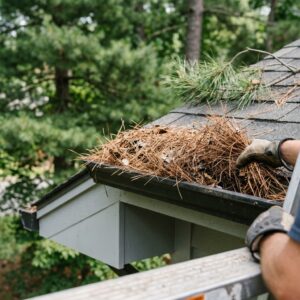
Storm-driven debris creates puncture damage and impact tears in asphalt shingles throughout heavily wooded areas of Elder, Elder Heights, and Elder Ridge, where mature trees near the Historic Elder Mill Covered Bridge pose ongoing risks during severe weather events. Airborne branches and limbs can puncture through dimensional shingles and synthetic underlayment, creating immediate leak pathways that require emergency repair to prevent structural damage to the roof decking below. Properties along wooded sections of Lane Creek Road, McNutt Creek Road, and Rocky Branch Road in the 30638 zip code experience higher frequencies of debris-related roof damage during thunderstorms and severe weather events.
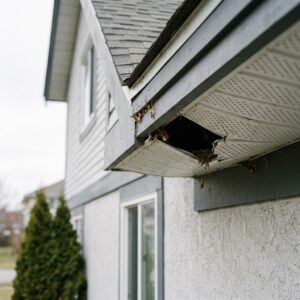
The impact force from falling branches often damages not only the shingles but also the underlying roof structure, requiring assessment of potential damage to fascia boards, soffit panels, and roof decking integrity. Homes near Scull Shoals Experimental Forest and Redlands Wildlife Management Area face increased debris risks due to the density of mature hardwood trees that can shed substantial limbs during high-wind events. Emergency repairs in these areas typically involve temporary weatherproofing with ice-and-water shield and plywood patches until complete shingle replacement can be completed on the affected roof sections.
Small Debris and Granule Scour
Wind-blown sand, small gravel, and organic debris create granule scour damage on asphalt shingles throughout open areas of Washington Farms, Ashland, and Echo Brook Park, where minimal tree coverage allows debris to accelerate across roof surfaces during storm events. This sandblasting effect removes protective granules and exposes the asphalt mat to UV degradation, creating long-term damage that may not become apparent until months after the initial storm. Properties near agricultural areas along Experiment Station Road and Daniells Bridge Road experience additional debris exposure from soil particles and crop residue that become airborne during severe thunderstorms.
The cumulative effect of granule scour combines with other storm damage mechanisms to accelerate roof aging throughout Covena, Bishop, and Poplar Springs, where exposed terrain provides minimal protection from wind-driven debris. According to Verisk data, homes with moderate to poor roof conditions experience significantly higher loss costs, making regular debris removal and granule loss assessment critical for maintaining roof system integrity. Professional inspections can identify early signs of granule scour damage before it progresses to the point where complete roof replacement becomes necessary rather than targeted repair of affected shingle areas.
Lightning Strike and Electrical Damage
Direct Strike Effects
Lightning strikes create severe localized damage to asphalt shingles and roof systems throughout elevated areas of Heritage Park, Woodlands, and Woodridge North, where homes on ridgelines face increased exposure during thunderstorm events. Direct lightning strikes can instantly vaporize sections of dimensional shingles and create entry points that extend through the roof decking and into the structural framing below. Properties near high points along Hog Mountain Road and Mars Hill Road in the 30677 zip code require immediate emergency response after lightning strikes to prevent moisture intrusion and potential fire damage to the roof structure.
The electrical discharge from lightning creates thermal damage that extends beyond the immediate strike point, affecting surrounding shingles, synthetic underlayment, and metal components like step flashing and counter flashing systems. Homes near prominent landmarks and elevated terrain throughout the Apalachee River corridor face higher lightning exposure risks during the frequent afternoon thunderstorms common in Georgia’s climate. Emergency repairs typically involve extensive removal of damaged roofing materials and assessment of potential electrical system damage throughout the affected structure.
Secondary Electrical Effects
Nearby lightning strikes create electromagnetic pulses that can damage metal roofing components and compromise the integrity of ridge vents, roof vents, and pipe boots throughout neighborhoods near Oconee Veterans Park and Herman C. Michael Park. The electrical effects can cause micro-fractures in asphalt shingles and create stress points that develop into leaks over time, even when no immediate visible damage occurs from the lightning event. Properties in Little Creek, Scull Shoals, and Iron Horse experience secondary lightning effects that may not manifest as obvious damage until subsequent weather events stress the compromised roofing materials.
According to the National Roofing Contractors Association, electrical damage from lightning requires comprehensive assessment of all roofing system components, including hidden damage to underlayment layers and decking materials that may not be immediately apparent. Homes along Elder Mill Road, Greensboro Highway, and High Shoals Road benefit from professional lightning damage assessments that can identify compromised areas before they develop into major leak sources. The interaction between lightning damage and subsequent storm events often accelerates the timeline for roof replacement in affected properties throughout the 30621 and 30638 zip code areas.
Professional Assessment and Documentation
Comprehensive Damage Evaluation
Professional storm damage assessment requires systematic evaluation of all roof components throughout Apalachee communities, from granule loss on architectural shingles to compromised flashing systems around chimneys and penetrations. Qualified inspectors examine properties in Eastville, Washington Farms, and Ashland for multiple damage types that may interact to create premature roof failure, including wind uplift damage combined with hail impact and thermal stress effects. The documentation process involves photographing damaged areas and measuring the extent of granule loss, seal strip failure, and structural impact to provide comprehensive records for insurance claims and repair planning.
According to IBISWorld data, Georgia’s roofing market represents $2.3 billion in annual activity, with storm damage representing a significant portion of replacement demand throughout Oconee County communities. Professional assessment services help homeowners in Bishop, North High Shoals, and Bostwick understand the full extent of storm damage and make informed decisions about repair versus replacement options. The evaluation process includes testing shingle flexibility, measuring granule retention rates, and assessing the condition of critical components like ice-and-water shield and synthetic underlayment that provide secondary protection when primary shingle layers fail.
Insurance Documentation Requirements
Storm damage claims require detailed documentation of all affected roofing components, from damaged ridge cap shingles to compromised drip edge and soffit systems throughout properties near Butler’s Crossing and the Epps Bridge Parkway corridor. Insurance adjusters expect comprehensive photographic evidence showing the extent of damage to dimensional shingles, starter strips, and flashing systems, along with professional assessments of potential hidden damage to roof decking and structural components. Understanding asphalt roofing performance in bishop and north high shoals helps homeowners provide context for damage patterns specific to their local area.
The claims process benefits from professional documentation that links visible surface damage to potential underlying issues with synthetic underlayment, OSB sheathing, and structural components that may require replacement during roof restoration. Properties in Covena, Heritage Park, and Woodlands require thorough documentation of storm damage patterns that may affect multiple roof areas and systems beyond the immediately visible shingle damage. Our Watkinsville roofing contractors work with homeowners throughout the 30677 and 30621 zip codes to provide comprehensive damage assessments that support successful insurance claims and ensure complete restoration of storm-damaged roof systems.
Protecting Apalachee Area Homes from Storm Damage
Storm damage patterns throughout Apalachee, Bostwick, North High Shoals, and surrounding communities in the 30621 zip code require proactive maintenance and professional assessment to minimize the impact of severe weather events on asphalt shingle systems. Homeowners near the Apalachee River, Historic Elder Mill Covered Bridge, and throughout Little Creek, Scull Shoals, and Iron Horse subdivisions benefit from understanding how wind uplift, hail impact, and thermal cycling combine to compromise ridge cap shingles, synthetic underlayment, and critical flashing systems. Ridgeline Roofing and Exteriors has documented storm damage patterns throughout Elder, Bishop, Poplar Springs, and Covena that help predict vulnerability areas and guide preventive maintenance strategies for dimensional shingles and architectural shingle systems.
The combination of Georgia’s extreme heat classification and frequent severe weather creates unique challenges for maintaining asphalt roofing integrity throughout neighborhoods near Westminster Christian Academy, Salem Baptist Church, and Antioch Christian Church along High Shoals Road and Mars Hill Road. According to Cost vs Value Report data, roof replacement projects provide 60 to 70 percent return on investment, making timely response to storm damage essential for protecting property values in Heritage Park, Woodlands, Woodridge North, and Lane Creek communities. Professional assessment of granule loss, seal strip failure, and ice-and-water shield integrity helps homeowners in the 30677, 30638, and 30645 zip codes make informed decisions about repair timing and system upgrades that can improve storm resistance and extend the lifespan of their roofing investment throughout Oconee County’s challenging climate conditions.