New siding improves home energy efficiency by creating a tighter, better-insulated barrier between your living space and the outdoor elements. When siding ages, warps, or develops gaps, conditioned air escapes and outside temperatures infiltrate your home, forcing your HVAC system to work harder and driving up monthly utility bills. Modern siding materials — including insulated vinyl, fiber cement, and engineered wood — are engineered with enhanced thermal resistance, reducing heat transfer through your walls. Many products include a built-in continuous insulation layer that eliminates thermal bridging across wall studs, a common weak point in older homes. Beyond the material itself, proper installation matters enormously. Even high-performance siding delivers limited energy savings if it’s poorly fitted, leaving air gaps and moisture pathways that undermine the entire thermal envelope. For Georgia homeowners dealing with hot, humid summers and unpredictable winters, upgrading old or failing siding is one of the most practical investments available — improving comfort, reducing energy costs, and protecting your home’s structural integrity all at once.
Why Your Home’s Siding Plays a Bigger Energy Role Than Most Homeowners Realize
Most conversations about home energy efficiency focus on roofing, windows, and HVAC systems. Siding rarely gets the attention it deserves, yet your exterior cladding functions as your home’s primary weather barrier — the first and most consistent line of defense against temperature fluctuation, moisture, and air infiltration. When siding is performing well, it holds conditioned air inside and resists outdoor heat or cold penetrating your wall cavities. When it begins to fail, even slightly, the energy consequences are significant.
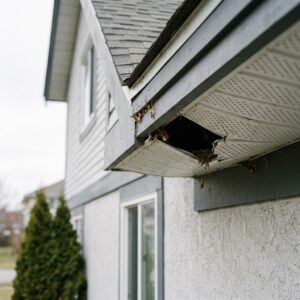
Older siding materials — particularly original wood clapboard or basic vinyl installed decades ago — were not designed with modern energy performance standards in mind. They lack the thermal mass, tight interlocking profiles, and moisture-resistant backing that today’s products provide. As these materials age, they crack, shrink, warp, and pull away from the wall framing, opening pathways for air exchange that make your heating and cooling system run in overdrive. According to the U.S. Department of Energy, air leakage through the building envelope accounts for a substantial portion of total home energy loss — and exterior wall cladding is a major contributor.
How New Siding Directly Reduces Heating and Cooling Costs
Understanding how new siding improves home energy efficiency requires looking at the specific mechanisms through which modern siding products outperform older ones. There are three primary pathways: improved insulation value, reduced air infiltration, and better moisture management.
Insulation Value and R-Value Improvements
Many modern siding products — particularly insulated vinyl siding — are manufactured with a rigid foam backing that adds measurable R-value to your wall assembly. While standard vinyl siding has a negligible R-value on its own, insulated vinyl can contribute R-2 to R-5 of continuous insulation depending on the product. That may sound modest, but because this insulation wraps continuously across wall studs, it eliminates thermal bridging — a significant source of heat loss in homes with standard stud framing. When you combine insulated siding with existing cavity insulation inside your walls, the total thermal performance of the wall assembly improves substantially.
Fiber cement siding, while not inherently insulating, pairs exceptionally well with rigid foam insulation installed behind it, allowing contractors to build highly efficient wall systems from the outside without interior disruption. This exterior continuous insulation approach meets or exceeds the requirements outlined in modern energy codes and significantly reduces the load placed on your HVAC equipment.
Air Sealing and Reduced Infiltration
New siding installation isn’t just about the cladding material itself. A properly executed siding replacement project includes careful attention to house wrap, flashing, and sealing around windows, doors, and penetrations. These elements work together to create a tight air barrier beneath the siding that prevents uncontrolled air exchange. Old siding that has shrunk, cracked, or separated from trim allows air to move freely through your wall cavity, carrying heat out in winter and pulling humid outdoor air in during summer — a particular challenge in Georgia’s climate.
When a skilled contractor replaces aging siding with new materials and installs a quality weather-resistant barrier underneath, the result is a dramatically tighter building envelope. Homeowners often notice an immediate difference in comfort — rooms that were previously drafty in winter or stuffy in summer suddenly feel more consistent and controlled, even before they see the reduction reflected on their utility bills.
Moisture Management and Long-Term Structural Protection
Energy efficiency is not solely about temperature — moisture plays an equally critical role. When water infiltrates your wall assembly through failed siding, it saturates insulation, dramatically reducing its thermal performance. Wet fiberglass batt insulation can lose the majority of its R-value. Moisture also promotes mold growth and wood rot, which compromise the structural components behind your siding and create pathways for further air leakage. New siding with proper drainage planes, flashing, and weather-resistant barrier installation keeps your wall cavity dry, preserving insulation performance for the long term. This is especially important in Northeast Georgia, where summer humidity and afternoon thunderstorms put constant pressure on building envelopes.
Best Siding Materials for Energy Efficiency in Georgia’s Climate
Not all siding materials deliver the same energy performance, and the right choice depends on your home’s construction, your budget, and your long-term goals. Here are the most energy-efficient options available to Georgia homeowners today.
Insulated Vinyl Siding
Insulated vinyl siding is the most popular choice for homeowners prioritizing energy savings on a practical budget. The foam backing bonds to the siding panel, eliminating the hollow space behind traditional vinyl that allows panels to flex and rattle. This density also improves sound attenuation and gives the siding a more substantial, quality appearance. Installation is relatively fast, and the material is low maintenance — no painting required and resistant to rot and insects.
Fiber Cement Siding
Fiber cement, such as HardiePlank, is a premium option that combines excellent durability with strong paint retention and dimensional stability in heat and humidity. While it doesn’t have built-in insulation, fiber cement is often installed over rigid foam, making it part of a high-performance wall system. It resists impact, fire, moisture, and insects — all meaningful advantages in a Georgia climate that ranges from summer heat waves to occasional ice storms.
Engineered Wood Siding
Engineered wood products like LP SmartSide offer a natural wood aesthetic with improved resistance to moisture, rot, and impact. These products pair well with continuous insulation strategies and are a strong option for homeowners building new construction or pursuing a significant exterior renovation.
The Connection Between Siding, Roofing, and Whole-Home Energy Performance
Siding upgrades deliver the greatest energy savings when they’re part of a comprehensive approach to your home’s thermal envelope. Your roof, attic, walls, and foundation all contribute to how efficiently your home retains conditioned air. If you’re investing in new siding, it’s worth evaluating how the rest of your exterior systems are performing at the same time.
For example, how attic insulation and roofing work together in Georgia has a direct bearing on your overall energy performance — a tight wall assembly paired with an under-insulated attic still leaves significant energy losses on the table. Similarly, understanding how roof ventilation protects homes in Oconee County helps homeowners see that moisture management is a whole-home discipline, not a single-system fix. If you’re considering siding alongside a roofing project, reviewing roofing upgrades that add value to homes in Bishop can help you prioritize investments that deliver both performance and resale returns.
Signs Your Current Siding Is Hurting Your Energy Efficiency
Many homeowners don’t recognize failing siding until the damage is visible and severe. But energy performance degradation often begins long before cracks, rot, or warping become obvious. Watch for these warning signs that your siding is undermining your home’s thermal envelope:
- Rising utility bills without a clear explanation in HVAC usage or rate changes
- Drafts near exterior walls even when windows and doors appear sealed
- Rooms that won’t maintain consistent temperature regardless of thermostat settings
- Visible gaps, cracks, or separations in siding panels or at trim joints
- Bubbling or peeling paint on interior walls near the exterior — a sign of moisture infiltration
- Soft or spongy spots when pressing on siding panels, indicating water damage beneath
- Mold, mildew, or fungal growth on interior walls adjacent to exterior surfaces
- Fading, chalking, or warped panels that have lost their weather-resistant integrity
If your home is showing multiple of these signs, a siding assessment is overdue. The longer degraded siding remains in place, the more damage accumulates in the wall cavity behind it — increasing both repair costs and energy losses.
Installation Quality Is As Important As Material Selection
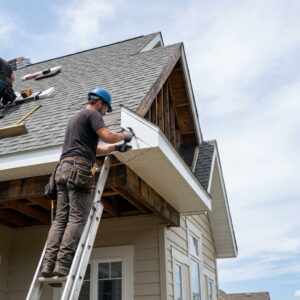
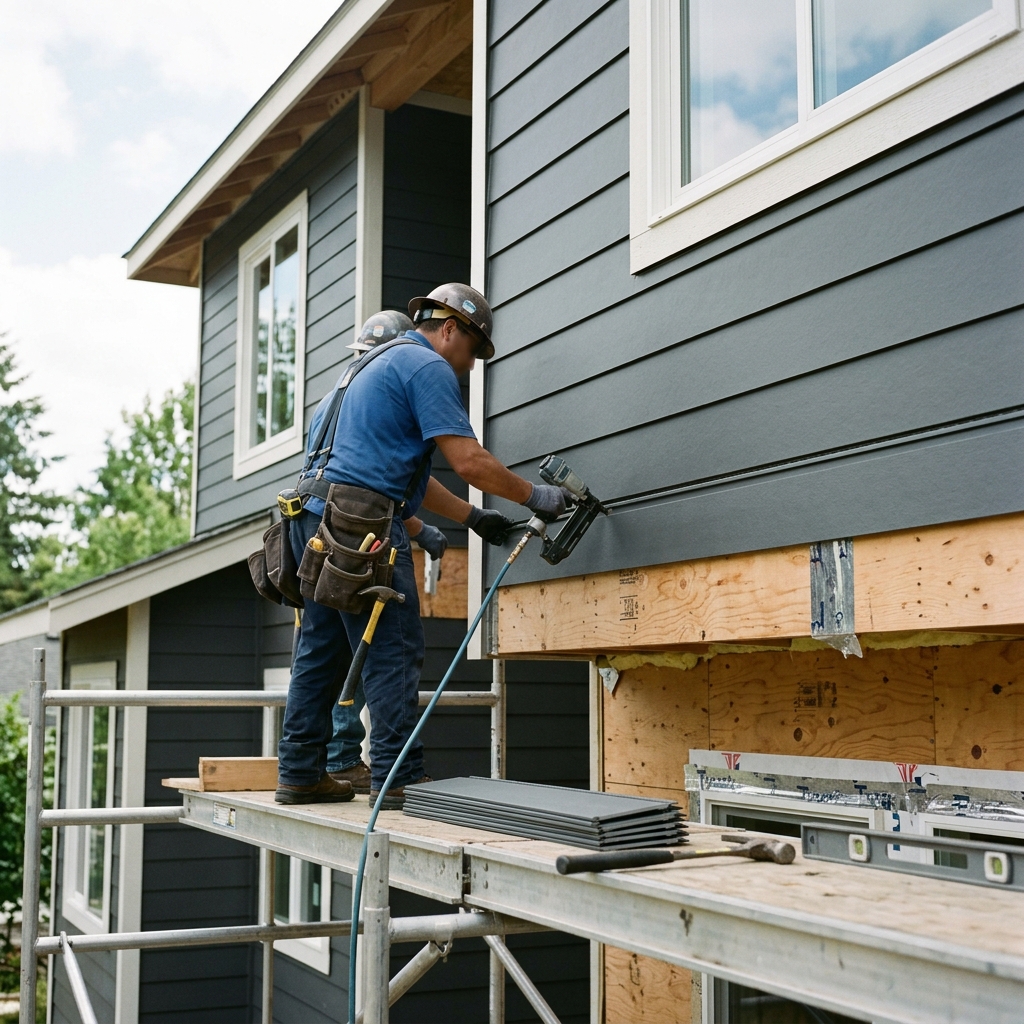
Even the highest-performing siding product will underdeliver if it’s poorly installed. Gaps left at seams, improperly lapped joints, missing or incorrectly applied flashing, and failure to properly integrate with window and door trim all create vulnerabilities that undermine both energy performance and weather protection. This is why choosing an experienced, reputable contractor is as important as choosing the right material.
Contractors who understand how new siding improves home energy efficiency approach installation as a system — not just cladding attachment. They ensure proper house wrap installation, correct fastening patterns, appropriate expansion gaps for thermal movement, and thorough sealing at all penetrations. A quality installation in Georgia’s climate requires understanding how materials behave in heat, humidity, and the occasional freeze — factors that influence every product and method decision on the job.
Energy Savings, Comfort, and Return on Investment
Homeowners who invest in new siding — particularly insulated products — typically report meaningful reductions in monthly heating and cooling costs. Industry estimates suggest insulated siding can reduce wall heat transfer by 20% or more compared to older, non-insulated materials, translating into real dollar savings over time. Beyond the utility bill impact, the comfort improvement is often cited as the most immediately noticeable benefit — a home that holds temperature consistently, without cold spots in winter or stuffy corners in summer, simply feels better to live in.
From a resale standpoint, new siding is one of the exterior upgrades with the strongest return on investment. It improves curb appeal, signals a well-maintained home to buyers, and — when buyers understand the energy efficiency benefits — commands a premium in the market. When combined with other exterior improvements like a new roof, updated windows, or improved attic insulation, the cumulative effect on home value is substantial. For more on how exterior investments pay off, how roof replacement improves energy efficiency provides a useful parallel perspective on investment returns from the roofing side of the equation.
Ready to Improve Your Home’s Energy Performance? Talk to Ridgeline Roofing & Exteriors
If you’re exploring how new siding improves home energy efficiency and want expert guidance specific to your home and your Georgia climate, Ridgeline Roofing & Exteriors is the team to call. Serving Watkinsville, Athens, Bishop, Farmington, and surrounding Northeast Georgia communities, Ridgeline brings over 20 years of experience and installers averaging 25+ years in the field. As a GAF Master Elite Certified Contractor with a 4.9 Google rating and a 98% customer satisfaction rate, Ridgeline delivers the craftsmanship and material quality that lasting exterior improvements demand.
From siding selection and installation to complete exterior renovations, Ridgeline handles every detail — ensuring your new siding performs as both a weather barrier and an energy-efficiency upgrade for years to come. Call today at 770-706-7663 to schedule your free estimate. Their team will assess your current siding condition, walk you through the right material options for your home, and give you an honest recommendation — no pressure, just expertise you can count on.