Knowing the siding replacement warning signs homeowners should know can save you thousands of dollars in structural repairs and prevent water damage from quietly destroying your home from the outside in. Your home’s siding is its first line of defense against rain, wind, heat, and pests — but unlike a leaking roof that announces itself with water stains on your ceiling, failing siding can deteriorate gradually before most homeowners notice anything is wrong. The most critical warning signs include visible warping or buckling panels, soft or spongy areas beneath the surface, peeling interior paint, unexplained spikes in energy bills, visible mold or mildew growth, cracked or loose panels, and significant fading or chalking that signals material breakdown. Catching these early-stage signals gives you time to act strategically — scheduling replacement at your convenience rather than in emergency mode. Whether your home is sided with vinyl, wood, fiber cement, or engineered wood, this guide walks through each major warning sign in detail so you can evaluate your home’s exterior with confidence.
Why Siding Condition Matters More Than Most Homeowners Realize
Siding does far more than define your home’s curb appeal. It works as a weather barrier, an insulating layer, and a moisture management system all in one. When it begins to fail, the consequences extend well beyond aesthetics. Water infiltrating behind damaged or deteriorating siding panels can reach the wood sheathing beneath, where it causes rot, mold growth, and eventually structural compromise that affects wall framing and interior wall finishes. In Georgia’s climate — characterized by hot, humid summers, heavy rainfall, and occasional freeze-thaw cycles — siding faces relentless stress across every season. Homes in communities like Watkinsville, Bishop, Athens, and Farmington deal with humidity levels that accelerate moisture-related siding problems faster than in drier climates. That makes regular visual inspection and awareness of failure signals especially important for Northeast Georgia homeowners.
The cost gap between proactive replacement and reactive emergency repair is significant. Replacing deteriorated siding before it allows water intrusion is a planned, budgeted project. Replacing siding after it has allowed moisture to rot the sheathing and wall framing beneath turns a straightforward exterior upgrade into a major reconstruction project. Understanding the warning signs puts you in control of that timeline.
The Most Important Siding Replacement Warning Signs Homeowners Should Know
1. Warping, Buckling, or Bulging Panels
Siding panels that are visibly warped, buckled, or bulging outward from the wall surface are one of the clearest indicators that replacement is necessary. This distortion typically happens for one of two reasons: moisture has worked its way beneath the panels and is causing the substrate to swell, or the siding material itself has reached the end of its useful life and is no longer holding its shape under thermal expansion and contraction cycles. Vinyl siding in particular is susceptible to buckling when improperly installed with insufficient expansion gaps, or when aging material loses its flexibility in extreme heat. Wood siding warps when moisture content changes repeatedly over years of weathering. In either case, buckled or bulging panels are no longer creating a flat, sealed surface against the wall — meaning water, insects, and air are finding their way in.
Run your hand along any panel that appears to bulge and press gently. If the area feels soft or spongy rather than firm, you likely have moisture damage behind the panel that has already reached the wall sheathing — a sign that replacement should be prioritized rather than delayed.
2. Cracked, Broken, or Missing Sections
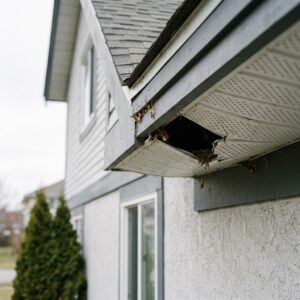
Cracks in siding panels — even small hairline fractures — create pathways for water and pests. What starts as a minor crack can quickly widen under freeze-thaw cycles or continued moisture exposure. Fiber cement and vinyl siding are prone to cracking from direct impact (hail, fallen branches, errant lawn equipment), and while individual cracked pieces can sometimes be replaced, widespread cracking across multiple panels is a sign that the material has become brittle with age and replacement of the full surface makes more practical and economic sense. Missing siding sections should always be treated as urgent, since unprotected wall sheathing is directly exposed to weather until the gap is closed.
3. Peeling Interior Paint or Wallpaper
This warning sign surprises many homeowners because it shows up inside the house rather than on the exterior. When siding fails and allows moisture to penetrate behind it, that moisture migrates through the wall assembly and can cause paint or wallpaper on interior walls to bubble, peel, or stain. If you notice peeling paint on interior walls that don’t have obvious plumbing nearby, or if multiple walls in a room show similar symptoms, failing exterior siding is a probable cause worth investigating. This is especially worth checking in rooms on the windward side of your home — the side that receives the most direct weather exposure.
4. Mold, Mildew, or Fungal Growth on the Surface
Some surface mildew on siding is a cosmetic issue that can be addressed with cleaning, especially in shaded areas or in humid Georgia summers. However, mold or fungal growth that persists after cleaning, appears in large patches, or seems to be growing from behind or beneath the siding rather than on its surface is a serious warning sign. Persistent biological growth indicates that moisture is trapped in or behind the siding — creating ideal conditions for wood rot and structural damage. Fiber cement and wood siding are particularly vulnerable. If you find soft, dark staining concentrated at panel joints or along the bottom rows of siding near the foundation line, those are the areas most likely to have moisture-related substrate damage that warrants professional inspection and probable siding replacement.
5. Noticeably Higher Energy Bills
Siding contributes to your home’s thermal envelope — the barrier between conditioned interior air and the outdoor environment. When siding degrades, gaps form at joints, fastener points loosen, and the underlying house wrap or insulation layer may be compromised. The result is increased air infiltration that forces your HVAC system to work harder. If your heating and cooling costs have increased steadily without an obvious explanation — no new appliances, no changes in usage habits — aging or failing siding may be allowing conditioned air to escape and outdoor air to infiltrate. This is a subtler warning sign than visible damage, but when combined with other indicators, it strengthens the case for siding evaluation and potential replacement. Learn how your home’s exterior systems collectively impact energy efficiency.
6. Fading, Chalking, or Severe Color Loss
All siding materials fade over time, but dramatic fading or chalking — where a powdery residue transfers to your hand when you wipe the surface — indicates that the protective coating or material surface has broken down past its effective service life. On vinyl siding, severe fading often accompanies brittleness, meaning the panels are simultaneously losing their visual finish and their structural integrity. Heavy color fading also reduces your home’s curb appeal and resale value significantly. While fading alone isn’t a structural emergency, it’s a reliable indicator that siding is aging out and replacement planning should begin. If you’re also seeing any of the other warning signs alongside significant fading, replacement rather than cosmetic refinishing is the appropriate path.
7. Dry Rot or Soft Spots in Wood Siding
For homes with wood siding, dry rot is one of the most urgent warning signs of all. Dry rot is a fungal decay that destroys the wood fiber, leaving the material crumbly, soft, and structurally compromised even when it appears intact on the surface. The classic test is to use a screwdriver or firm probe — healthy wood resists penetration, while dry-rotted wood crumbles easily. Dry rot spreads if left untreated, so isolated patches that aren’t addressed can expand to neighboring sections and eventually into the structural framing behind the siding. If your home has wood siding and shows any soft, discolored, or crumbling areas, have those sections professionally evaluated immediately. The same principle that applies to small roof issues — delay amplifies cost — applies directly to siding decay.
8. Frequent Need for Repainting or Caulking
Siding that requires repainting every few years rather than every 10–15 years, or caulking that fails repeatedly at joints and seams, is telling you that the material is no longer holding its protective finish or dimensional stability effectively. Chasing recurring maintenance on aging siding is a diminishing-returns investment. At some point, the cumulative cost of repeated painting, caulking, spot repair, and the labor involved surpasses the cost of simply replacing the siding with a modern, low-maintenance product. If you find yourself scheduling the same exterior repairs every one to three years, replacement is almost certainly the more economical long-term decision.
How Georgia’s Climate Accelerates Siding Deterioration
Homeowners in Northeast Georgia face climate conditions that place siding under accelerating stress. The combination of high summer humidity, intense UV exposure, heavy seasonal rainfall, and occasional winter freezes creates a demanding cycle of expansion, contraction, moisture absorption, and drying. This repeated stress cycle shortens the effective lifespan of many siding materials compared to their rated life in more moderate climates. Vinyl siding that might last 25–30 years in the Pacific Northwest may show signs of failure closer to 15–20 years in the Athens or Watkinsville area. Wood and engineered wood products are even more sensitive to moisture cycling in humid climates. Understanding how Georgia’s climate affects all exterior building materials helps homeowners make informed replacement decisions.
What to Do When You Identify Warning Signs
Step One: Document What You See
Walk the full perimeter of your home and photograph any areas that show warping, cracking, staining, mold, or soft spots. Pay particular attention to areas around windows, doors, and at the foundation line — these transition zones are where moisture most commonly infiltrates. Documentation helps any contractor you contact give you a more accurate preliminary assessment before the in-person inspection.
Step Two: Schedule a Professional Exterior Inspection
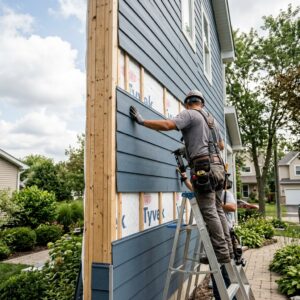
A qualified contractor can assess not just the visible siding surface but the condition of the house wrap, sheathing, and wall framing beneath. This is important because the true scope of any damage — and therefore the true scope of the replacement project — depends on what’s been happening behind the siding, not just what’s visible on its face. An experienced contractor can probe soft spots, check moisture levels, and identify whether the damage is cosmetic or structural.
Step Three: Understand Your Replacement Options
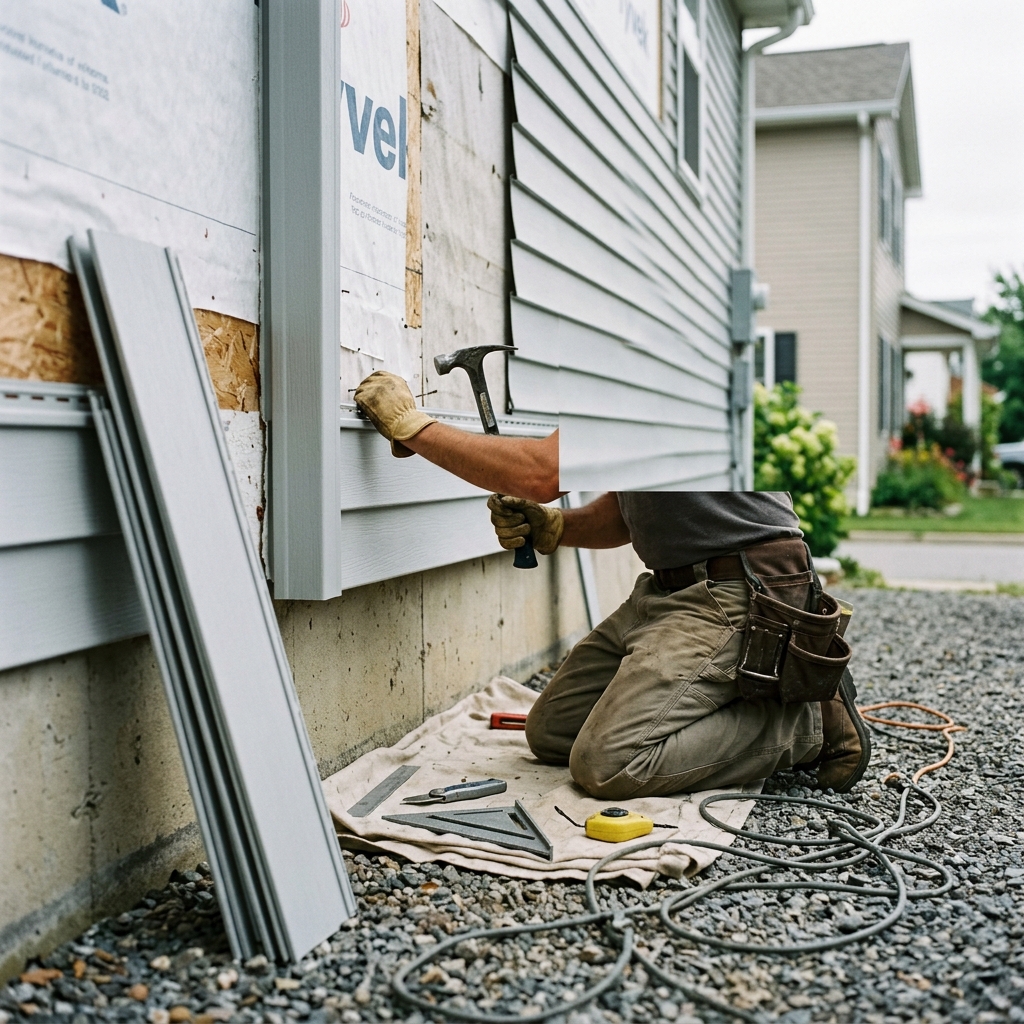
Modern siding materials offer substantially improved performance compared to products from 15–20 years ago. Fiber cement siding offers excellent moisture resistance, dimensional stability, and fire resistance with a paint finish that holds significantly longer than wood. Engineered wood products have improved dramatically in moisture management. Premium vinyl formulations resist UV-related brittleness better than older vinyl products. A professional contractor can walk you through the material options that make the most sense for your home’s exposure, your aesthetic goals, and your budget. Like roofing upgrades, quality siding replacement adds measurable value to your home.
Siding Replacement and Your Home’s Overall Exterior Health
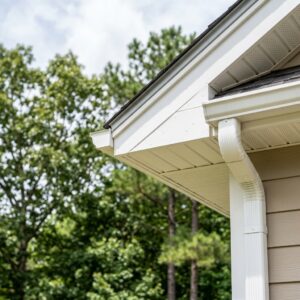
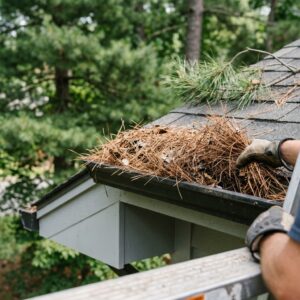
It’s worth noting that siding doesn’t operate in isolation. Your home’s exterior system — siding, roofing, gutters, windows, and trim — works together as an integrated weather-management assembly. Failing siding is often accompanied by gutter problems that are allowing water to run behind the siding at the eaves, or by roofing issues where water is entering at the fascia and finding pathways down behind the wall cladding. When planning a siding replacement, it’s a practical opportunity to assess the condition of all these interconnected exterior components. If your roof is aging alongside your siding, evaluating both systems together can streamline planning and reduce total project disruption.
Talk to a Local Exterior Contractor About Your Home’s Siding
If you’ve noticed any of the siding replacement warning signs covered in this guide — warping, cracking, mold growth, soft spots, rising energy bills, or persistent maintenance demands — the right next step is a professional evaluation. Ridgeline Roofing and Exteriors serves homeowners throughout Watkinsville, Athens, Bishop, Farmington, and surrounding Northeast Georgia communities, providing experienced assessments of exterior siding, roofing, gutters, and more. With over 20 years in business and installers averaging 25+ years of hands-on experience, Ridgeline brings the kind of local knowledge that makes a real difference in exterior replacement decisions. Contact Ridgeline Roofing and Exteriors today to schedule your exterior inspection at 770-706-7663 or visit ridgelineroofingcompany.com to request your free estimate and protect your home before small problems become costly repairs.